English
WHY
“How to become a better designer” is a question I have constantly pondered. I have attempted to answer this question in different ways at different stages of my career. I hope to present this thinking process and the results here to discuss with more people and spark some new ideas!
WHAT
CONTENT
As always, please treat this as a discussion rather than a lecture. The following are my personal views; there may be oversights or errors. Let’s explore together!
First, let’s think together: How can one become a better designer? (Please give your answer)
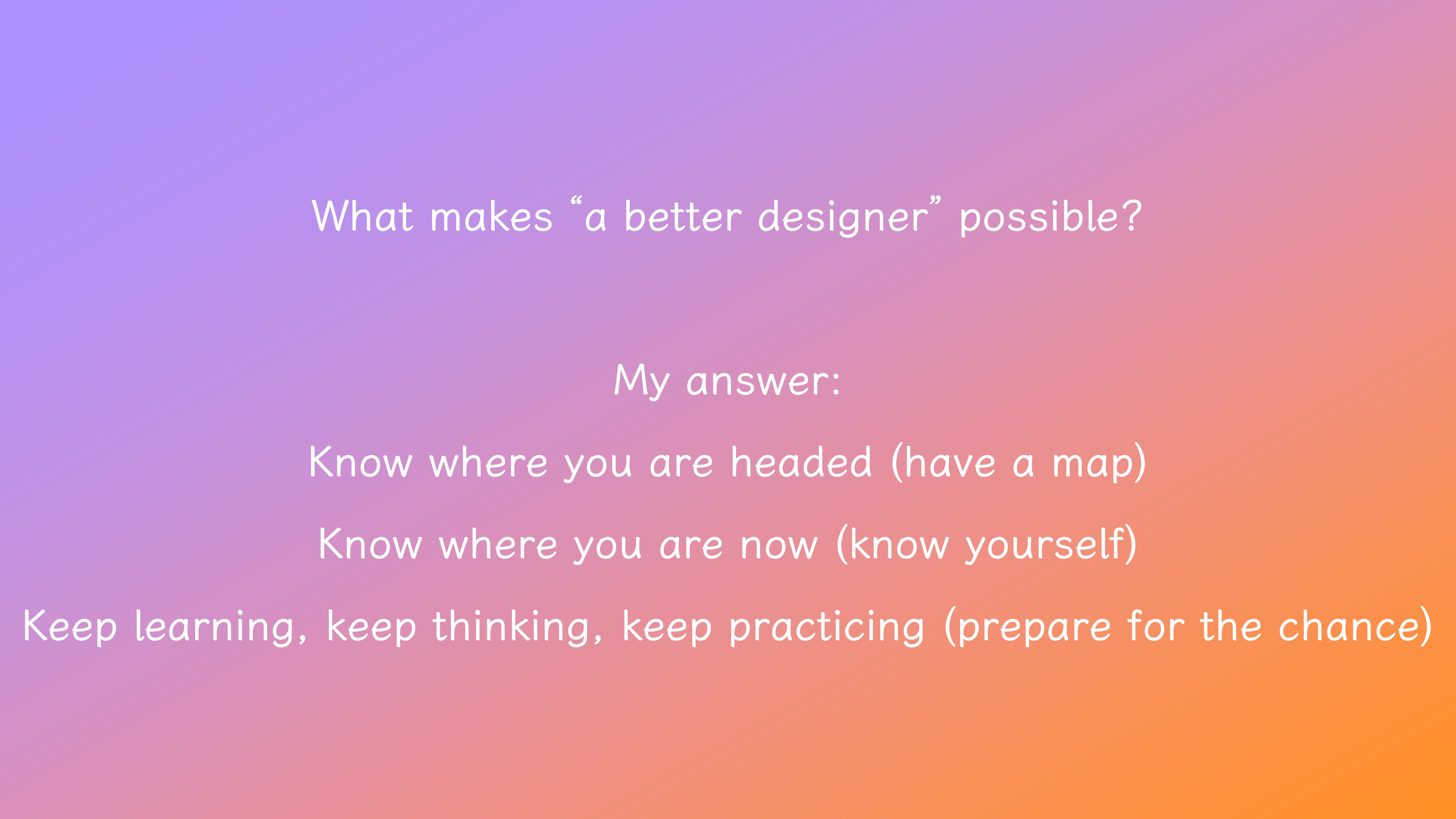
My current answer is:
- You need a map to overlook all capability dimensions.
- Know where you are (Know Yourself).
- Keep learning, thinking, and practicing (Prepare for opportunities that haven’t arrived yet).
In today’s discussion, I will recount the shift in my perspective over the past three years.
Imagine you just joined the game industry. What would you do to improve yourself? (Please try to answer)
My answer back then was simple: Practice makes perfect!
I dove headfirst into making a large number of prototypes.
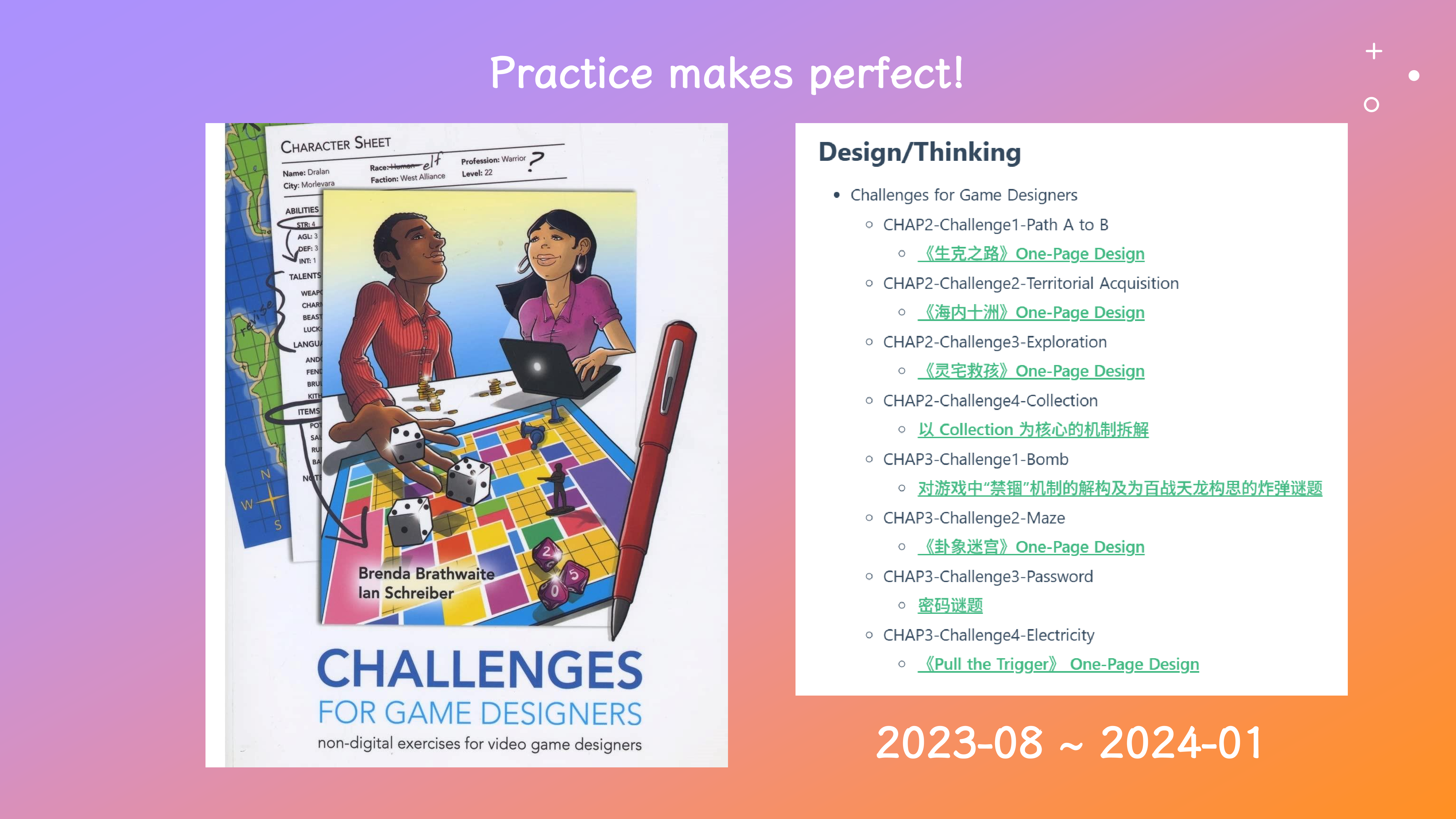
At that time, I came across a book titled [[book - Challenges For Game Designers]]. This book provided numerous “exercises” for designers to practice based on specific themes. Consequently, between August 2023 and January 2024, I created many prototypes, including both paper prototypes and playable ones.
Also around that time, I encountered the one-page-design method. These exercises honed my visual expression abilities and my ability to design for specific gameplay mechanics.
However, after a while, I started to think: It seems I’m just endlessly designing mechanics, and this feels never-ending. I don’t know how else to grow. After all, games aren’t just about mechanics, right?
So, during my annual talk with my lead, I raised my doubts. He introduced two concepts to me:
- Game design is about experience design.
Try approaching the same topic from different directions. For example, if you used mechanic design to realize [[subjective feeling - 害怕 fear]] this time, try using Level Art next time, and Audio Design the time after. Using different design tools helps you understand the characteristics and limitations of different tools, viewing the experience from a more holistic perspective. - From wall (feature), to house (system), to the whole city (game), you need to think from a higher perspective.
Designing a game is like architecture. At first (Junior), you are just laying bricks (responsible for a small feature). Later (Mid-level), you need to consider a whole house (responsible for a system). Further on (Senior), you need to consider the entire city (the whole game). You have to consider more things, and your perspective needs to be broader.
Additionally, at that time, I happened to listen to an interview with [[陈星汉 Jenova Chen]] from years ago on G-Cores. Coming from an Interactive Media Arts background, he raised a question: If the film industry already has relatively mature methods to influence audience emotions, but the game industry seems to lack such methods, can we do something about it?
Interview with Jenova Chen I (The Path of Games)
Interview with Jenova Chen II - “Journey”
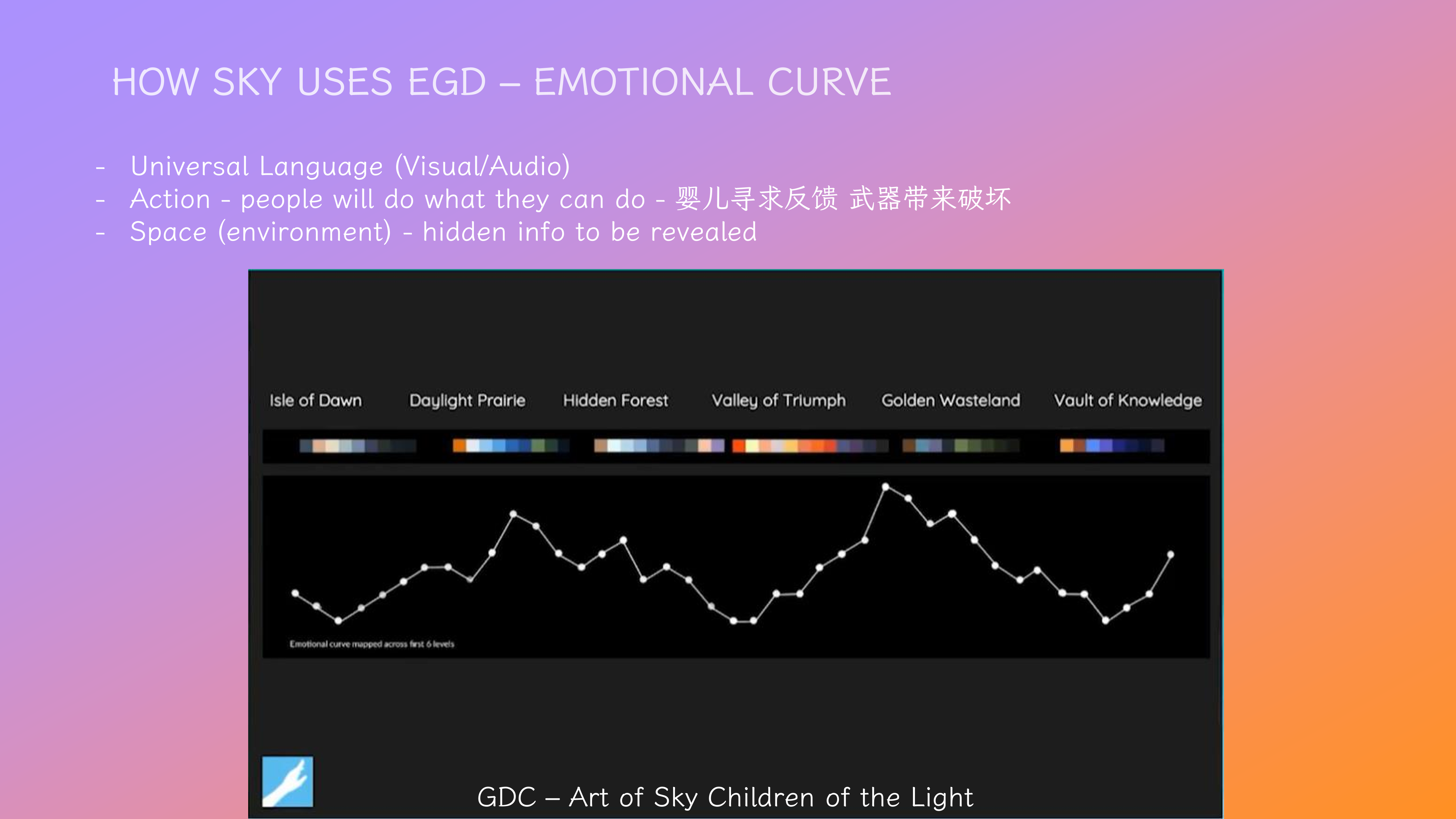
With this question in mind, [[陈星汉 Jenova Chen]] proposed a method called the Emotional Curve: If a player’s entire playthrough journey is viewed as a line of emotional fluctuation, every moment of joy or sadness is a peak or valley within it. Thus, the entire journey can be abstracted as a curve representing emotional ups and downs. If we can attempt to influence every point within it, we can influence the psychological feeling of the entire playthrough in the way the designer intends. To this end, the methods they adopted include:
- Universal Language (Visual/auditory elements that transcend race, age, and gender)
- Universal Actions (Using actions everyone understands, restricted to appropriate contexts)
- Space and Environment (Using environmental storytelling to convey information implicitly)
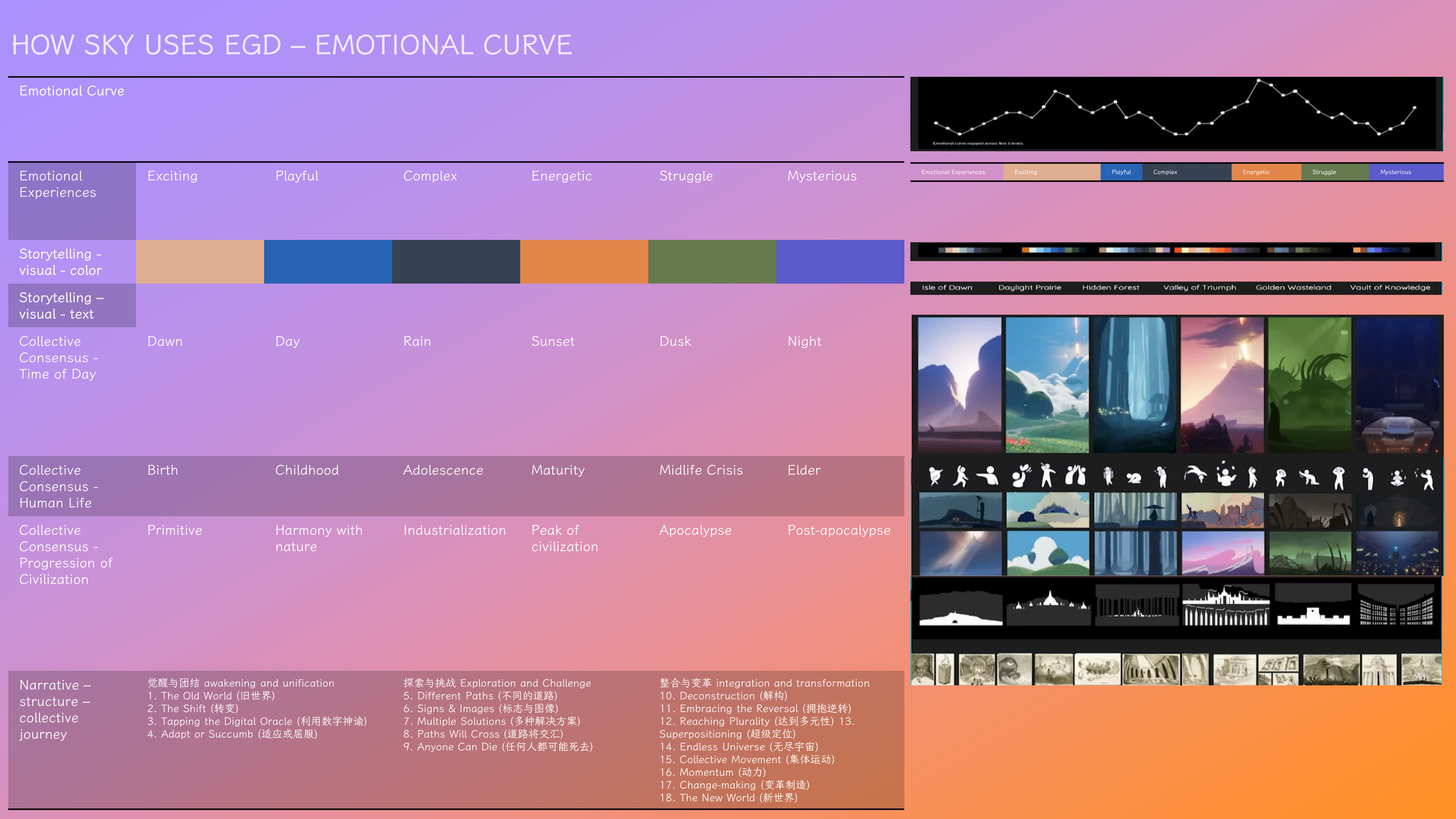
The information in this image lists the specific design elements they used. All means serve the same goal (inducing specific emotions) to achieve the best effect. For specific details, you can refer to this previous post: Emotional Game Design System - 1 - Create the System.
In today’s discussion, I will use another set of examples to illustrate this.
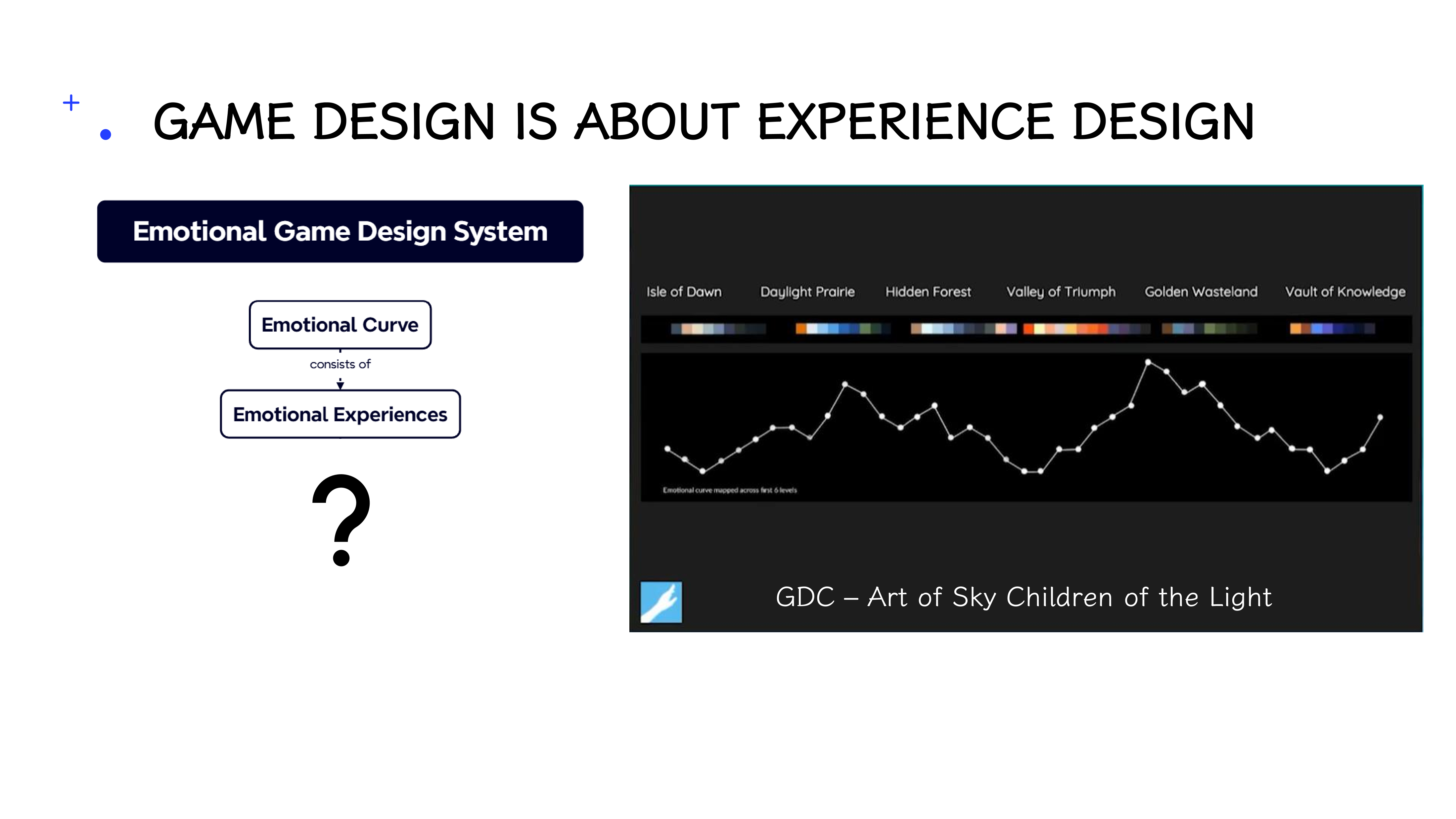
Inspired by them, I began to conceive the [[情感化游戏设计系统 emotional game design system - EGDS]].
The philosophy behind EGDS is as follows:
- WHY
- I believe the world is explainable. Genius, though remarkable, leaves traces. I believe that by deeply understanding underlying laws and logic, we can not only understand ourselves better but also engineer expected experiences in a controllable manner.
- HOW
- Driven by this belief, I draw knowledge from multidisciplinary fields, using reliable information to ground my vision and see beyond the surface to the Why.
- WHAT
- EGDS is the embodiment of this vision - an emotional game design system. Through the cycle of Perception, Rationalize, Deconstruct, and Reconstruct, it turns intangible feelings into structured design levers, allowing designers to create emotional experiences not by chance, but by design.
If the entire playthrough journey can be viewed as an emotional curve, it is composed of multiple emotional experiences. So, what lies behind an emotional experience?
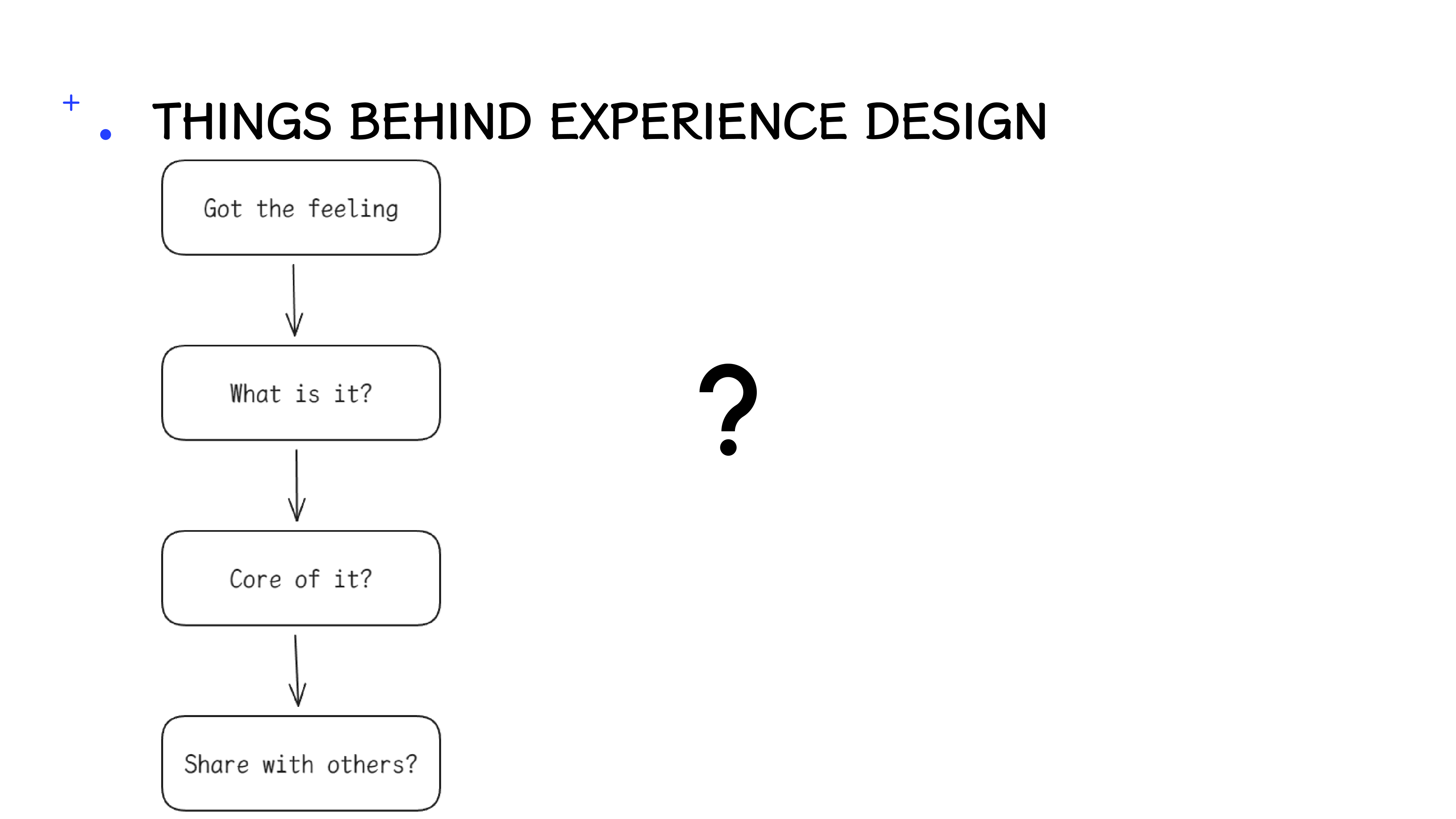
Suppose there is an emotional experience:
- First, we need to be able to feel it.
- Then, we need to be able to identify it.
- If we want to use the game medium to convey this experience, we need to abstract and deconstruct the core of this experience (since we can’t replicate the entire experience 100%).
- Finally, use tools to reconstruct it so it can be shared with other players.
Each of these points represents a different capability.
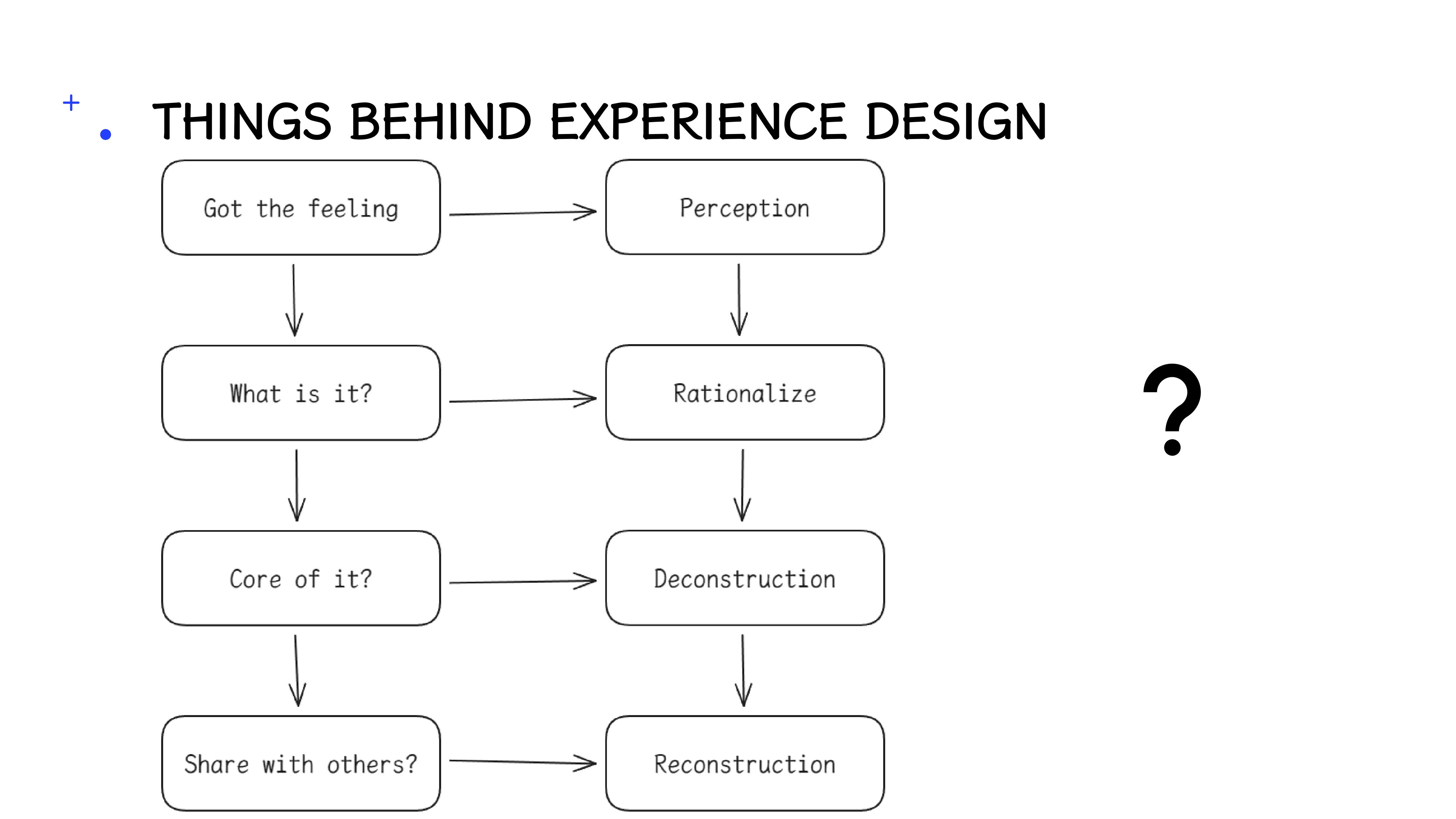
- Perception - Knowing a specific experience exists.
- Rational Analysis - Defining what this experience is.
- Deconstruction - Understanding the causes of the experience.
- Reconstruction - Using tools to reconstruct the experience to convey it to players.
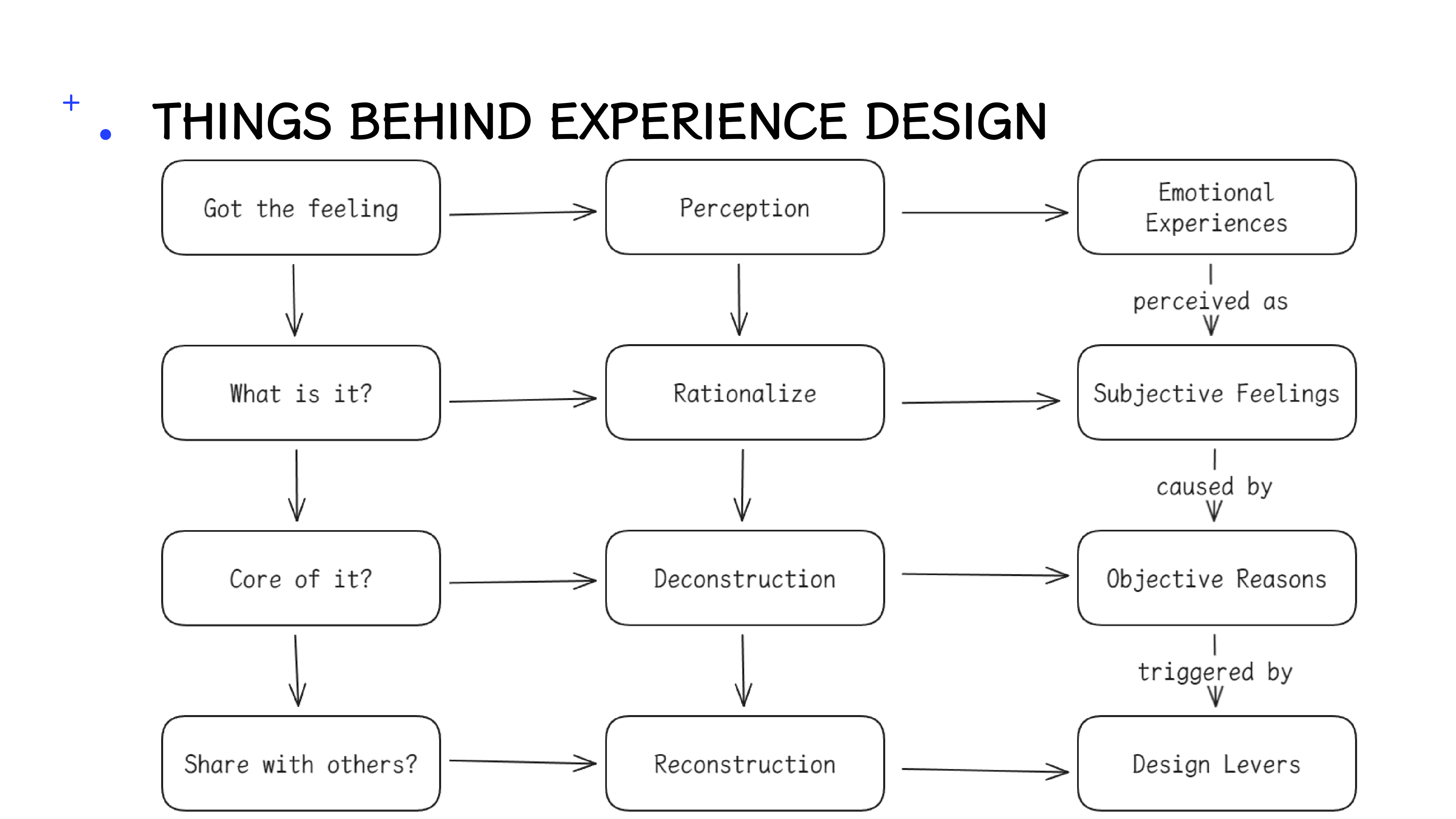
- [[感受 perception]] corresponds to [[情绪体验 Emotional Experiences]]
- [[理解 rationalize]] corresponds to defining what the [[主观感受 subjective feelings]] are
- [[解构 deconstruction]] corresponds to finding what the [[客观原因 objective reasons]] are
- [[重构 reconstruction]] corresponds to identifying what the [[设计杠杆 design levers]] are
Emotions are perceived as feelings; subjective feelings are caused by objective reasons; objective reasons are triggered by design levers.
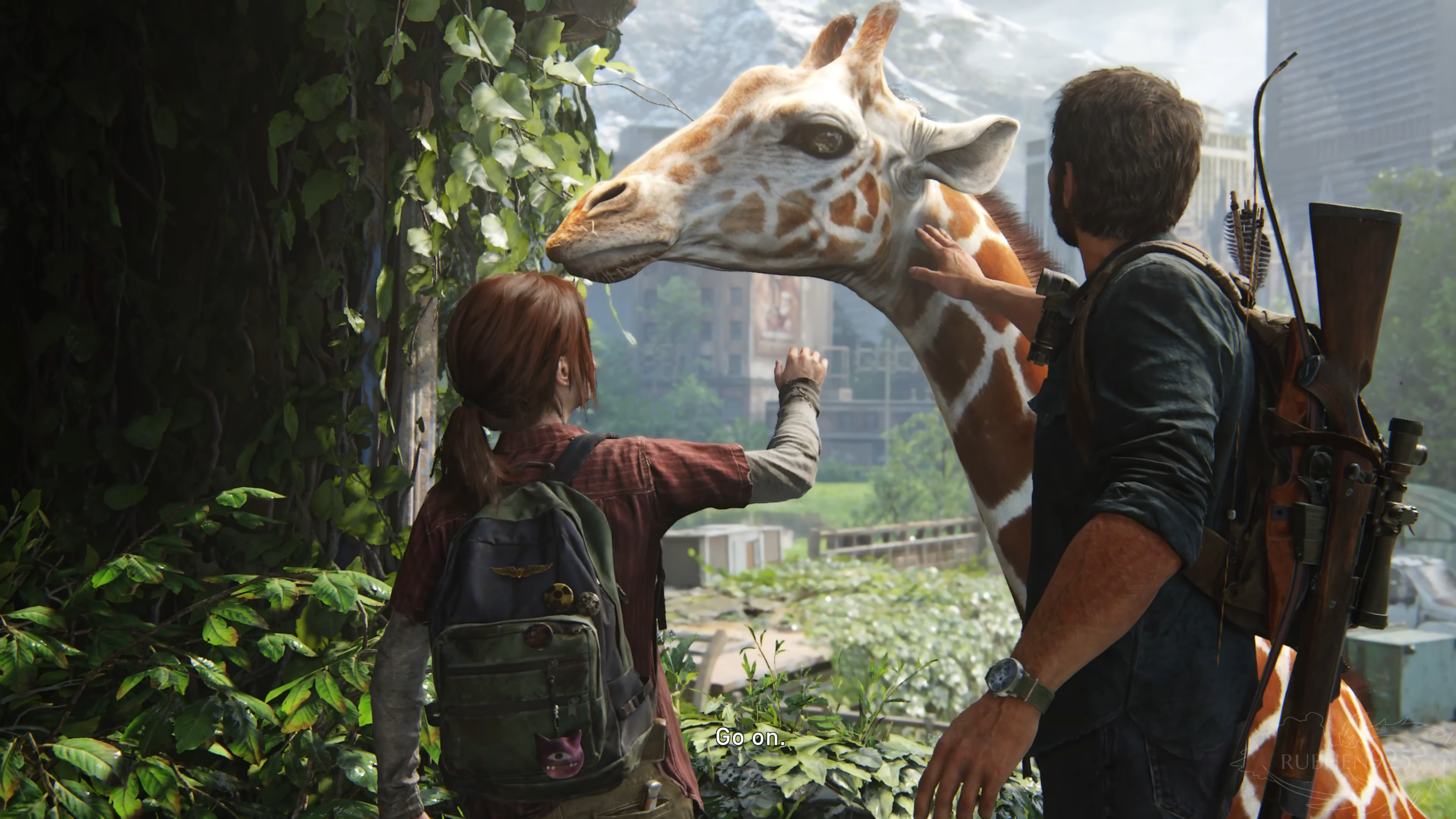
Next, I will use the classic Giraffe Scene from [[game - the last of us 1 最后生还者 1]] as an example to explain this construction method:
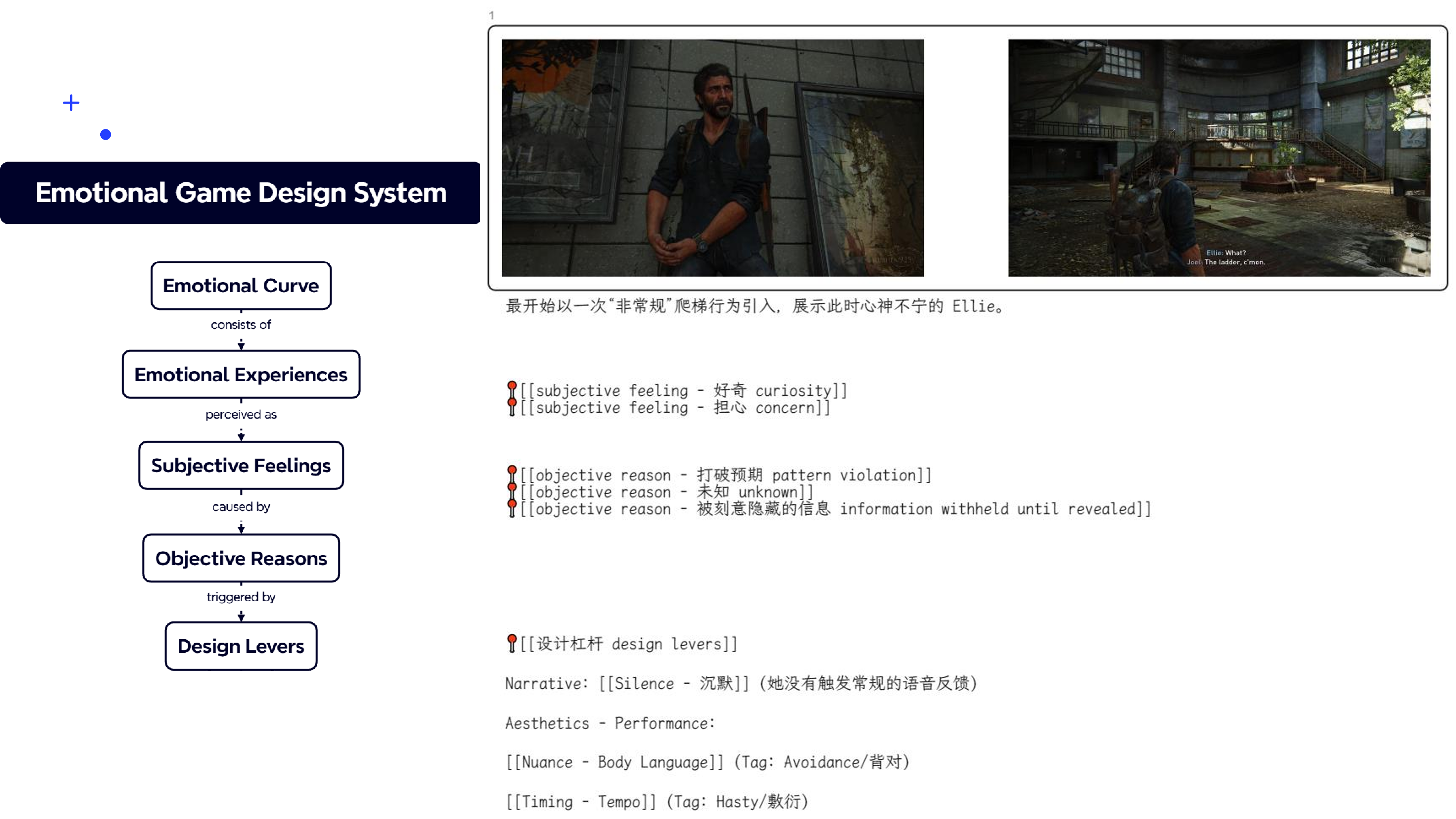
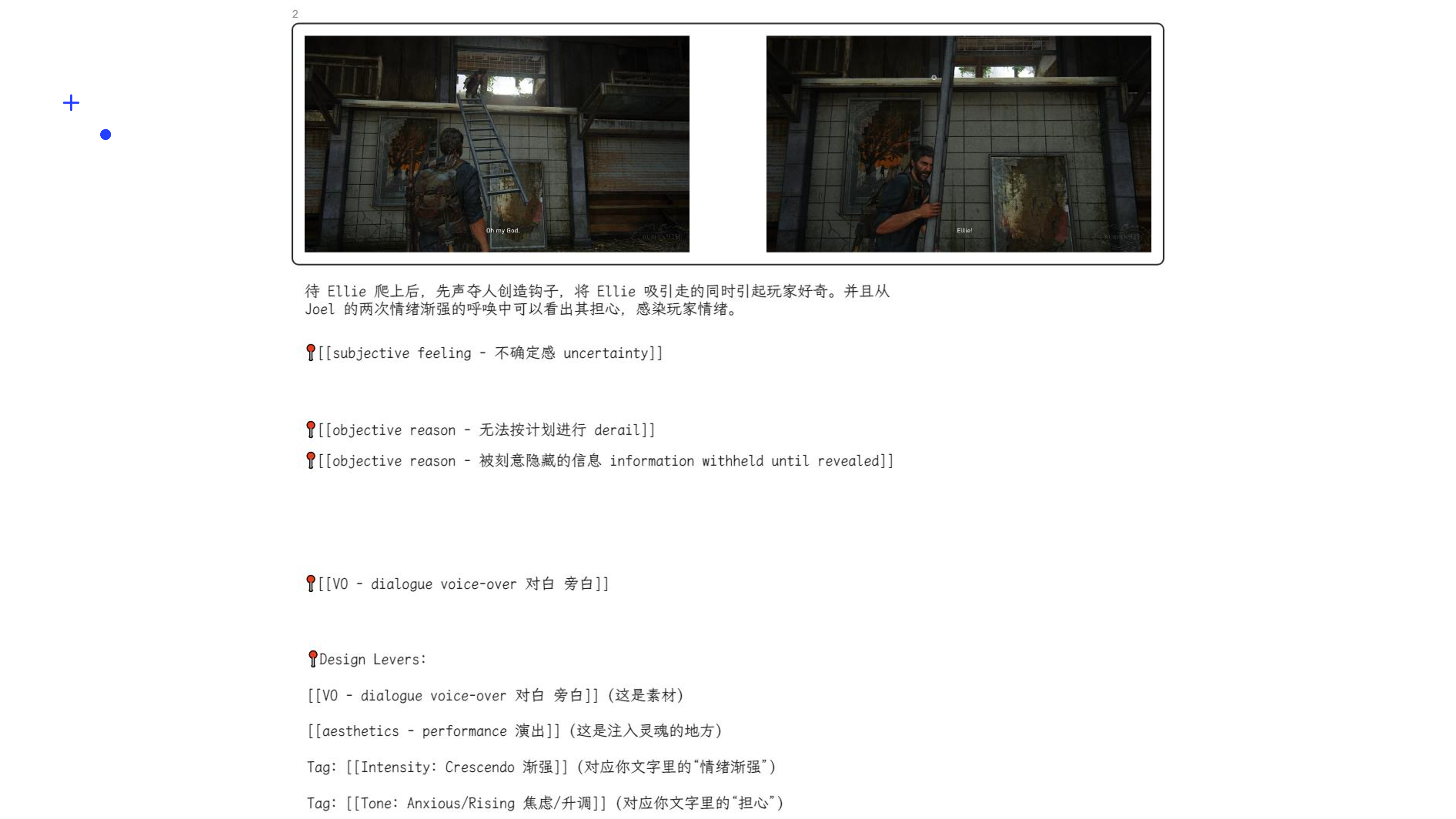
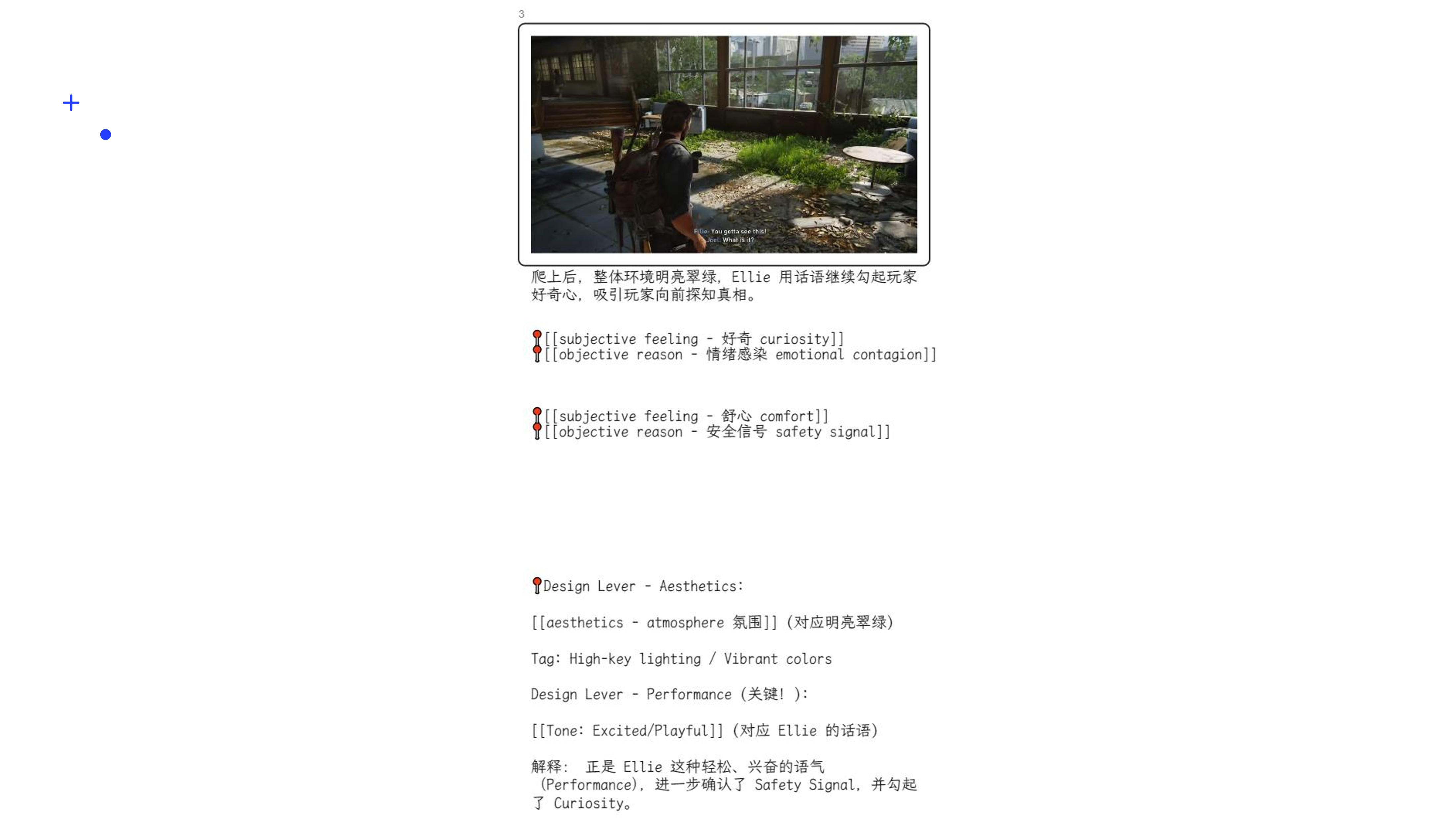
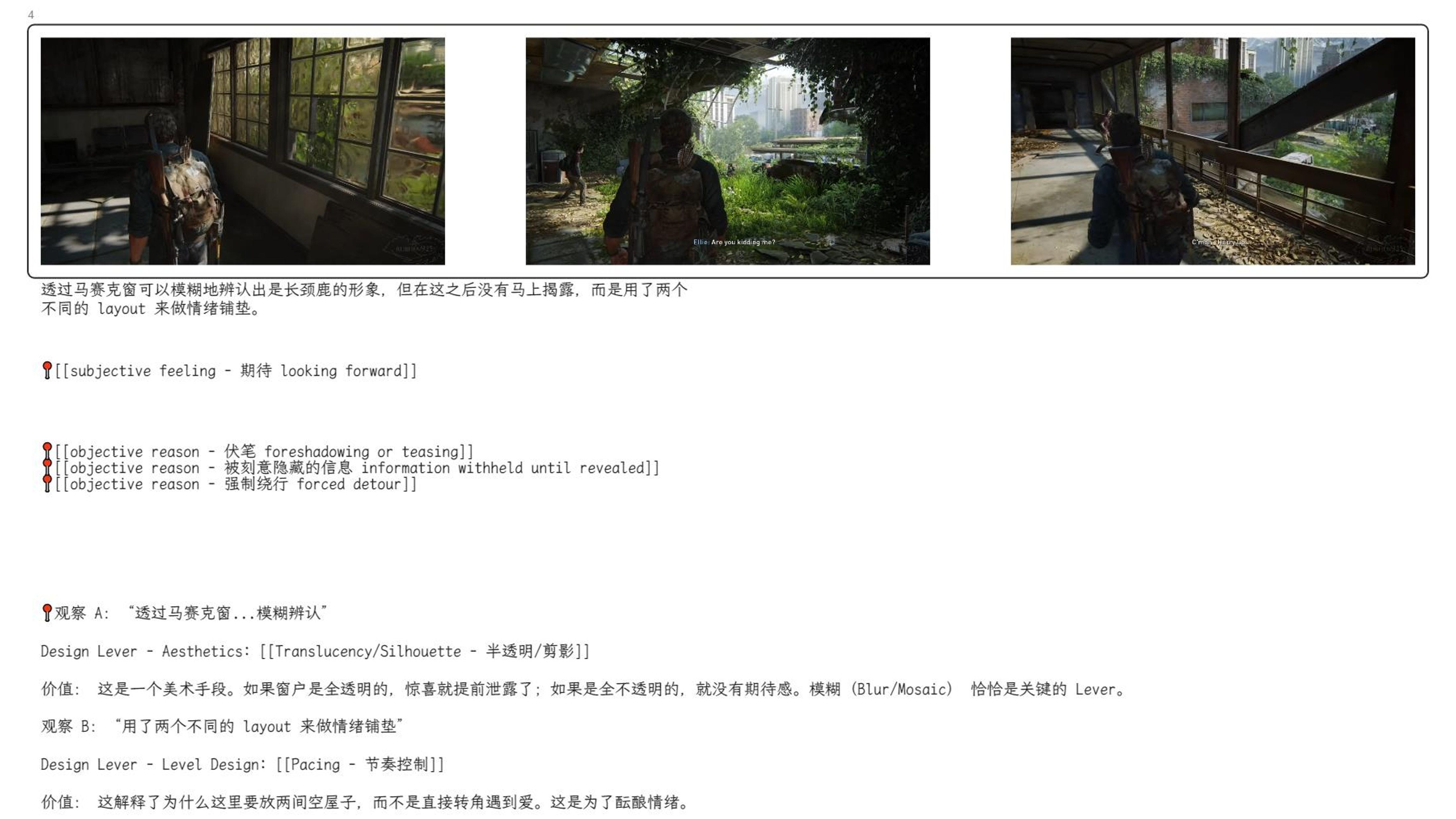
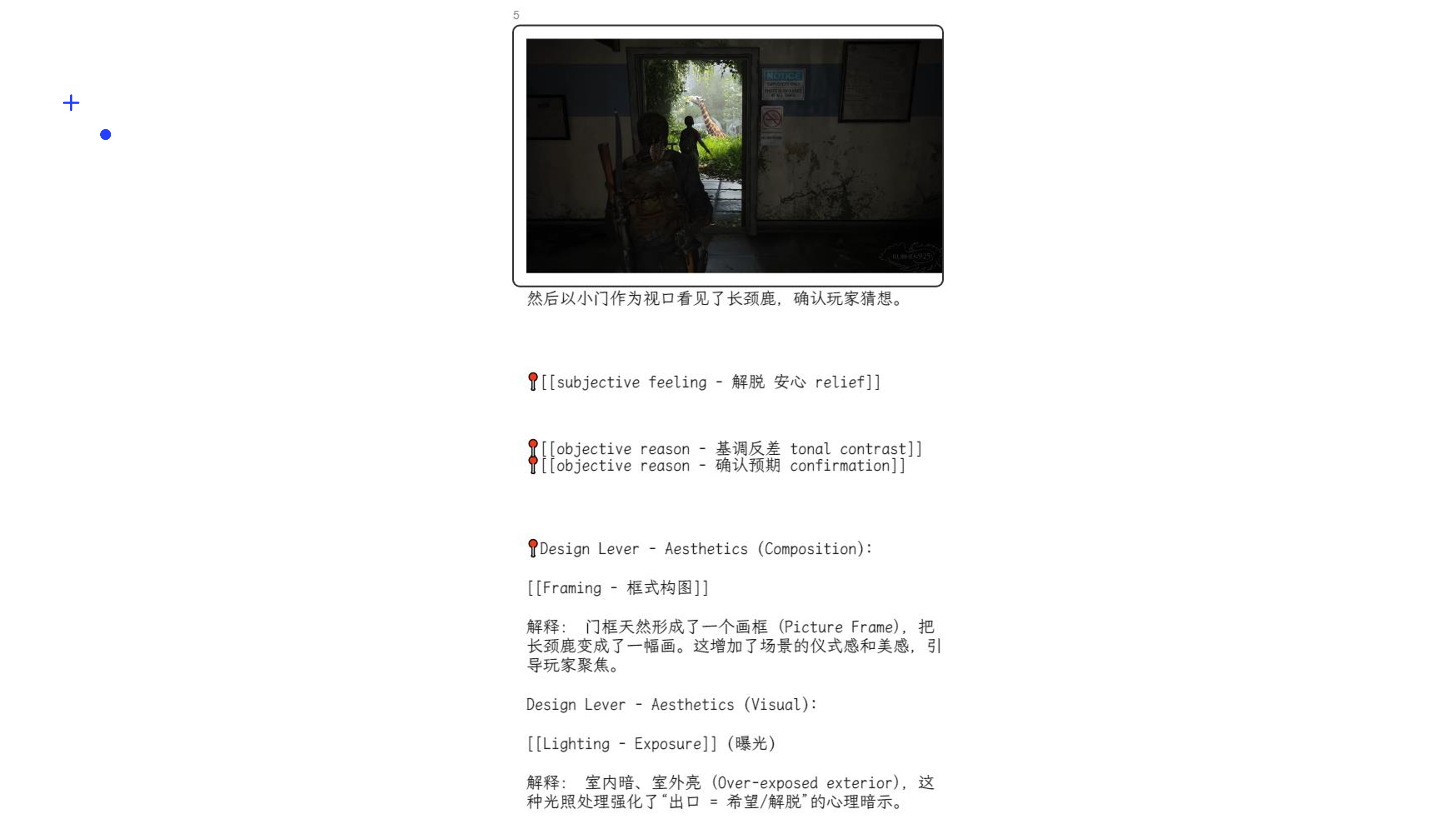
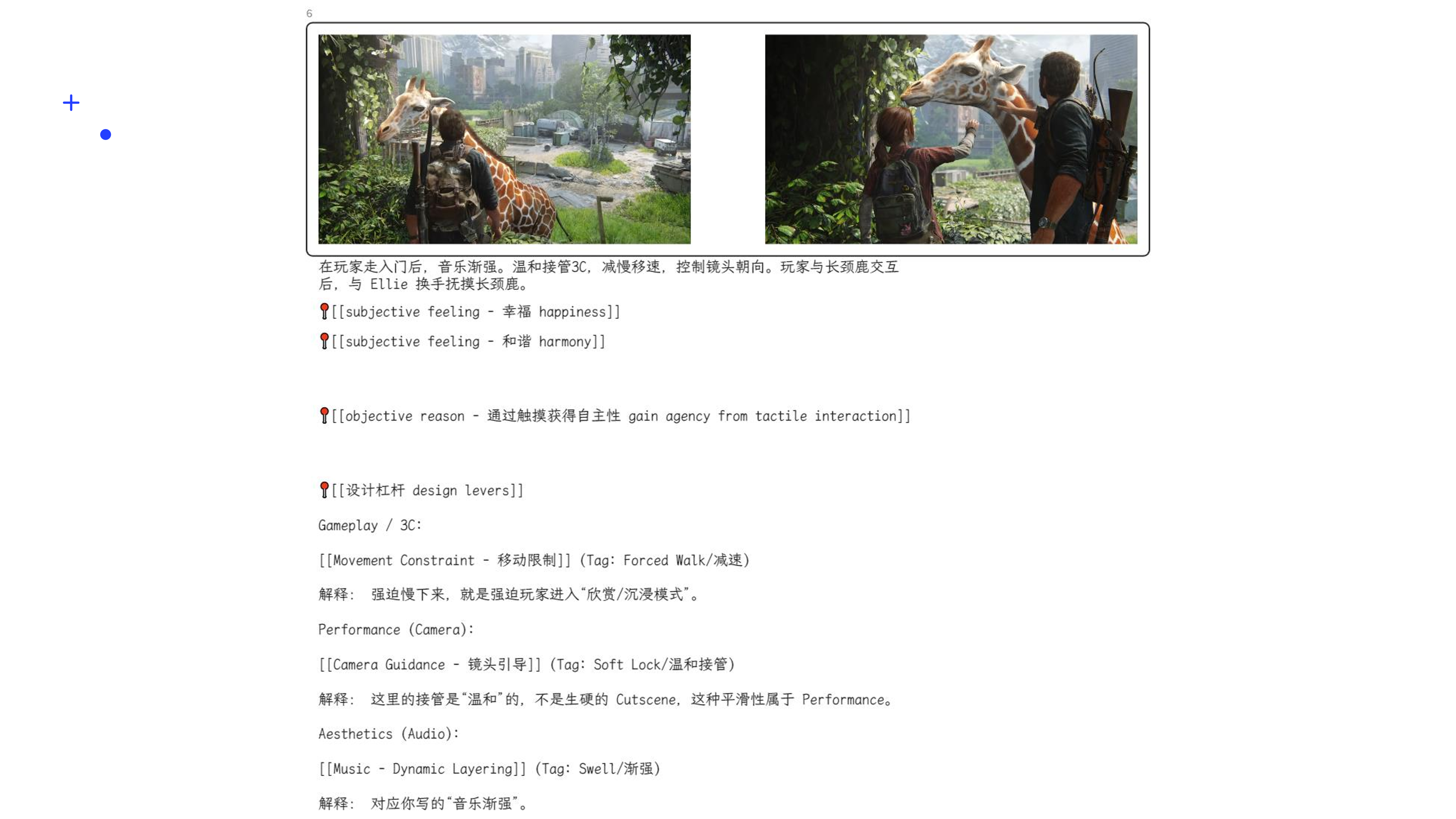
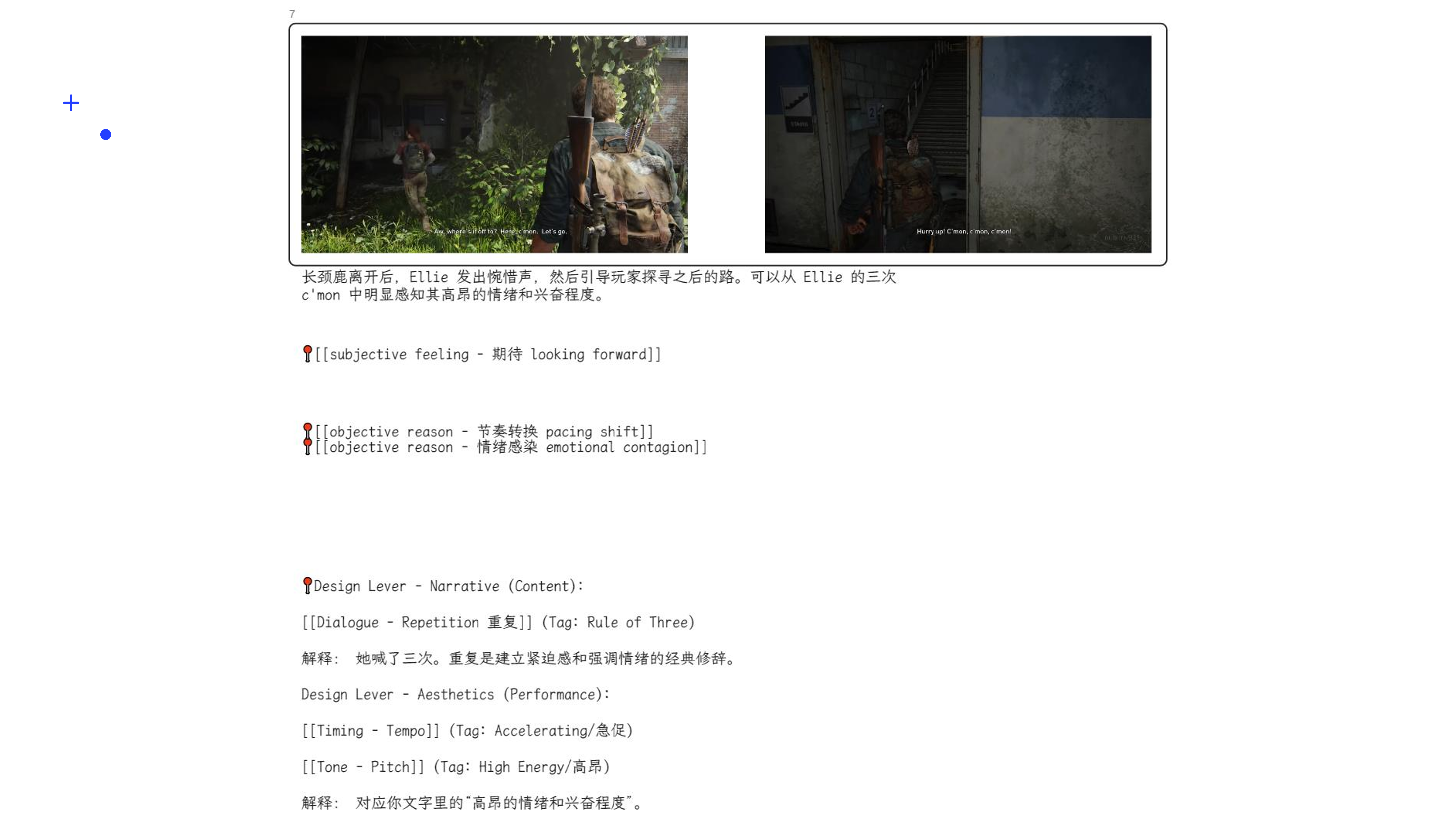
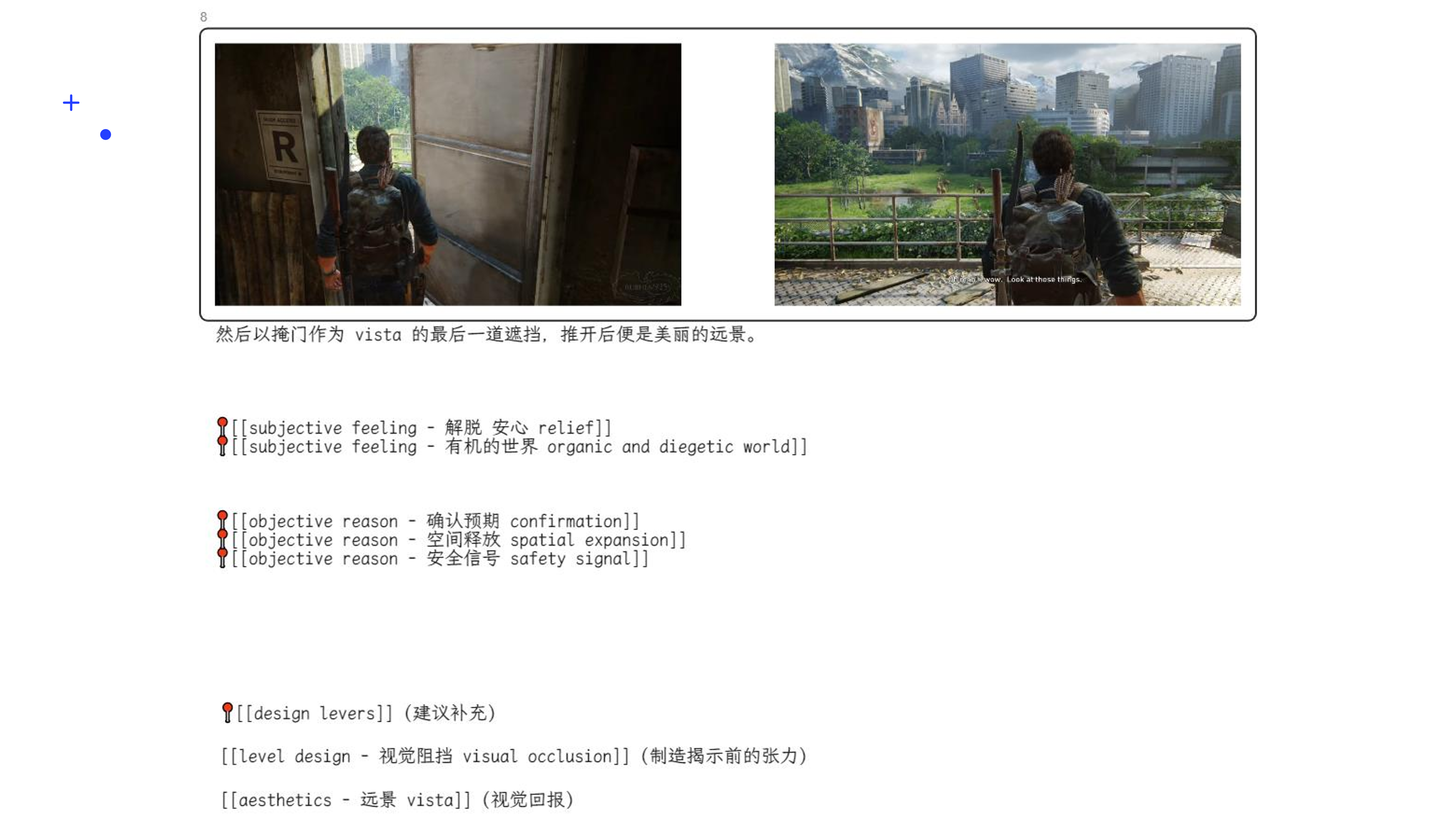
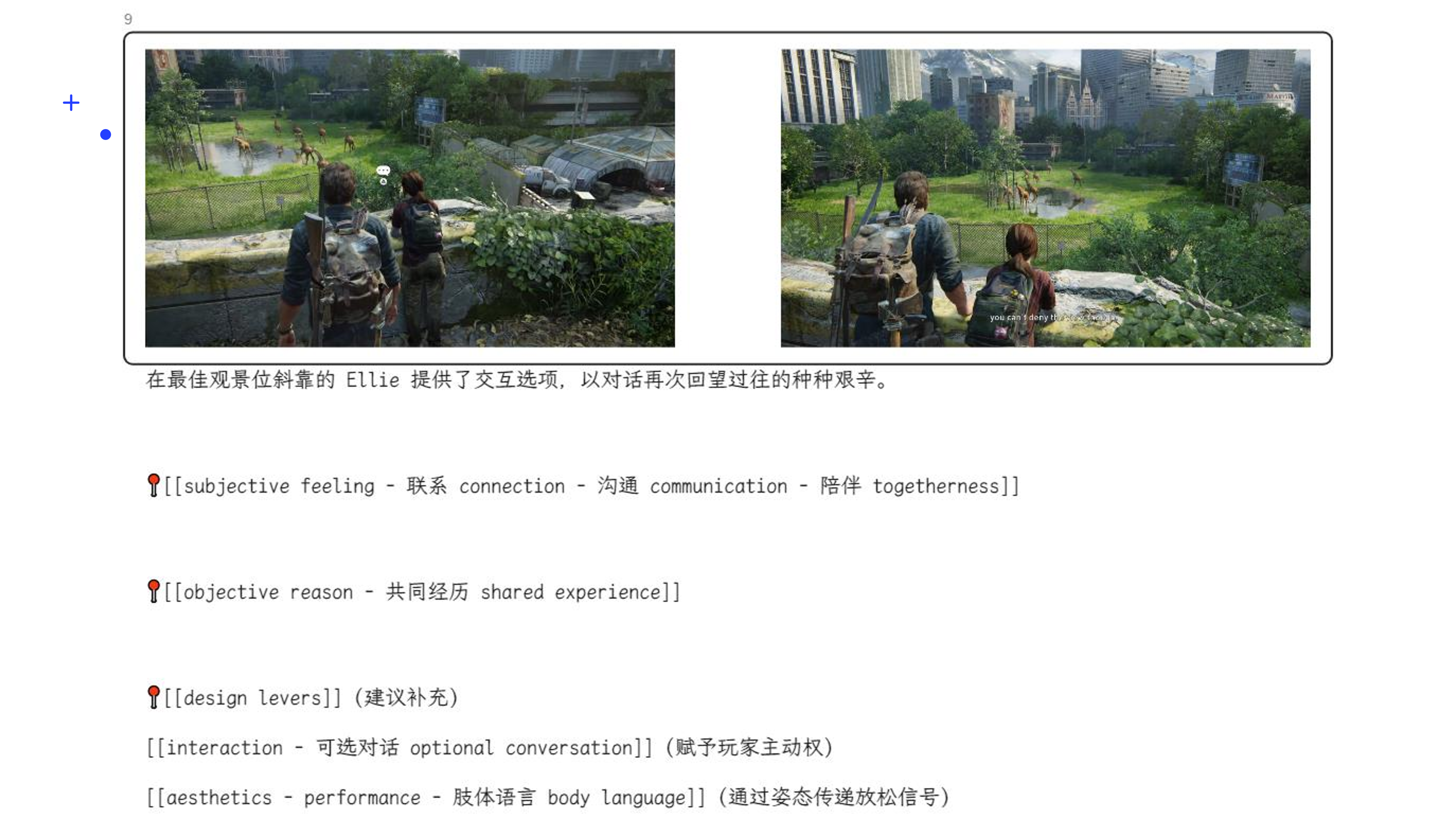
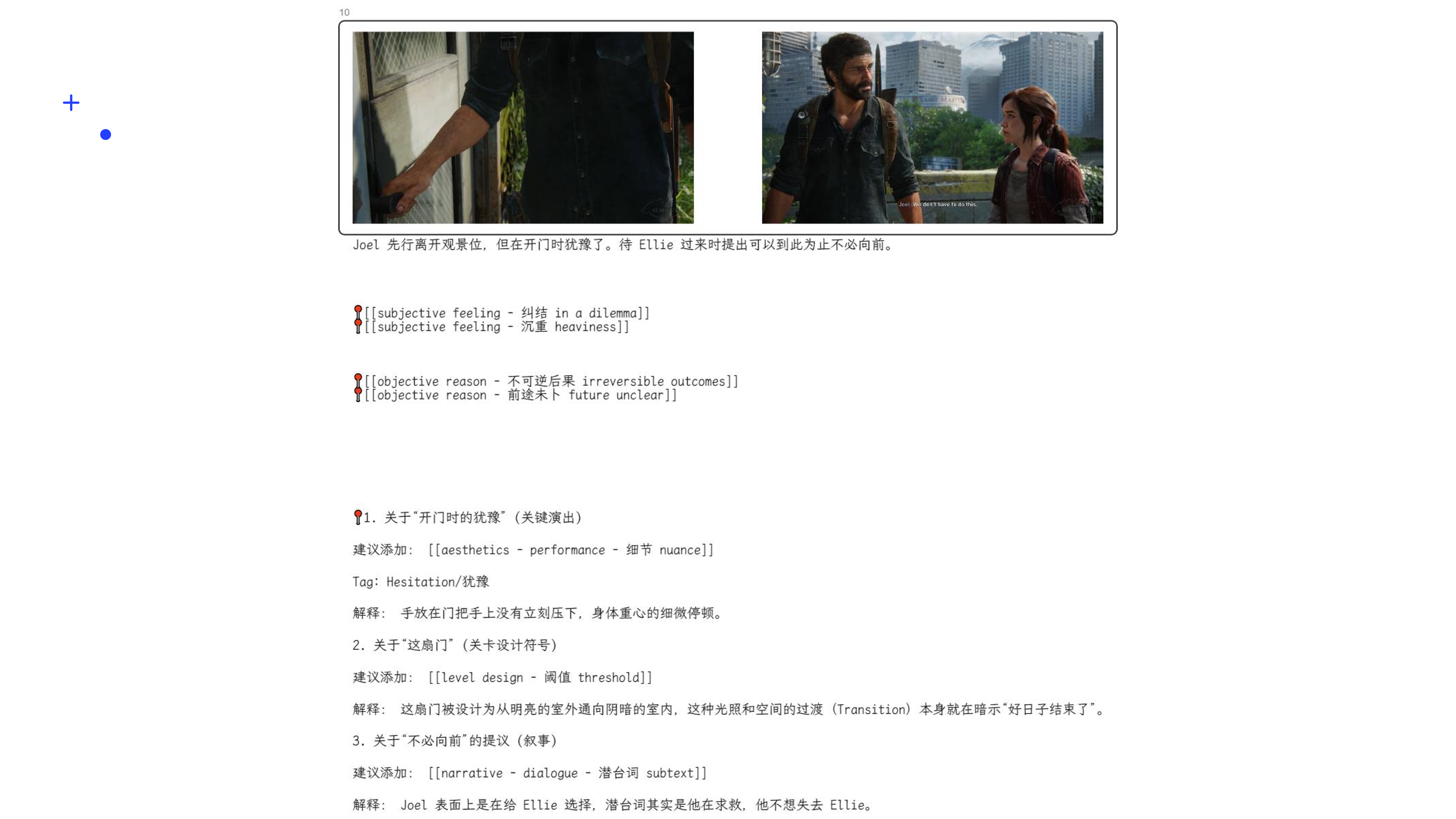
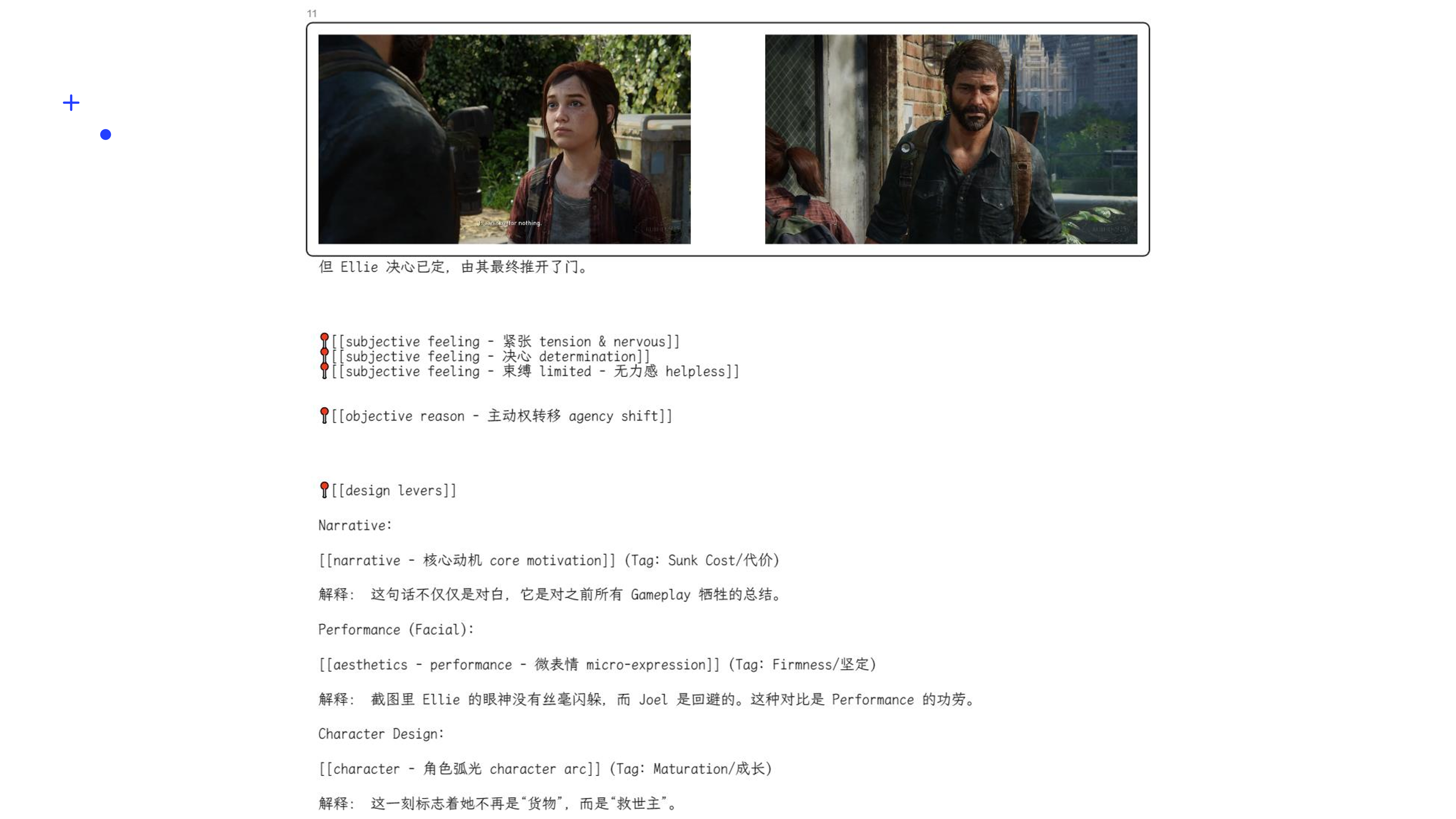
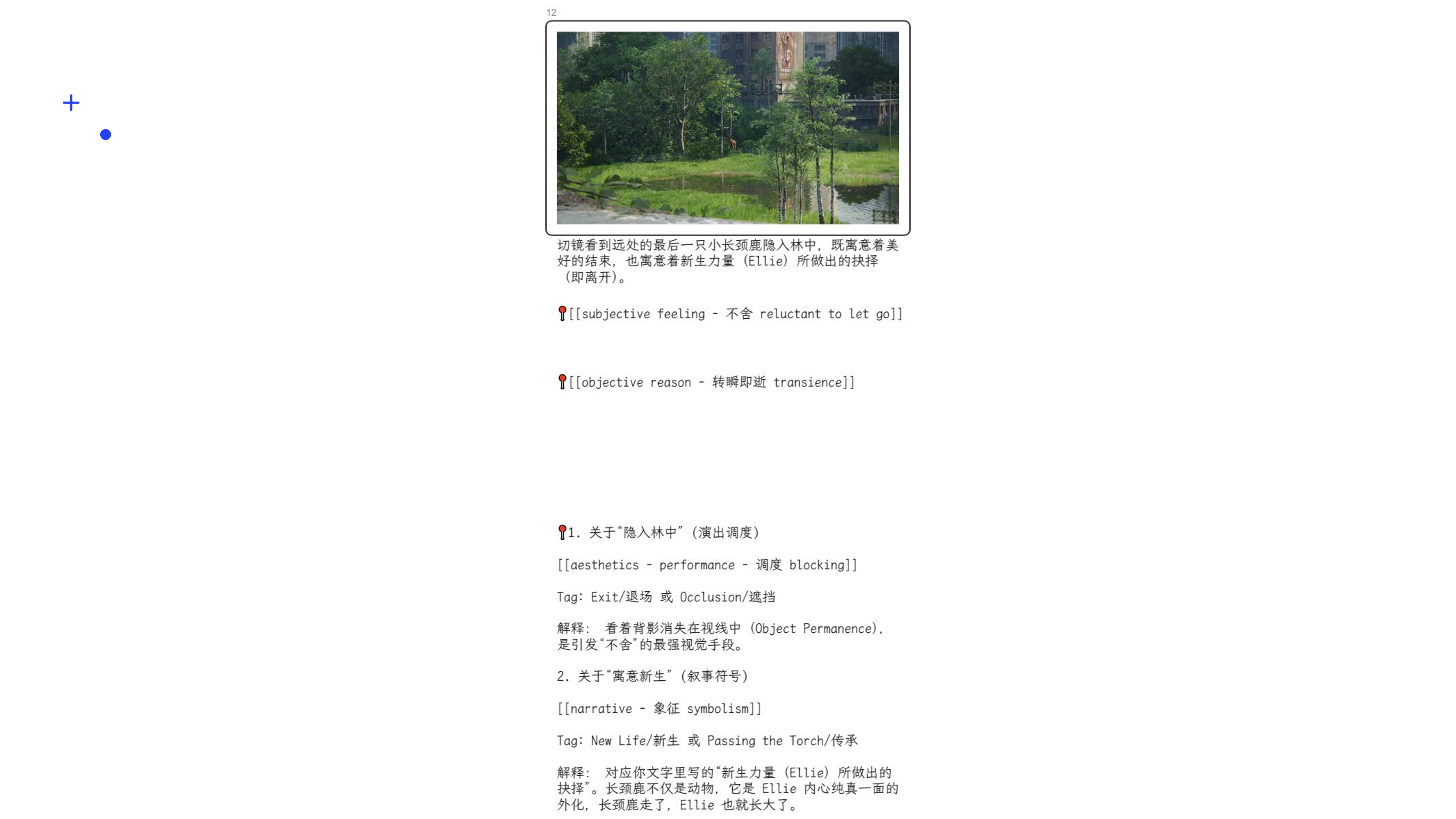
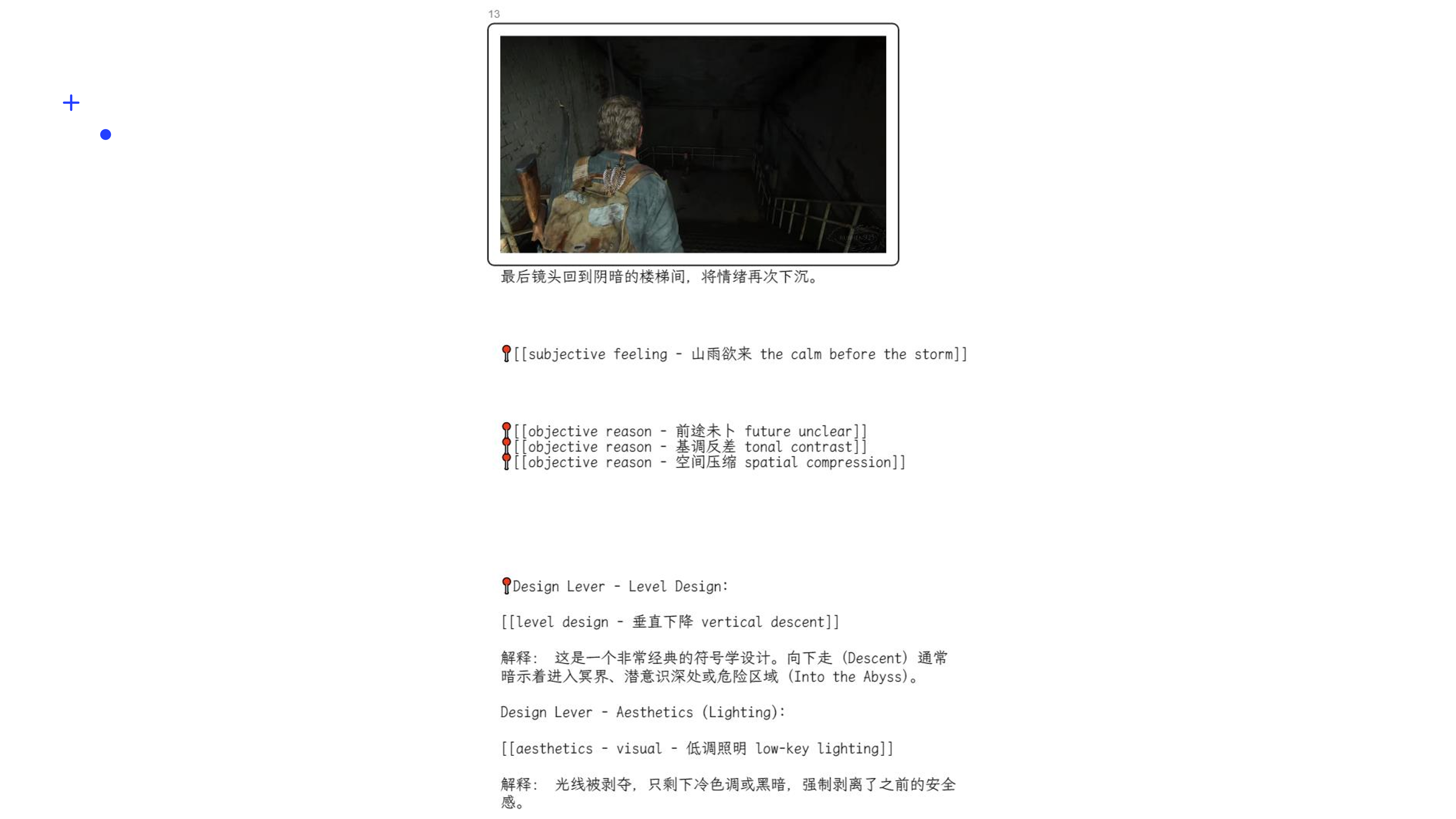
Through the analysis of this example, we can see how an emotional experience is decomposed step-by-step into subjective feelings, objective reasons, and their corresponding design levers.
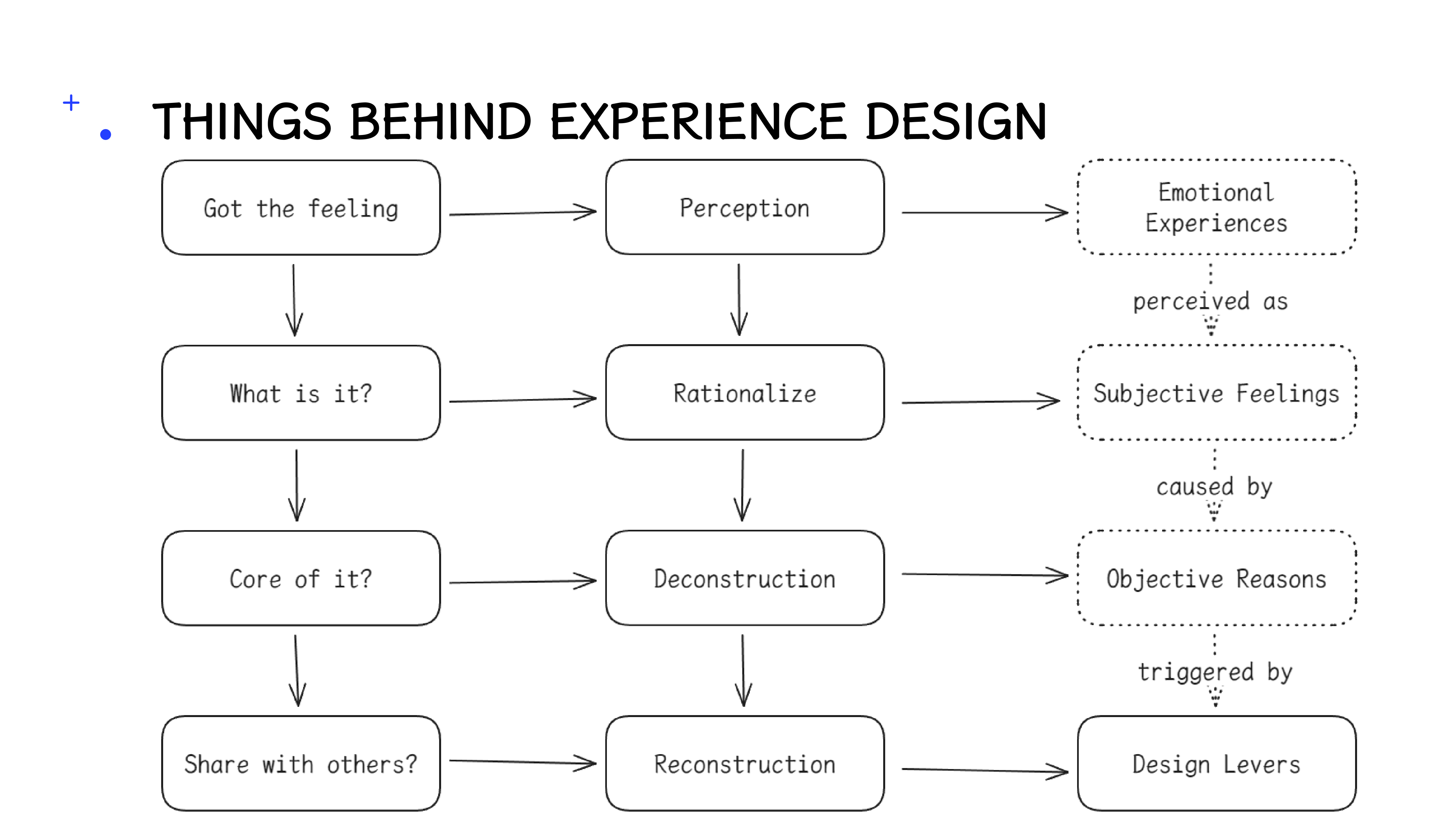
In my understanding, Emotional Experience, Subjective Feelings, and Objective Reasons are three elements more easily overlooked in the design context, whereas Design Levers are the “tools” most frequently discussed. Next, we will dissect Design Levers more deeply.
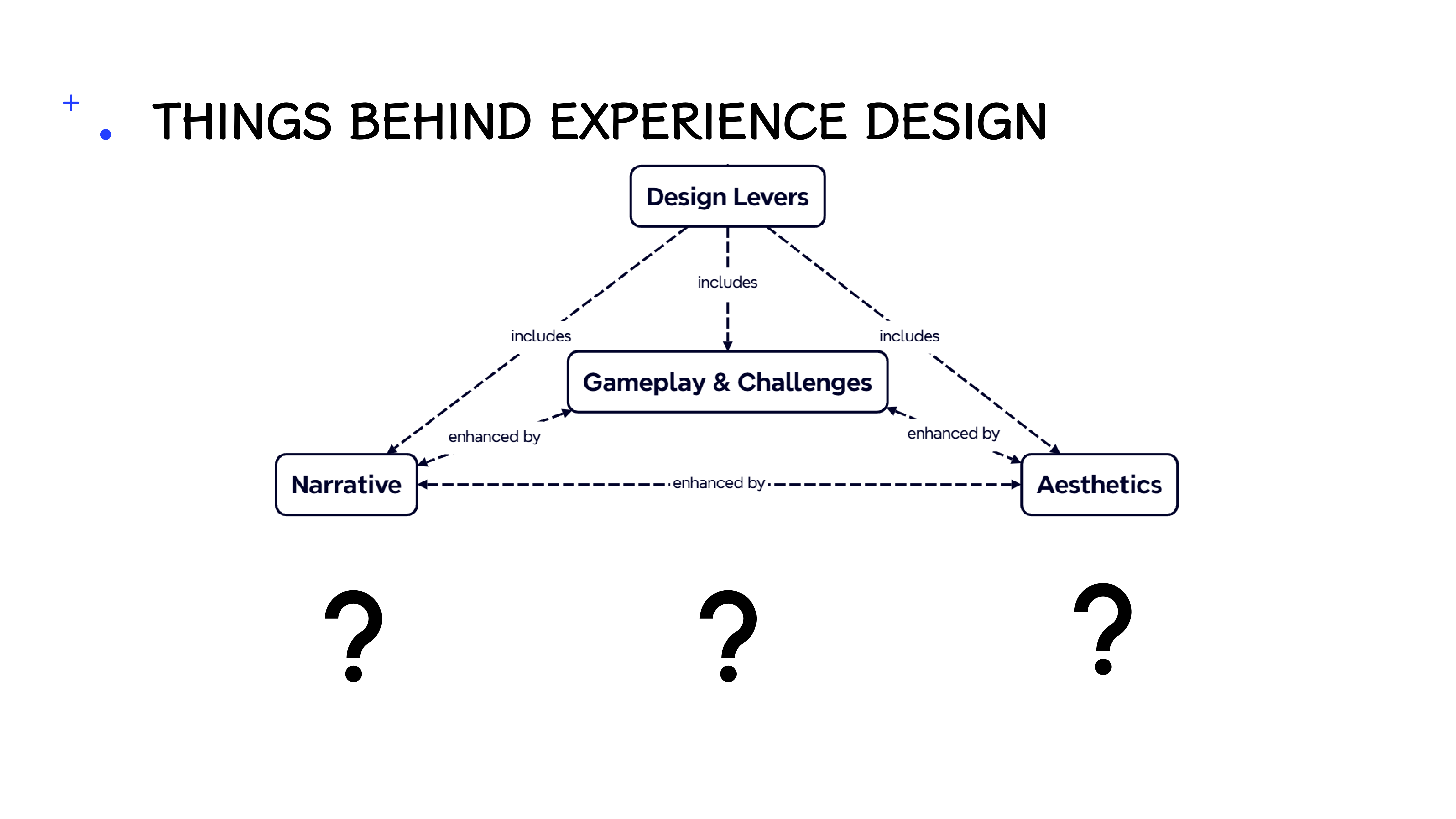
In EGDS, [[设计杠杆 design levers]] are divided into three main modules: [[玩法和挑战 gameplay & challenges]], [[叙事 narrative]], and [[美学 aesthetics]]. These three reinforce each other.
If [[叙事 narrative]] is pushed to the extreme, it exists in pure text form, becoming novels or literature; combining [[叙事 narrative]] and [[美学 aesthetics]] is essentially film; while the medium of games adds the dimension of [[玩法和挑战 gameplay & challenges]] on top of this. The combination of all three is, in my view, the ideal game form.
Designing these three corresponds to different capabilities. What might they be?
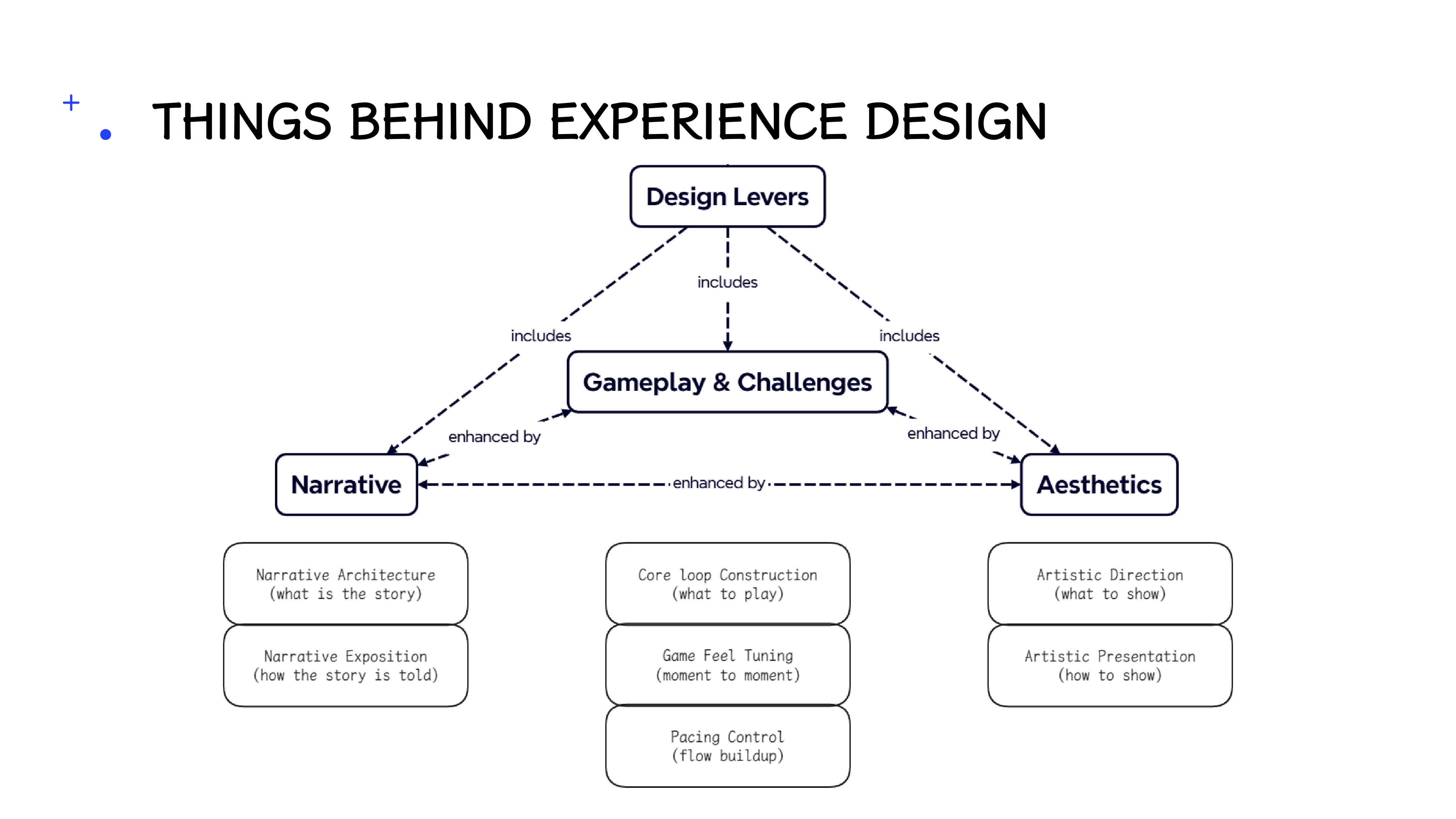
[[叙事 narrative]] mainly requires two capabilities: [[叙事建构 narrative architecture]] (What is the story) and [[叙事呈现 narrative exposition]] (How to tell the story). [[美学 aesthetics]] requires similar skills: [[美学指导 artistic direction]] (What to present) and [[美学表达 artistic presentation]] (How to present it). [[玩法和挑战 gameplay & challenges]] involve a more dynamic process:
- [[构建核心循环 core loop construction]] ability: What the player actually plays. When I was revolving around mechanics in my first year, this was the primary capability I trained.
- [[打磨手感 game feel tuning]] ability: The so-called “Moment to moment” experience. This is the main part of the objective reasons causing subjective feelings.
- [[节奏把控 pacing control]] ability: This relates more to pacing in level design, such as the classic “Introduction, Development, Twist, Conclusion” (Ki-Sho-Ten-Ketsu) theory adopted by Nintendo.
Each of these parts could be expanded into a separate article, but since the purpose of this discussion is “mapping,” I will stop here.
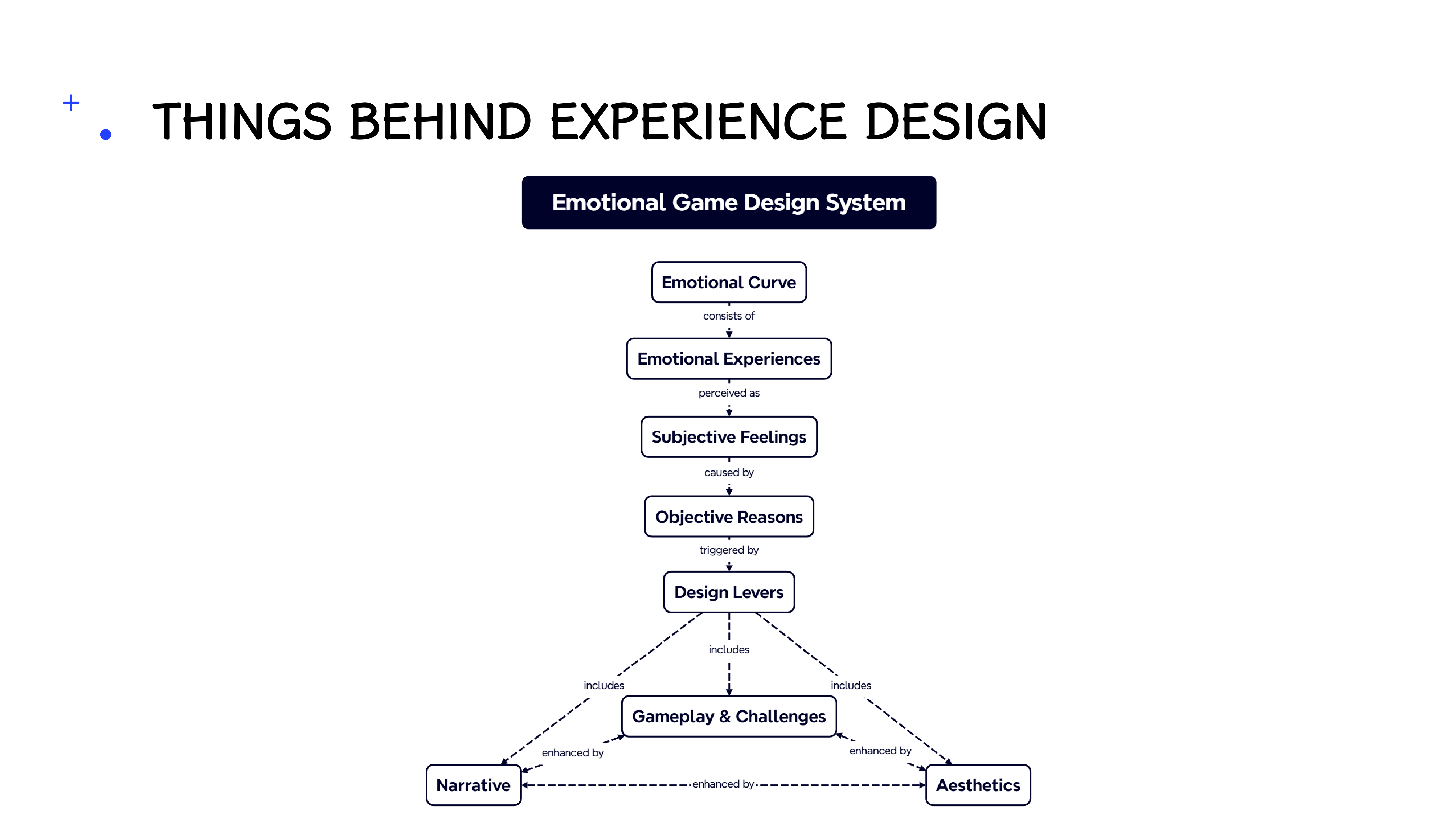
This introduces the complete framework of the current version of EGDS:
- The ultimate goal of [[情感化游戏设计系统 emotional game design system - EGDS]] is to construct the [[情绪曲线 emotional curve]].
- The [[情绪曲线 emotional curve]] is composed of individual [[情绪体验 Emotional Experiences]].
- [[情绪体验 Emotional Experiences]] are perceived as [[主观感受 subjective feelings]].
- [[主观感受 subjective feelings]] can be explained by [[客观原因 objective reasons]].
- [[客观原因 objective reasons]] can be triggered by [[设计杠杆 design levers]] (these elements can also reinforce each other).
- [[设计杠杆 design levers]]
- [[玩法和挑战 gameplay & challenges]]
- [[叙事 narrative]]
- [[美学 aesthetics]]
- [[设计杠杆 design levers]]
- [[客观原因 objective reasons]] can be triggered by [[设计杠杆 design levers]] (these elements can also reinforce each other).
- [[主观感受 subjective feelings]] can be explained by [[客观原因 objective reasons]].
- [[情绪体验 Emotional Experiences]] are perceived as [[主观感受 subjective feelings]].
- The [[情绪曲线 emotional curve]] is composed of individual [[情绪体验 Emotional Experiences]].
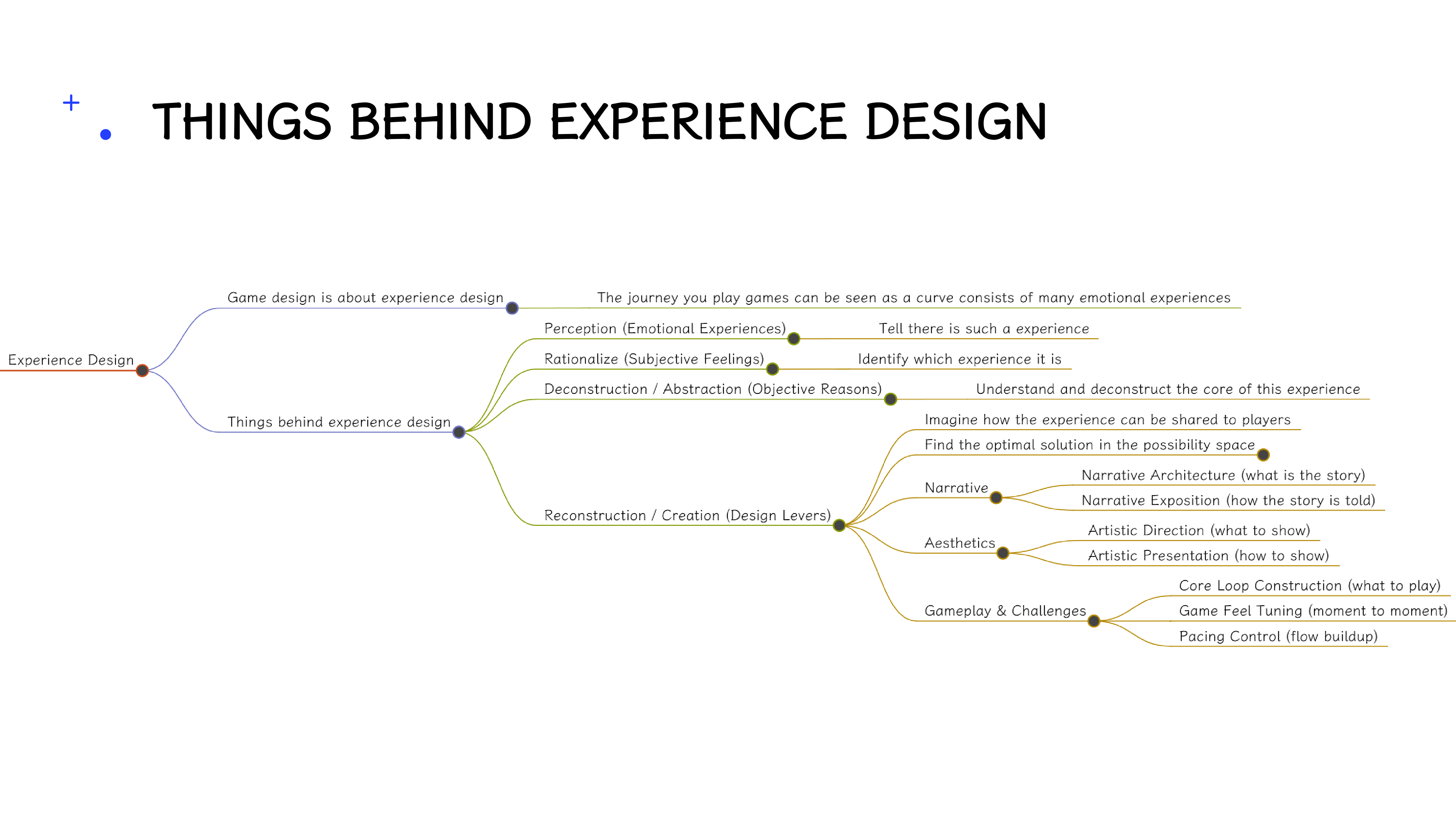
Thus, the loop of experience design is complete:
- Game Design is Experience Design.
- The process of Experience Design includes:
- [[感受 perception]]
- First, knowing the experience exists.
- [[理解 rationalize]]
- Then, being able to identify exactly what experience it is.
- [[解构 deconstruction]]
- After that, understanding the core of the experience and its objective reasons.
- [[重构 reconstruction]]
- Finally, utilizing all design levers to reconstruct it based on the core experience.
- Reconstruction is a process of finding the relative optimal solution in a possibility space.
- Sims designer [[Will Wright]] describes design as a process of continuous pruning.
- Reconstruction requires utilizing multiple different design levers:
- [[叙事 narrative]]
- [[美学 aesthetics]]
- [[玩法和挑战 gameplay & challenges]]]]
- [[感受 perception]]
Everything mentioned above could be considered theoretical (“paper design”). Next, we touch upon capabilities related to implementation.
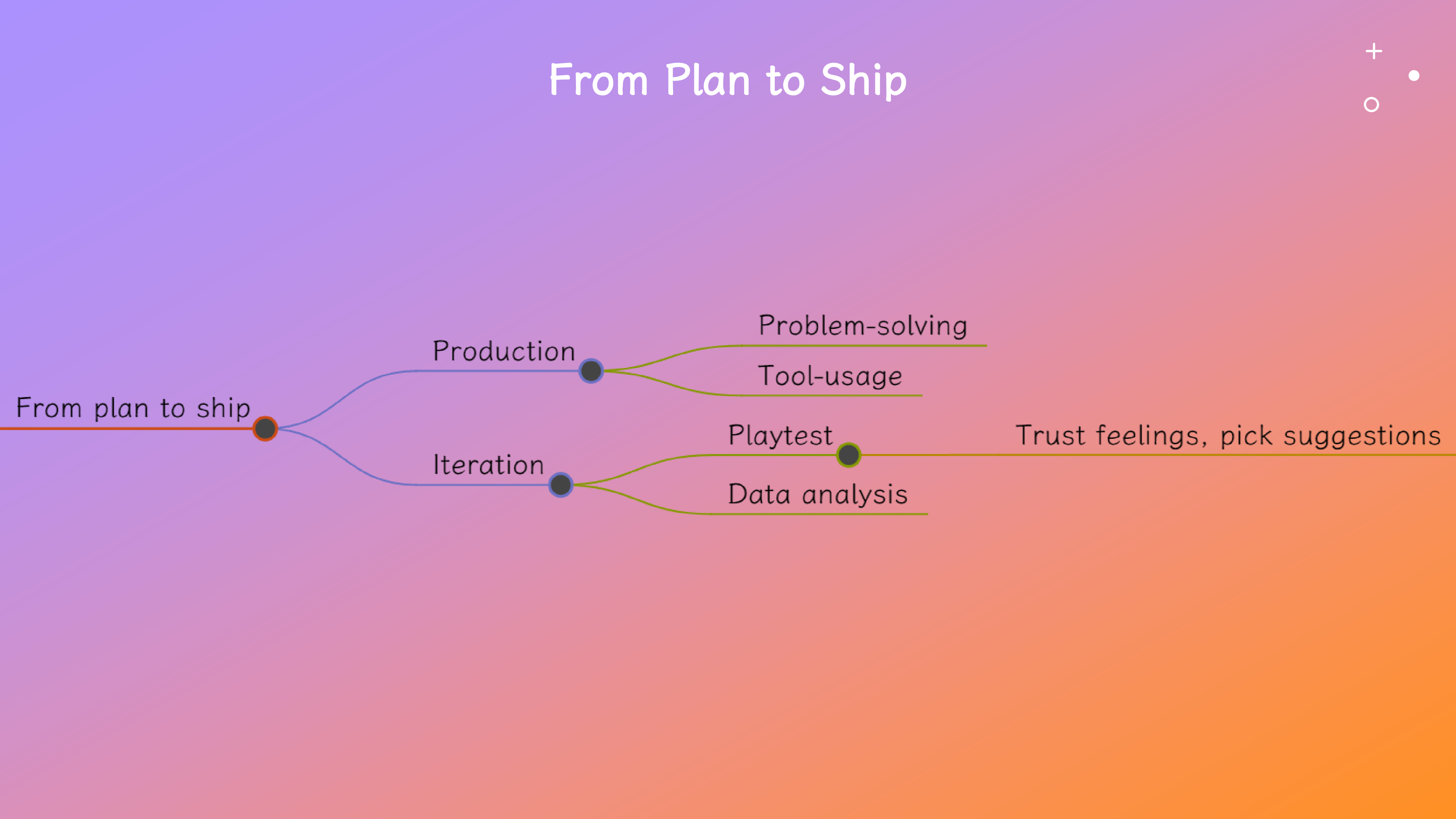
From planning to landing, broadly speaking, covers two major aspects:
- [[生产 production]]
- Primarily requires [[解决问题 problem-solving]] ability.
- Because game production is a complex engineering feat covering multi-disciplinary knowledge, often there are no ready-made solutions, requiring flexibility and actively seeking potential solutions.
- Secondly, basic [[工具使用 tool-usage]] ability.
- Such as game engine-related skills, or project management tools related to efficiency.
- Primarily requires [[解决问题 problem-solving]] ability.
- [[迭代 iteration]]
- [[Playtest]] is an important tool for iteration.
- A key point is to trust the tester’s feedback, but be selective about the suggestions they offer.
- For specific content, refer to the previous discussion: How to run a good Playtest.
- [[数据分析 data analysis]]
- After testing, results need to be analyzed and summarized as a basis for iteration.
- [[Playtest]] is an important tool for iteration.
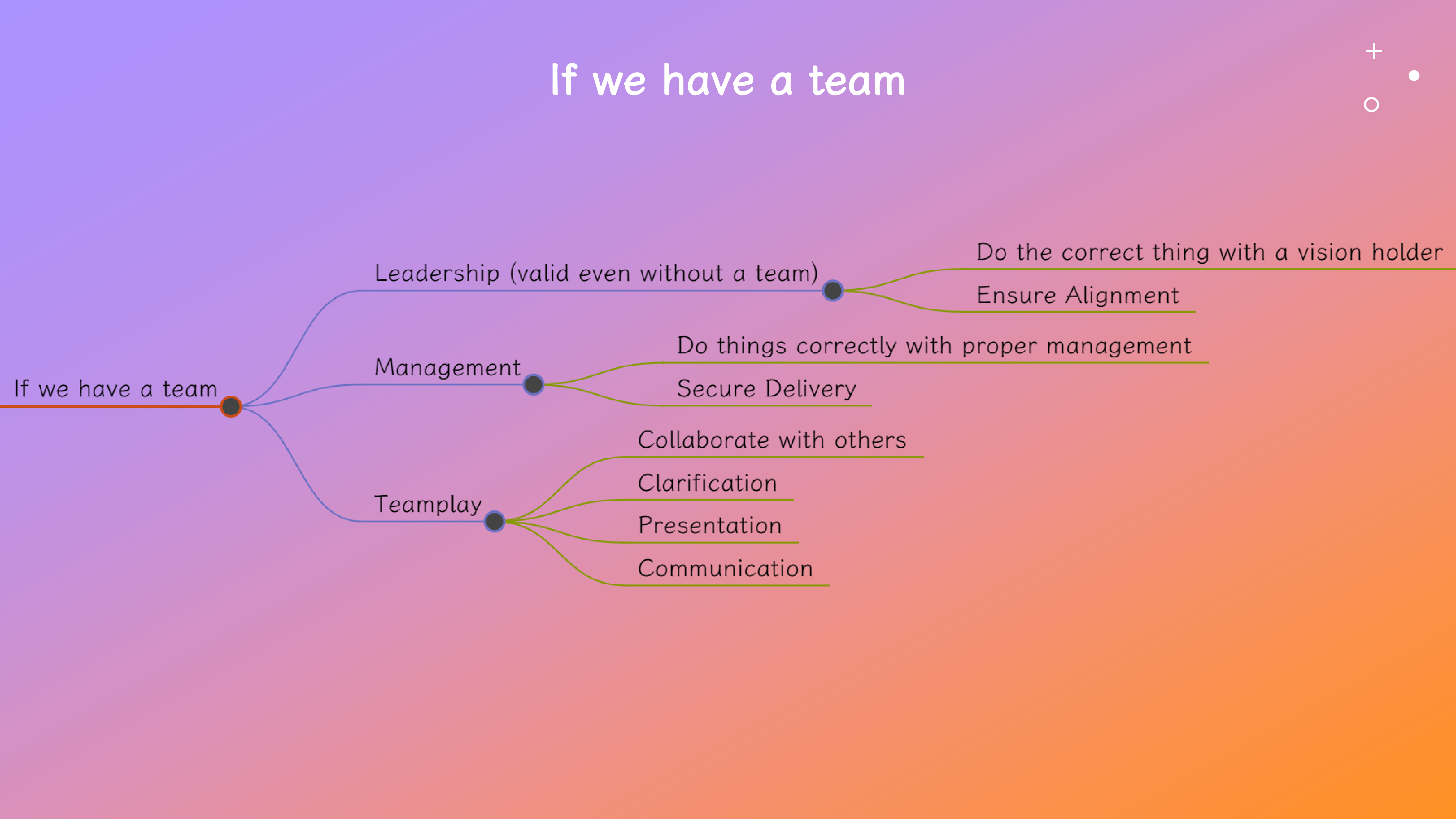
Often, making games involves more than one person, bringing in teamwork-related capabilities:
- First is [[领导力 leadership]].
- The ability to guide the team to do the right thing. This applies even to a one-person team.
- Regardless of team size, a distinct Vision Holder is needed. Only with a clear vision and continuous movement towards it can the final goal be reached.
- The core of [[领导力 leadership]] is ensuring team alignment.
- The role corresponding to this ability is usually the [[创意导演 creative director]]. The CD needs to possess a clear vision and convey it accurately to team members.
- Second is [[管理 management]].
- This corresponds to the ability to ensure the team _does things right_—ensuring delivery.
- Finally, Teamplay (Collaboration).
- For designers, this usually involves:
- The ability to define problems clearly.
- The ability to present information accurately.
- Communication skills with other members.
- For designers, this usually involves:
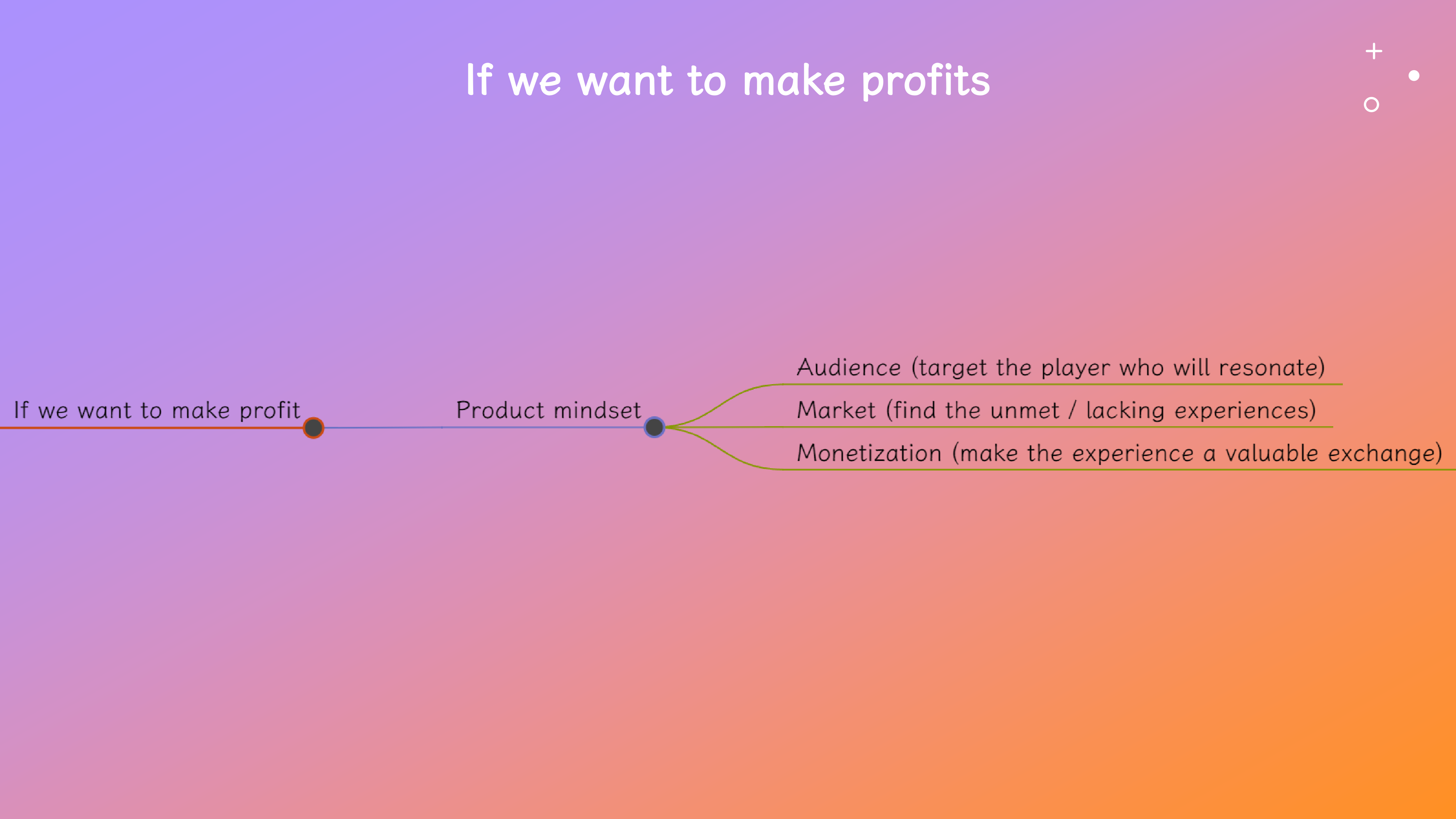
If we also consider profitability, we need the so-called [[产品思维 product mindset]].
- Consider Target Players.
- I don’t like the term “target user,” as it sounds like a group unrelated to oneself.
- I tend to understand our target players from the perspective of experience: the group of players who can perceive the experience we want to convey and resonate with it.
- Market Gap.
- I also tend not to understand “market gaps” from a genre perspective, but rather consider which experiences in the market have not yet been satisfied, or which experiences have not yet been presented.
- And Business Model.
- Viewing it as what players exchange for this experience.
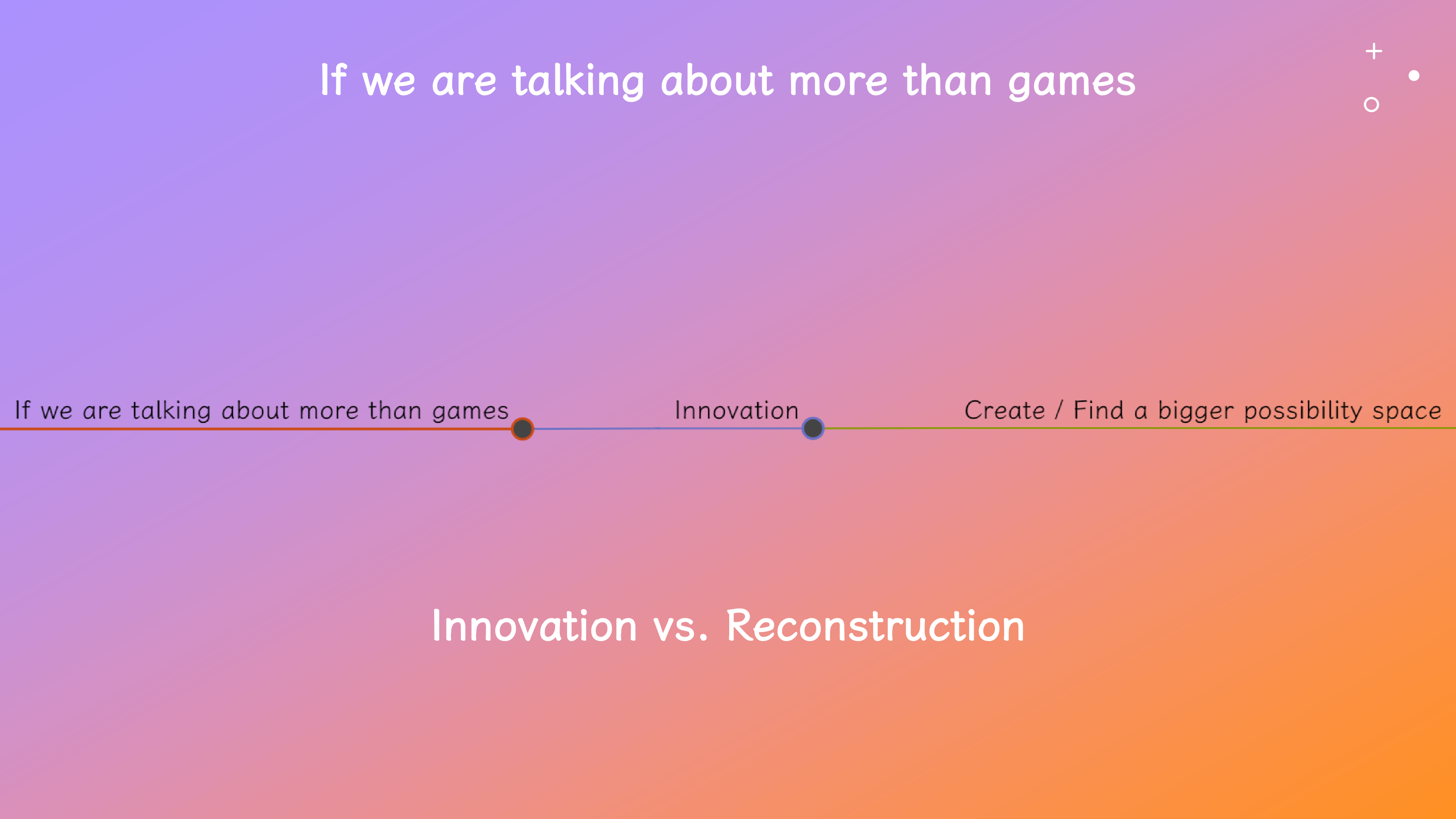
Finally, a more open capability: [[创新 innovation]]. Here I want to contrast it with the [[重构 reconstruction]] capability.
If reconstruction is the ability to find the relative optimal solution within a possibility space, then I believe innovation is the ability to open up new possibility spaces - for example, introducing new media, or presenting an experience in a way that has never been done before.
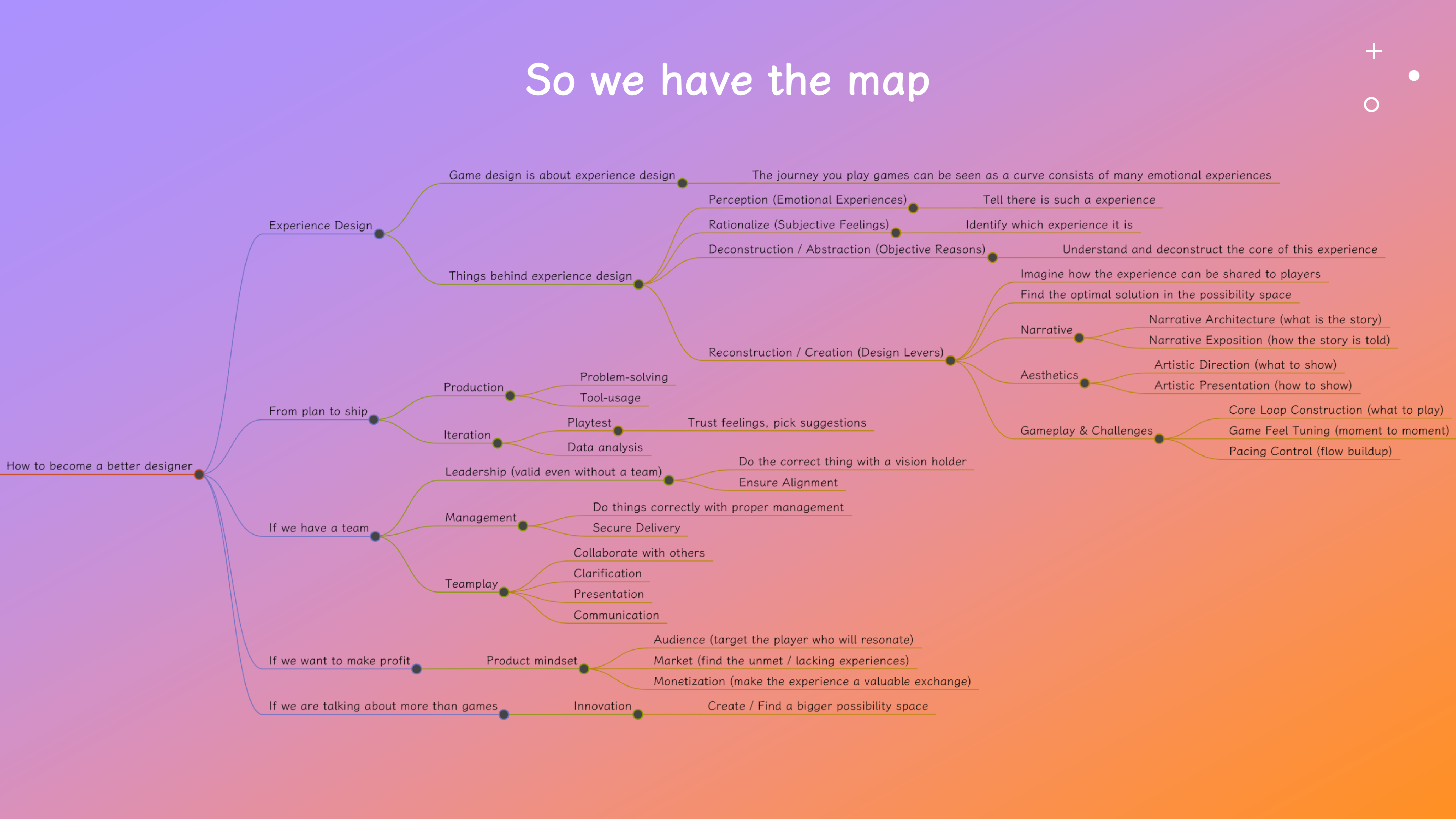
Thus, we have our current map.
If game design is experience design, then we need to understand the essential capabilities behind experience design (Perception-Rationalize-Deconstruction-Reconstruction), and possess the capabilities to land the design (Production, Iteration). Additionally, we need to consider teamwork (Leadership, Management, Collaboration), profitability (Product Mindset), and Innovation.
Let’s revisit the answer to “How to become a better designer”:
- Know where you are heading for (Have a map).
- Know where you are (Know yourself).
- Keep learning, thinking, practicing (Prepare).
I hope you can find your own answer too.
That’s all for this discussion, thank you! If you are willing, you can also help fill out this questionnaire to provide any feedback~ See you next time!
SUMMARY
“How to become a better designer” is a question I have constantly pondered. From revolving around mechanics at the very beginning, to gaining a more global perspective, to starting to think from the angle of experience design, and later creating EGDS. After participating in Game Jams and similar events as a team, I began thinking from perspectives outside of design, leading to the current framework. There may be many oversights, but I hope to discuss this thinking process and results with more people, sparking new ideas~
Chinese
WHY
“如何变得更好”是我一直以来不断思考的问题,我在不同的阶段以不同的方式尝试对这个问题进行回答,希望能把这个思考过程以及结果呈现出来与更多人一起讨论,碰撞火花!
WHAT
CONTENT
- 老样子,请把这当做一个讨论而不是分享,以下都是我的个人观点,可能会有疏忽错误,可以一起探讨!
首先,让我们一起思考,如何能够成为一个更好的设计师?(请给出你的答案)
我目前的答案是:
- 需要有一张地图,来纵览所有的能力维度
- 知道自己所处的位置(认识你自己)
- 以及不断学习,不断思考,不断实践(为还未到来的机会做好准备)
我会在今天的讨论中,讲述我三年来的视角转变。
想象你刚刚加入游戏行业,你会做些什么来提升自己呢?(请尝试回答)
我当时的答案很简单:Practice makes perfect!
我一头扎进了大量的原型制作当中。
我当时接触到了一本名为 [[book - Challenges For Game Designers]] 的书,这本书中提供了大量的“习题”,以供设计师们基于特定的主题进行练习。于是我在 2023 年 8 月至 2024 年 1 月期间做了很多的 原型,既有纸面原型,也有可玩原型。
也是在那个时候,我接触到了 one-page-design 的方法。
这些练习锻炼了我的视觉表达能力,以及对于某些特定玩法的设计能力。
然而,过了一段时间之后,我开始思考:
看样子我好像只是不停地在做机制设计,而这是永无止境的,我不知道还能如何成长,毕竟游戏不仅仅只是机制而已,对吧?
于是我在一年一度的和领导谈话中向他提出了我的疑问,他向我引入了两个概念:
- Game design is about experience design.
游戏设计其实是体验设计。
可以尝试着从不同的方向来逼近同一个议题,比如这次用了机制设计的方法来尝试实现 [[subjective feeling - 害怕 fear]],那么下次可以尝试使用 level art 的方式,再下一次用 audio design 的方式。通过使用不同设计工具,帮助自己了解不同的工具特性以及限制,从更加全局的视角来看待体验。 - From wall (feature), to house (system), to the whole city (game), you need to think from a higher perspective.
设计游戏和建筑相通,最开始(初级)你只是在砌墙(只是负责一小个模块),之后(中级)你需要考虑一整个房子(负责一个系统),再往后(高级)你需要考虑的是整座城市(整个游戏)。你要考虑的事情越来越多,视角也需要越来越广阔。
此外,在那时,我恰好听到了机核多年前对 [[陈星汉 Jenova Chen]] 的专访,其中身为互动媒体艺术出身的他提出了一个问题:如果说电影工业中已经有较为成熟的能够影响观众情绪的方法,似乎游戏工业中还没有这样的方法,我们能否做些什么?
专访陈星汉 I (游戏之路) - Jenova Chen
专访陈星汉 II - 《Journey》 - Jenova Chen
带着这样的问题,[[陈星汉 Jenova Chen]] 提出了一种名为 Emotional Curve 情感曲线的方法:如果将玩家的整个游玩历程看作是情绪的起伏线,每一个高兴或难过的瞬间就是其中的波峰或者波谷,那么整个游玩历程就可以被抽象为一条代表着情绪起伏的曲线。如果能尝试影响其中的每一个点,那么就能以设计者期望的方式影响整个游玩期间的心理感受。为此,他们所采用的方法有:
- 使用通用语言(跨越种族、年龄、性别的通用视觉/听觉元素)
- 通用动作(使用人们都能理解的动作,并且限定动作只能在恰当的场域发生)
- 空间和环境(使用环境叙事来隐形传达信息)
这张图中的信息是将他们所采用的具体的设计元素罗列出来。所有的手段都为了达成相同的目标(引发特定的情绪),这样才能达到最好的效果。
具体的内容可以看过往的这篇 情感化游戏设计系统 - 1 - 构建系统。
今天的讨论中会用另一套例子来呈现。
我受到了他们的启发,开始构想 [[情感化游戏设计系统 emotional game design system - EGDS]]。
EGDS 背后的理念如下:
- WHY
- 我相信这个世界是可解释的,天才有其过人之处,但并非无迹可寻。我相信通过深入了解事物的内在规律和逻辑,可以帮助我们更好地提升和认识自己,且以可控的方式构建预期体验。
- I believe the world is explainable. Genius, though remarkable, leaves traces. I believe that by deeply understanding underlying laws and logic, we can not only understand ourselves better but also engineer expected experiences in a controllable manner.
- HOW
- 为此,我不断学习各个学科的知识,用可靠的信息来支撑我的愿景,帮助我更好地理解表象背后的原因。
- Driven by this belief, I draw knowledge from multidisciplinary fields, using reliable information to ground my vision and see beyond the surface to the Why.
- WHAT
- EGDS 就是基于这样的愿景和方法所建构的一套情感化游戏设计系统,通过感受-理解-解构-重构的方法,将不可捉摸的体验进行结构化拆解,以期让设计师们在构建情感化游戏体验时有的放矢。
- EGDS is the embodiment of this vision - an emotional game design system. Through the cycle of Perception, Rationalize, Deconstruct, and Reconstruct, it turns intangible feelings into structured design levers, allowing designers to create emotional experiences not by chance, but by design.
如果说整个游玩历程可以被视作情绪曲线,它由多个情感体验所构成。
那么情感体验背后又是什么呢?
假如说有一个情绪体验:
- 首先我们需要能够感受到它
- 然后要能够识别它
- 如果要利用游戏媒介来传达这个体验,需要将这个体验的核心进行抽象和解构(因为我们不可能百分百还原整个体验)
- 最终利用工具将其重构,才能将其分享给其他玩家
这其中的每一个点都代表着一种不同的能力。
- 感知力 - 知道有一种特定的体验
- 理性分析能力 - 定义这种体验是什么
- 解构能力 - 理解产生体验的原因
- 重构能力 - 利用工具重构体验以传达给玩家
- [[感受 perception]] 对应的是 [[情绪体验 Emotional Experiences]]
- [[理解 rationalize]] 对应的是定义 [[主观感受 subjective feelings]] 是什么
- [[解构 deconstruction]] 对应的是 [[客观原因 objective reasons]] 是什么
- [[重构 reconstruction]] 对应的是 [[设计杠杆 design levers]] 有哪些
情绪被感知为感受,主观感受由客观原因造成,客观原因被设计杠杆所触发。
接下来会以 [[game - the last of us 1 最后生还者 1]] 中的经典的 长颈鹿桥段 作为例子来对这套建构方式进行解释:
经过这个例子的分析,可以看到情绪体验如何一步步被拆解为主观感受,客观原因,及其对应的设计杠杆。
以我自己的认知来看,情绪体验,主观感受,客观原因这三者在设计语境中更容易被忽视,而设计杠杆其实是最常被提起的“器”。
接下来就对设计杠杆进行更深入地剖析。
在 EGDS 中,[[设计杠杆 design levers]] 被分为三个主要的模块 [[玩法和挑战 gameplay & challenges]],[[叙事 narrative]] 以及 [[美学 aesthetics]]。此三者互相强化。
假如说 [[叙事 narrative]] 做到极致,其实就是纯文本的形态,就是小说或者文学;[[叙事 narrative]] 和 [[美学 aesthetics]] 相结合,其实就是电影;而游戏这个媒介便是在此之上再添加 [[玩法和挑战 gameplay & challenges]] 的维度。三者结合在我看来是最理想的游戏形态。
而这三者的设计其实对应着不同的能力,可以思考一下有些什么?
[[叙事 narrative]] 所需要的主要是两方面的能力:[[叙事建构 narrative architecture]](故事是什么)的能力以及 [[叙事呈现 narrative exposition]] (以何种方式讲述故事)的能力。
[[美学 aesthetics]] 所需要的是类似的:[[美学指导 artistic direction]](呈现什么)的能力,以及 [[美学表达 artistic presentation]](如何呈现)的能力。
而 [[玩法和挑战 gameplay & challenges]] 包含更加动态的过程:
- [[构建核心循环 core loop construction]] 的能力,即玩家具体玩什么,我原来第一年围绕机制打转的时候,主要训练的其实就是这部分的能力
- [[打磨手感 game feel tuning]] 的能力,即常说的 Moment to moment 的体验,这是造成不同主观感受的客观原因的主要部分
- [[节奏把控 pacing control]] 的能力,这其实和我们通常所说的关卡设计中的节奏更加相关,比如任天堂所采用的经典理论是起承转合。
这里面的每一个部分都可以深入展开,单独成文,但这次讨论的目的主要是“绘制地图”,所以这里就点到为止。
由此也引入了当前版本的 EGDS 的完整框架:
- [[情感化游戏设计系统 emotional game design system - EGDS]] 所期望构建的最终目标是 [[情绪曲线 emotional curve]]
- [[情绪曲线 emotional curve]] 是由一个个 [[情绪体验 Emotional Experiences]] 构成
- [[情绪体验 Emotional Experiences]] 被感知为 [[主观感受 subjective feelings]]
- [[主观感受 subjective feelings]] 可以被 [[客观原因 objective reasons]] 所解释
- [[客观原因 objective reasons]] 可以被 [[设计杠杆 design levers]] 所触发(这些元素之间也可以互相加强)
- [[设计杠杆 design levers]]
- [[玩法和挑战 gameplay & challenges]]
- [[叙事 narrative]]
- [[美学 aesthetics]]
- [[设计杠杆 design levers]]
- [[客观原因 objective reasons]] 可以被 [[设计杠杆 design levers]] 所触发(这些元素之间也可以互相加强)
- [[主观感受 subjective feelings]] 可以被 [[客观原因 objective reasons]] 所解释
- [[情绪体验 Emotional Experiences]] 被感知为 [[主观感受 subjective feelings]]
- [[情绪曲线 emotional curve]] 是由一个个 [[情绪体验 Emotional Experiences]] 构成
由此,完成了体验设计的闭环:
- 游戏设计即体验设计
- 体验设计的过程包括
- [[感受 perception]]
- 即首先得知道体验的存在
- [[理解 rationalize]]
- 然后要能够辨认出这到底是什么体验
- [[解构 deconstruction]]
- 之后要能理解体验的核心,并理解体验的客观原因
- [[重构 reconstruction]]
- 最后才是利用所有设计杠杆来基于体验核心对其进行重构
- 重构是一种在可能性空间中寻找相对最优解的过程
- 模拟人生的设计师 [[Will Wright]] 的说法是设计是不断剪枝的过程
- 重构的完成需要利用多种不同的设计杠杆
- [[叙事 narrative]]
- [[美学 aesthetics]]
- [[玩法和挑战 gameplay & challenges]]
- [[感受 perception]]
前面所说的所有部分,可谓都还是纸上谈兵,那么接下来就涉及到具体的实现部分相关的能力。
从计划到落地,简单来讲包括了两个大的方面:
- [[生产 production]]
- 主要需要的其实是 [[解决问题 problem-solving]] 的能力
- 因为游戏的制作过程是一个涵盖多学科知识的复杂工程,很多时候不一定有现成解决方案,这种时候需要灵活变通,积极寻找问题的可能解
- 其次是基本的 [[工具使用 tool-usage]] 的能力
- 比如常说的游戏引擎相关的能力,或者是和效率有关的项目管理工具等
- 主要需要的其实是 [[解决问题 problem-solving]] 的能力
- [[迭代 iteration]]
- [[Playtest]] 是迭代的重要工具
- 其中重要的一点就是相信测试者的反馈,但是要选择性接纳他们所提出的建议
- 具体的内容可以参看过往的讨论:如何进行好的 Playtest
- [[数据分析 data analysis]]
- 而测试之后就需要对测试的结果进行分析总结,作为迭代的依据
- [[Playtest]] 是迭代的重要工具
很多时候做游戏不止一个人,那么就会涉及到团队合作相关的能力:
- 首先是 [[领导力 leadership]]
- 即引导团队做正确的事的能力,这一点其实对于一个人的团队也同样适用
- 无论是多大的团队,都需要有一个出色的愿景守护者(vision holder)。只有拥有清晰的愿景,并且持续向着愿景前行,才有可能抵达最终的目标
- 而对于 [[领导力 leadership]] 而言,其核心的要点就是确保团队齐心(也是互联网常说的对齐)
- 这个能力对应的角色通常是 [[创意导演 creative director]],CD 需要拥有清晰的愿景,并且将愿景准确无误地传达给团队中的成员
- 其次是 [[管理 management]]
- 对应的是让团队做正确的事的能力,即确保交付
- 最后就是团队协作能力 teamplay
- 对于设计师而言,通常涉及到几个能力
- 清晰定义问题的能力
- 将信息进行准确呈现的能力
- 与其他成员沟通交流的能力
- 对于设计师而言,通常涉及到几个能力
假如我们还要考虑盈利,那么就需要具备所谓的 [[产品思维 product mindset]]
- 需要考虑目标玩家
- 我不太喜欢目标用户这个说法,好像是与自己无关的一群人
- 我倾向于从体验的角度来理解我们的目标玩家,即应该是那群能够感知到想要传达的体验,并与之共鸣的玩家
- 市场缺口
- 我也不太倾向于从品类的角度来理解所谓的市场空缺,而是希望考虑市面上有哪些体验还未被满足,或者说有哪些体验还未曾被呈现
- 以及商业化模型
- 将其视作希望玩家用什么东西来交换这段体验
最后是一个比较开放的能力,即所谓 [[创新 innovation]] 的能力。这里想将其与 [[重构 reconstruction]] 能力进行一下对比。
如果说重构能力是在可能性空间中来寻找相对最优解的能力,那么我认为创新能力是开辟新的可能性空间的能力,比如引入了新的媒介,或者是以未曾有过的方式来呈现体验的能力。
由此,我们拿到了当前的地图。
如果说游戏设计是体验设计,那么需要理解体验设计背后的本质能力(感知-分析-解构-重构),并且需要能将设计落地的能力(生产,迭代)。此外还需要考虑团队合作(领导,管理,协作),盈利(产品思维),以及创新能力。
让我们再次回顾对于“如何成为更好的设计师”这个问题的回答:
- 知道去向何方(拥有地图)
- 知道所在何处(认识自己)
- 不断学习、思考、实践(充分准备)
也希望你可以寻找到属于你的答案。
以上就是这次讨论的全部内容,感谢!
如果大家愿意的话,也可以帮助填写一下这个问卷,可以提供任意反馈~
下次见!
SUMMARY
“如何变得更好”是我一直以来不断思考的问题,从最开始的围绕机制打转,到后来有了更全局的视角,开始从体验设计的角度进行思考,再到后来创建 EGDS。以团队为单位参与了一些 gamejam 和类似活动之后开始从设计之外的角度进行思考,从而有了现在的这个框架。可能多有疏漏,但也希望能将思考过程和结果与更多人讨论,从而碰撞出不一样的火花~