Before You Read
The Chinese version follows below.
Texts with a background (e.g., [[game - 2025 - the alters 多重人生]]) are special tags from my personal note-taking system.
中文版本见后文。
带背景的文字(如 [[game - 2025 - the alters 多重人生]])是我笔记系统中的专用标签。
ENGLISH
TL; DR
- Tear-down methodology
- 情感化游戏设计系统 Emotional Game Design System (my self-developed emotional game design system)
- Goal
- Use the EGDS hierarchy of “emotional experience – subjective feelings & objective reasons – design levers” to break down the game journey in practice and test EGDS
- Not just “experience it and move on”, but deeply analyze the reasons behind each emotional moment, feed them back into EGDS, and refine it as a set of design tools
- Takeaways
- Narrative is king. There are no absolutely “correct” choices; a good story doesn’t just spark curiosity — what the player faces is not a fictional situation, but their own “Shadow” (unaware part of themselves)
- The player is always the one to make decisions. You cannot escape crucial choices by distributing responsibility; only by bearing responsibility and accepting consequences can a story be truly touching
- Gameplay and aesthetics deepen the narrative without overshadowing it; when all three (gameplay & challenges, aesthetics, narrative) are in balance, that’s what makes a truly great game
Why
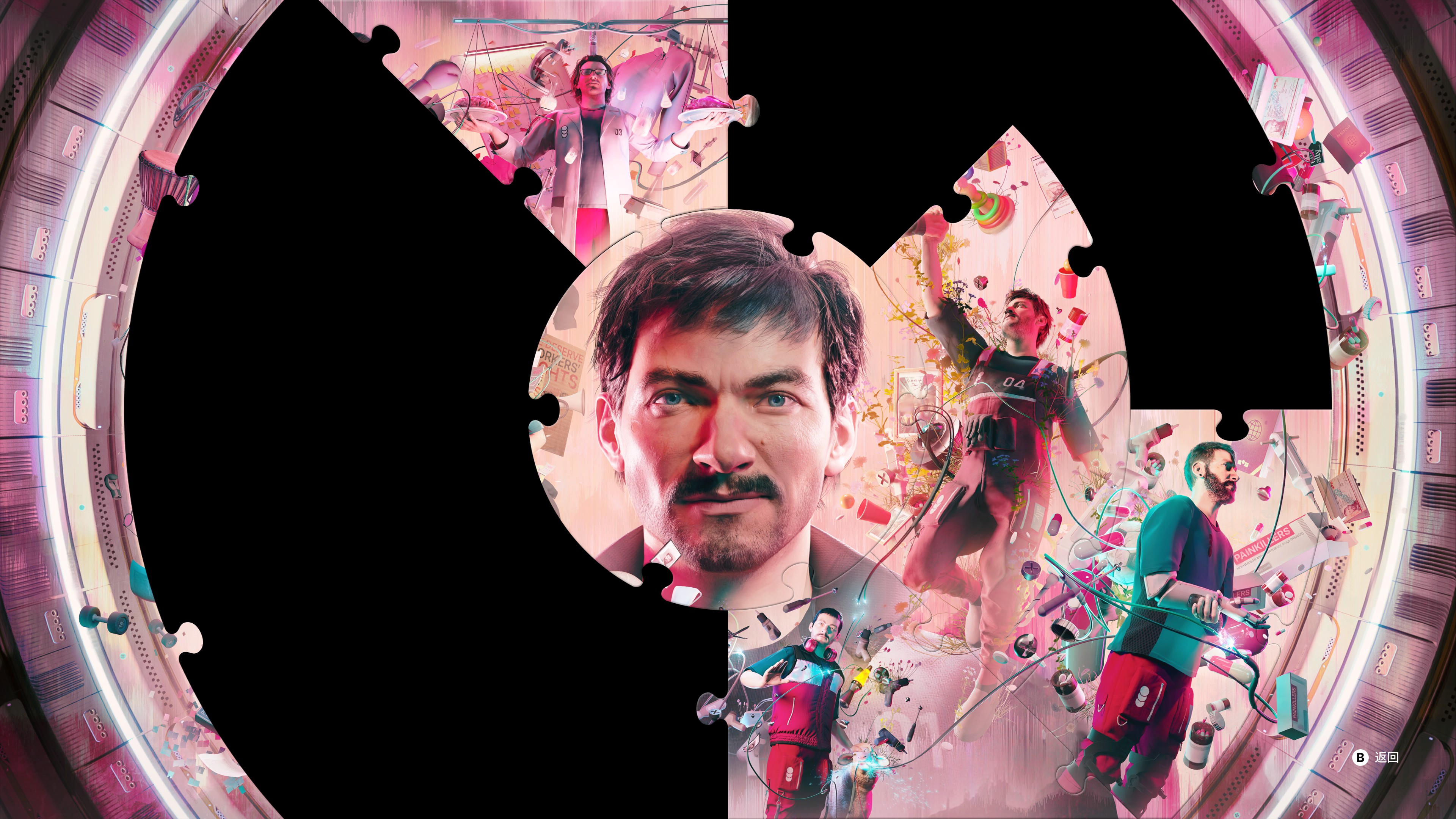
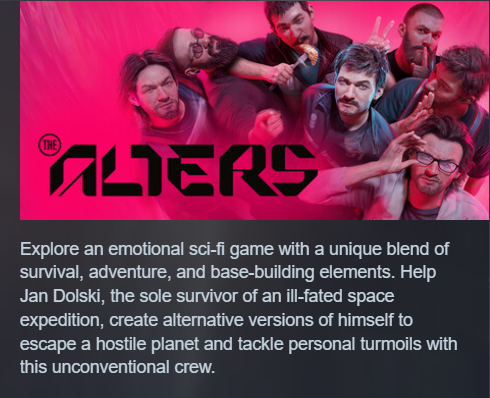
[[game - 2025 - the alters 多重人生]] was a game I picked up by chance on a friend’s recommendation. At first glance I thought it looked somewhat similar to [[game - 2019 - death stranding 死亡搁浅]], but after reading the description I realized all the characters on the cover are actually “you”. After finishing it, it became one of my “life games”, so I had to write this.
Please note: major story spoilers ahead!!!
What - Analyze
Throughout this article I’ll be using [[情感化游戏设计系统 emotional game design system - EGDS]] as the core analytical framework. Everyone experiences games differently; my analysis is primarily based on my own playthrough and the events I personally encountered.
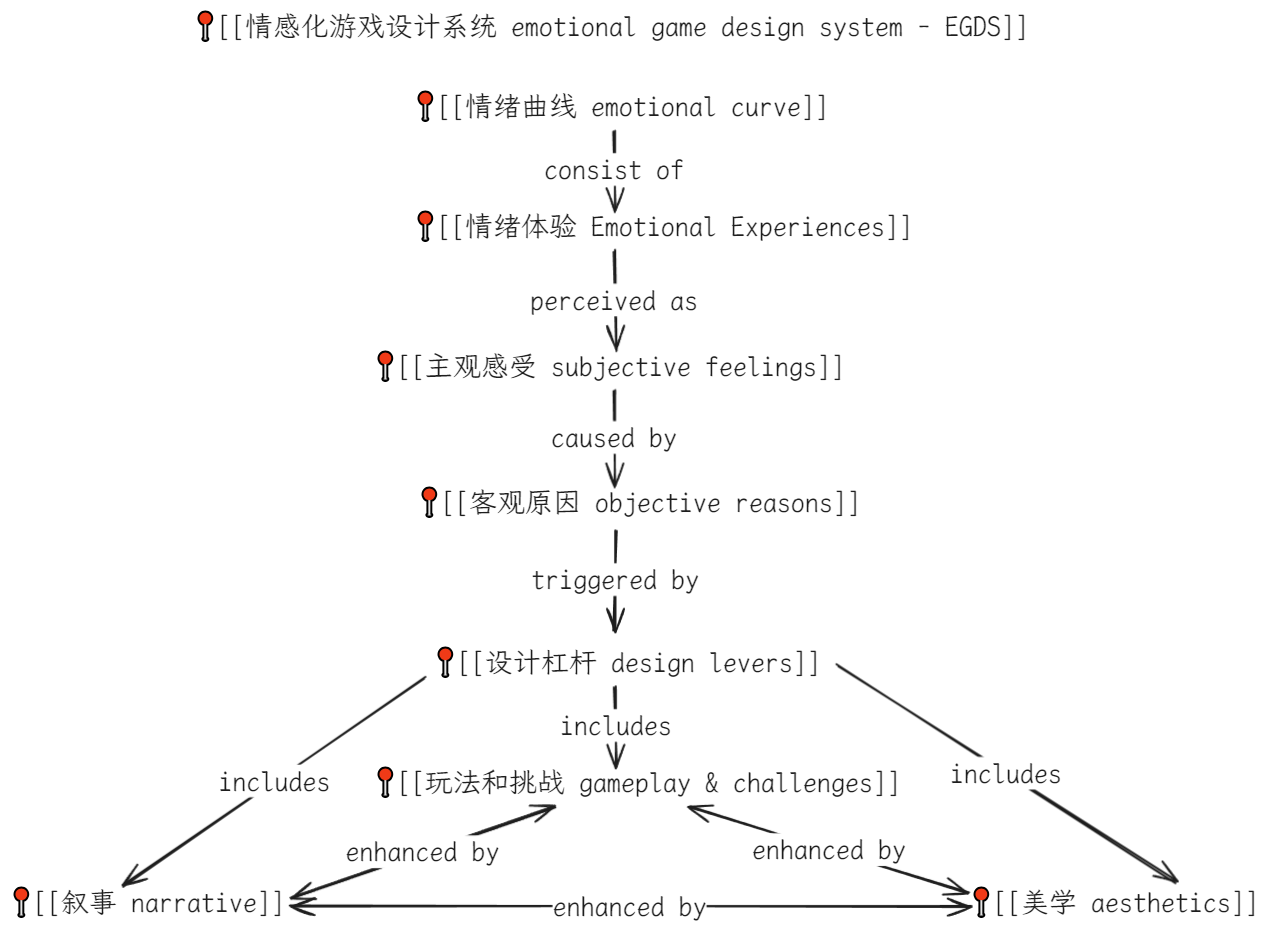
EGDS (Emotional Game Design System) is an emotional game design framework I am trying to build, inspired by [[陈星汉 Jenova Chen]].
The core belief behind EGDS is: every feeling a player experienced has its root. Those root can be traced, analyzed, and broken down; once clarified and named, they can become tools for designers to craft emotional experiences.
In film, there are already relatively mature methods for systematically influencing the audience’s emotions. In games, as far as I know, similar frameworks are still relatively rare. EGDS is my attempt to map the relationships between “emotional experiences – subjective feelings & objective reasons – design levers” based on shared human emotions and aesthetic consensus, in the hope that it can offer reusable references and inspiration for myself and other designers who care about emotion-driven game experiences.
Overview
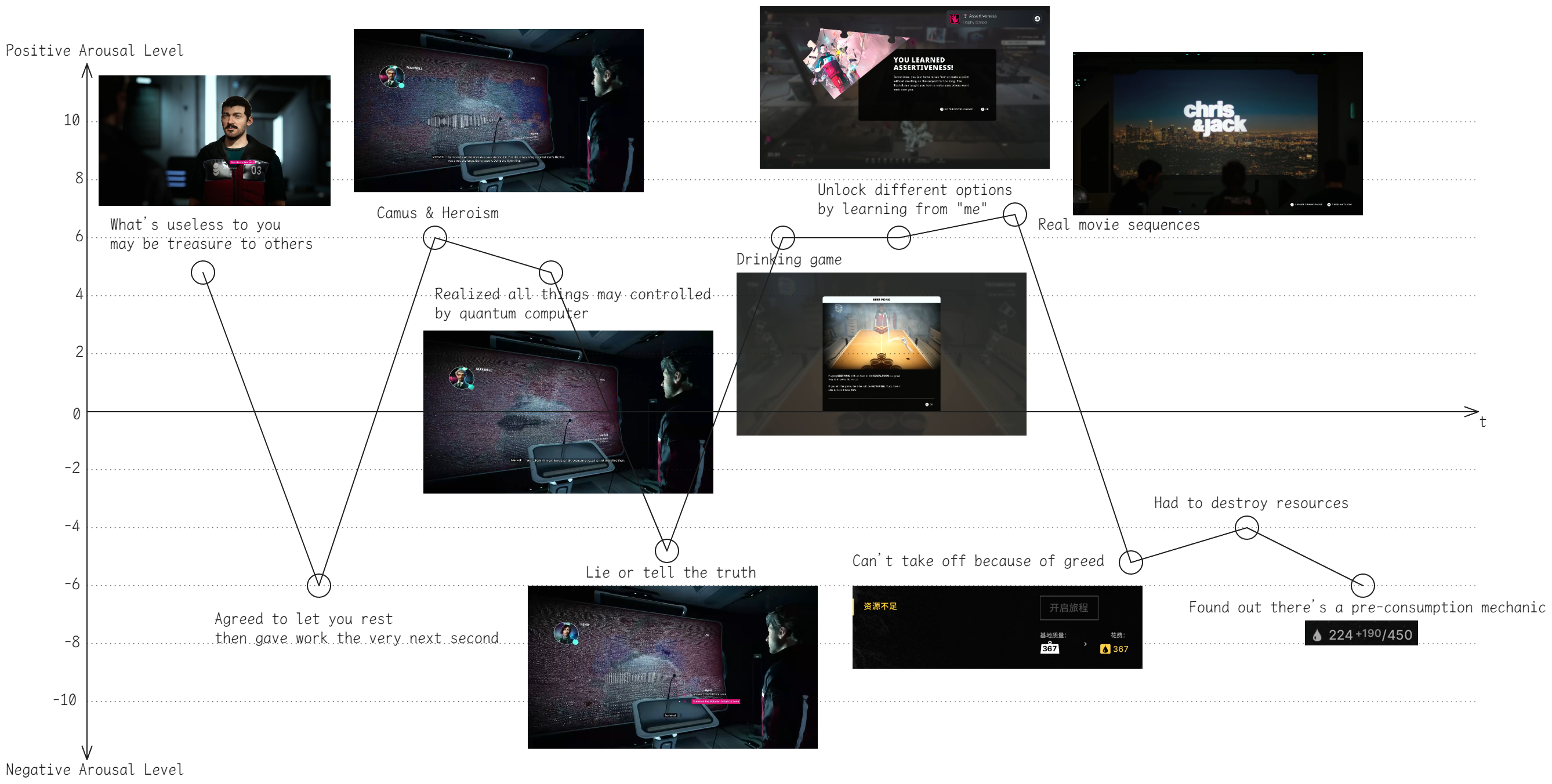
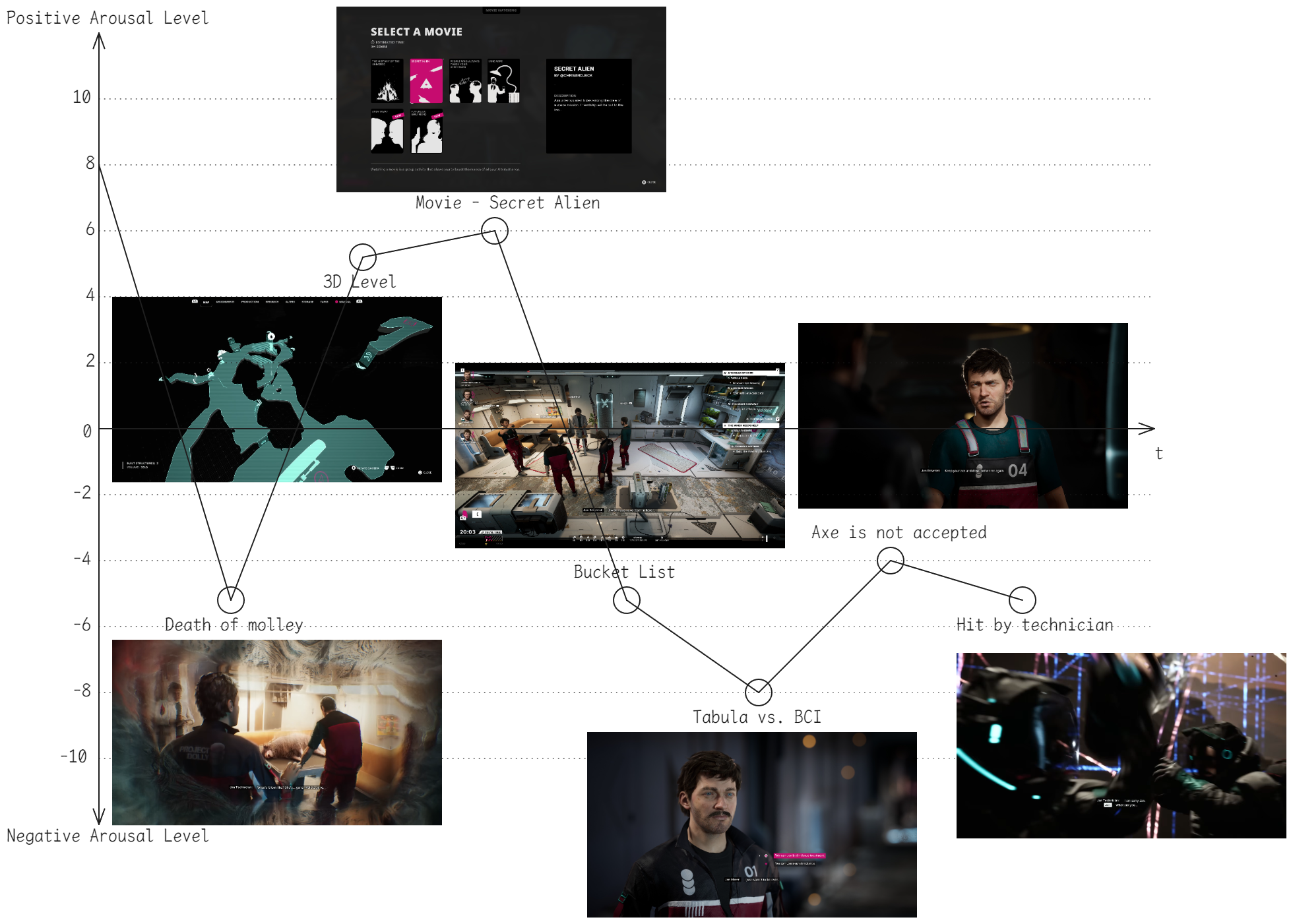
Emotional Curve

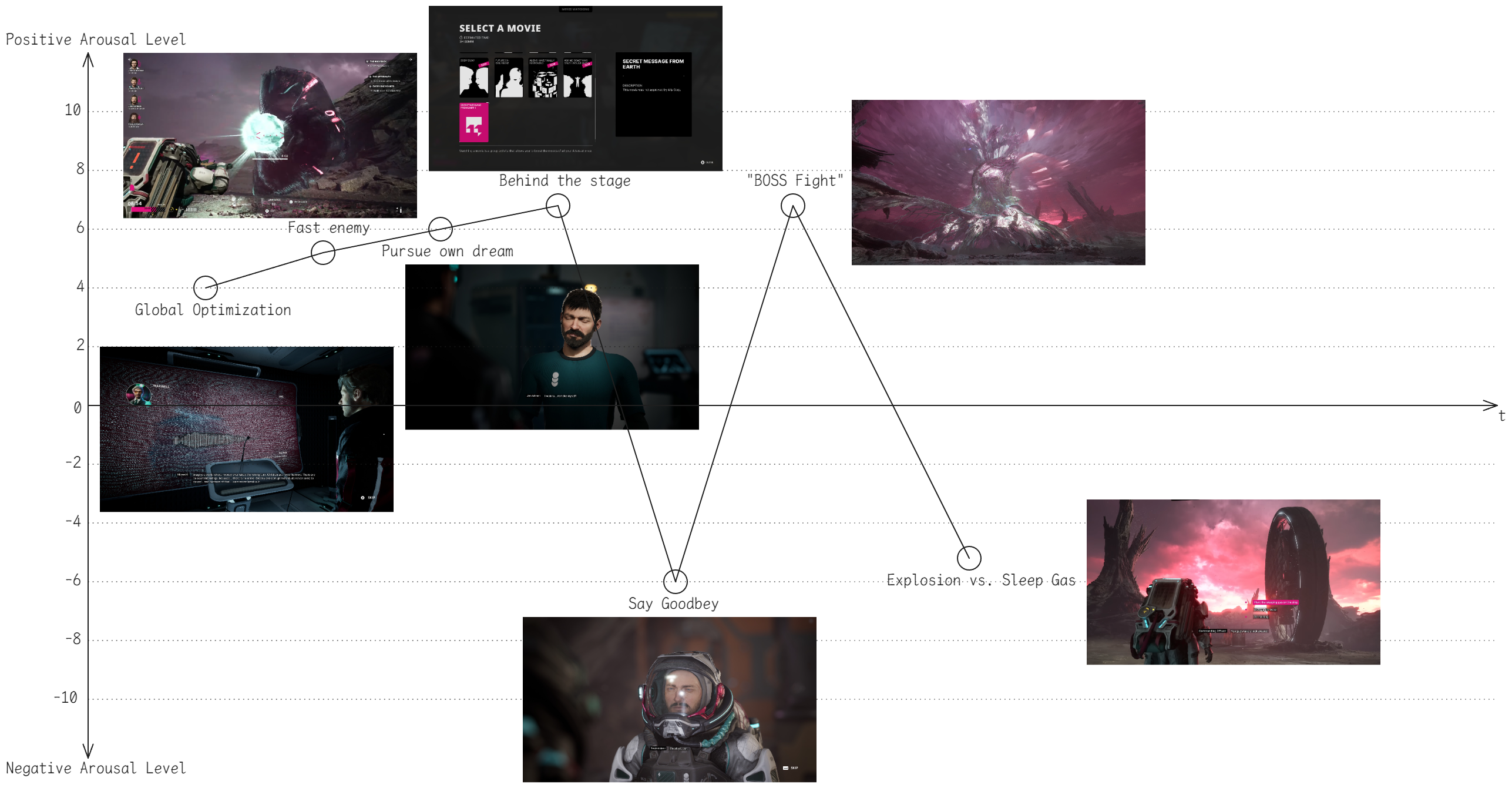
My total playtime at completion was around thirty hours. Just from this emotional curve you can tell how many ups and downs there were along the way — which is rare and precious.
Subjective Feelings & Objective Reasons
If I had to pick some keywords for my subjective feelings:
- [[subjective feeling - 探索 exploration]]
- [[subjective feeling - 有意义的选择 meaningful choice]]
- [[subjective feeling - 代入感 共情 empathy 成为或理解TA - 同情 compassion]]
- [[subjective feeling - 纠结 in a dilemma]]
And the most crucial objective reason would be: [[objective reason - 取舍 trade-offs]]
Design Levers
[[玩法和挑战 gameplay & challenges]]
On the gameplay & challenges side, there are two main cores:
- [[gameplay & challenge - 资源管理 resource management]]
- [[gameplay & challenge - 基于选择的叙事 choice-based narrative]]

[[叙事 narrative]]
In terms of narrative structure, it’s roughly:
- [[narrative structure - 三幕结构 Three-Act Structure - Syd Field - 1979]]
- [[narrative structure - 群像叙事 ensemble storytelling]]
In terms of narrative themes:
- [[narrative theme - 身份认同 identity]]
- [[narrative theme - 多重自我 multiplicity of self]]
- [[narrative theme - 生存困境 survival under scarcity]]
- [[narrative theme - 道德困境 moral dilemma]]
- [[narrative theme - 责任与亏欠 responsibility & guilt]]
- [[narrative theme - 控制与失控 control vs powerlessness]]
Narrative tone:
- [[narrative tone - 冷静 calm]]
- [[narrative tone - 理性 rational]]
- [[narrative tone - 沉郁 somber]]
Narrative perspective: [[narrative voice - 第一人称 first-person]]
[[美学 aesthetics]]
- [[visual style - 写实科幻 grounded sci-fi]]
- [[atmosphere - 异星 alien-world]]
- [[atmosphere - 敌意环境 hostile environment]]
In short, The Alters is a grounded sci-fi game set on a distant alien planet. Its gameplay & challenge focuses on resource management and a choice-based branching narrative: on one hand players must plan their actions under limited resources and time pressure, and on the other they must make moral decisions in a world with no “right answers”.
From an EGDS perspective, what moved me most is how the game uses concrete design levers — visualized emotions, irreversible consequences, etc. — to truly embed themes like “responsibility”, “guilt”, and “multiple selves” into the player’s lived experience.
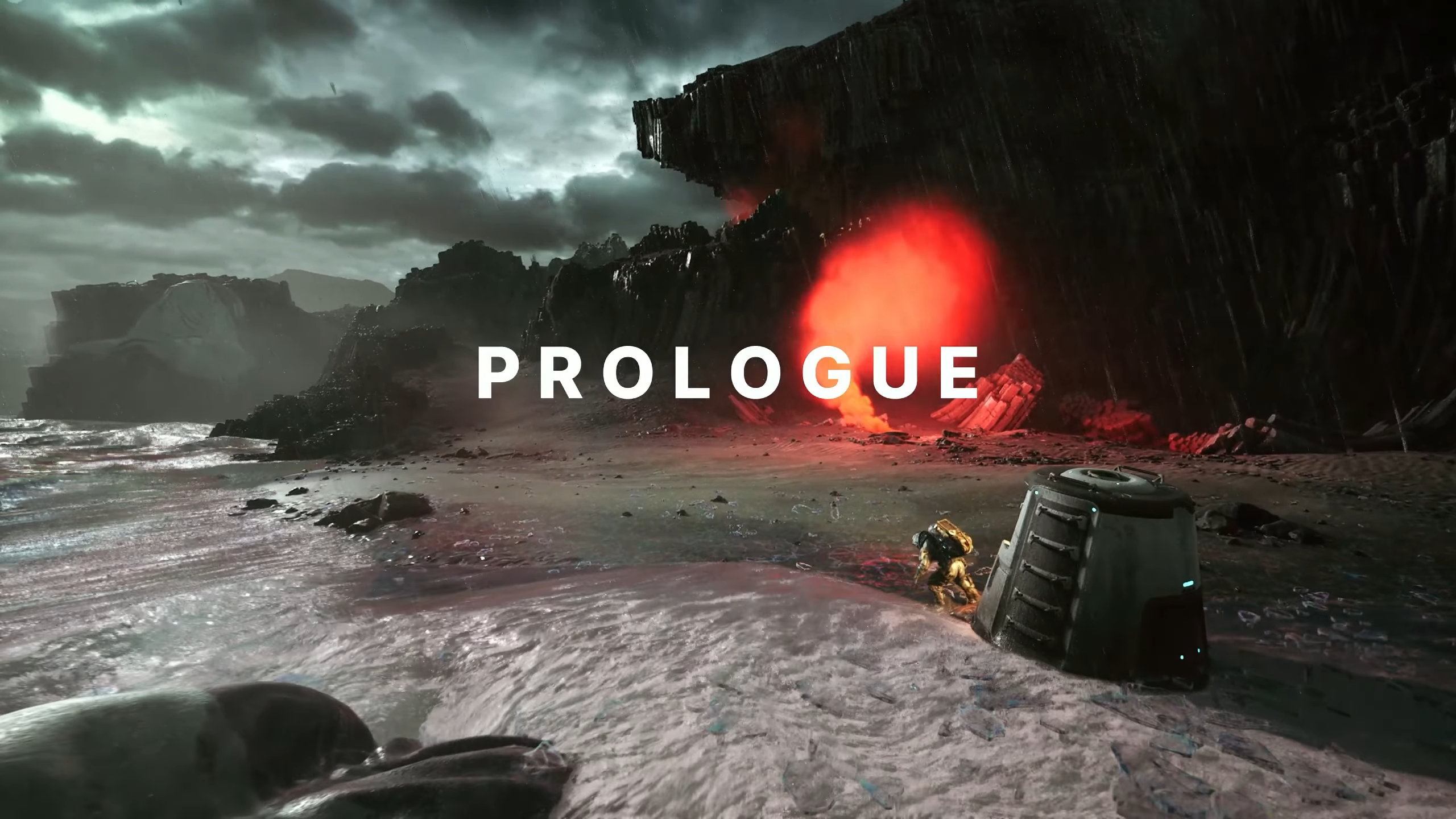
PROLOGUE
Emotional Curve
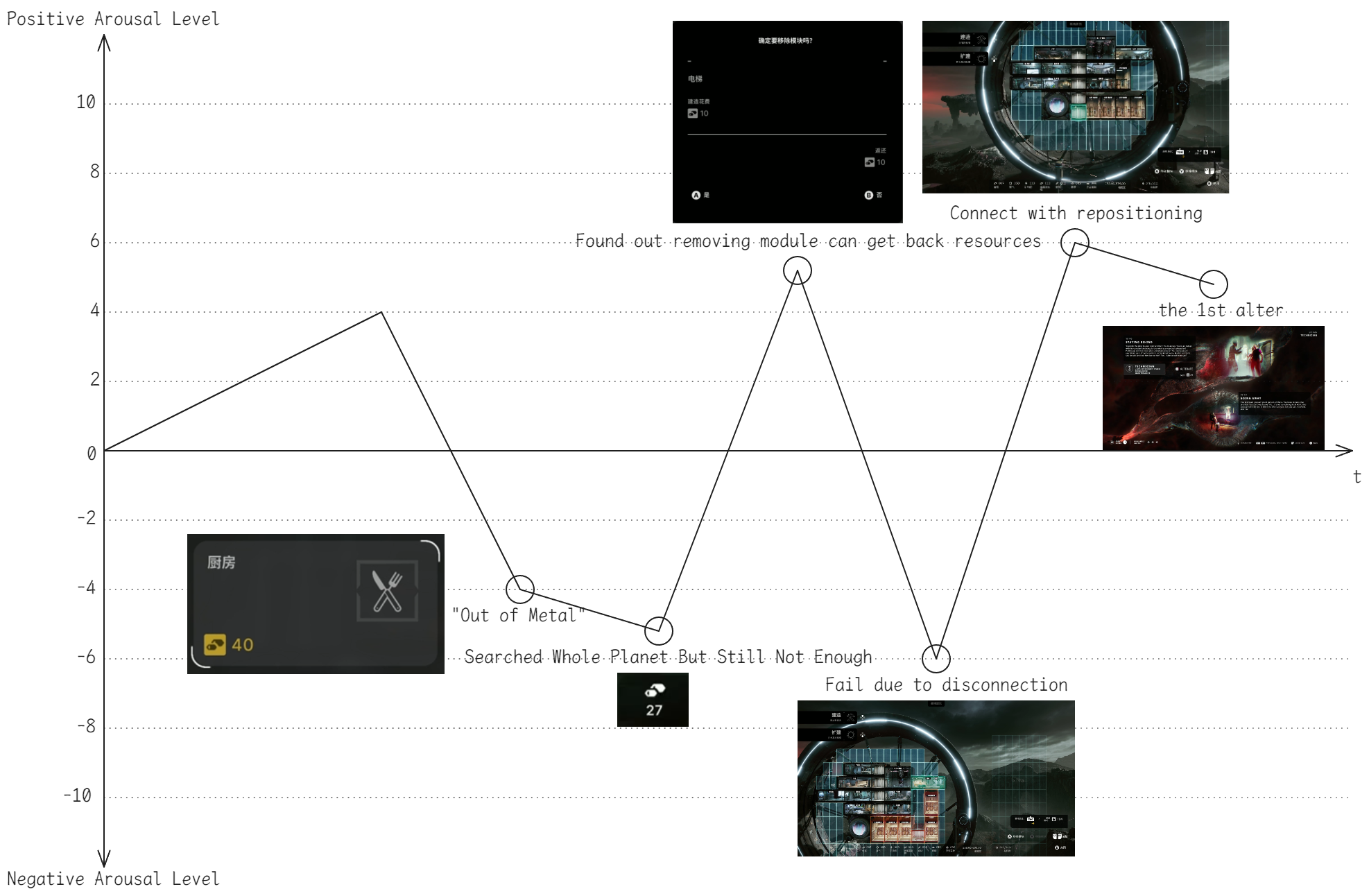
In the PROLOGUE, everything is fresh. [[叙事 narrative]] and [[美学 aesthetics]] kept pushing me forward to explore, while on the [[玩法和挑战 gameplay & challenges]] side, the main system introduced is [[gameplay & challenge - 资源管理 resource management]]. Everything went smoothly at first, emotions steadily climbed — but the part that impressed me most ended up being the closing section.
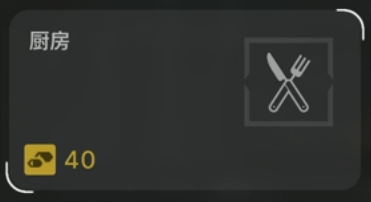
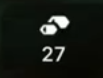
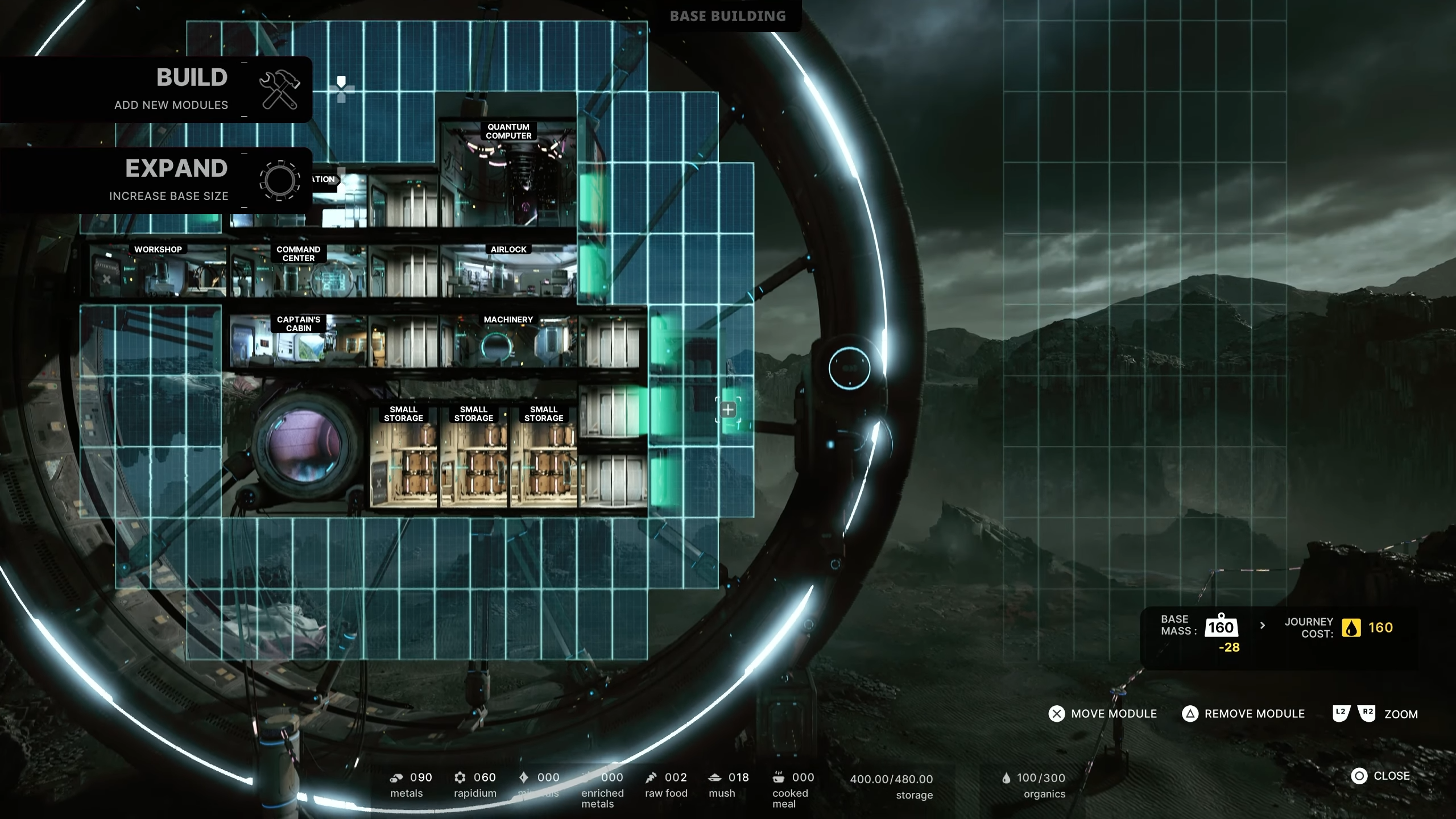
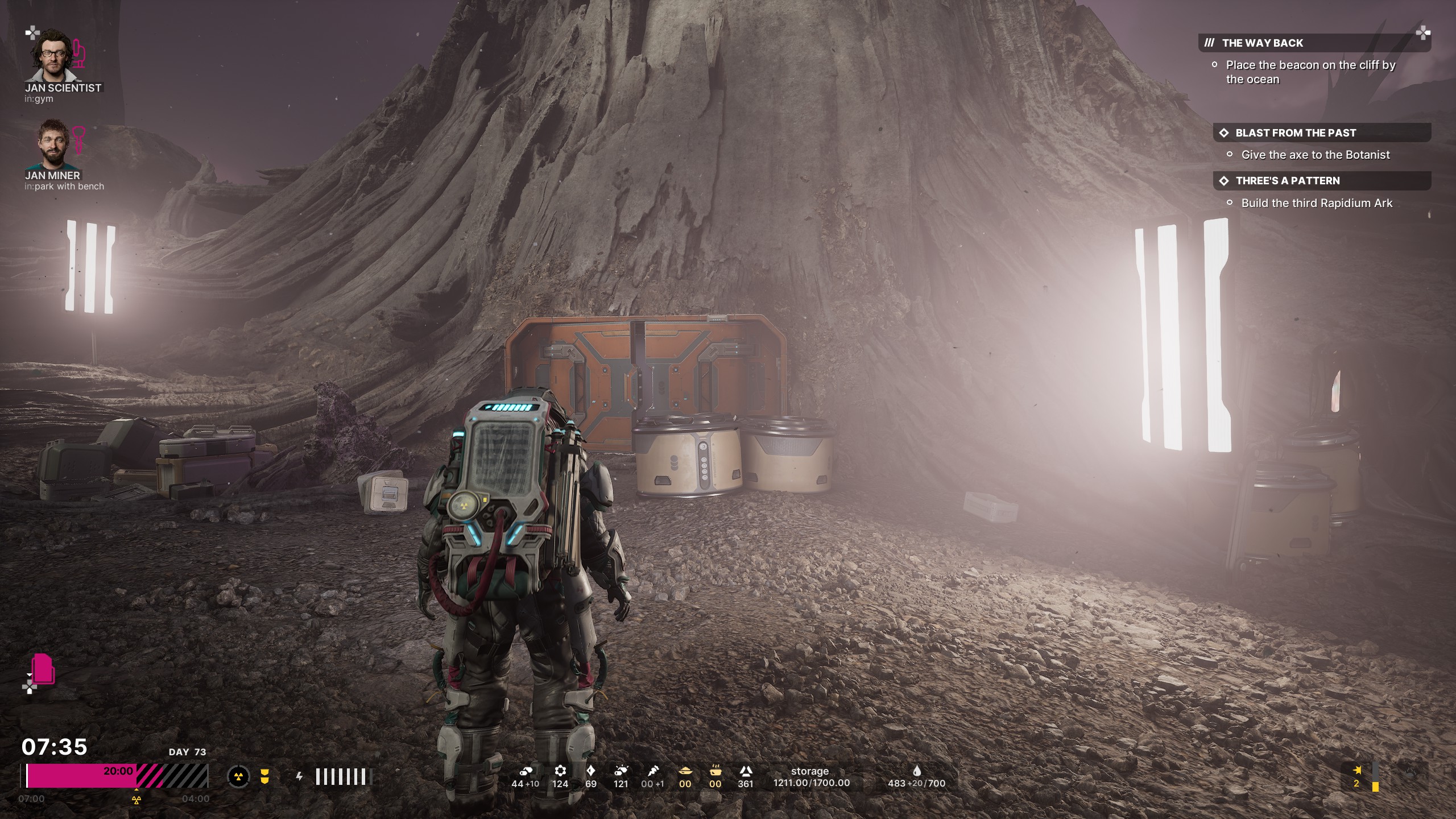
Because I overbuilt, I found myself short on metal right at the final step (18/40). Even after running and searching all over the map, I still didn’t have enough (27/40).

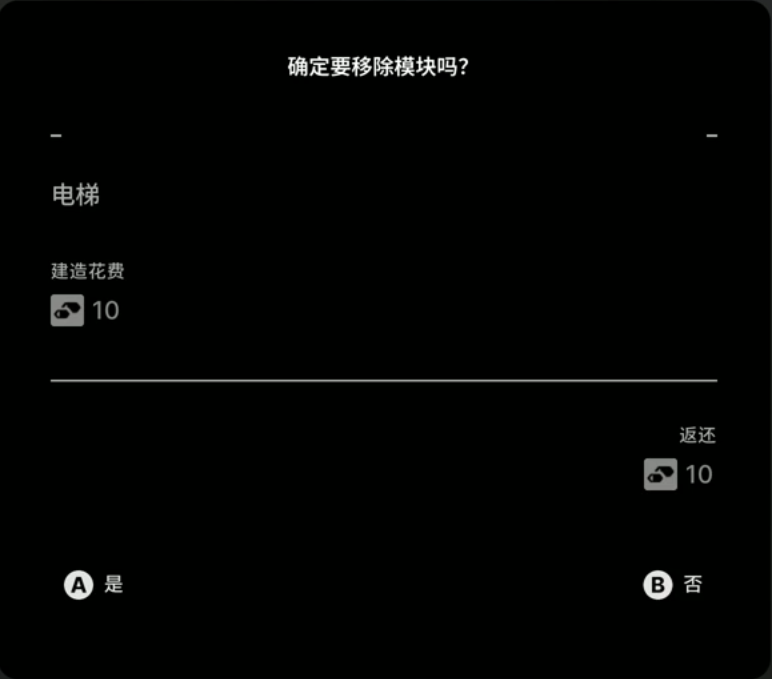
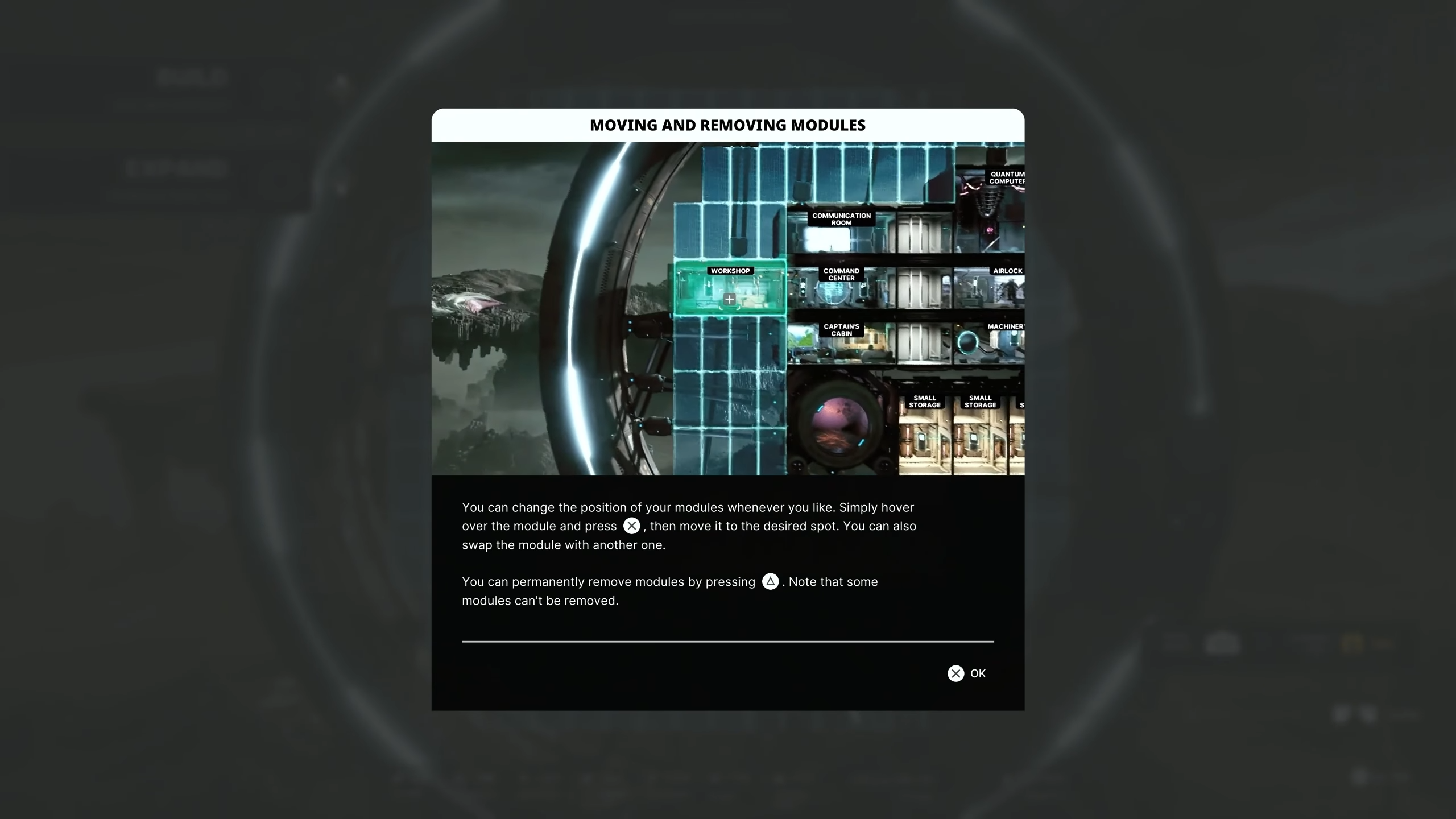
I stared at the build panel for several minutes, mentally preparing myself to painfully restart, when I suddenly realized I could remove modules to reclaim some resources:
I happily scrapped modules to gather enough resources and thought I was finally done — only to be told I couldn’t finish construction because some modules weren’t connected:
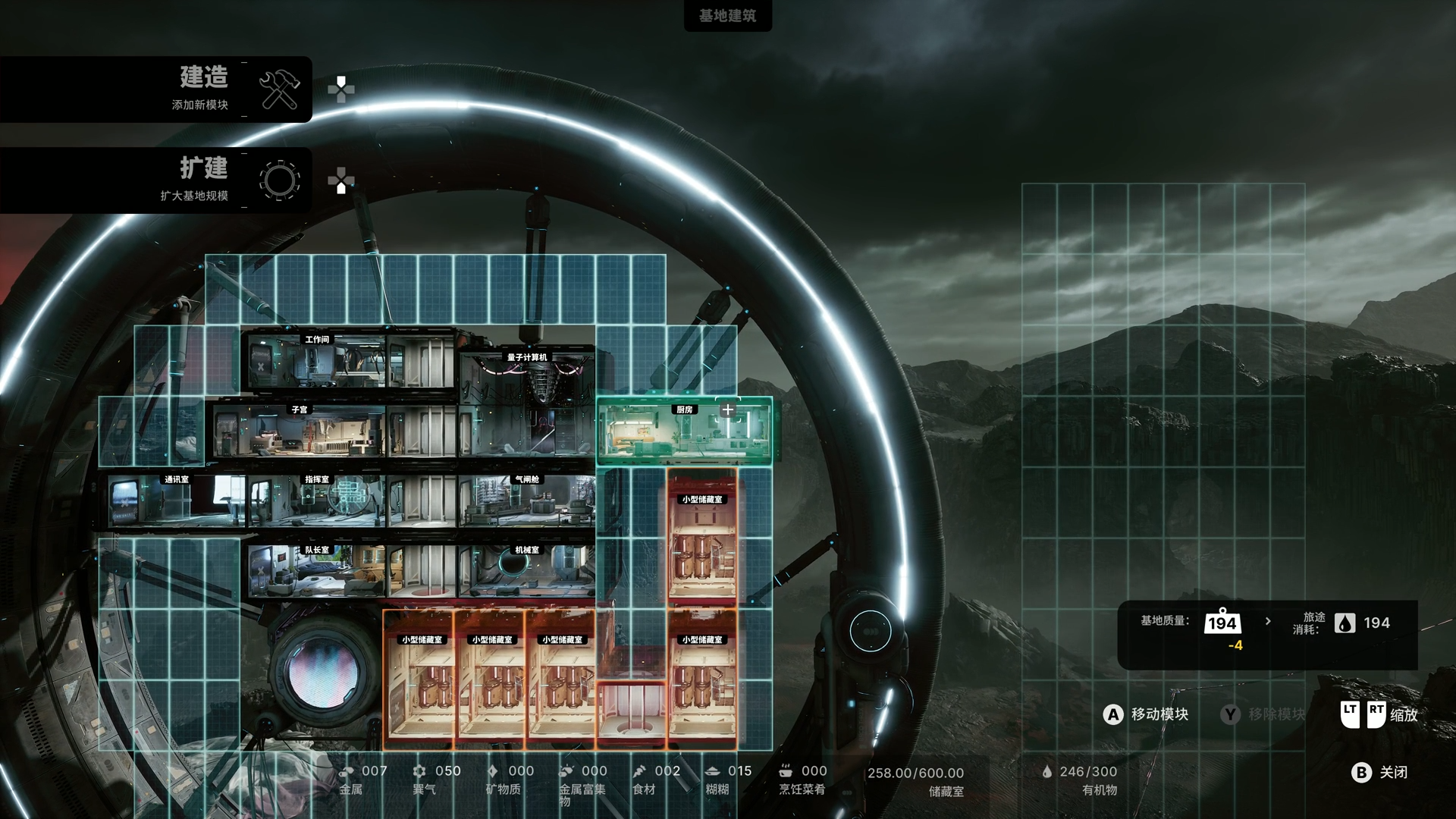
After thinking for a while, I realized my spatial layout wasn’t optimal, and only by rearranging modules could I get everything connected:
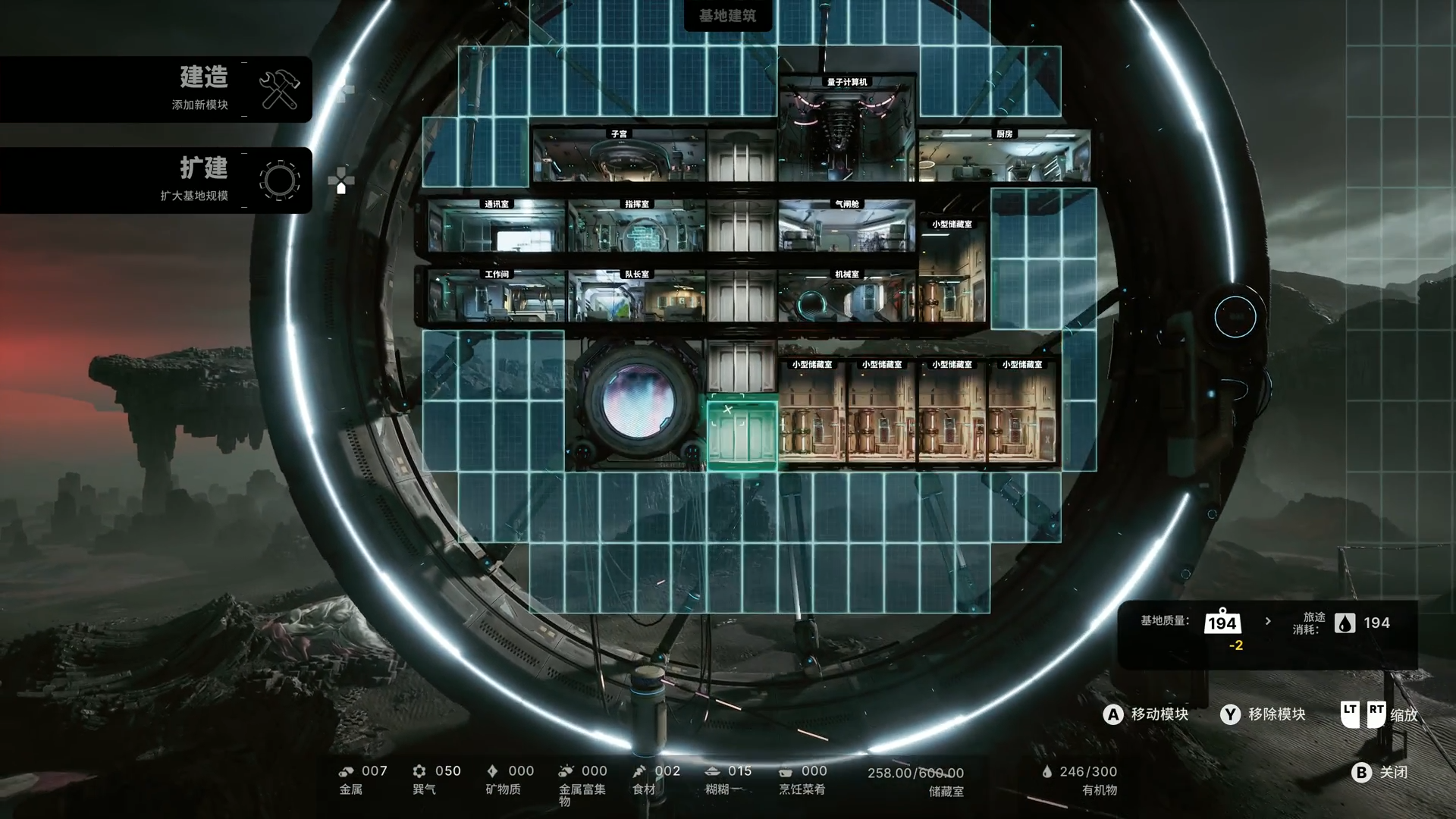
By the time I finally created the first Alter, it was something I already anticipated, so emotionally it was more “novelty” than “surprise”:
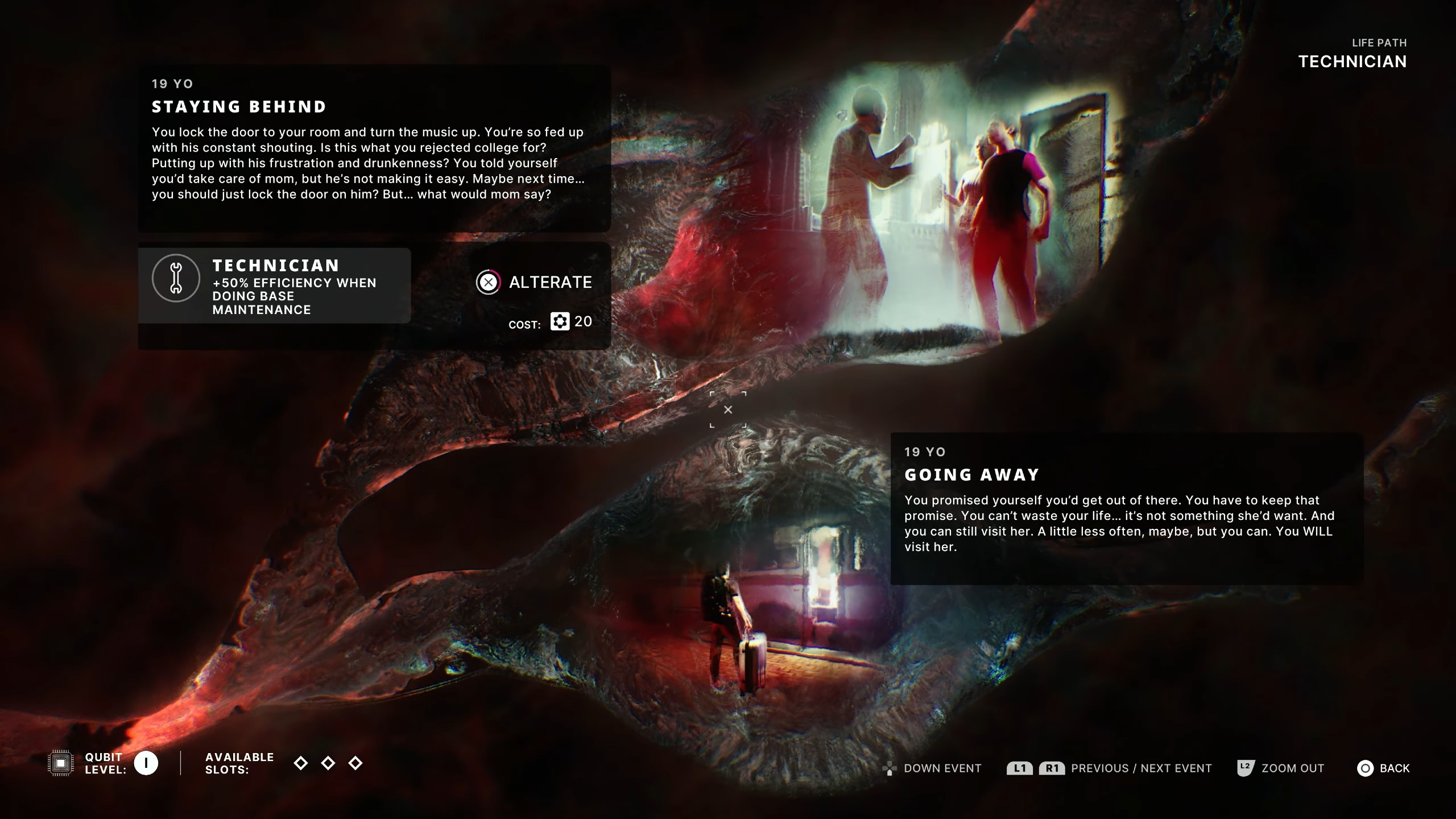
Once I created the Alter, I had what I needed to leave, so the PROLOGUE ended there.
Subjective Feelings & Objective Reasons
Although all these “twists” were entirely caused by my own decision-making mistakes, they nonetheless reinforced the [[gameplay & challenge - 资源管理 resource management]] -driven [[subjective feeling - 紧张 tension & nervous]] and [[subjective feeling - 有意义的选择 meaningful choice]] that the design aimed for.
The main objective driver behind [[subjective feeling - 有意义的选择 meaningful choice]] is [[objective reason - 资源有限 limited resources]], which demands that the player plan various resources carefully.
Design Levers
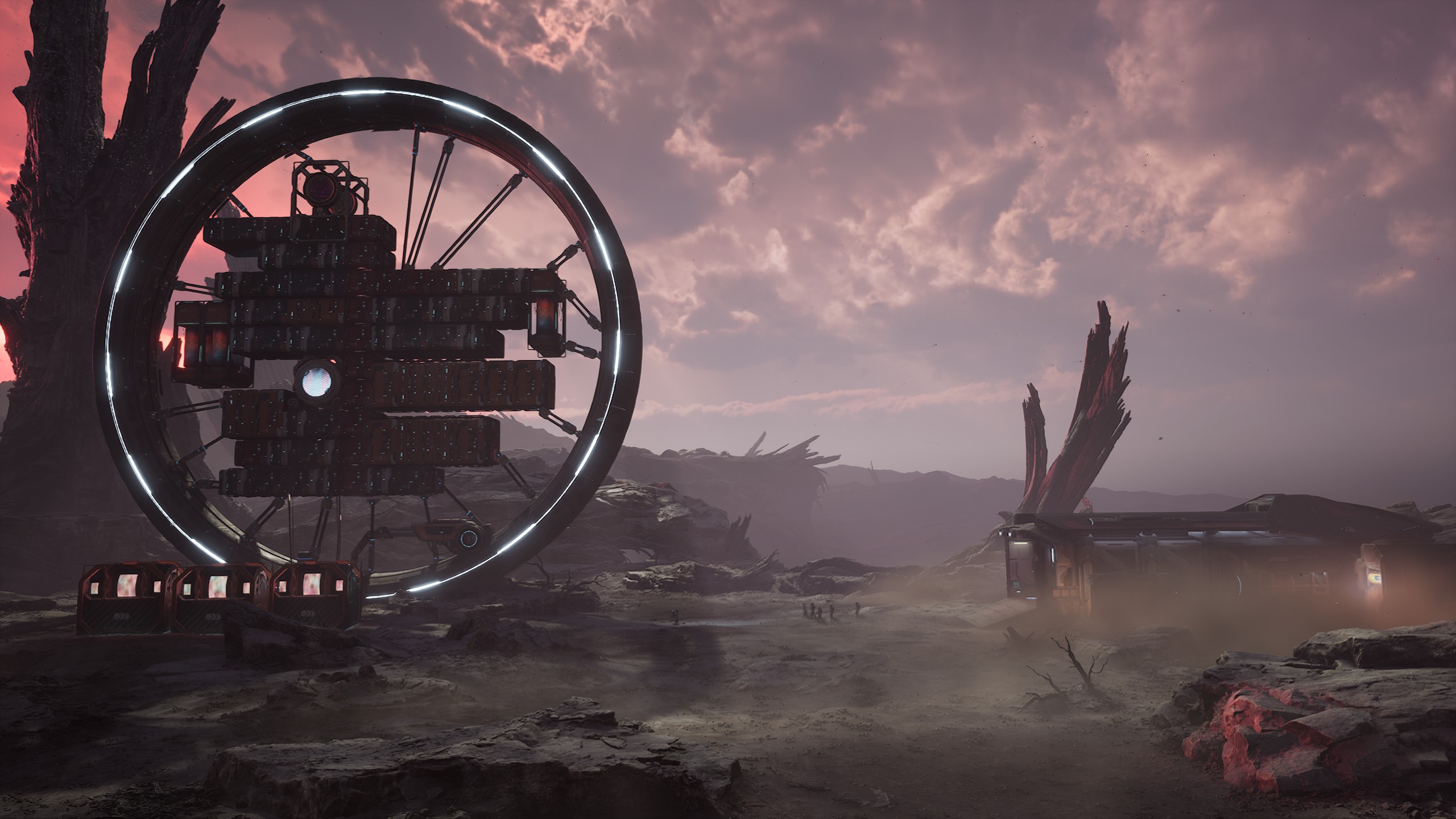
In the PROLOGUE, [[叙事 narrative]] is still in setup mode, while [[美学 aesthetics]] establishes the desolate alien world and a sufficiently believable layer of sci-fi tech. [[玩法和挑战 gameplay & challenges]] already unfolds its core: [[gameplay & challenge - 资源管理 resource management]].
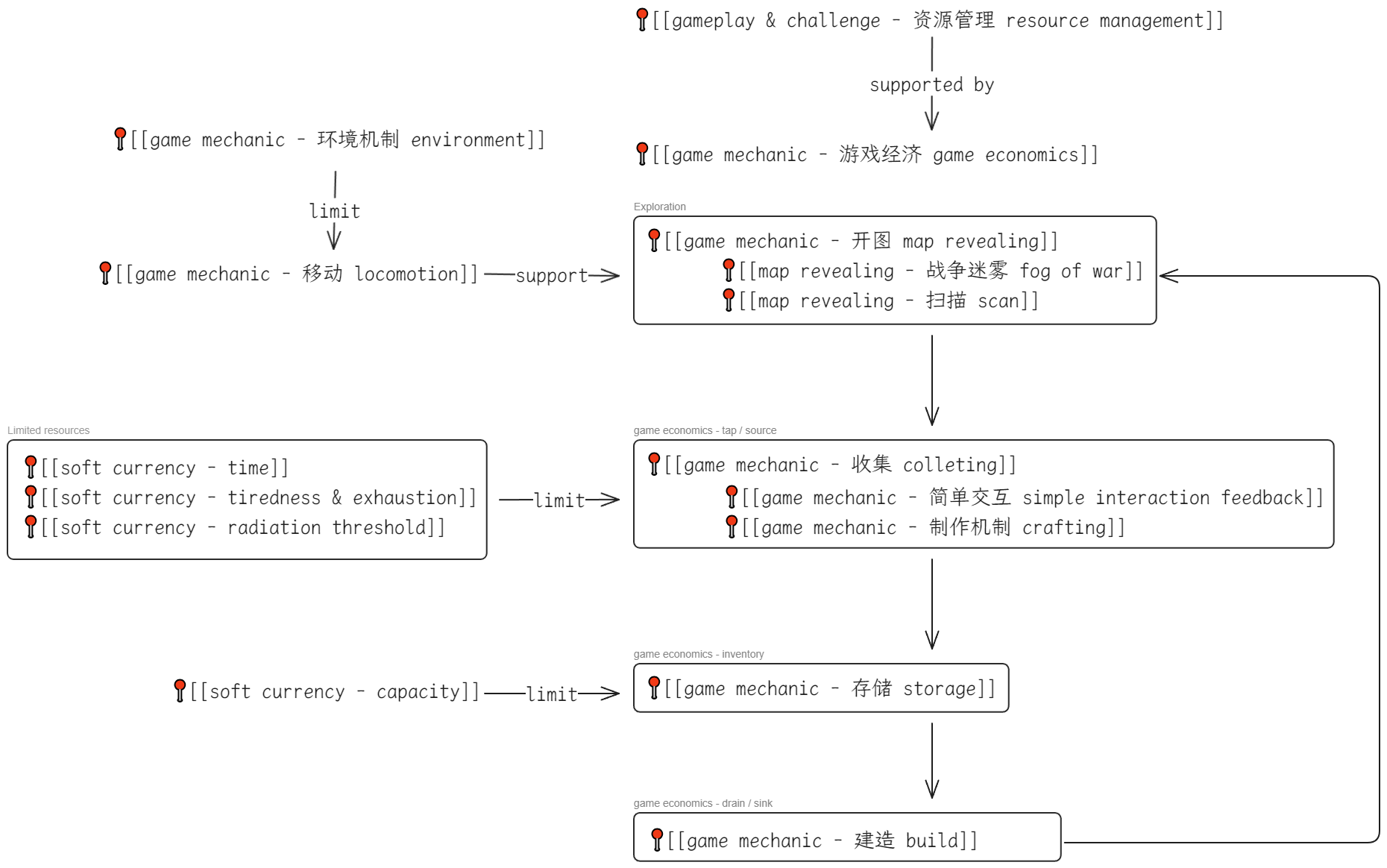
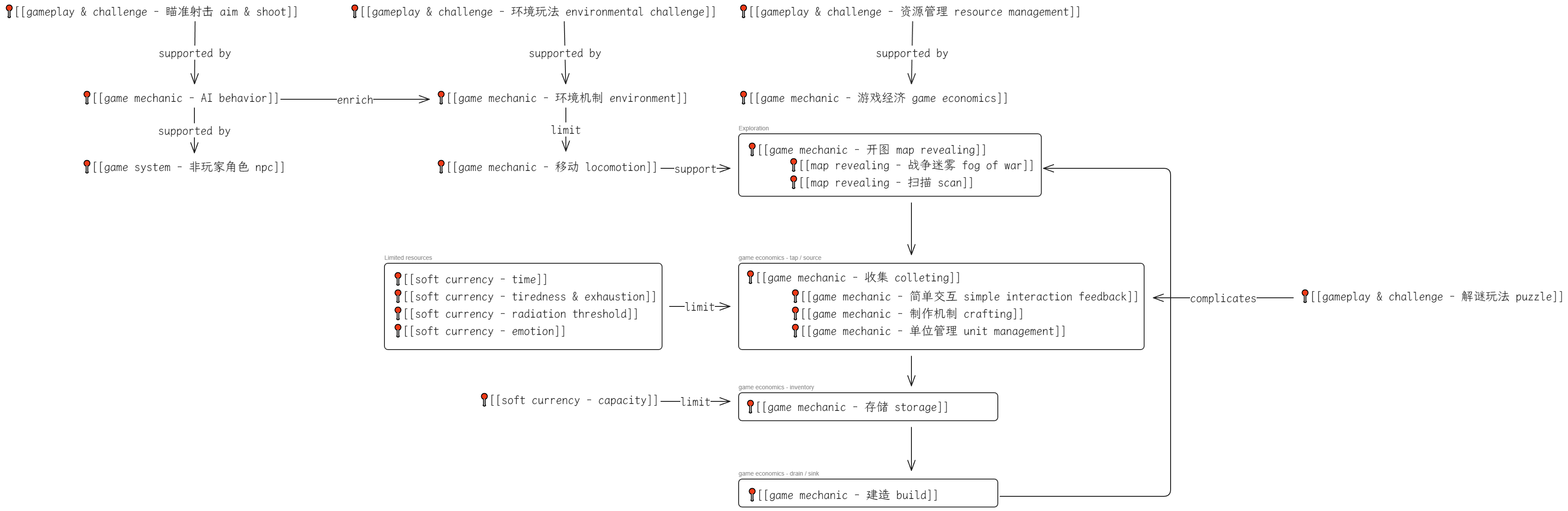
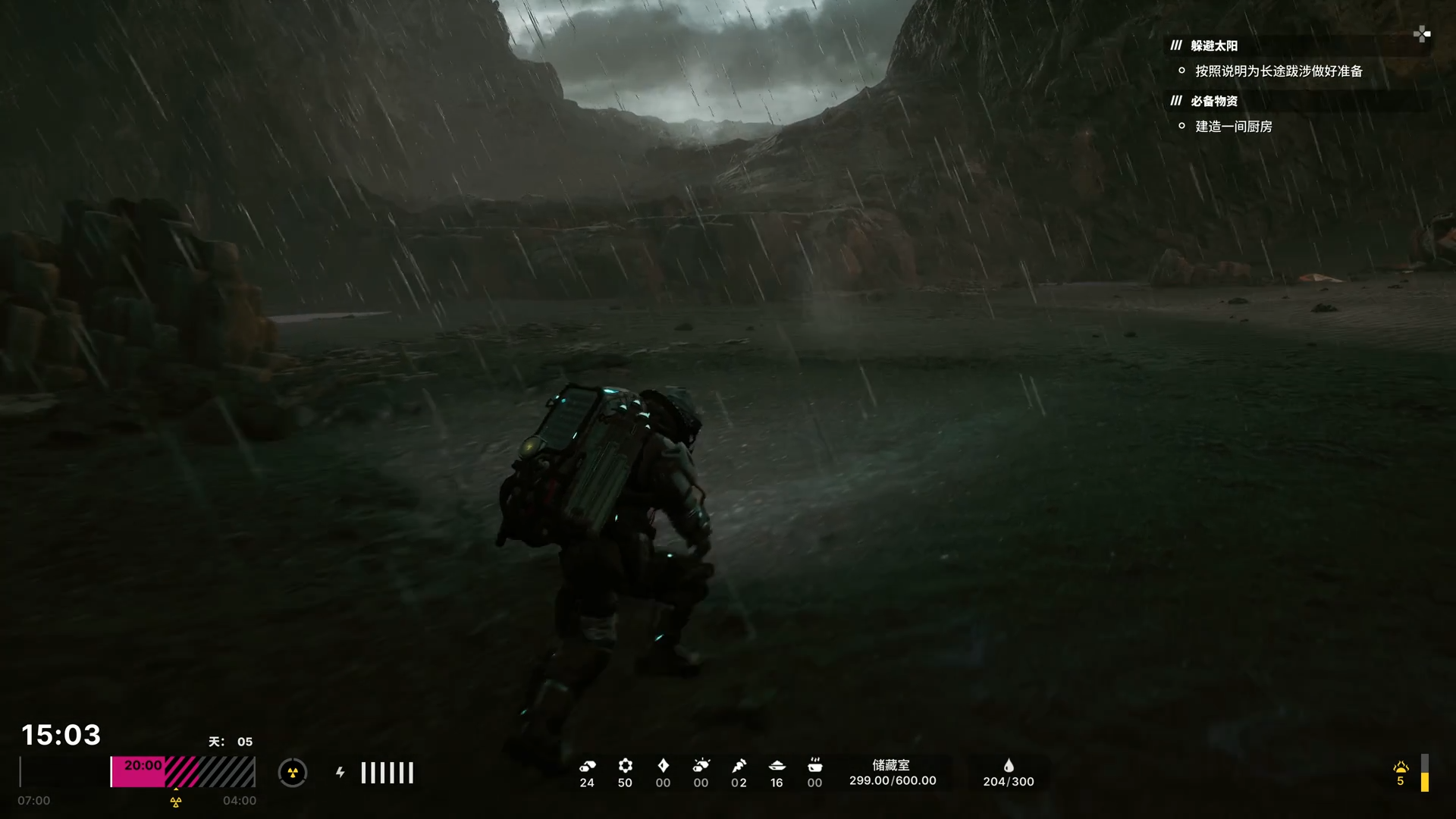
Because it’s 3D spatial exploration, it’s built on [[game mechanic - 移动 locomotion]]:
The map contains areas that are not directly traversable, i.e. [[game mechanic - 环境机制 environment]], which constrain [[game mechanic - 移动 locomotion]] to some extent:
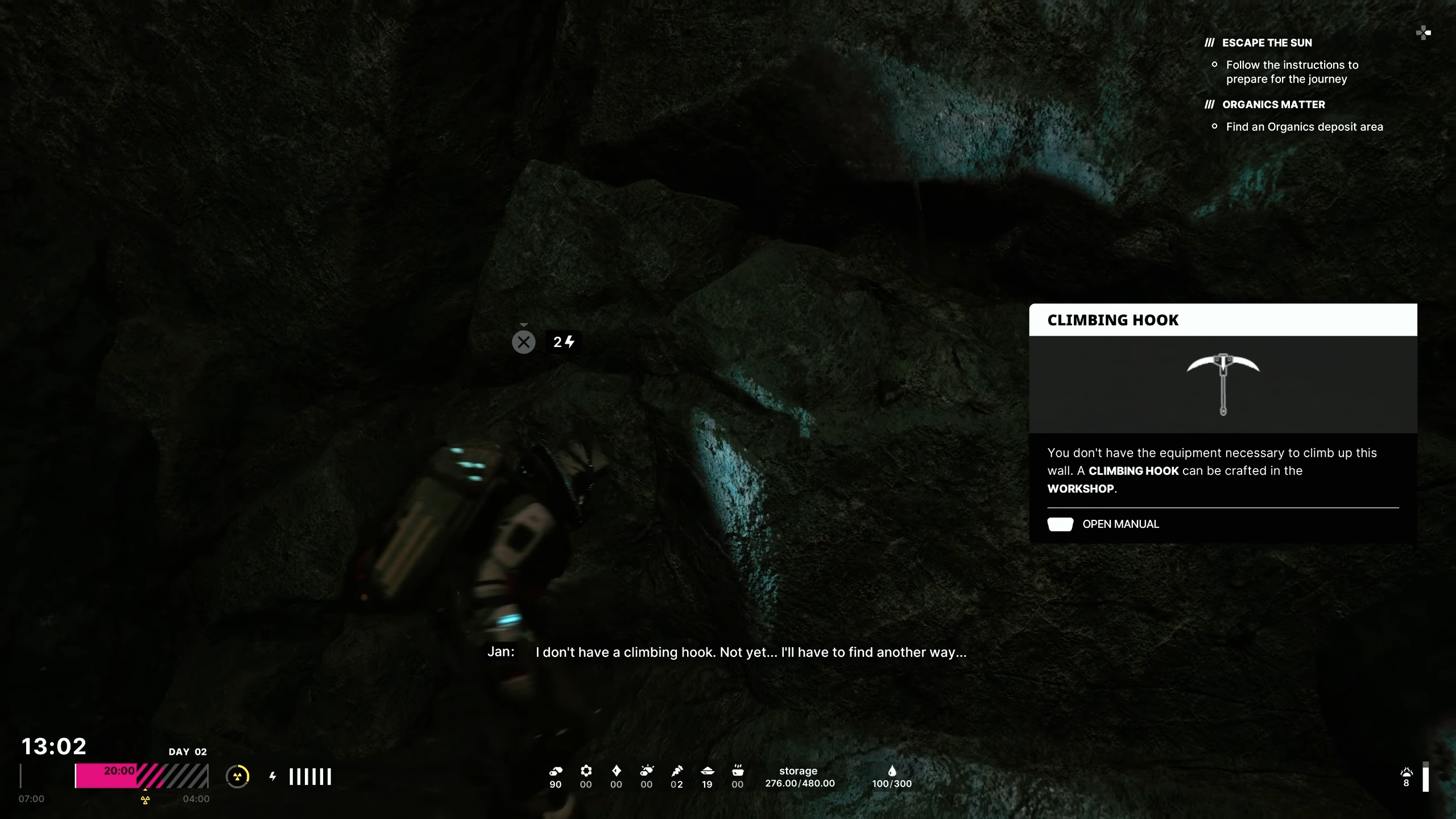
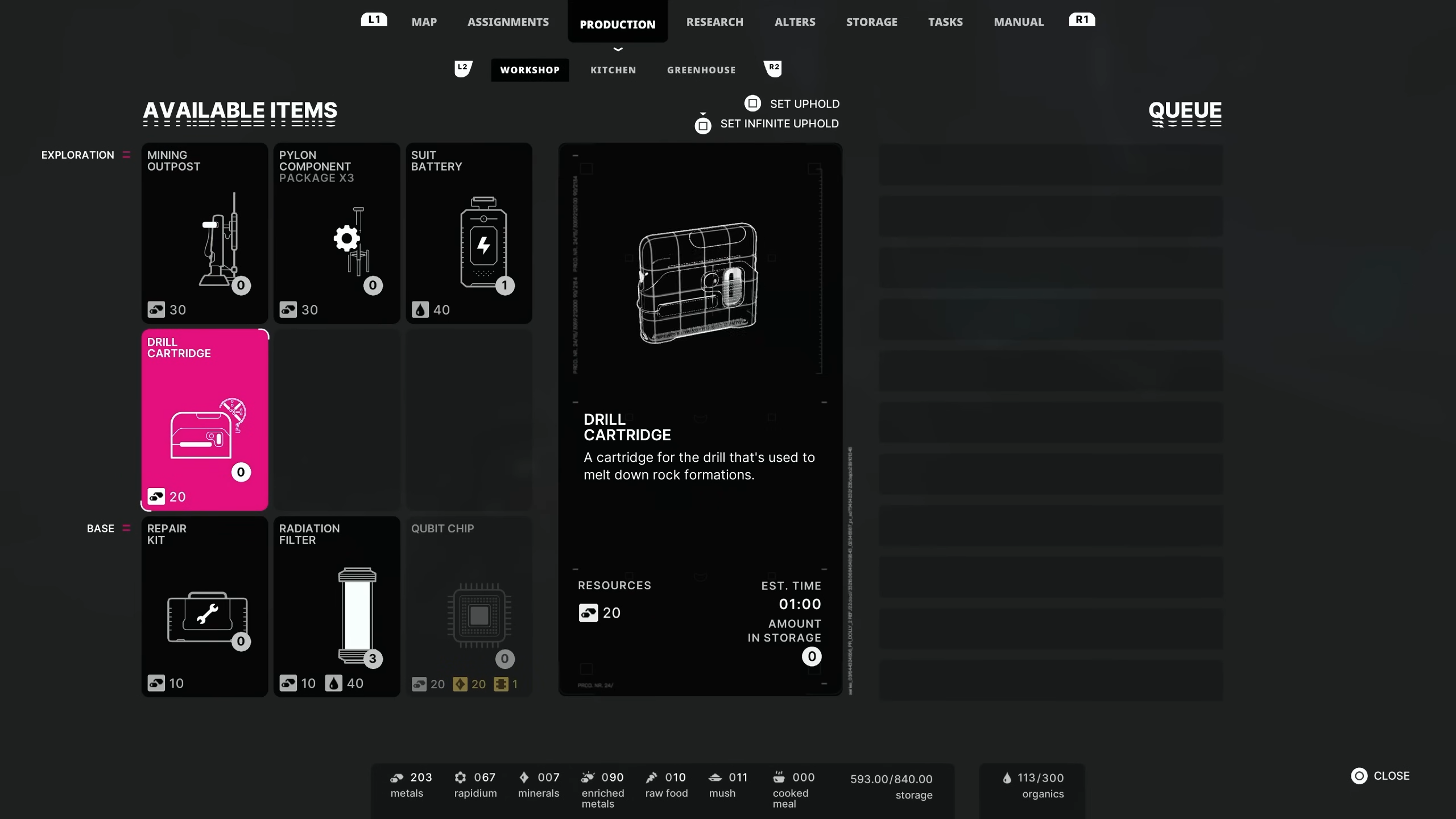
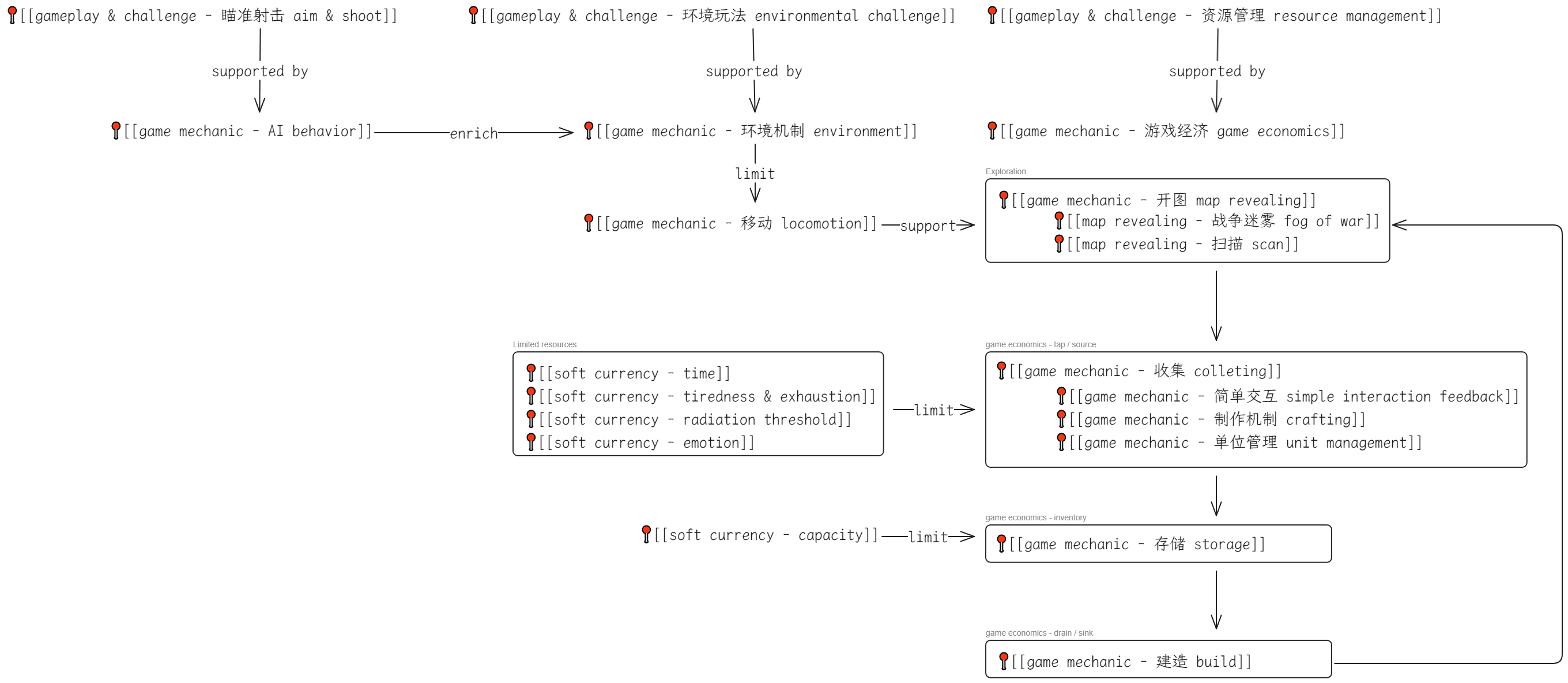
And all of this ultimately serves [[game mechanic - 游戏经济 game economics]].
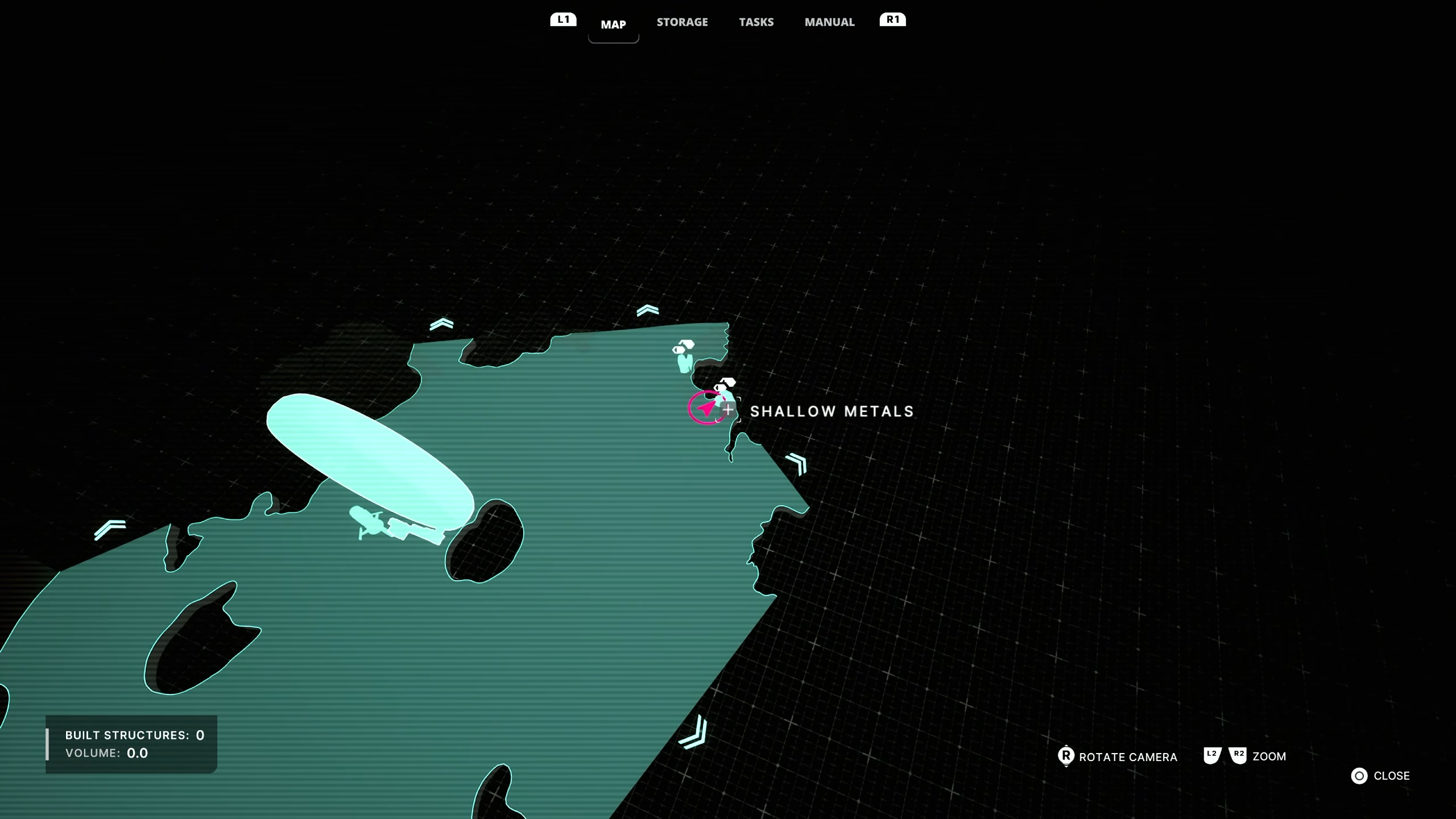
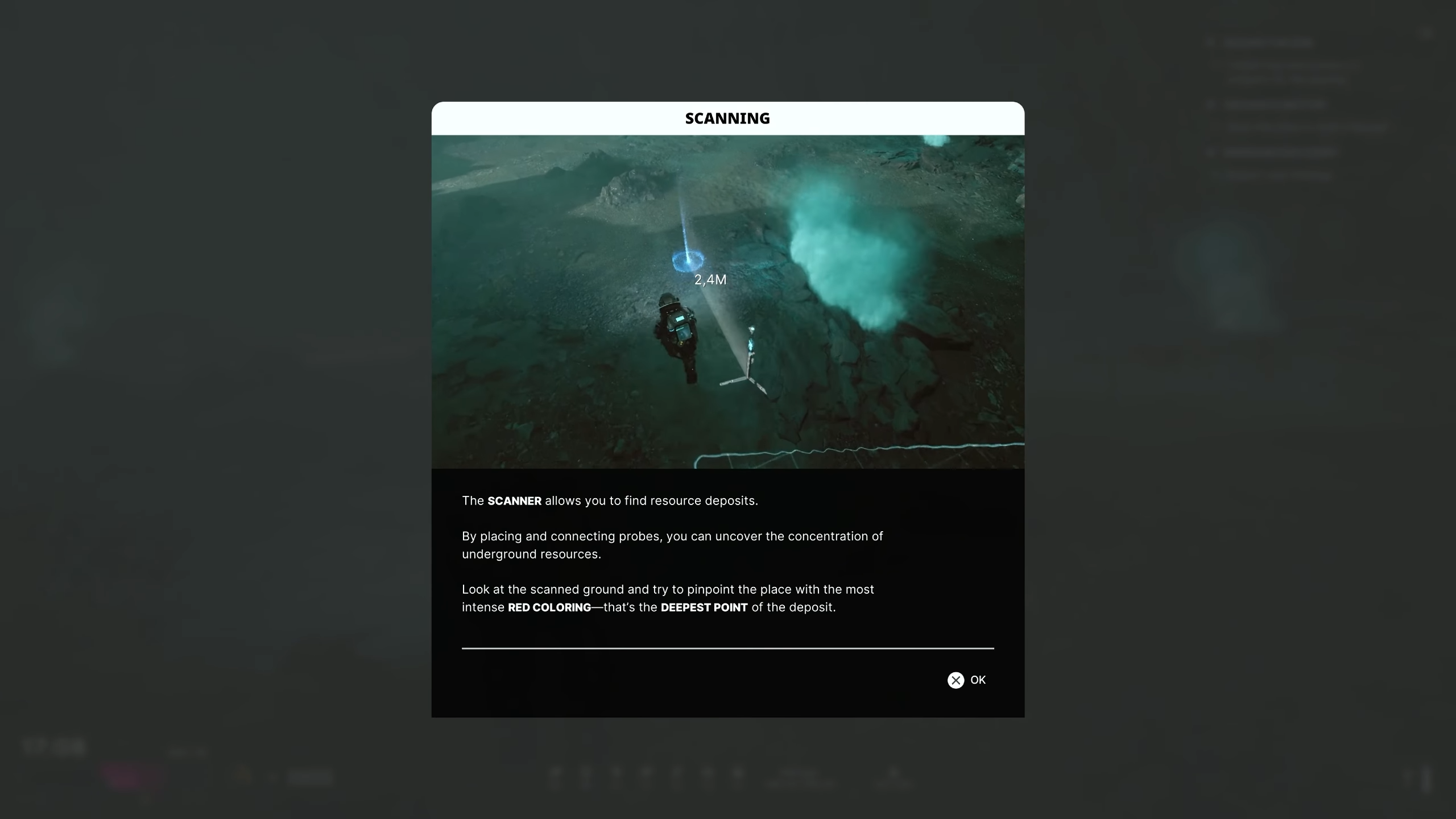
- Step one is [[game mechanic - 开图 map revealing]], which itself has two parts:
- [[map revealing - 战争迷雾 fog of war]], i.e. the common approach where unexplored areas on the map remain hidden:
- [[map revealing - 扫描 scan]], i.e. if you find a deep deposit, you have to use a “triangulation” mechanic to find the exact location:
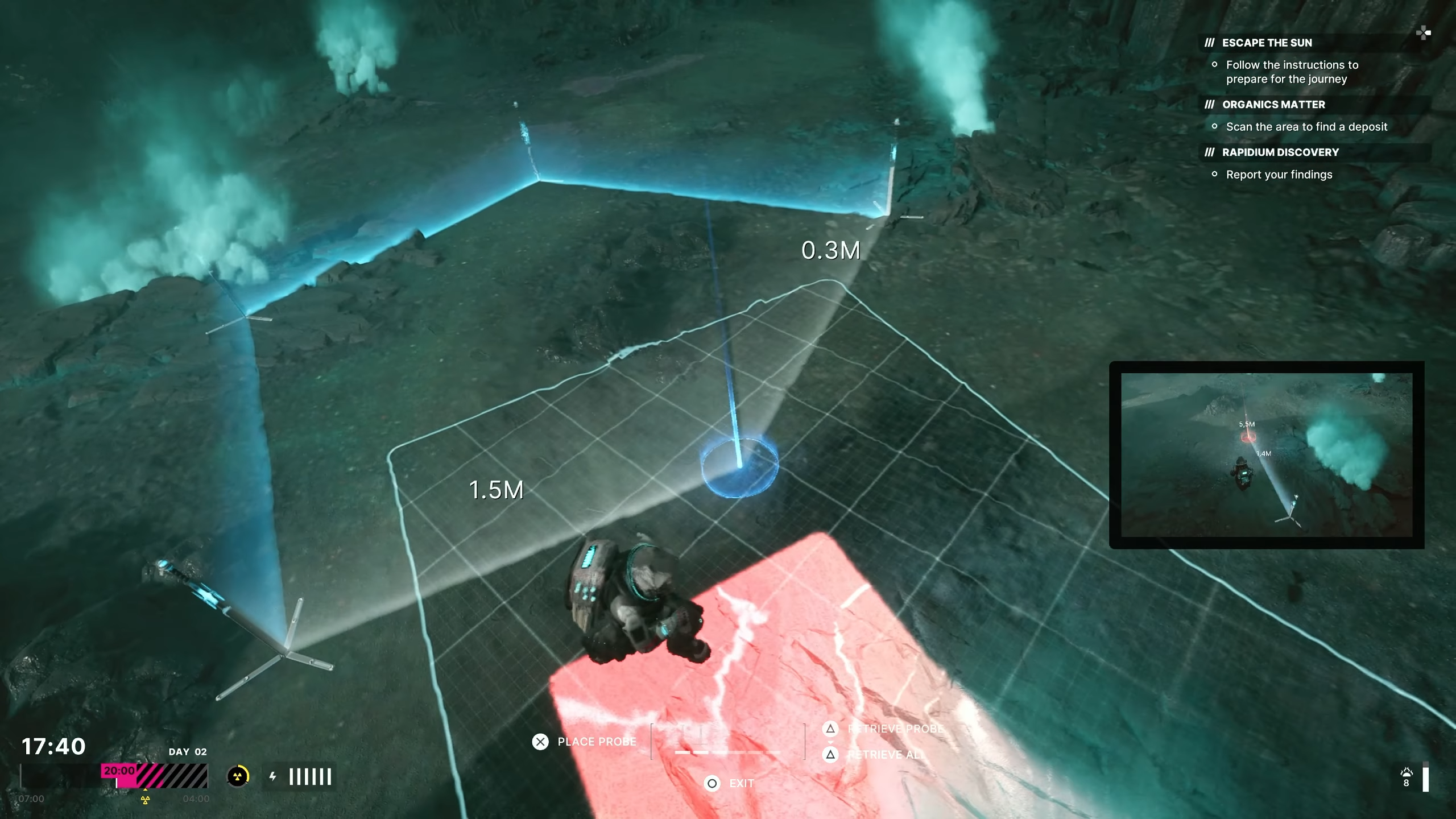
- [[map revealing - 战争迷雾 fog of war]], i.e. the common approach where unexplored areas on the map remain hidden:
- Once you locate the deposit, there are different ways to gather it:
- For SHALLOW RESOURCES, you can harvest them directly via [[game mechanic - 简单交互 simple interaction feedback]], but the quantity is limited:
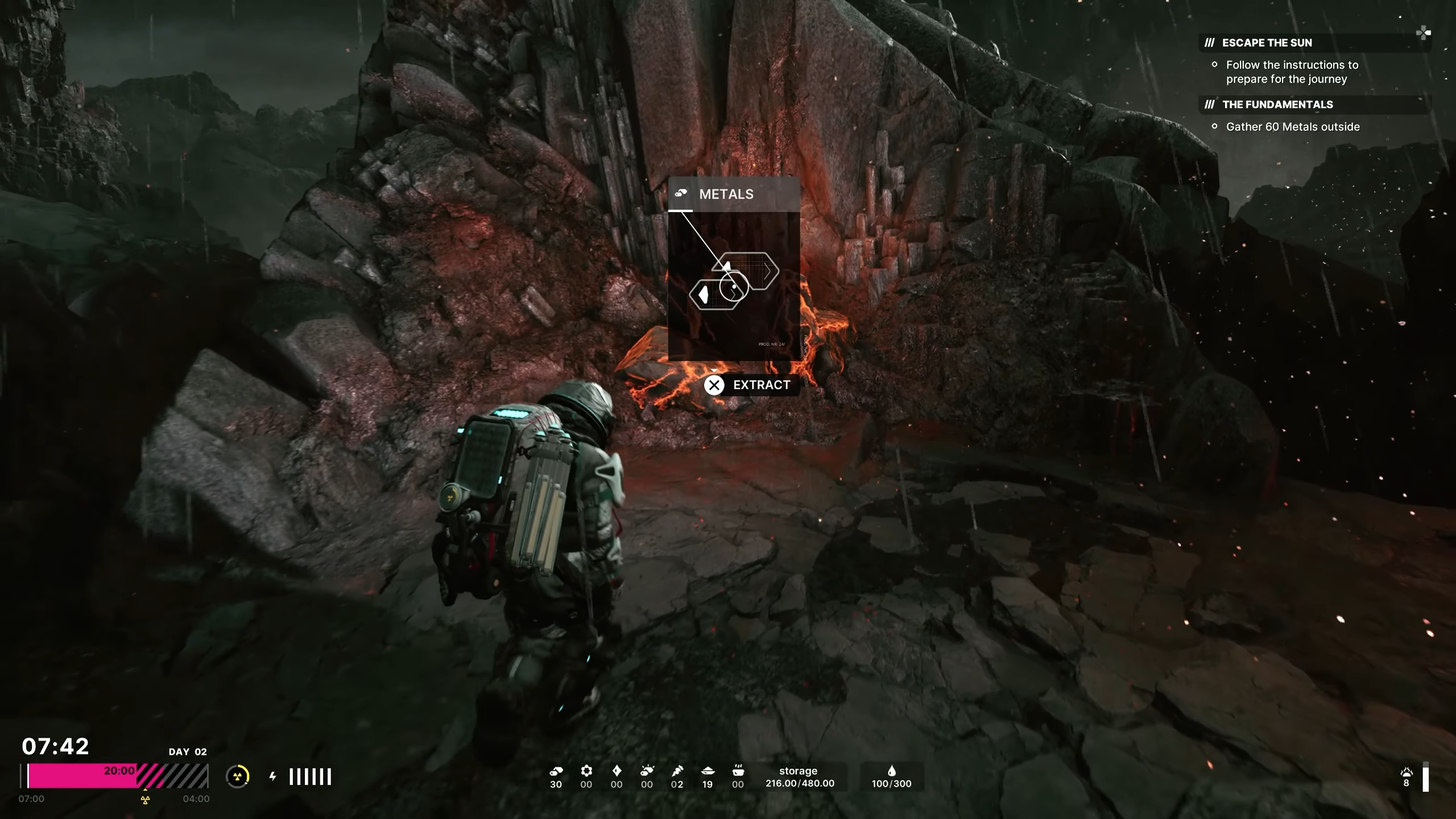
- For DEEP DEPOSIT, you first triangulate the location, then use [[game mechanic - 制作机制 crafting]] to build a MINING OUTPOST to gather resources:
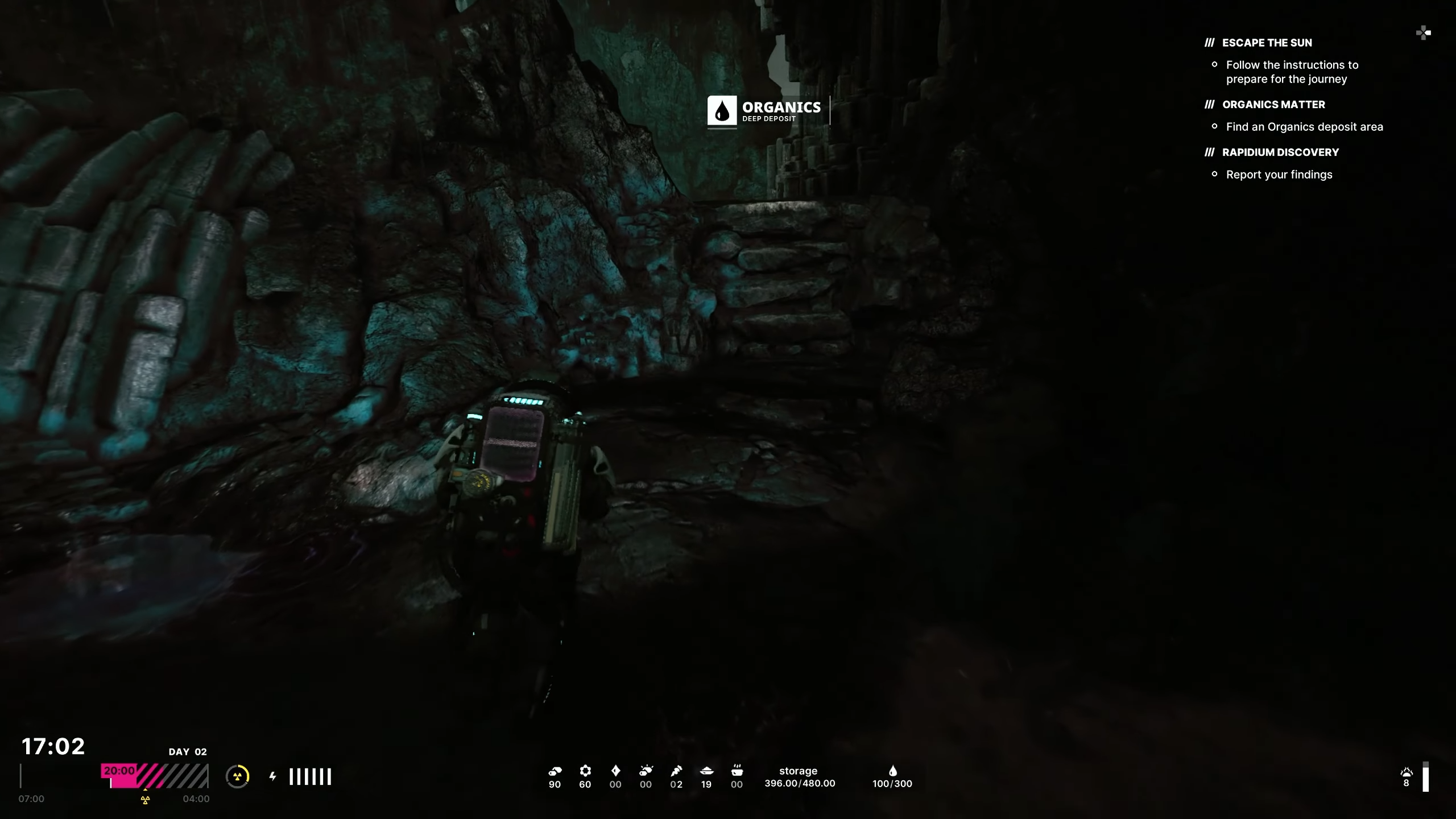
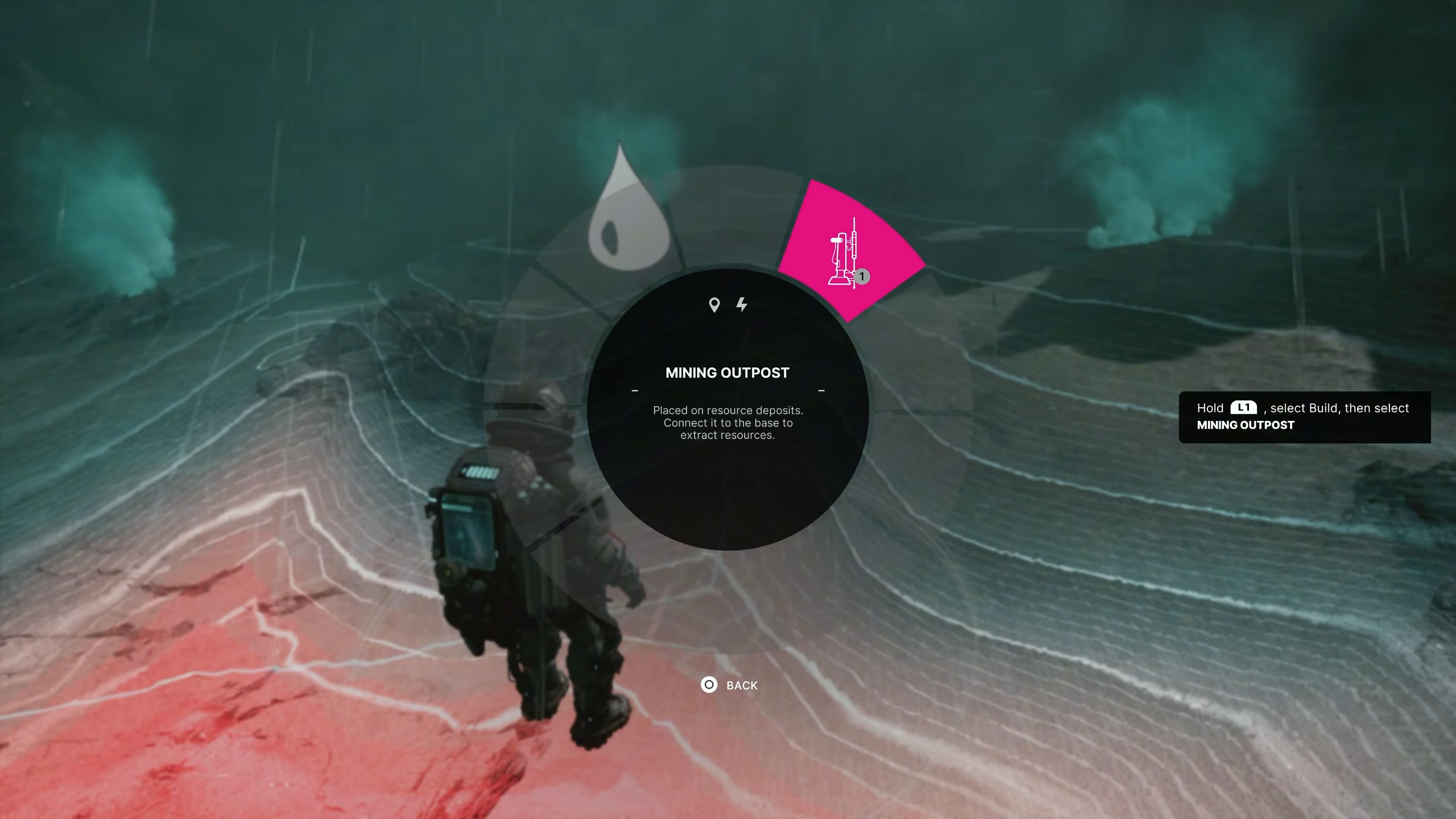
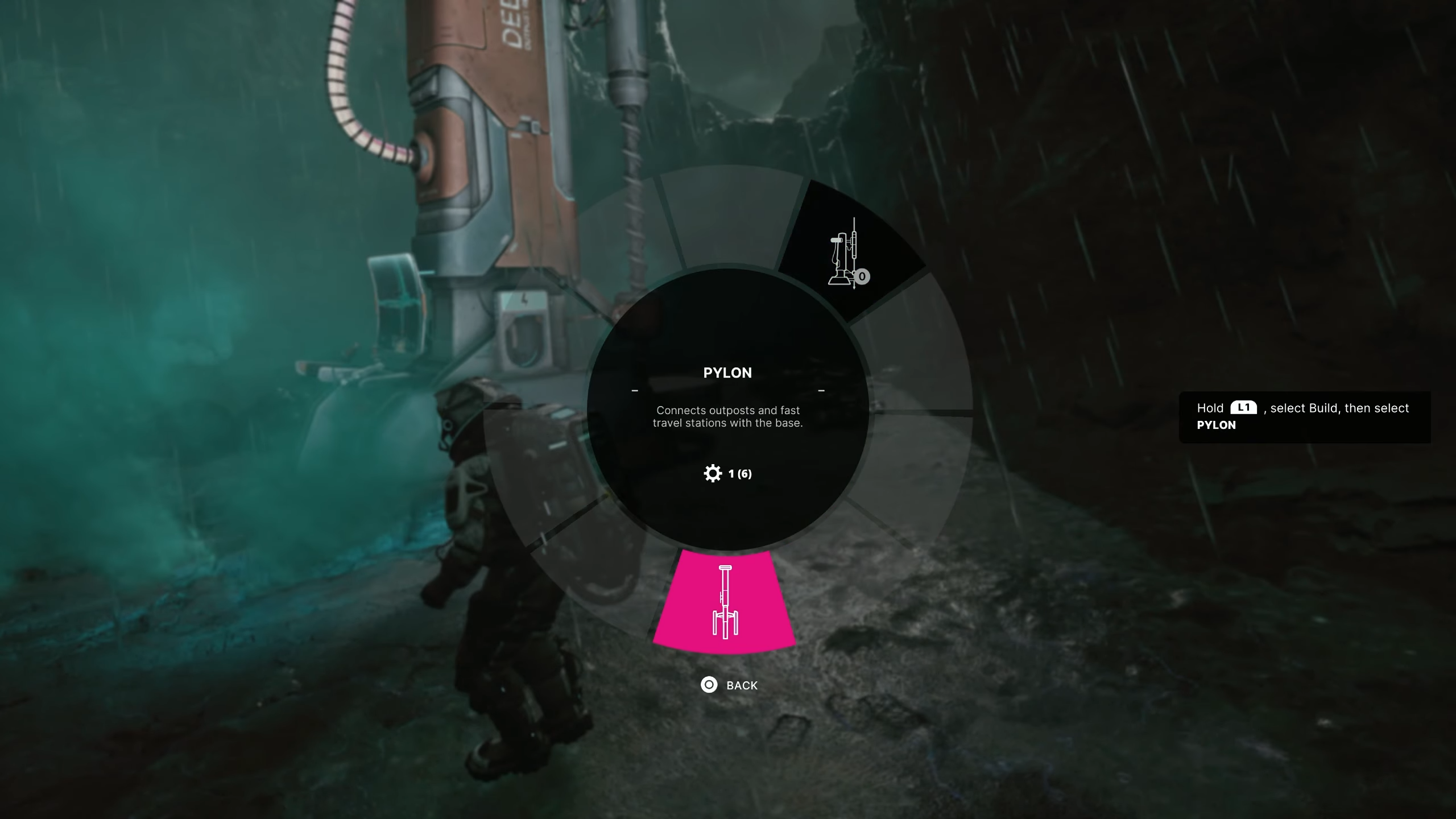
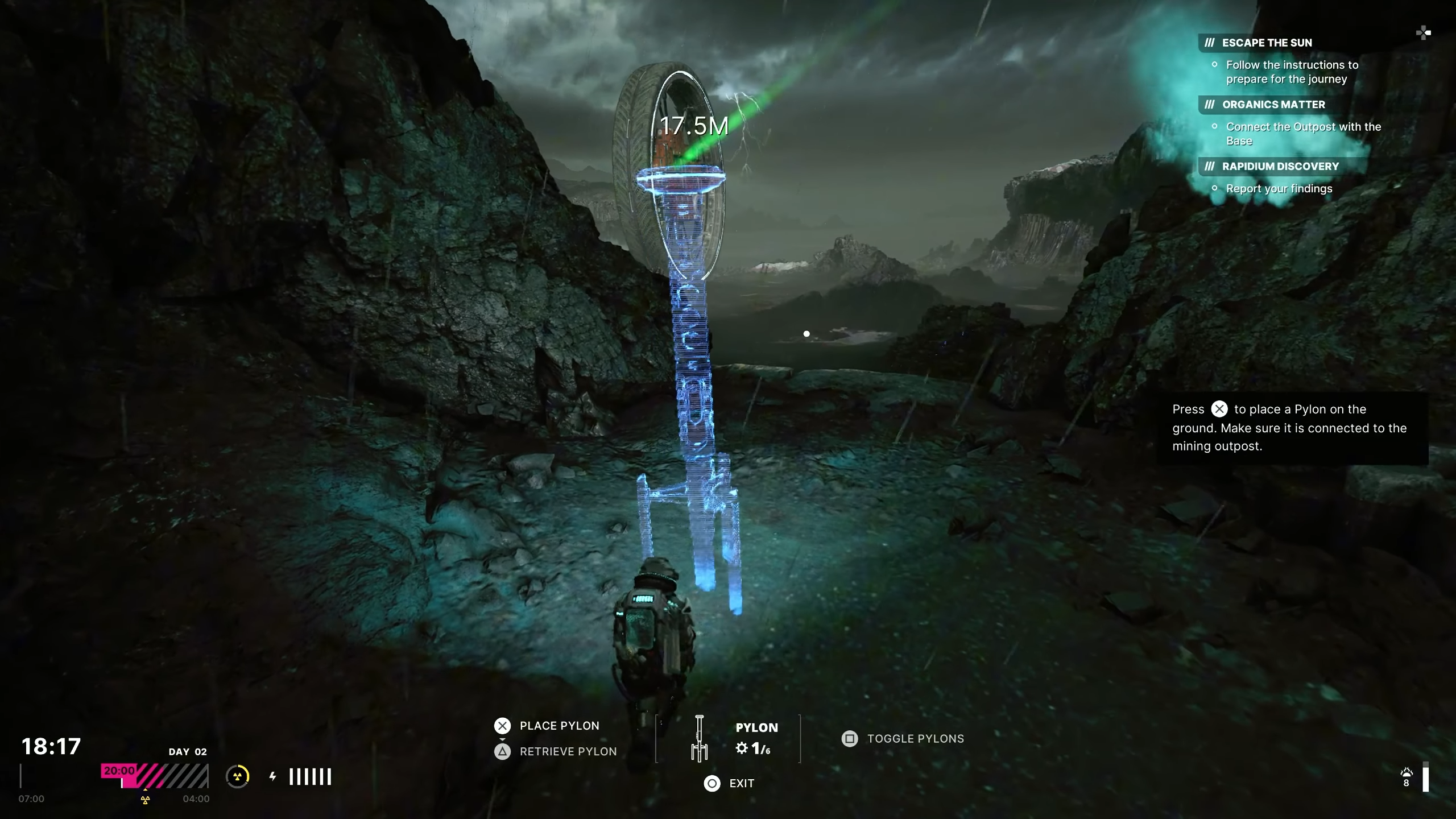
All mining outposts also need to be powered by the base, which requires building PYLON:
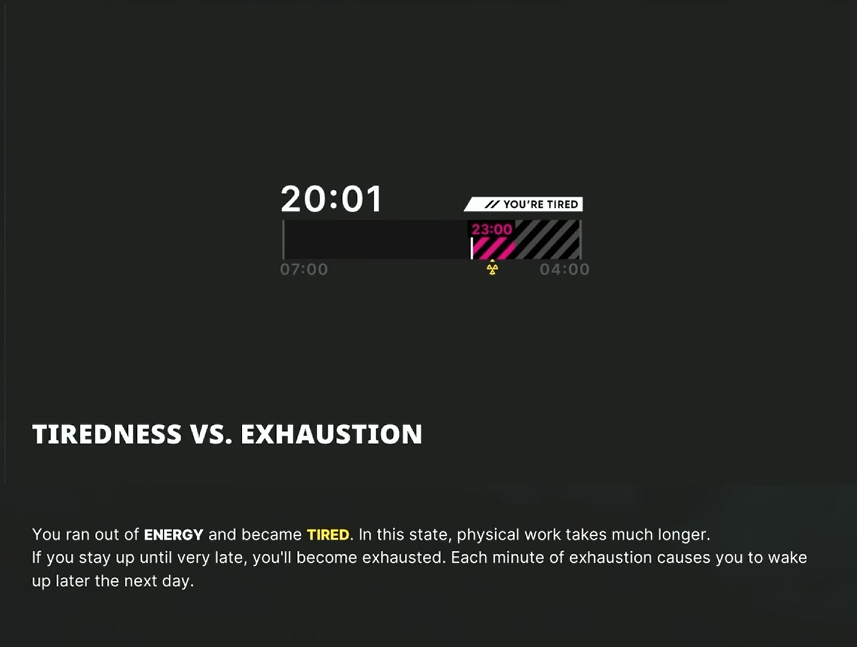
Resource gathering is further constrained by things like [[soft currency - tiredness & exhaustion]]:
- For SHALLOW RESOURCES, you can harvest them directly via [[game mechanic - 简单交互 simple interaction feedback]], but the quantity is limited:
- All harvested resources are automatically stored in the base’s resource pool, which is bounded by [[soft currency - capacity]]: some resources have individual caps (100/300), and there’s also a total cap for everything (404/480):

- Then you can spend resources at the base on [[game mechanic - 建造 build]]:
The other major pillar of [[玩法和挑战 gameplay & challenges]] is [[gameplay & challenge - 基于选择的叙事 choice-based narrative]], built on mechanics like [[game mechanic - 异步通讯 asynchronous communication]] and [[game mechanic - 分支对话 choice-based dialogue]]:

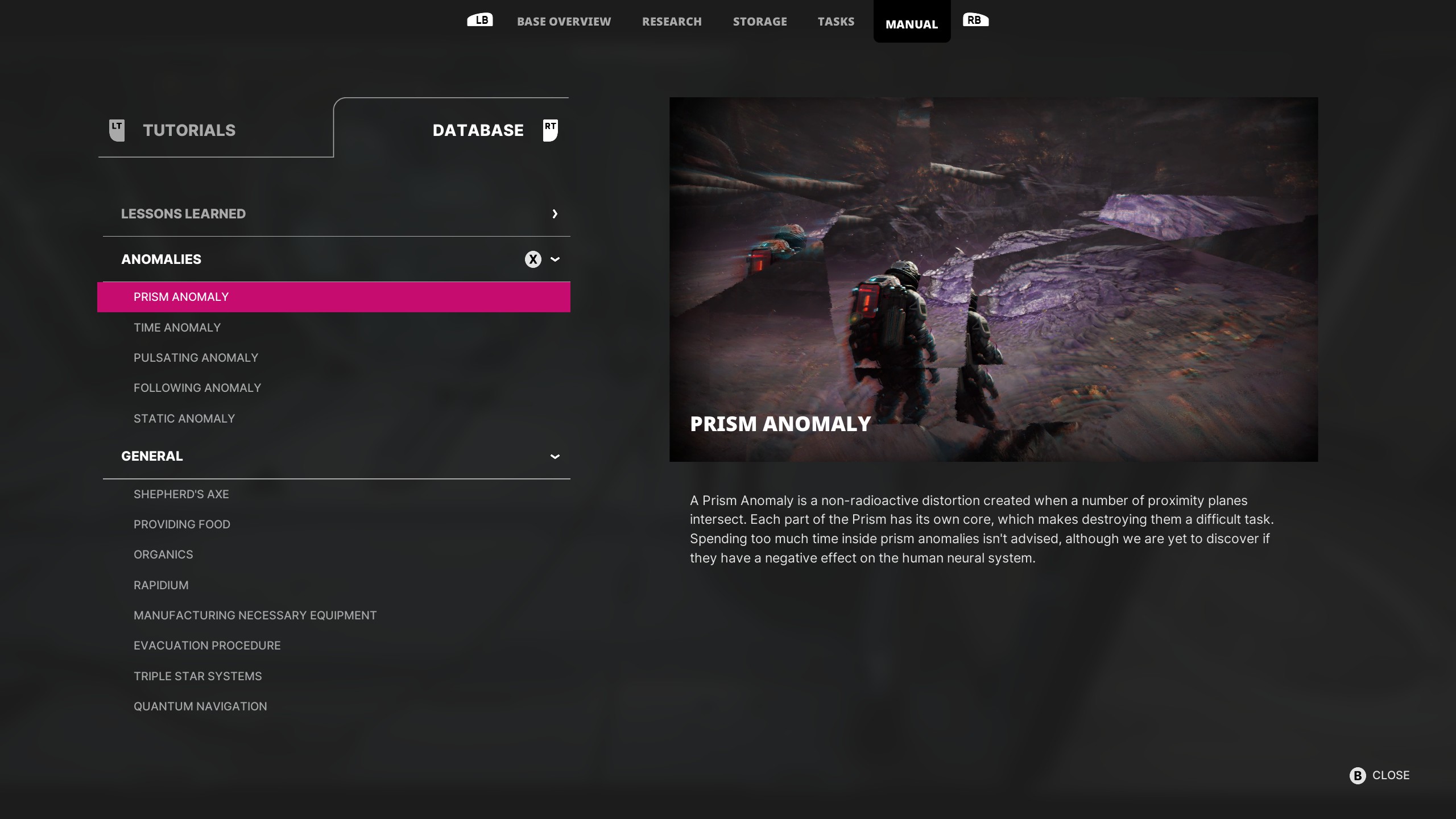
[[game mechanic - 异步通讯 asynchronous communication]] mainly refers to the in-game phone system:
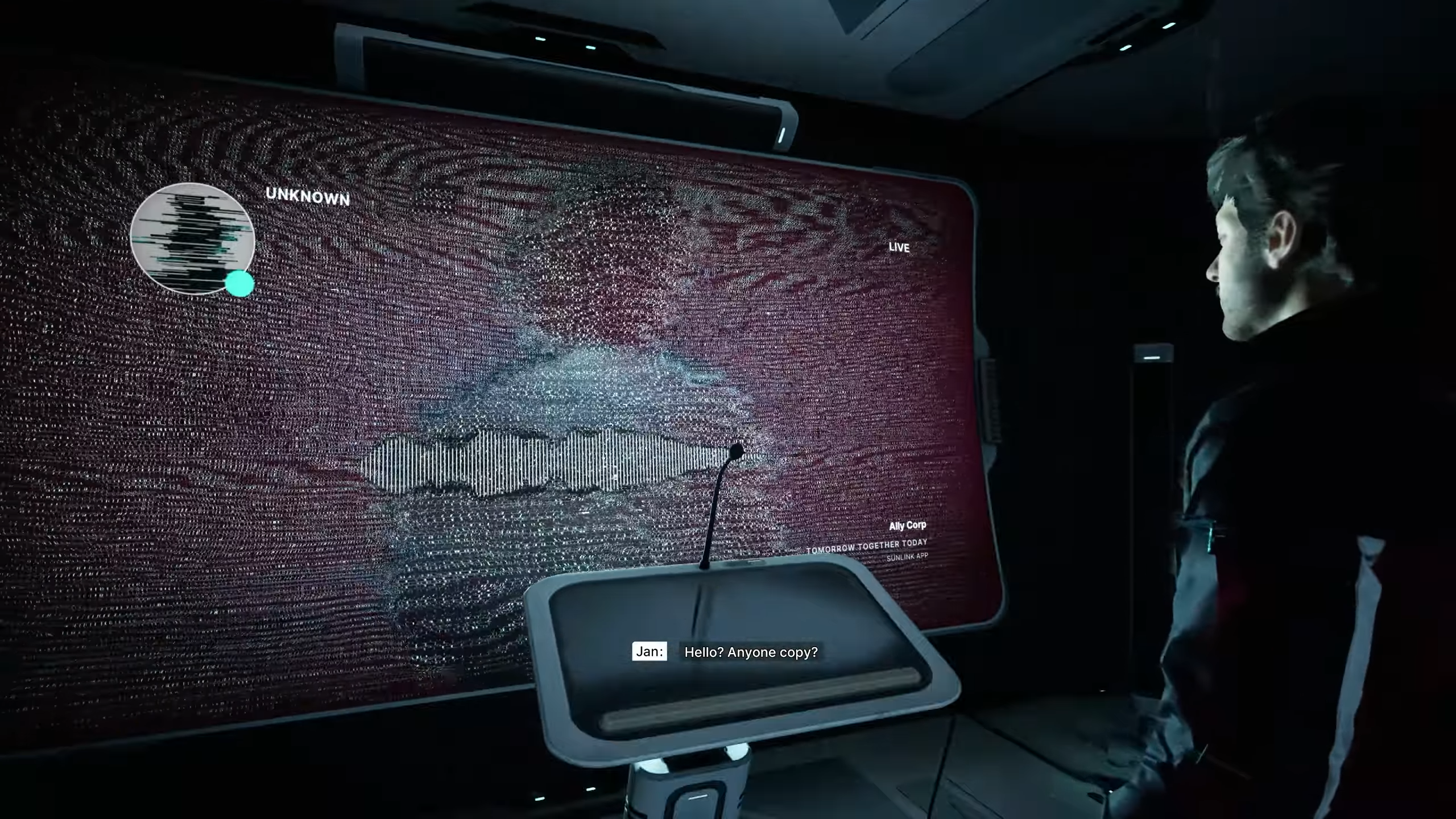
And [[game mechanic - 分支对话 choice-based dialogue]] is self-explanatory:
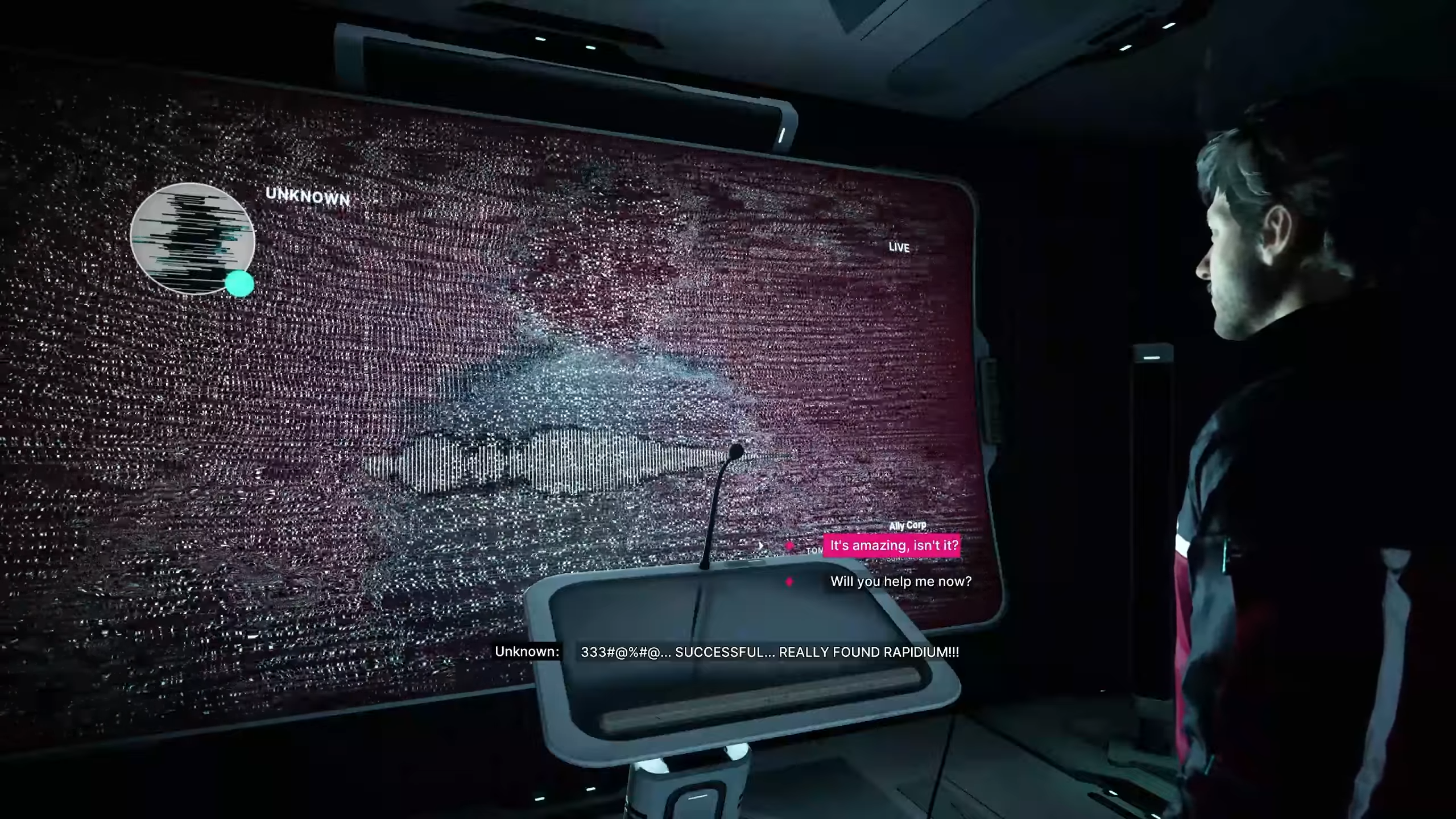
Almost all subsequent narrative gameplay builds on the systems introduced here.
Summary
The PROLOGUE already introduces most of the game’s main systems and mechanics, but it doesn’t feel overwhelming. The narrative baseline — “everyone else is dead except you” plus a mysterious caller — creates a tone of suspense and conspiracy. Combined with the desolate alien visuals and the sci-fi base, it naturally makes you want to see what happens next. And because the game has already foreshadowed the idea of “creating different versions of yourself”, the actual moment you create the first Alter is less shocking and more like a long-awaited arrival.
As mentioned, my emotional swings here mostly came from my own play rather than scripted drama. Still, the feeling of “being stranded alone on a faraway planet where one wrong step means disaster” comes across very clearly.
JOURNEY 1
Emotional Curve
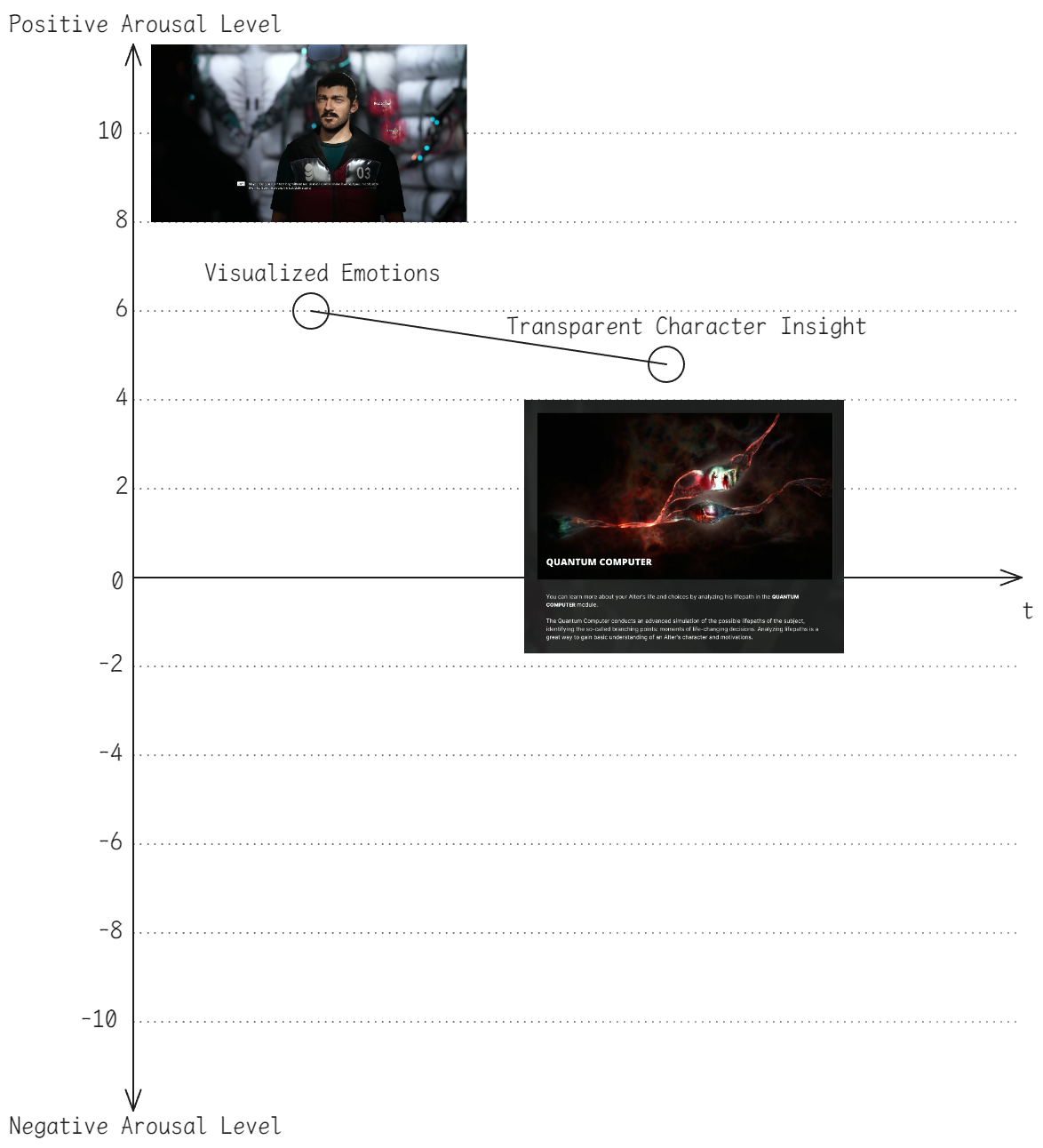
Between destinations you spend short stretches stuck on the ship with nothing else to do. During the first of these trips, I noticed two interesting things:
- Visualized Emotions
- Transparent Character Insight
- Visualized Emotions
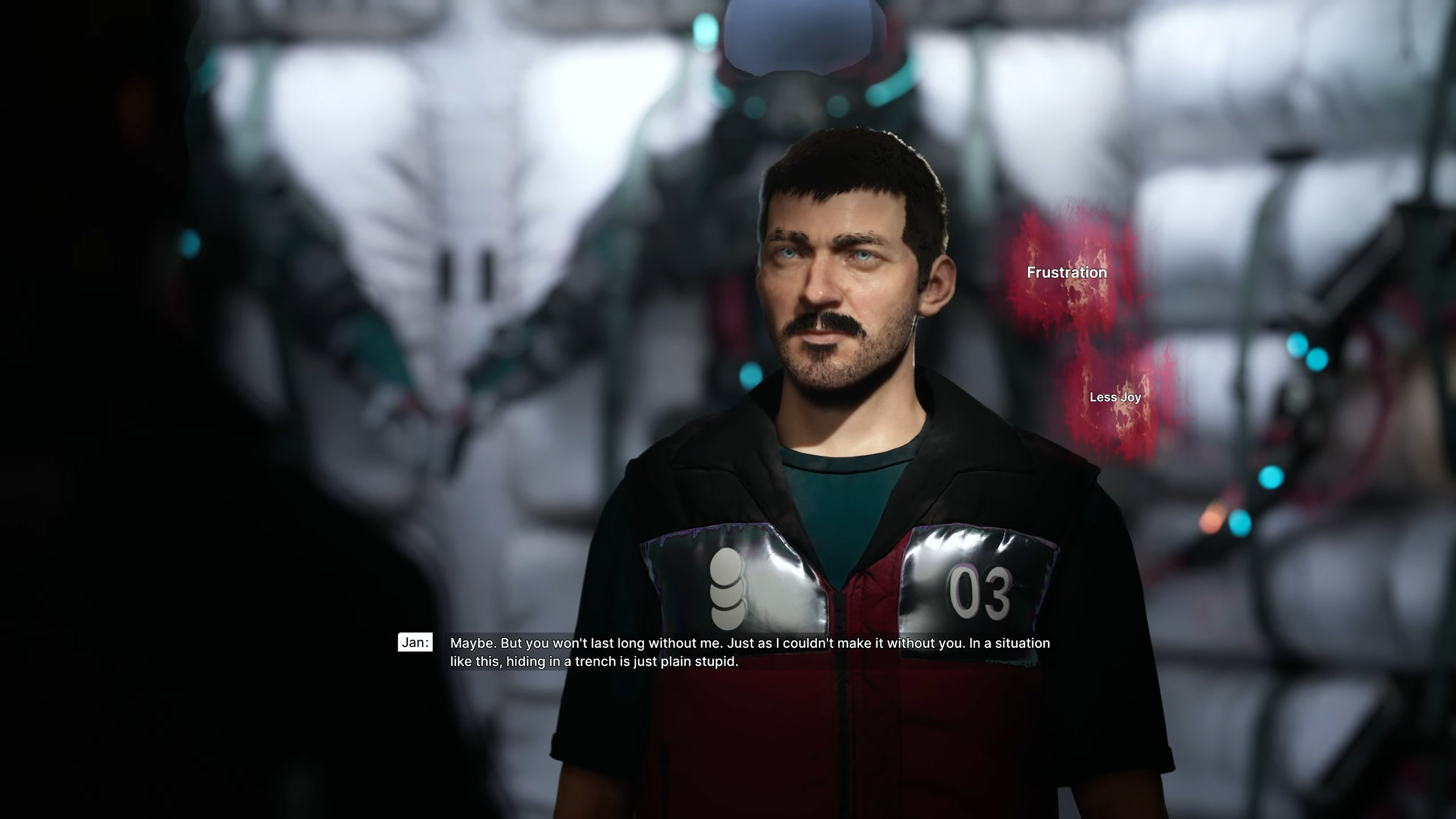
I noticed this immediately because EGDS is also a design system that emphasizes emotional impact, so I’m sensitive to such details. Externalizing emotions this way is very intuitive — it lets players directly feel the emotional outcome of each dialogue option.
- Transparent Character Insight
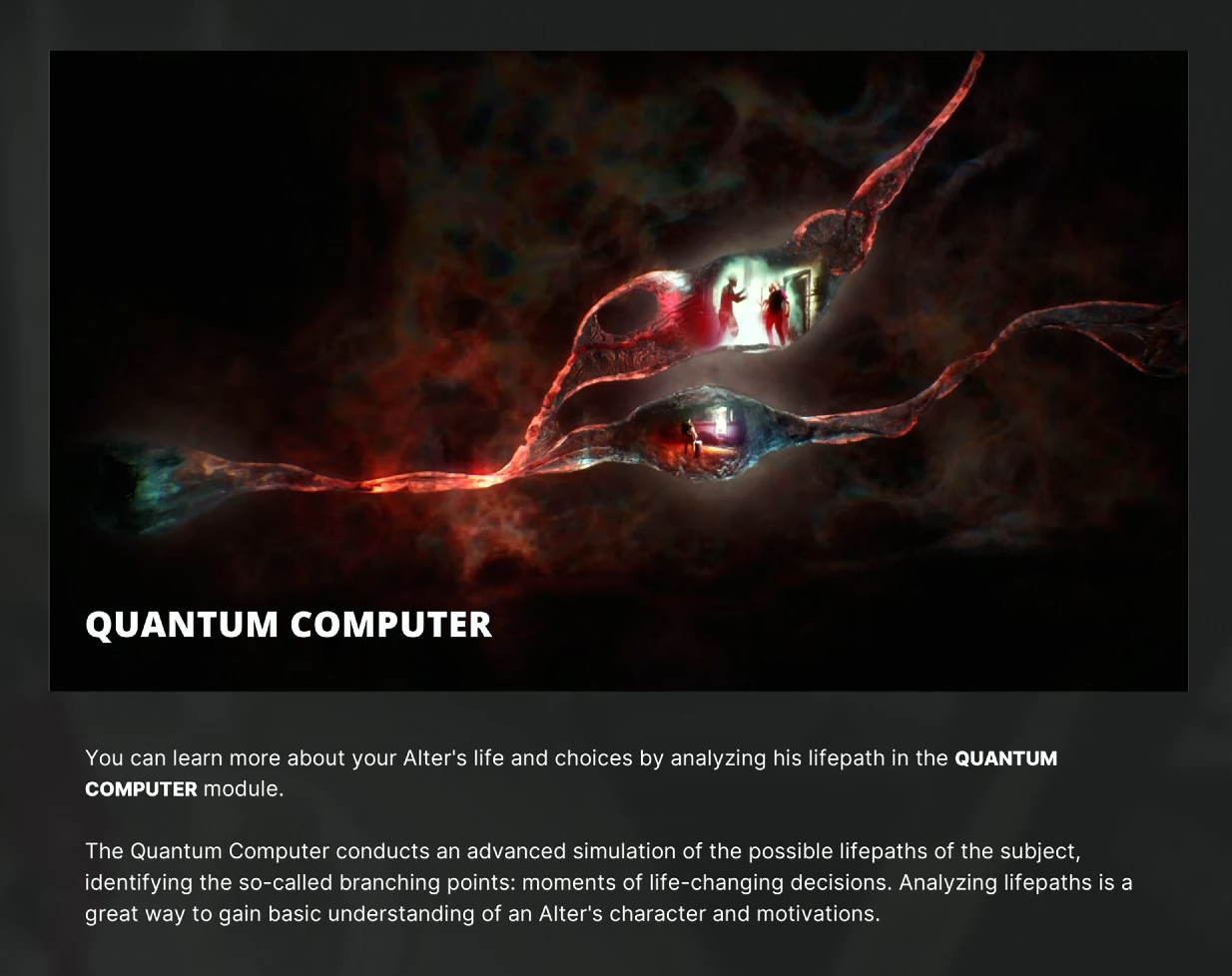
I didn’t label it this way in the moment, but thinking back, this is basically “playing with your cards face up” when it comes to people — almost like a non-romance “Gal-Game”. Compared to a typical galgame, here you completely know the other person’s life trajectory and thought patterns. In theory, you can infer what they’re likely thinking and what kind of answer they want to hear.
ACT 1
Emotional Curve
With the arrival of multiple Alters, the influence of [[gameplay & challenge - 基于选择的叙事 choice-based narrative]] and [[叙事 narrative]] grows significantly.
Items found in the levels may not be particularly useful to your current self, but for other versions of you in different timelines, they’re priceless.
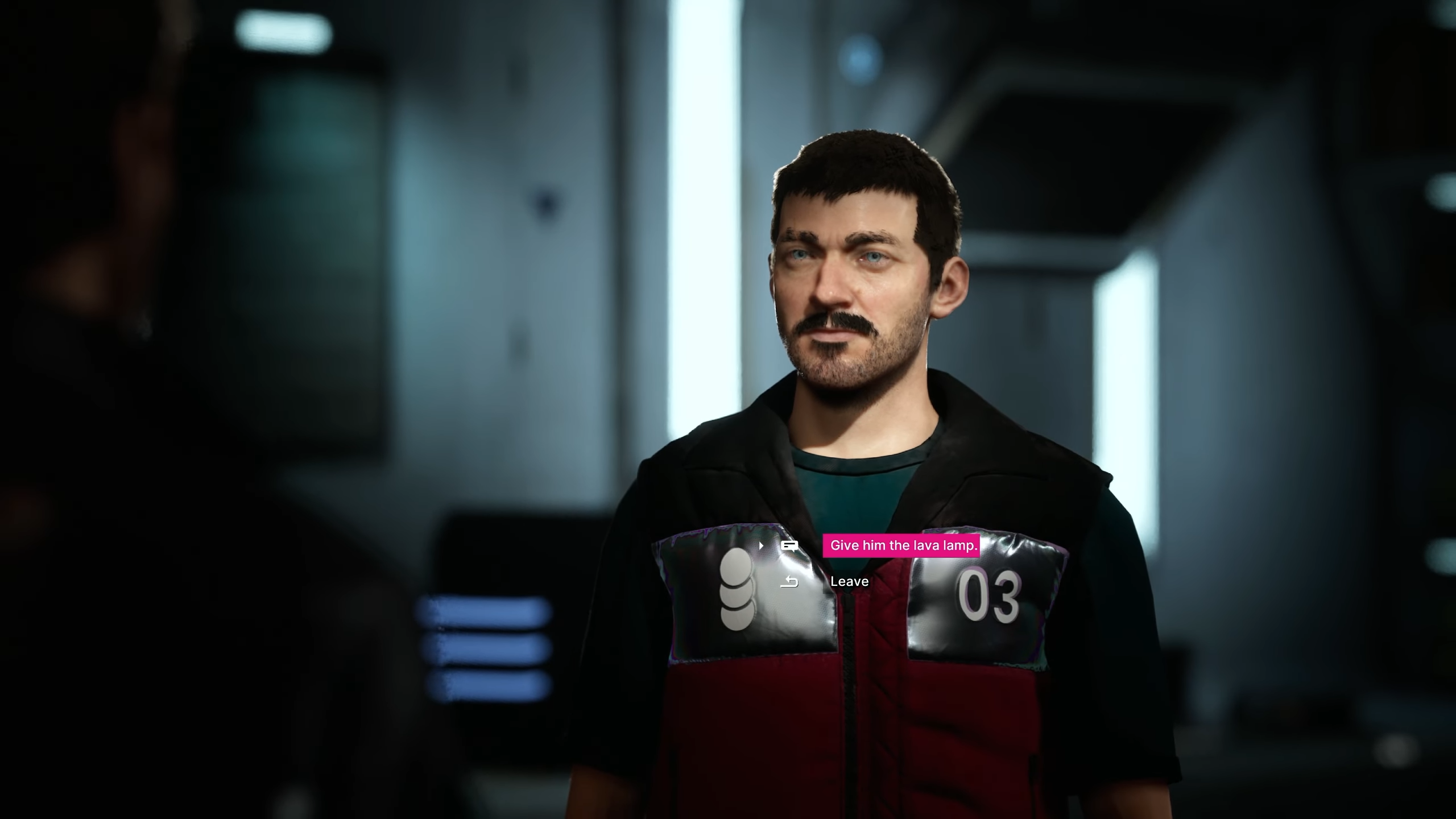
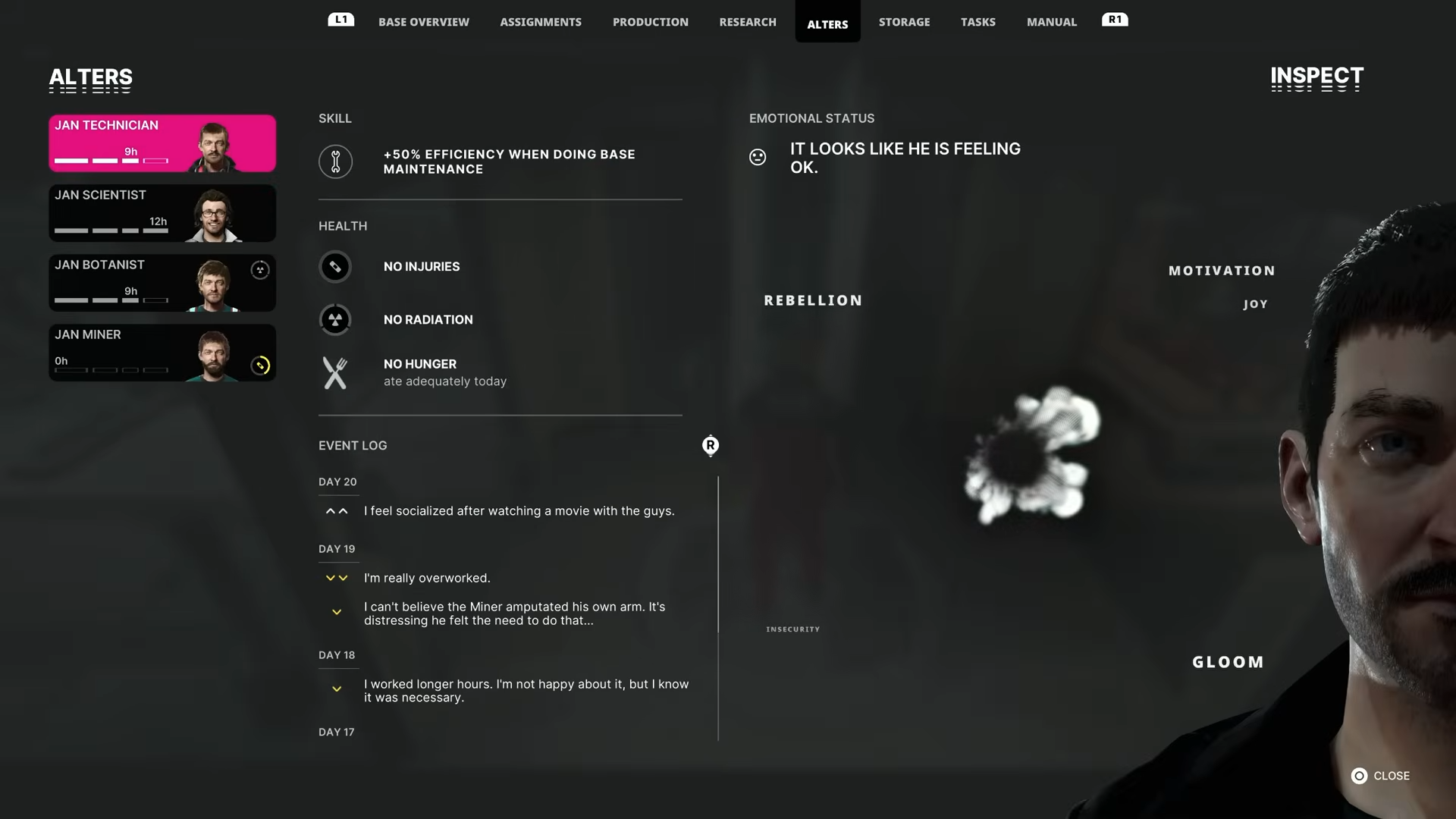
Ironically, the game frequently puts you in situations like this: one moment an Alter is complaining about long work hours and asking for a break; you promise to let him rest, but then you check his mood panel, see that his emotional state isn’t that bad, and promptly assign him more work. This quasi-“self-exploitation” that comes from having a god’s-eye view bugged me at first (I did promise him rest), but later I kind of enjoyed it (after all, his mood bar still looked pretty good).
In ACT 1 you also have a conversation with Maxwell about [[加缪 Albert Camus]] and [[英雄主义 heroism]]:
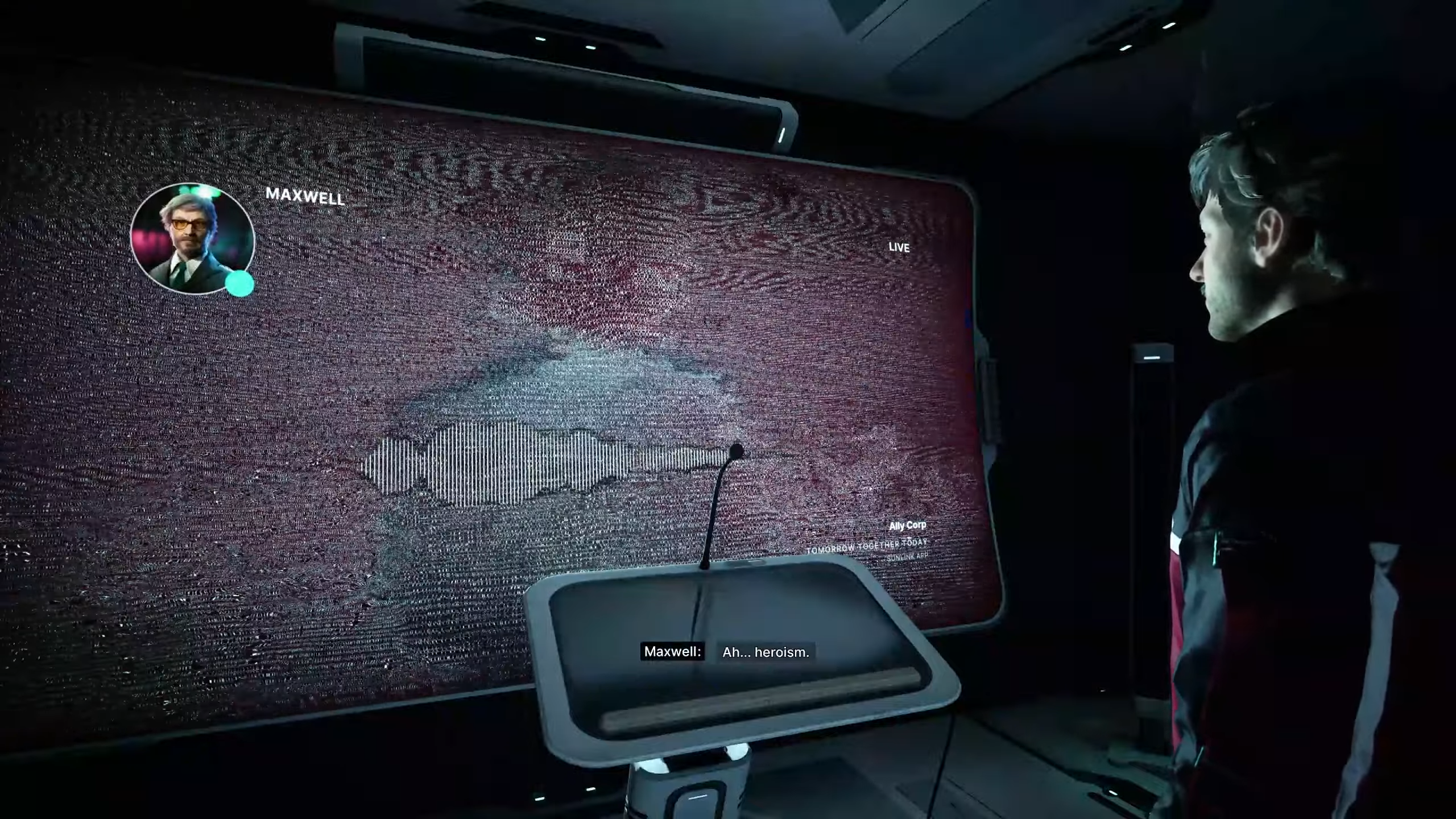
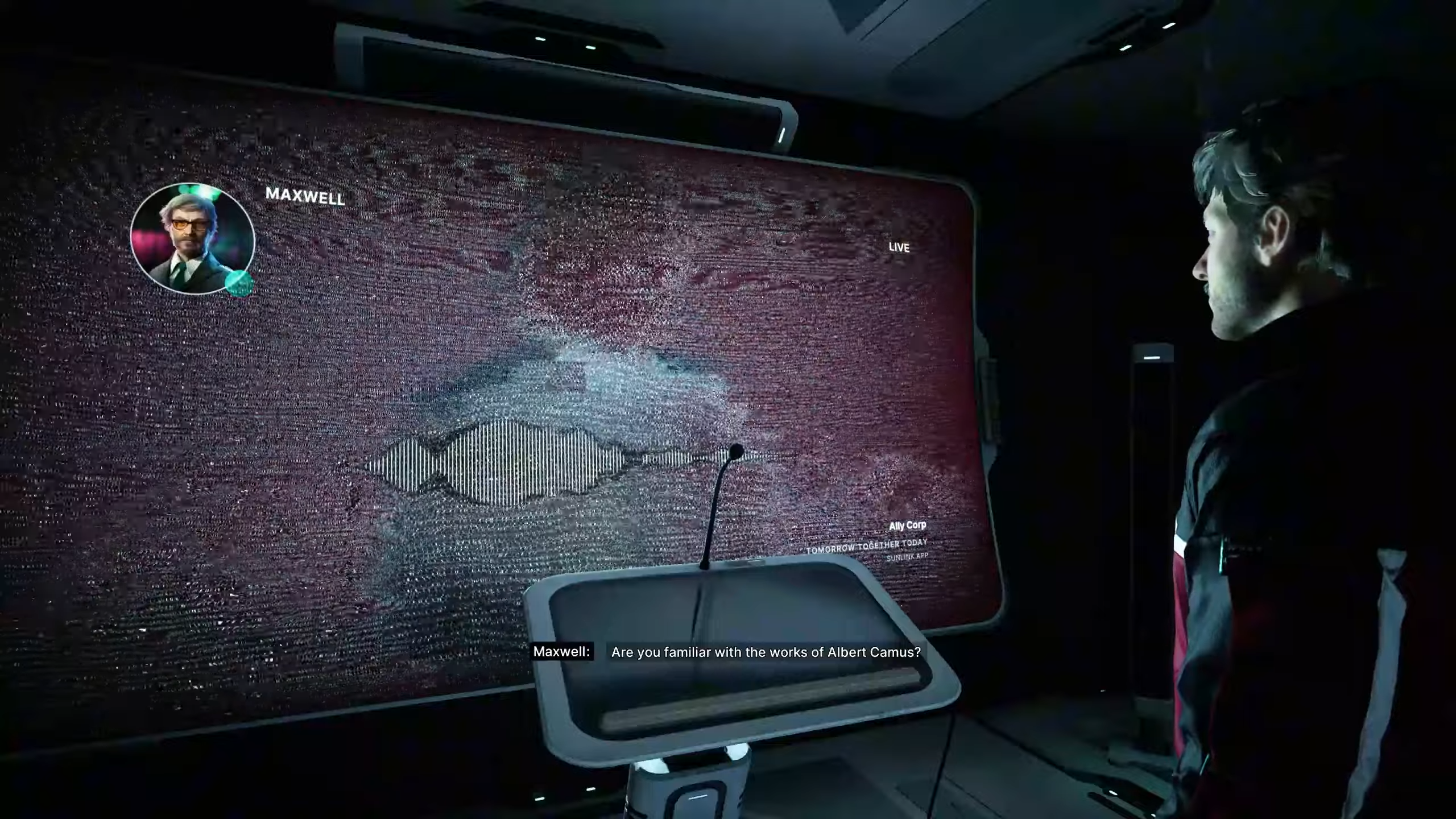
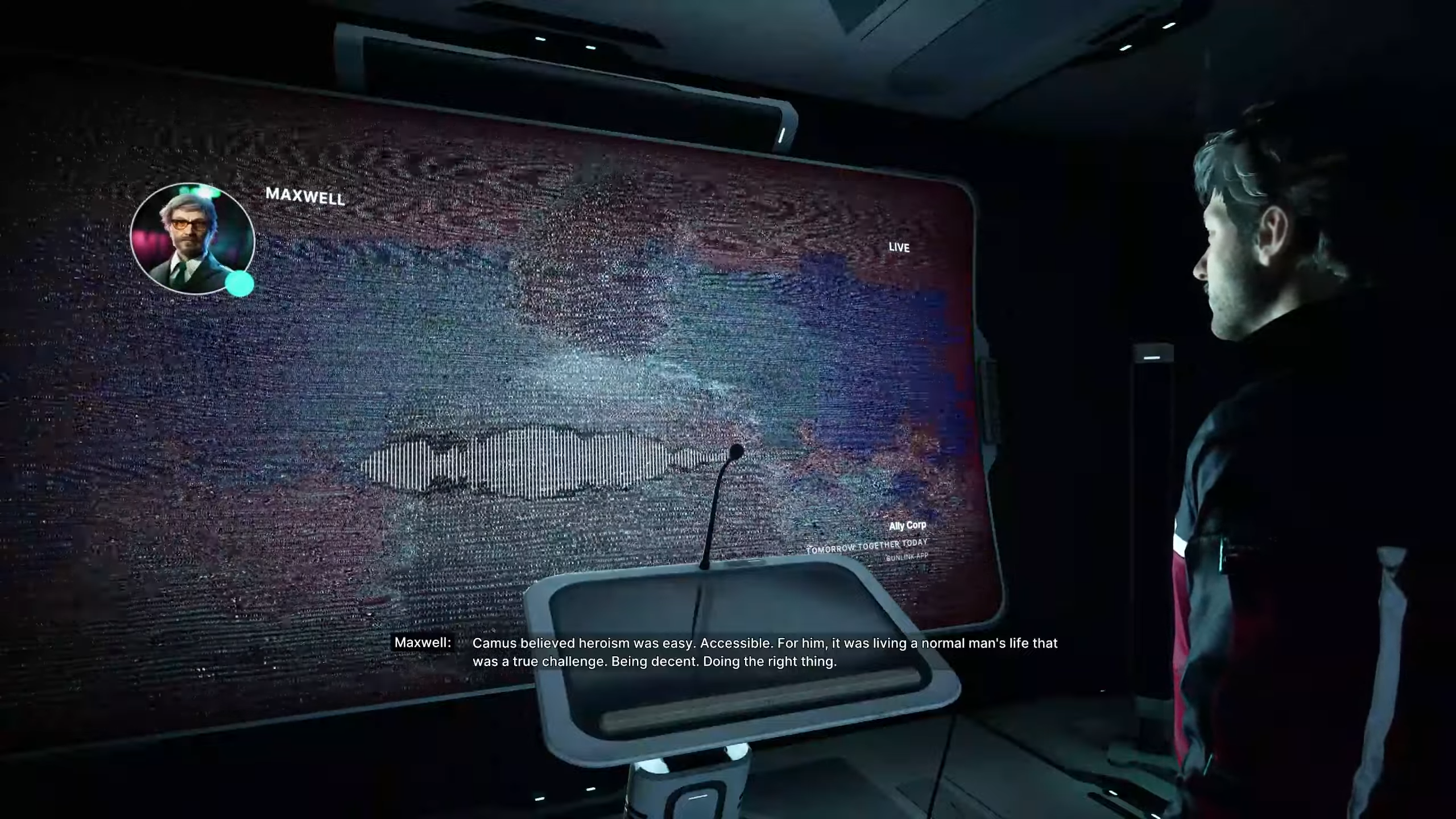
Coincidentally, I had just finished reading [[book - 荒谬之外 - 傅佩荣]], a work by [[傅佩荣]] on [[加缪 Albert Camus]] ’s philosophy, and had written my own thinking on “Sisyphus’ descent 西西弗斯下山”. So seeing Camus show up here was a delightful surprise.
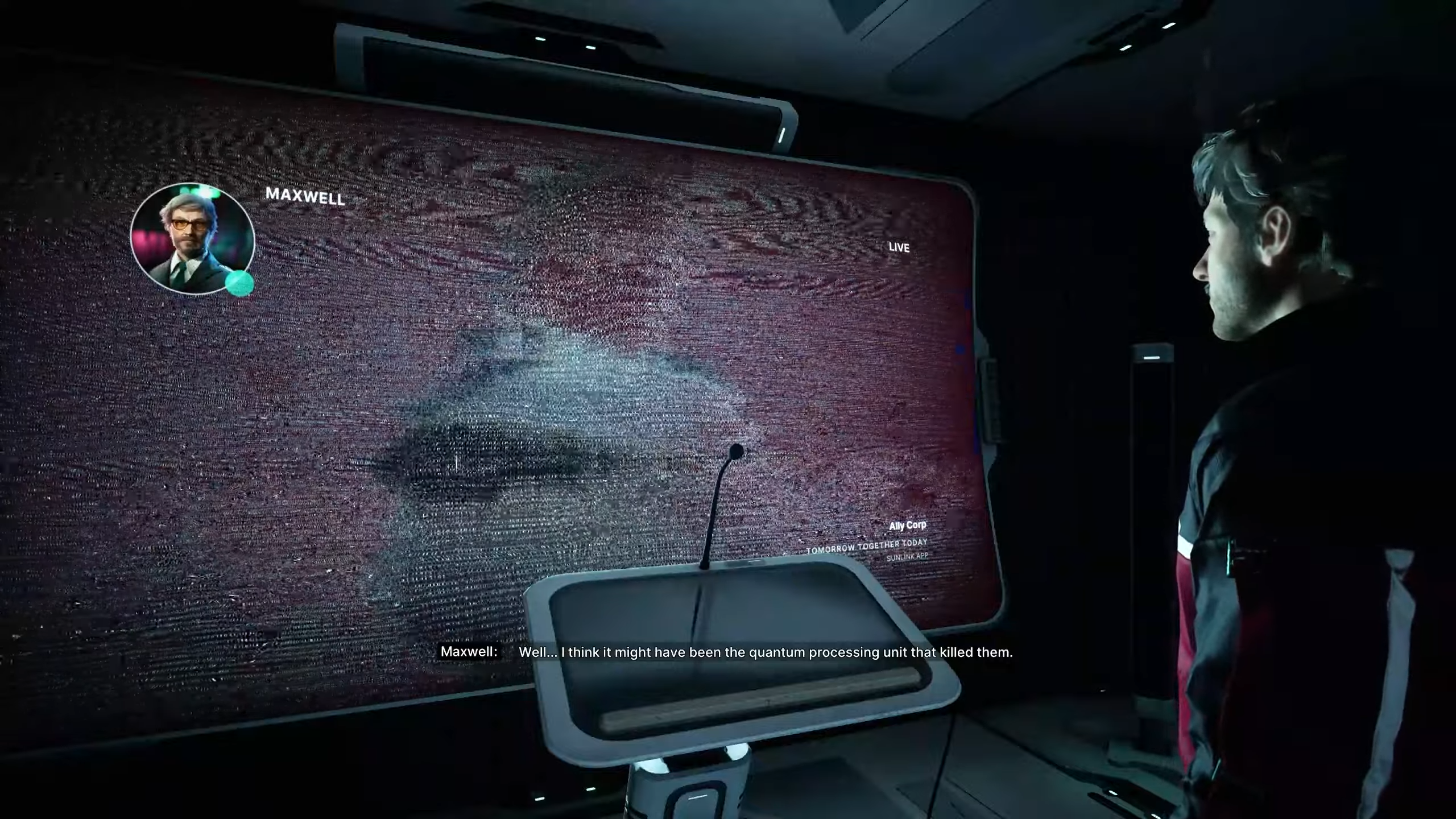
When Maxwell first hinted that the quantum computer killed all the other crew members and chose to keep me alive, I was surprised — but after thinking about it, it did feel “surprising yet inevitable”.
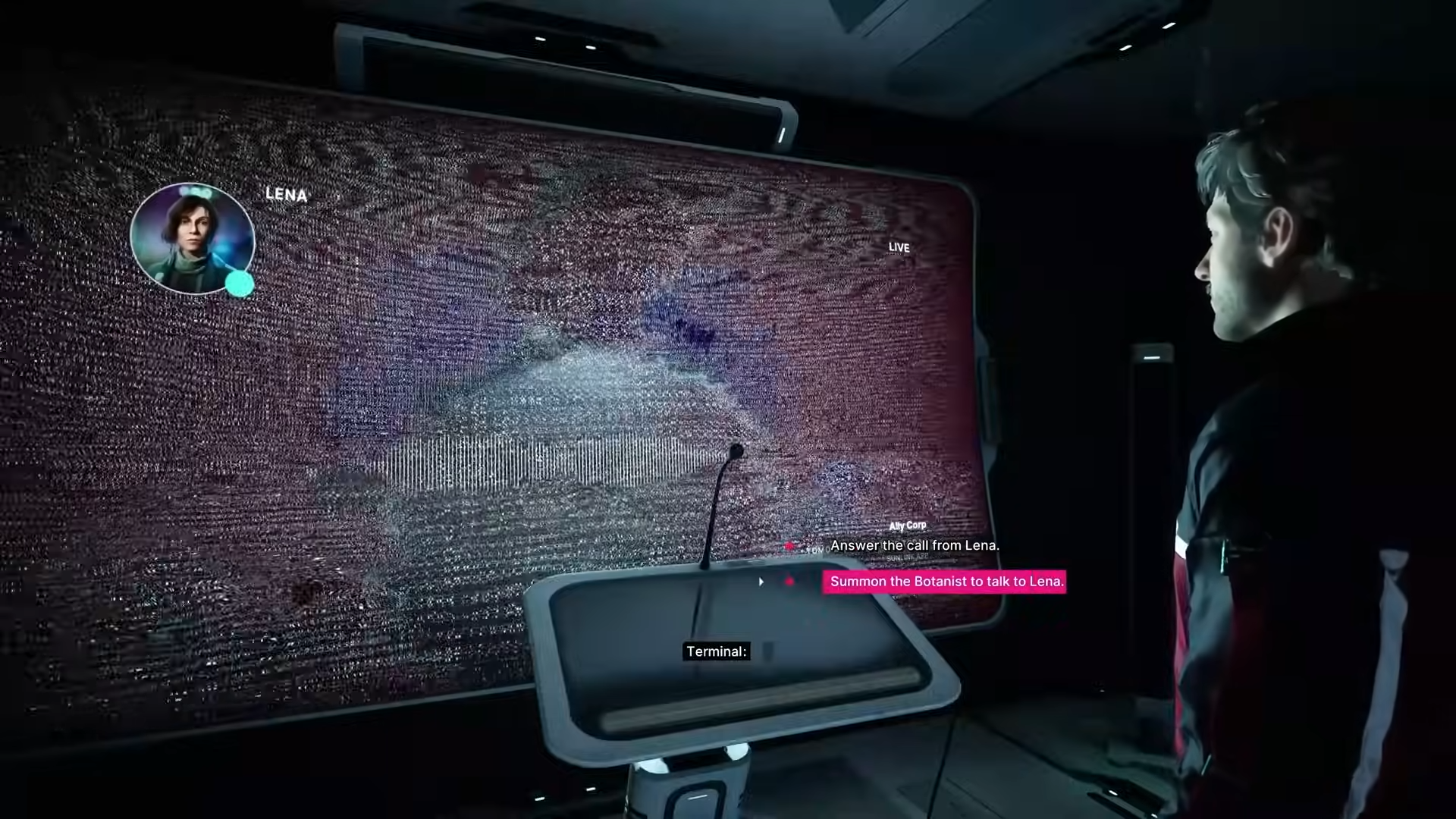
What really put me in a dilemma was the conversation with Lena. Since I had already created the Botanist Alter, I could have him talk with Lena on my behalf. When faced with someone who might genuinely be trustworthy, I hesitated: should I tell her everything and drag her into this mess, or keep her in the dark to protect her?
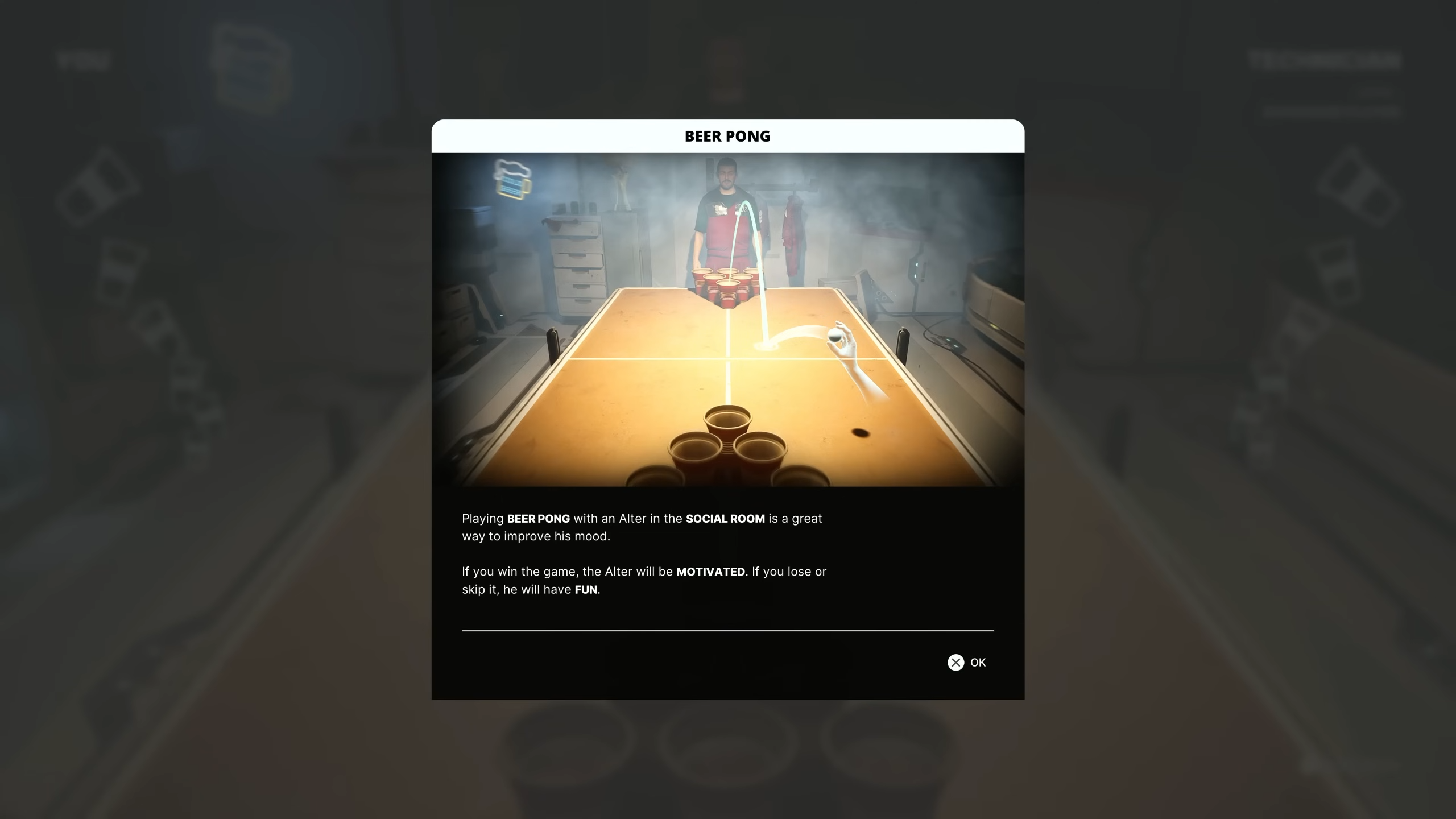
The drinking mini-game was pretty fun. As you drink more and more, the screen simulates drunkenness using [[camera - 运动模糊 motion blur]] and [[camera - 摇镜 tilt]].
Another memorable element is a common tool in [[gameplay & challenge - 基于选择的叙事 choice-based narrative]]: [[game mechanic - 基于条件的对话选项 gated dialogue]].
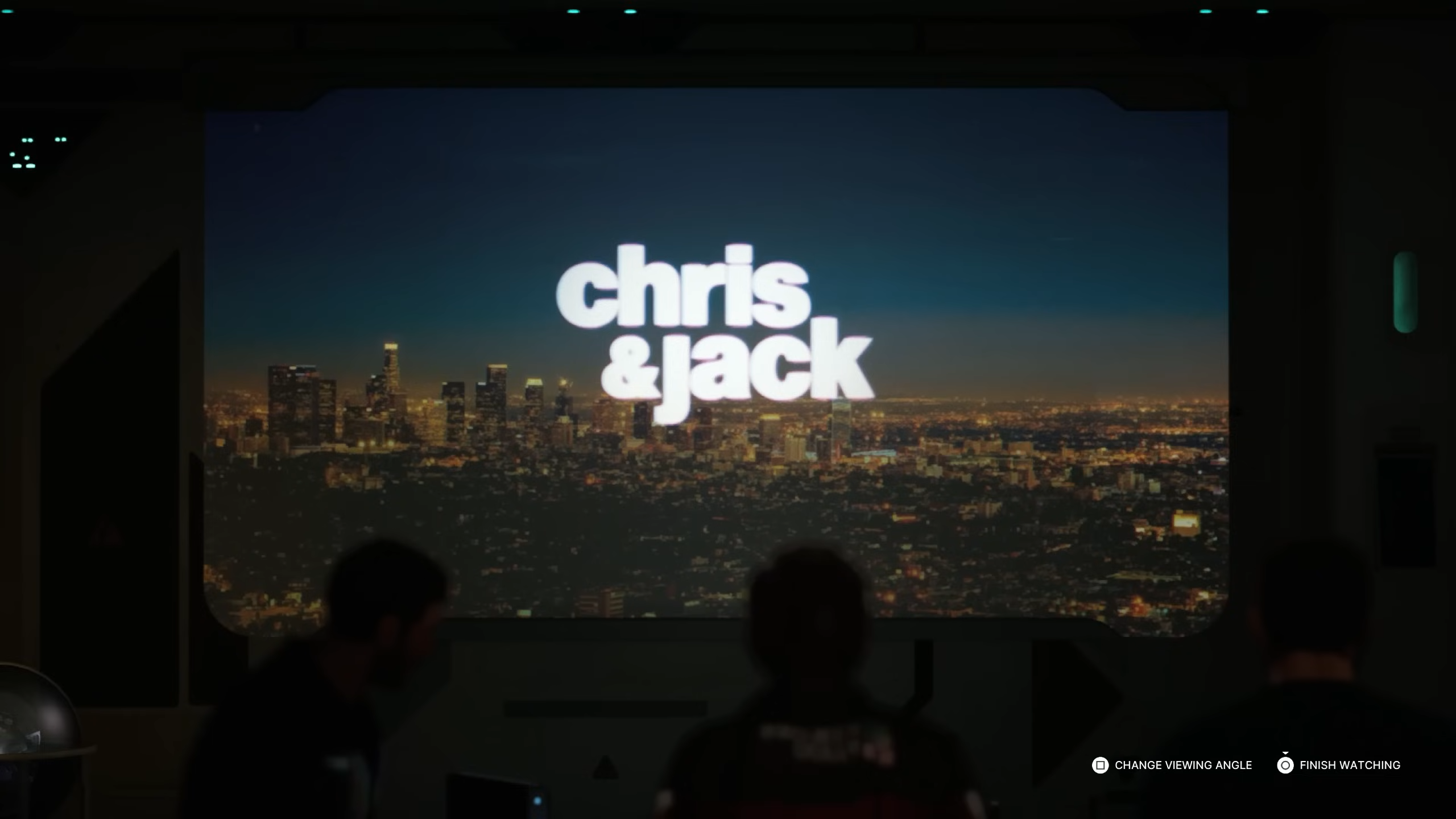
I was also pleasantly surprised that [[collectible - movie]] turns out to be actual short films that play for several minutes. Each clip is different, so I always looked forward to finding the next one.
At the end of ACT 1, I managed to trip myself up again. I didn’t realize there was a mechanic called [[game mechanic - 资源软锁 resource soft reservation]], or rather I hadn’t fully understood it, so I spent several in-game days repeatedly gathering resources, rearranging my base modules, swapping resources and weight, even destroying some previously collected resources to free up capacity for organics — all just to barely make it out. When I finally figured out [[game mechanic - 资源软锁 resource soft reservation]], I could only slap my forehead.


Subjective Feelings & Objective Reasons
With more Alters joining in ACT 1, [[叙事 narrative]] takes on a larger role, while the relative weight of [[玩法和挑战 gameplay & challenges]] and [[美学 aesthetics]] decreases somewhat.
Notable [[主观感受 subjective feelings]] include:
- [[subjective feeling - 有意义的选择 meaningful choice]]
- [[subjective feeling - 代入感 共情 empathy 成为或理解TA - 同情 compassion]]
- [[subjective feeling - 纠结 in a dilemma]]
The corresponding [[客观原因 objective reasons]] are mainly:
- [[objective reason - 取舍 trade-offs]]
- [[objective reason - 不可逆后果 irreversible outcomes]]
- [[objective reason - 资源有限 limited resources]]
Strong [[gameplay & challenge - 基于选择的叙事 choice-based narrative]] and [[gameplay & challenge - 资源管理 resource management]] naturally imply [[objective reason - 取舍 trade-offs]] and [[objective reason - 不可逆后果 irreversible outcomes]]. Meanwhile, [[objective reason - 资源有限 limited resources]] makes each decision more critical — time only moves forward, so doing one thing means you don’t have time for another.
As mentioned, the narrative dilemmas are mostly centered around conversations with Lena. Once you’ve developed [[subjective feeling - 代入感 共情 empathy 成为或理解TA - 同情 compassion]] toward the player character and the Alters, you can’t help but weigh the pros and cons.
Design Levers
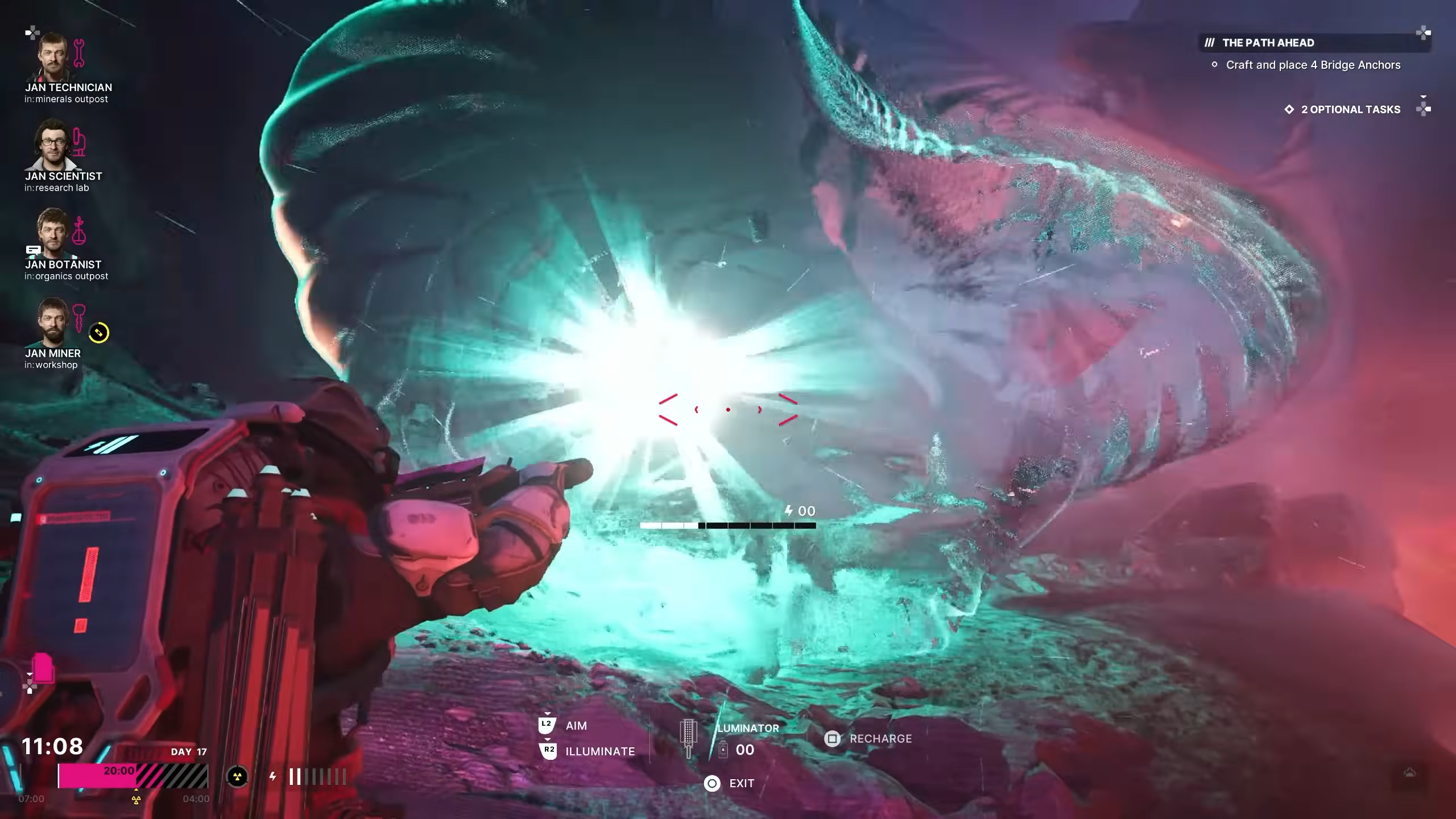
- [[gameplay & challenge - 瞄准射击 aim & shoot]]
ACT 1 introduces a new type of “enemy”. After researching and unlocking “weapons”, you can see invisible entities in the level and “eliminate” them. At this stage, if I remember correctly, these enemies are static — they don’t move or chase you.
- [[game mechanic - 单位管理 unit management]] & [[soft currency - emotion]]
Once the Alters join in, they can participate in [[game mechanic - 收集 collecting]], but you have to take care of their well-being.
The drinking game is a standalone mini-game and doesn’t directly tie into the core gameplay loop, so I won’t go into more detail here.
On the [[叙事 narrative]] side, the story unfolds gradually as more [[narrative content - 人物 character]] are introduced. If we borrow terms from [[Five-Act Structure 五幕结构 - Gustav Freytag]], this is the Rising Action.
Summary
Overall, ACT 1 flows naturally from the PROLOGUE. The background has been laid out; now the novelty lies in the steady arrival of new Alters and learning their life stories — which are also glimpses of what you could have become. The gameplay difficulty ramps up slightly, and from a progression standpoint the challenge scales smoothly. I grew increasingly familiar with the systems and tried to maximize collected resources. It was precisely this “blind confidence” that cost me several extra days and forced me to scrap resources I had stockpiled earlier before I could finally take off.
JOURNEY 2
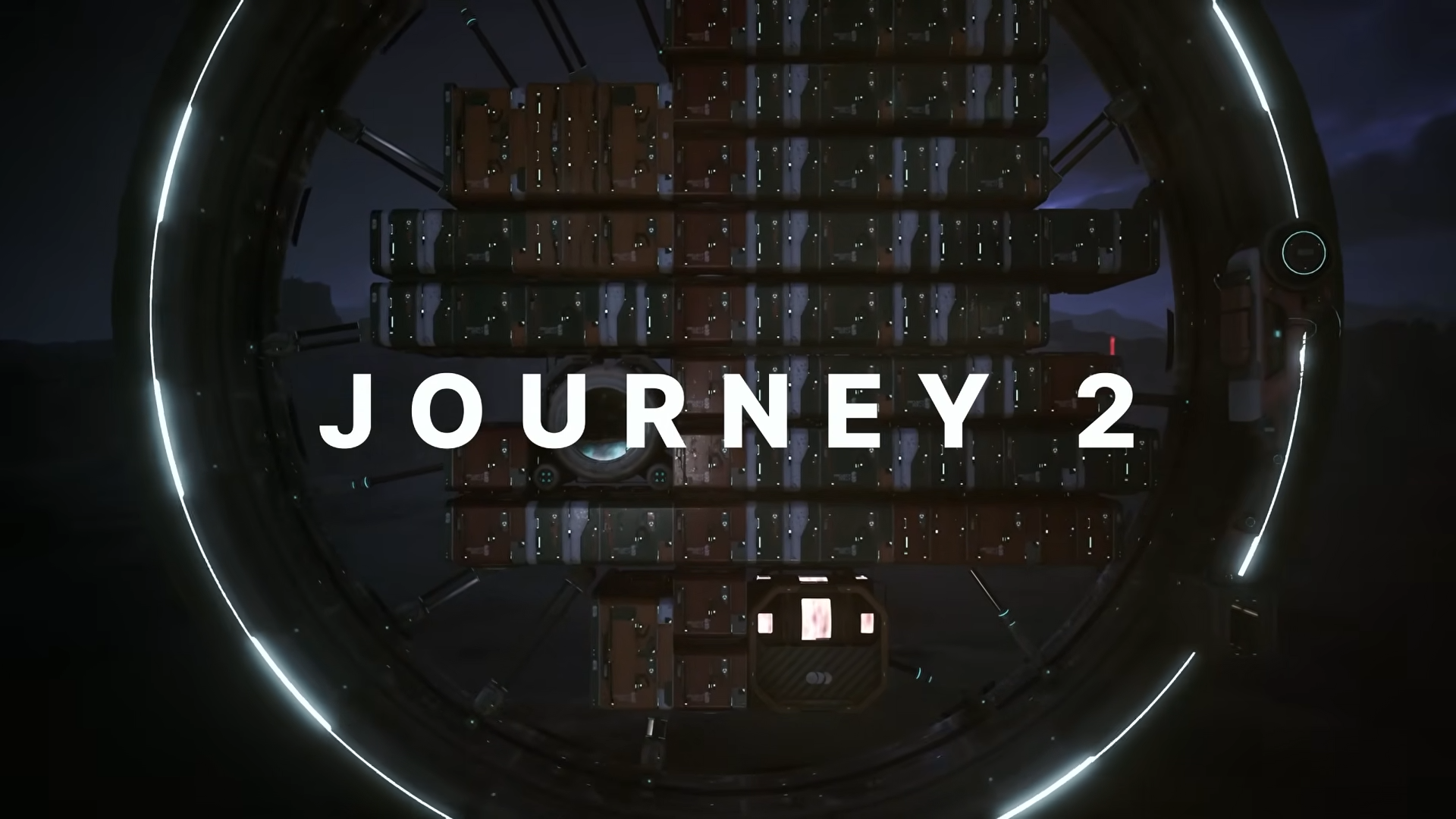
Emotional Curve
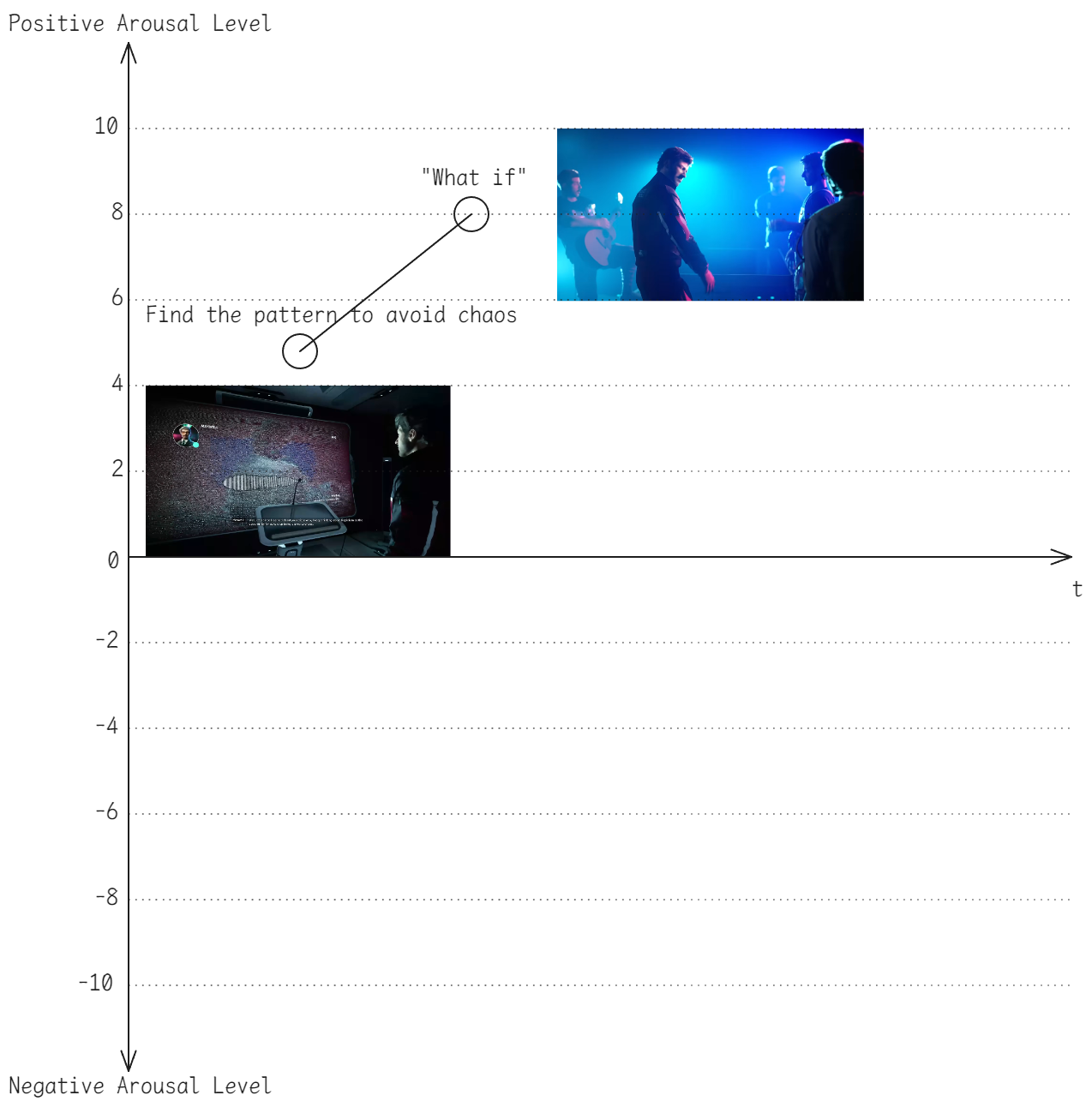
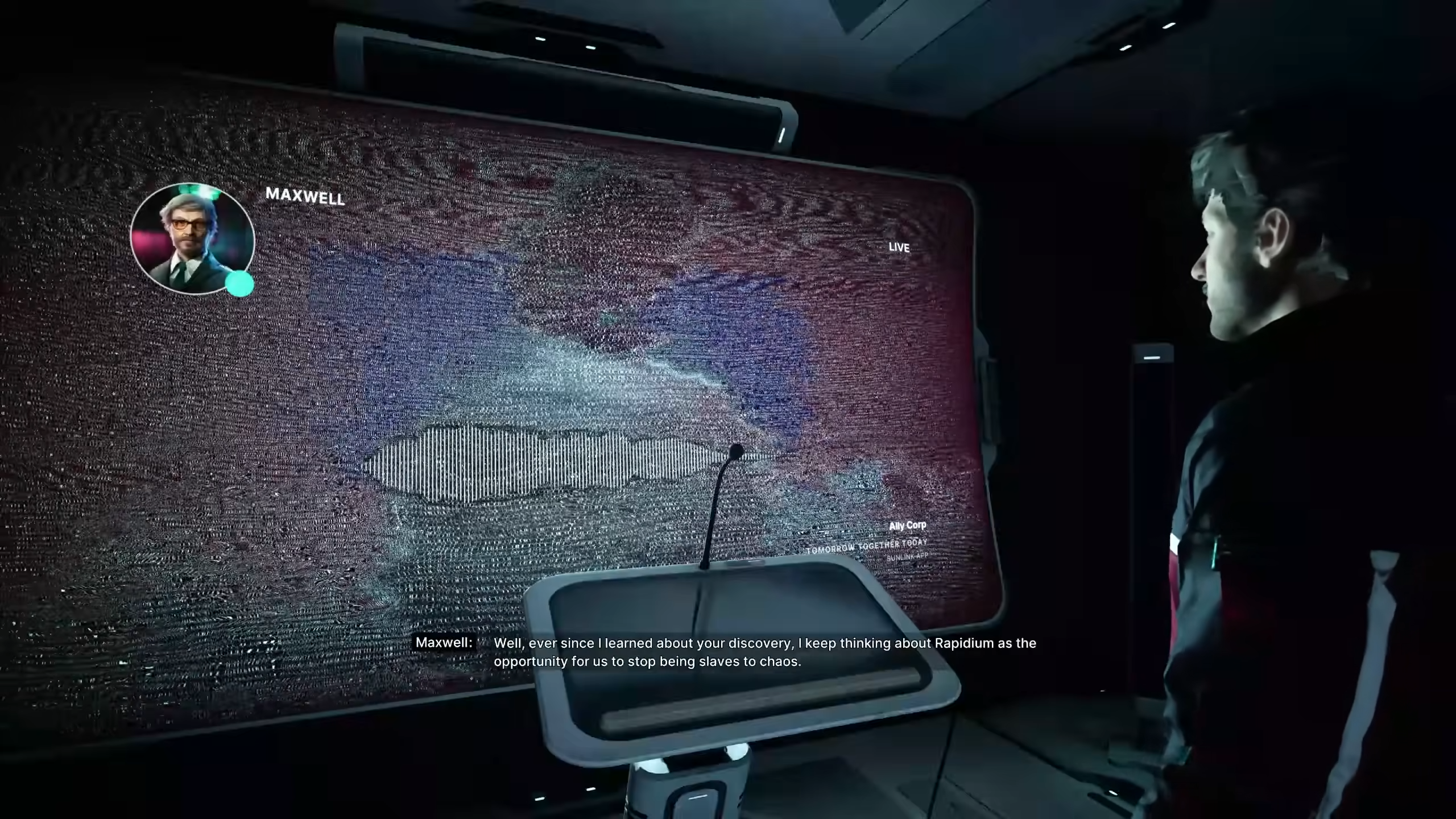
This section starts with another conversation with Maxwell, where he reveals a bit more of his goal — to search for patterns in chaos. It reminded me of the [[猴子打字机 Infinite monkey theorem]].
Then comes what might be my favorite emotional high point in the whole game — the group performance of What If.
All the Alters and the original self sing in their unique voices, each verse reflecting their personality.
Looking back at the past, standing still in the present, talking about the future. Letting go of division, holding together as one — it’s warm and powerful.
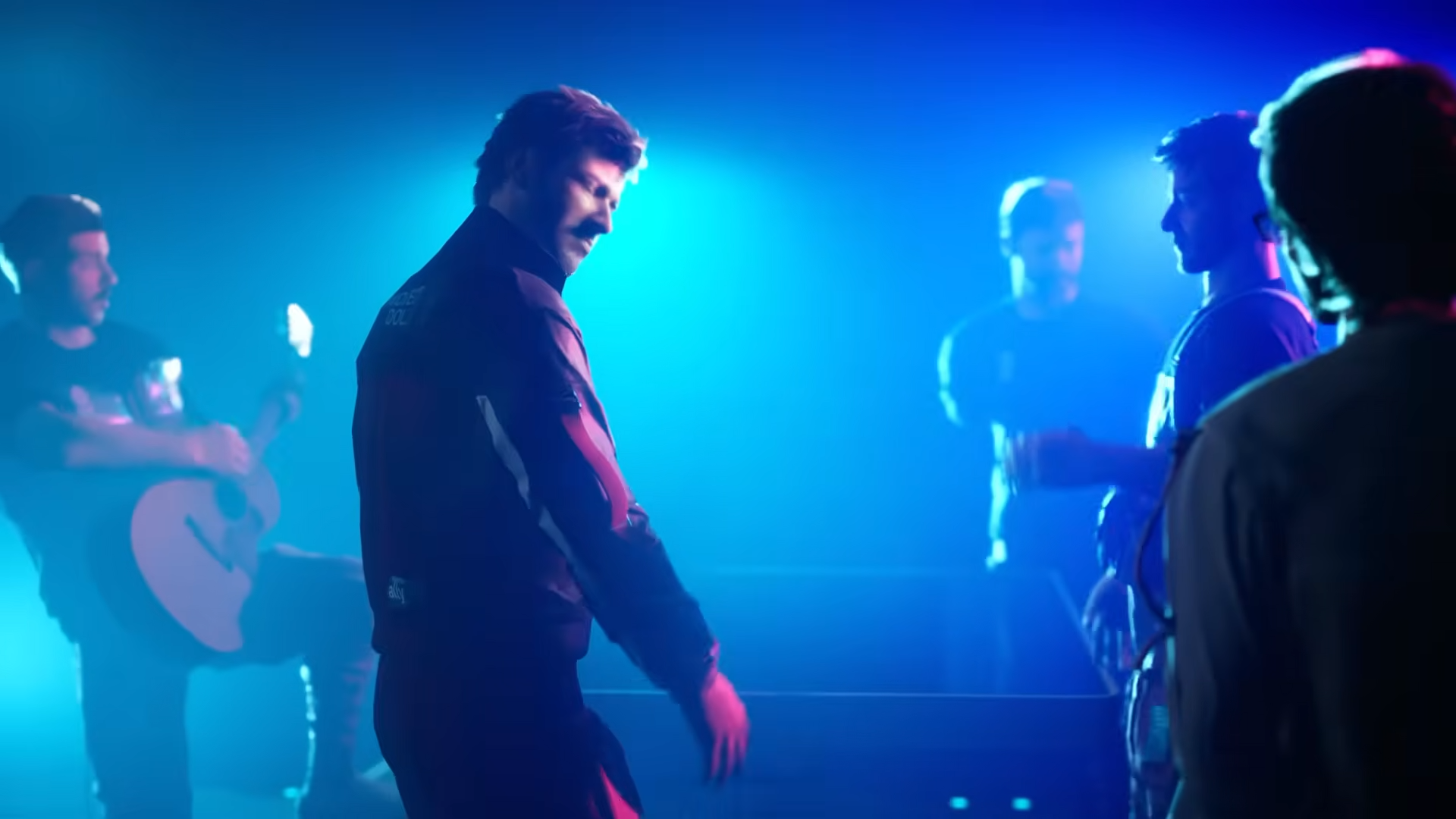
In the final shot, the “protagonist” turns to the camera to cheer you on — I assume it’s a little easter egg? Message received 😀
ACT 2
Emotional Curve
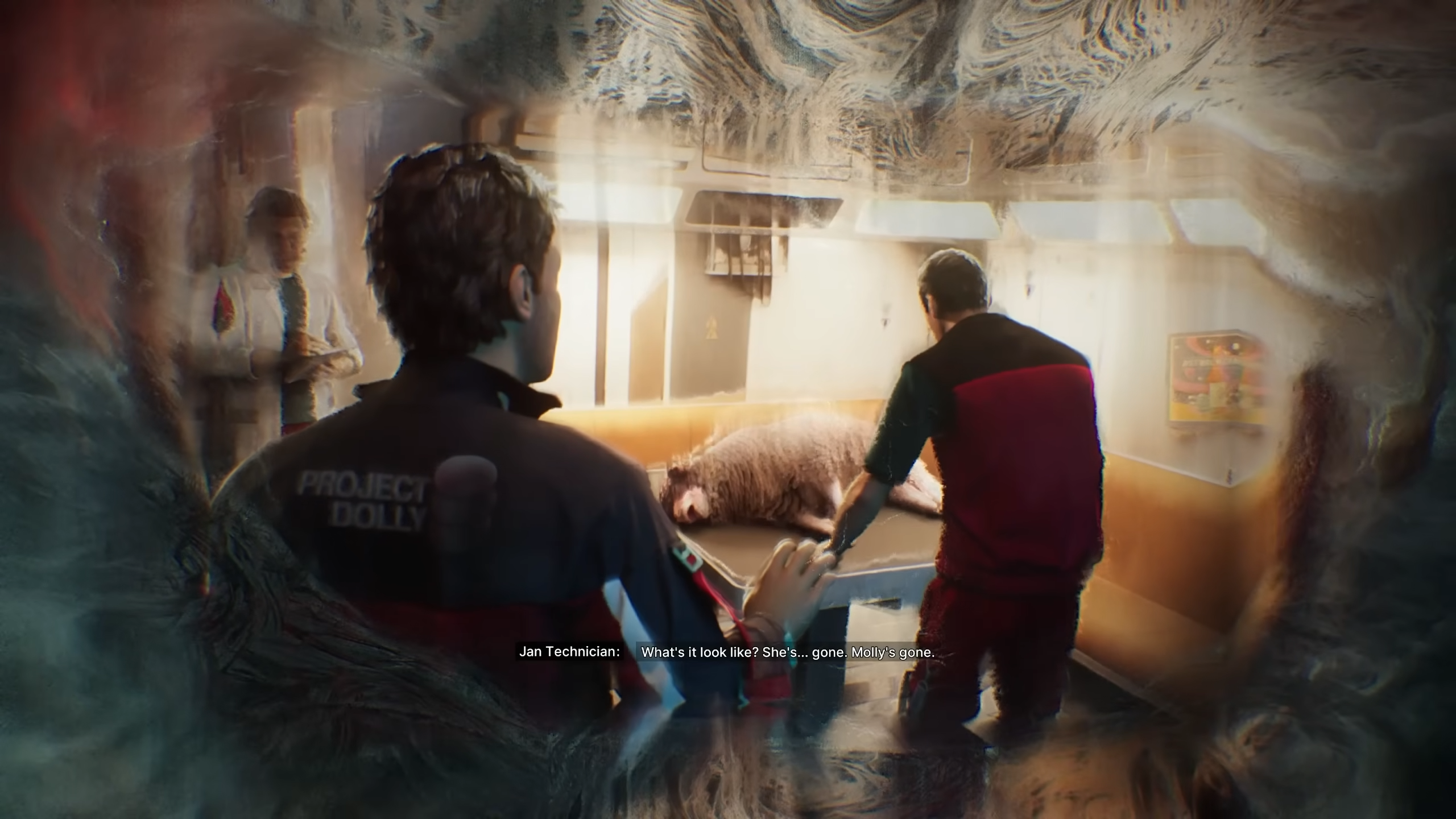
Soon after the joyful What If sequence, ACT 2 brings a heavy down moment — the death of Molly.
Molly is a symbolic nod to Dolly, the iconic cloned sheep in real-world history. It’s also the first living organism created through the quantum computer and Repedium. Its death foreshadows the fate of all Alters.
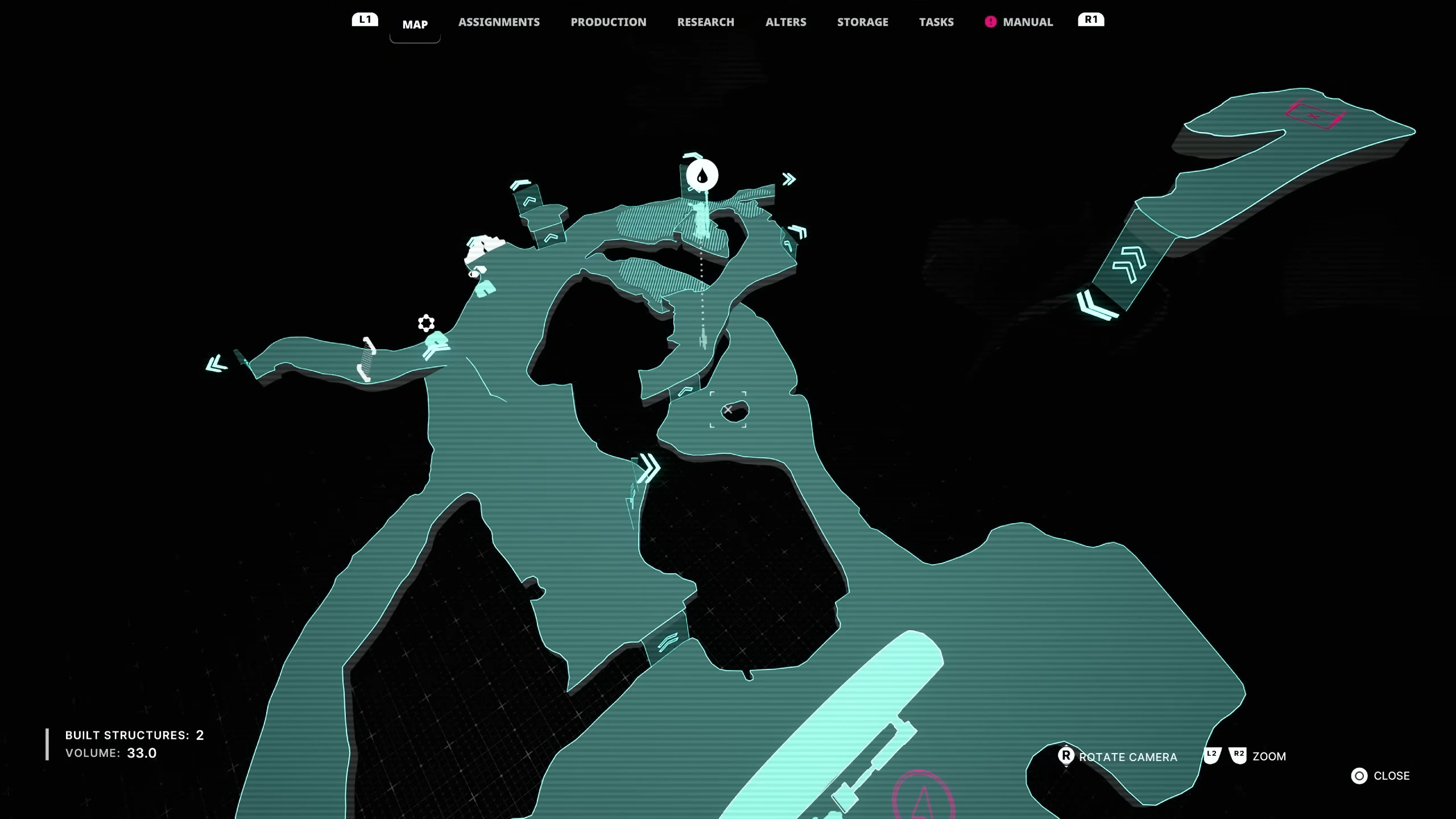
As I explored, I gradually realized that ACT 2 introduces true 3D-level design, which brings new challenges:
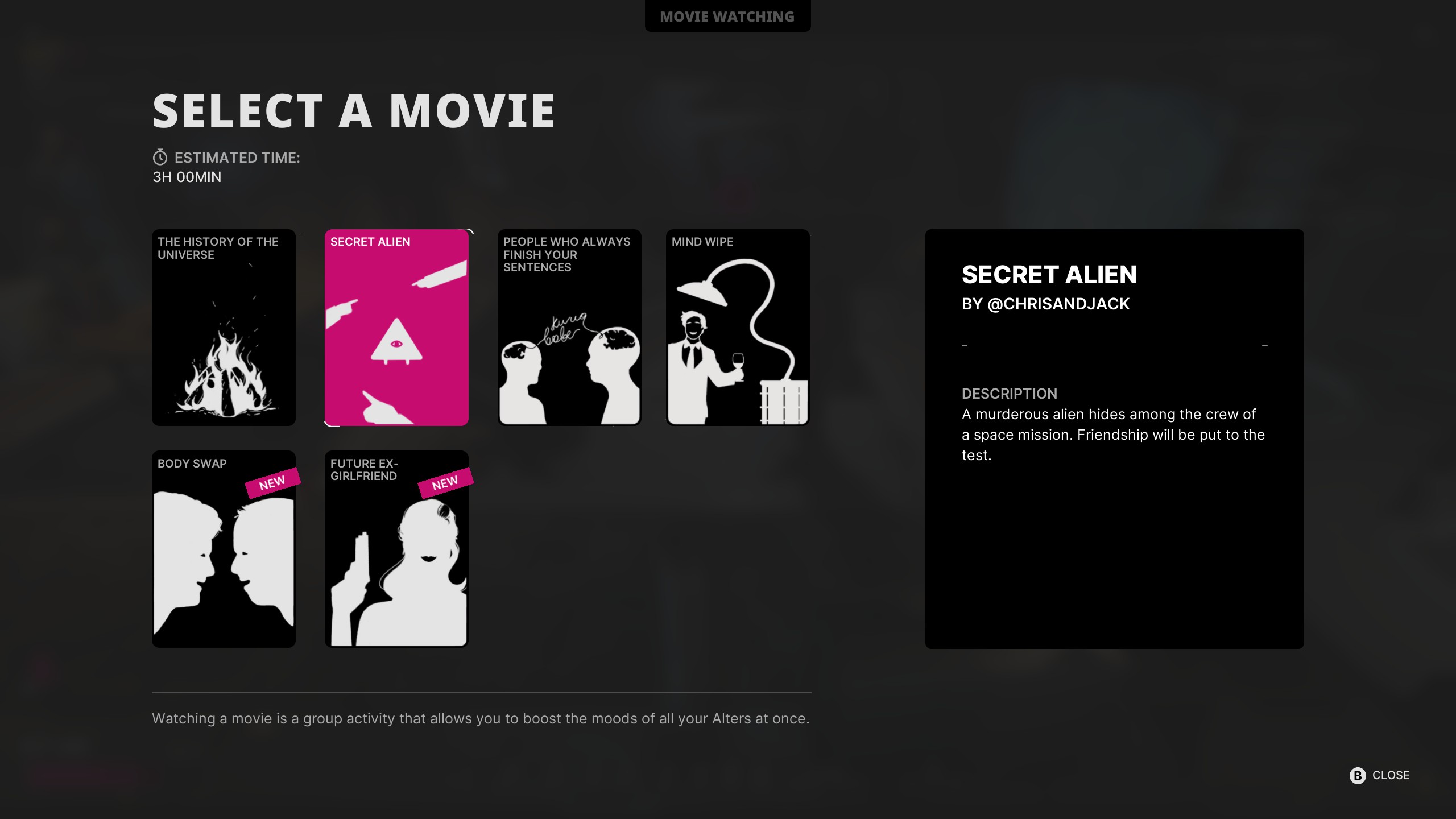
The film collectible in this area is particularly interesting: from a future perspective, it humorously recounts the evolution of life and the tiny fluctuation within it called “human being”.
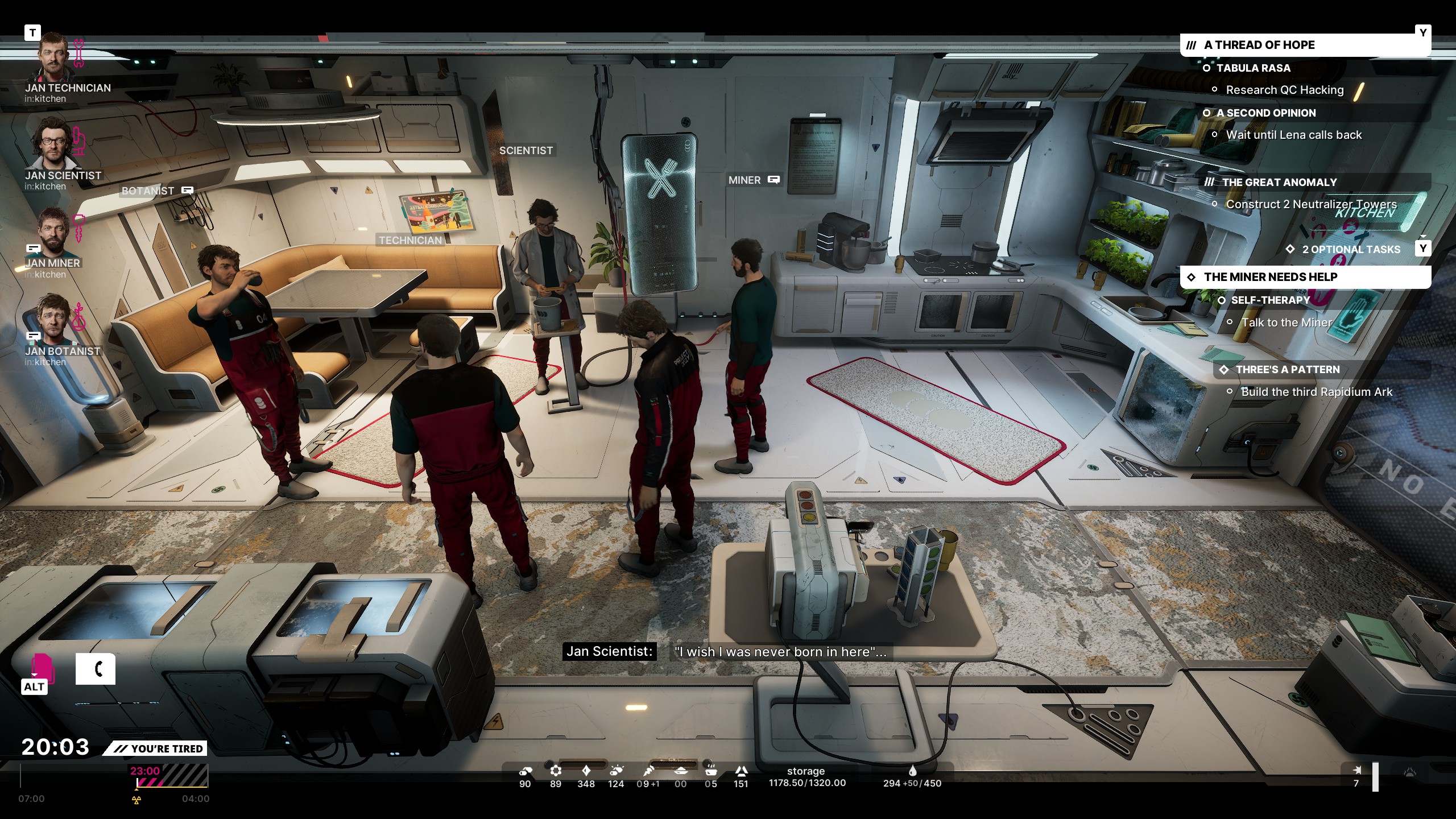
Another memorable element is the bucket list. You can really feel how quickly things are deteriorating.
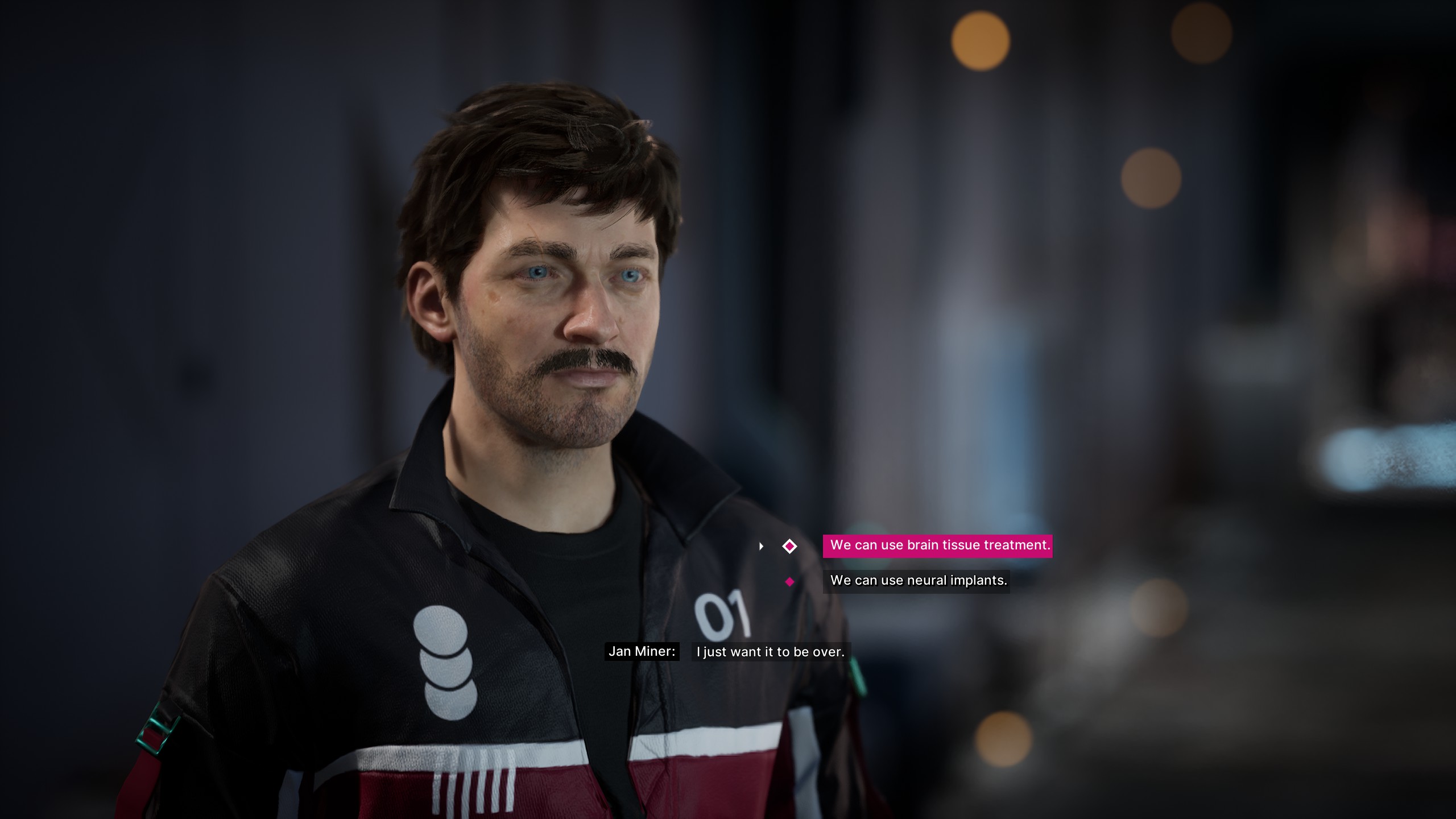
The choice between Brain Tissue Treatment and Neural Implants is the single most agonizing decision I faced in the entire game. The former means killing someone (especially when I saw Tabula struggles a bit), while the latter means living under surveillance for the rest of your life.
This decision perfectly embodies [[company - 11bitstudios]] ’ goal of Meaningful Entertainment — there are no easy right answers; every choice involves [[objective reason - 风险和回报 risk and reward]].
I ultimately chose the first option — and I actually made that decision before Tabula stood up, because I couldn’t bear the thought of all Alters living under constant surveillance. But even after choosing, I still wavered (and I’m someone who almost never regrets decisions). From the Alters’ point of view, they probably were mentally prepared from the moment they came into being; short of death, it’s hard to avoid becoming lab rats.
The game does “offer” another seemingly democratic choice — everyone votes and the majority decides — but that, too, is an illusion. You don’t get an easy way to dilute responsibility; as the core character, the player must make the final call.
But what’s done is done; there’s no point belaboring it. This moment is the dramatic high point of the story, and also one of the main reasons I love this game so much.
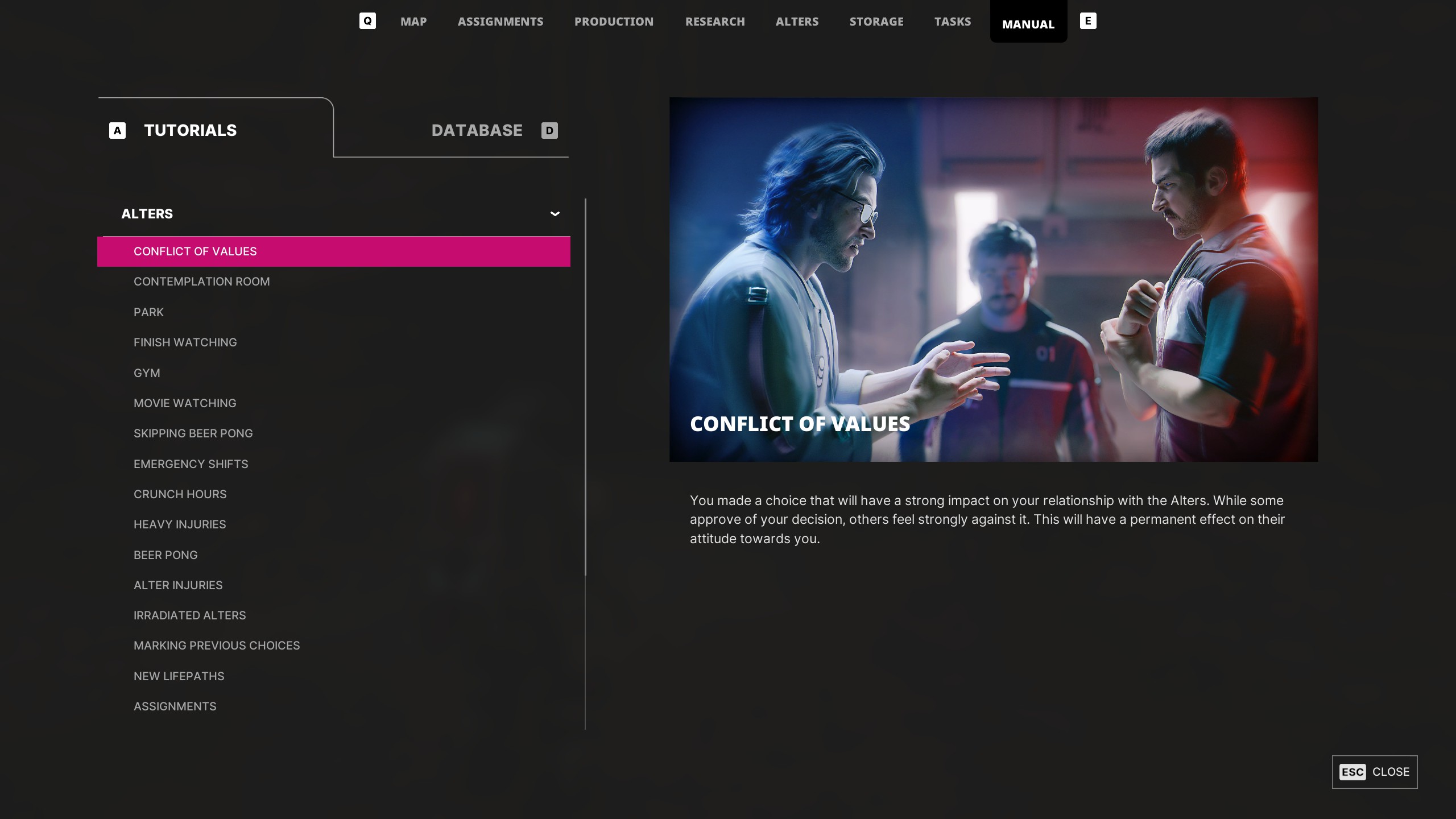
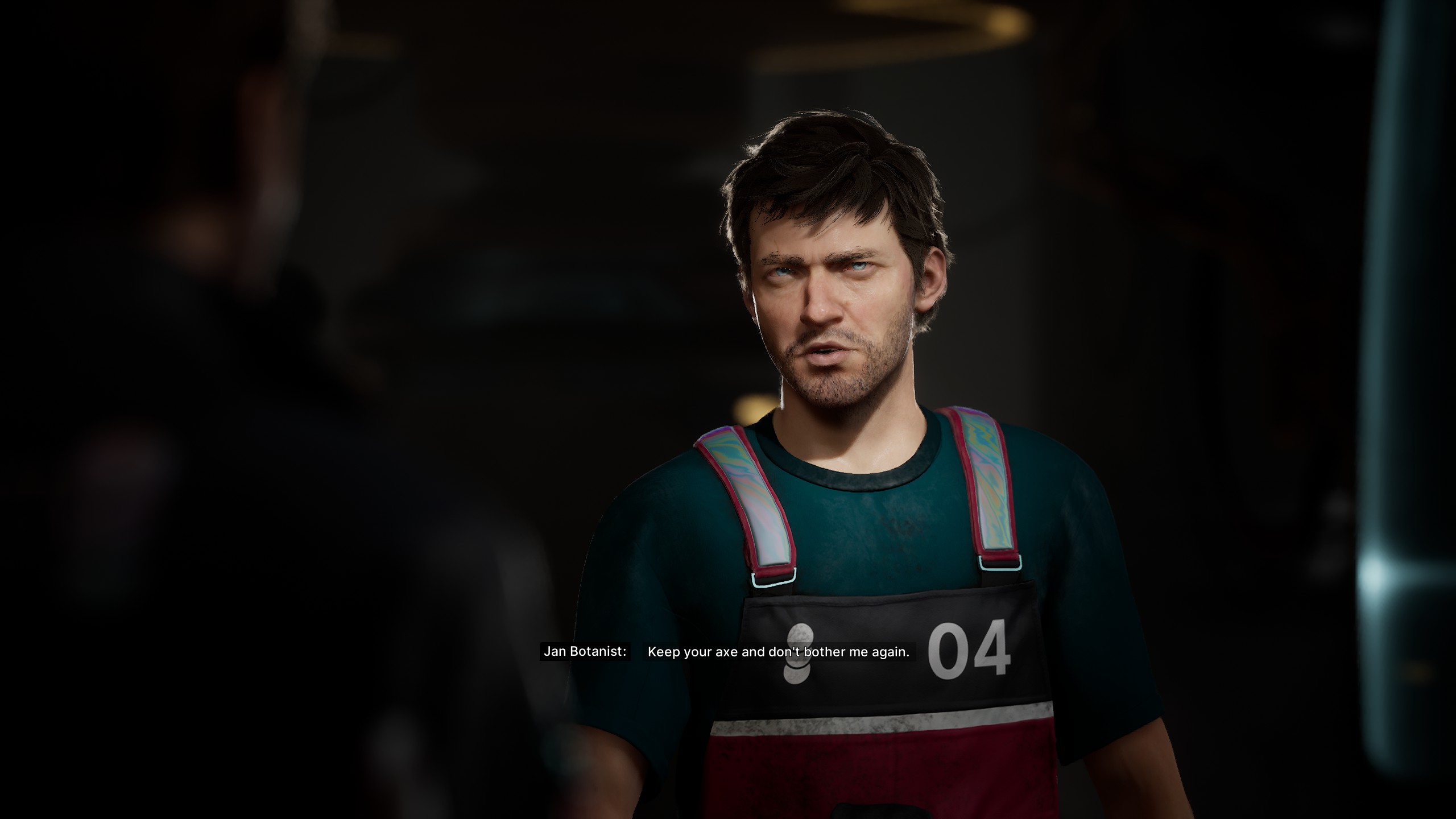
Another regret I have is missing the chance to give the axe to the Botanist.
Because side quests aren’t automatically tracked, I never realized I could call Lena to advance that storyline. I only learned the follow-up steps later when I checked an online post — but by then it was too late. I had already chosen Brain Tissue Treatment, the Botanist no longer agreed with me, and the opportunity to give him the axe was lost.
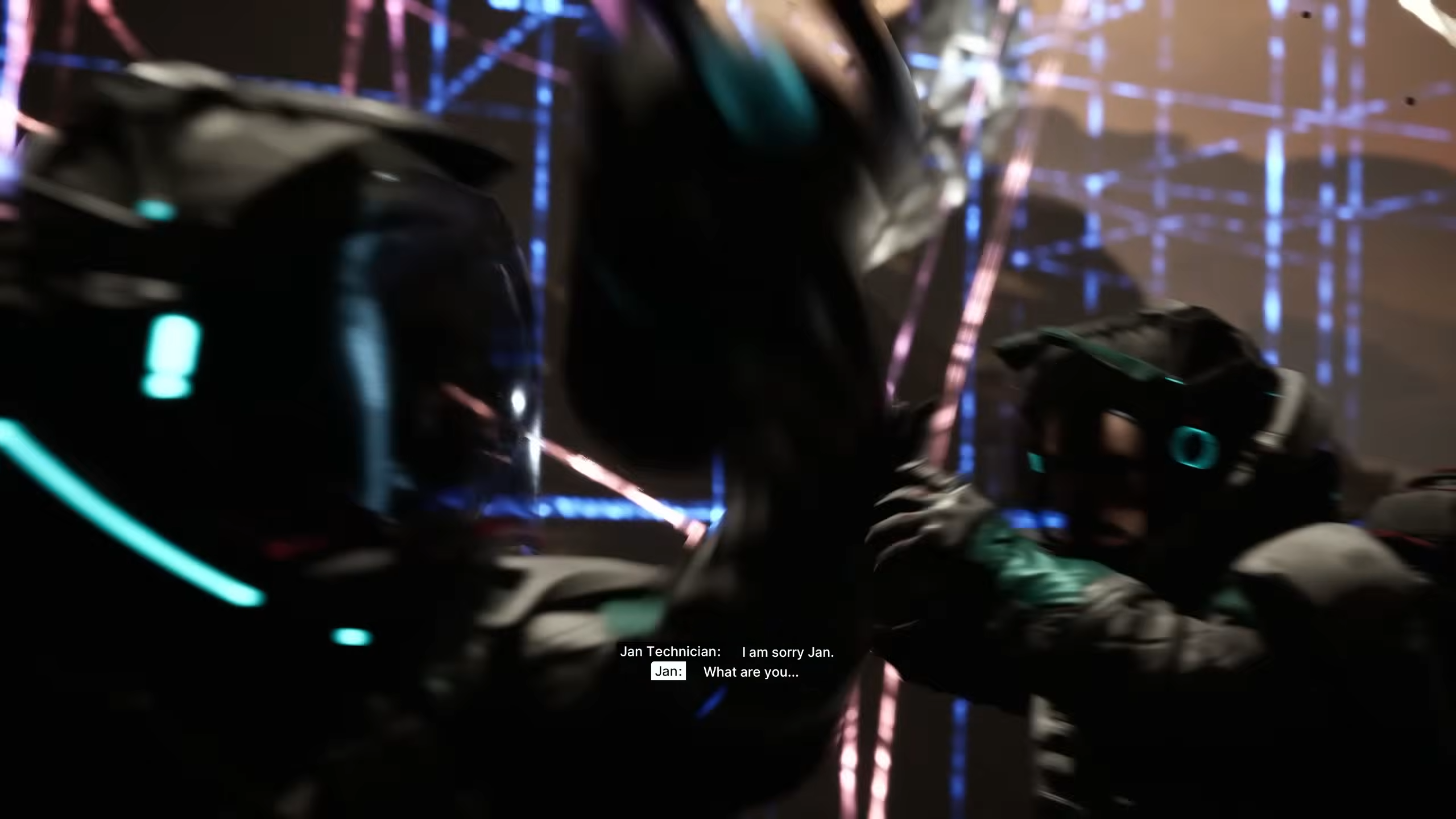
ACT 2 ends with the Technician attacking me.
Unexpected, yet perfectly reasonable.
Subjective Feelings & Objective Reasons
As mentioned earlier, ACT 2 is where [[company - 11bitstudios]] ’ pursuit of Meaningful Entertainment truly shines.
Specifically, [[subjective feeling - 有意义的选择 meaningful choice]] is driven by [[objective reason - 风险和回报 risk and reward]]. Key decisions lead to [[objective reason - 不可逆后果 irreversible outcomes]], forcing players to think carefully before they choose.
As I got to know the characters more deeply, my [[subjective feeling - 代入感 共情 empathy 成为或理解TA - 同情 compassion]] grew stronger. The objective reasons here include: [[objective reason - 取舍 trade-offs]] and [[objective reason - 理解对方动机 understand motivations behind]].
Just like the protagonist, the Alters don’t want to kill, nor do they want to be monitored. They don’t want to sacrifice Tabula — just because he’s “not fully conscious” — to save themselves, but they also don’t want to live like criminals whose thoughts can be read at any time. All of these mental states and the motivations behind them are understandable — which naturally makes it easy to empathize.
In ACT 2, [[subjective feeling - 责任感 responsibility]] is also reinforced. There could have been a democratic solution where everyone votes and responsibility is shared, but that path is closed off — which underscores [[objective reason - 无法分摊责任 responsibility cannot be shared]] and [[objective reason - 玩家决定后果 player-decided outcomes]]. The sense of responsibility is strengthened on two fronts at once.
Later, when the Technician and Botanist refuse to talk to me, and finally rebel under the Technician’s lead, it confirms the feeling of [[subjective feeling - 山雨欲来 the calm before the storm]]. The objective reasons behind this include:
- [[objective reason - 意料之外情理之中 surprising yet reasonable]]
- [[objective reason - 可感知的改变 perceivable changes]]
It starts small: you find a broken vehicle outside the base, and the Technician periodically goes out to repair it, saying it helps him relax. After you make the key decision, the Technician and Botanist try multiple times to have secret conversations but get interrupted by you. Eventually, they choose to rebel. It’s surprising, but also fits everything that came before. The broken car, which initially seemed incidental, becomes the perfect condition for their escape. In hindsight, everything feels like it was always meant to be.
Design Levers
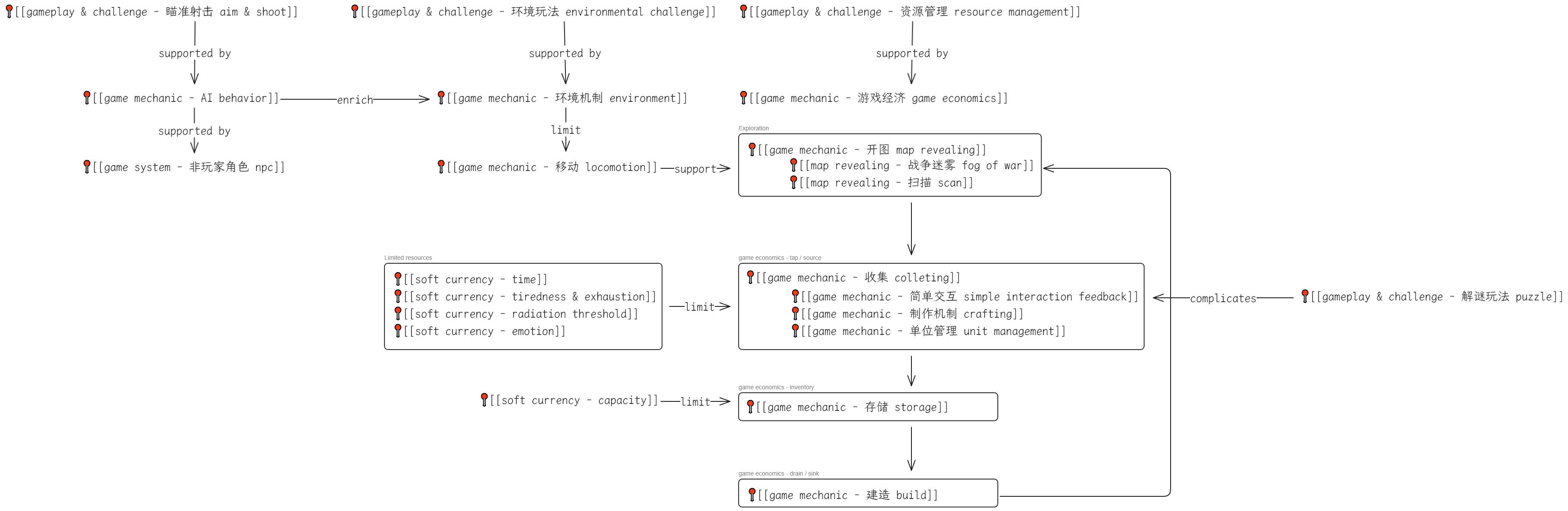
On the [[玩法和挑战 gameplay & challenges]] layer, there are no structural changes, but the introduction of fully 3D levels makes [[game mechanic - 制作机制 crafting]] more complex:
For example, cables that could be connected in a straight line in ACT 1 now require you to find suitable paths in 3D space, which turns them into a kind of light [[gameplay & challenge - 解谜玩法 puzzle]]:
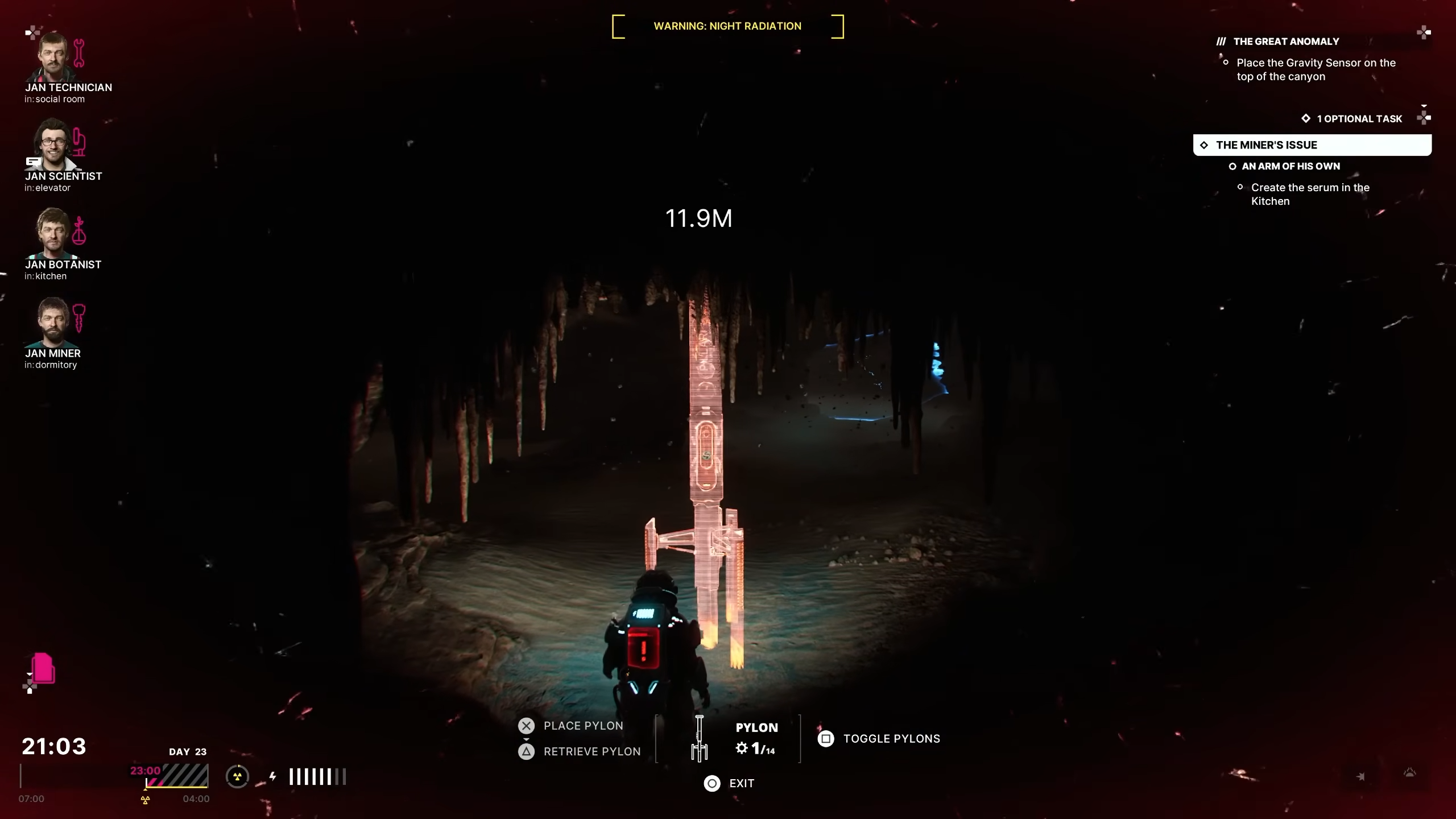
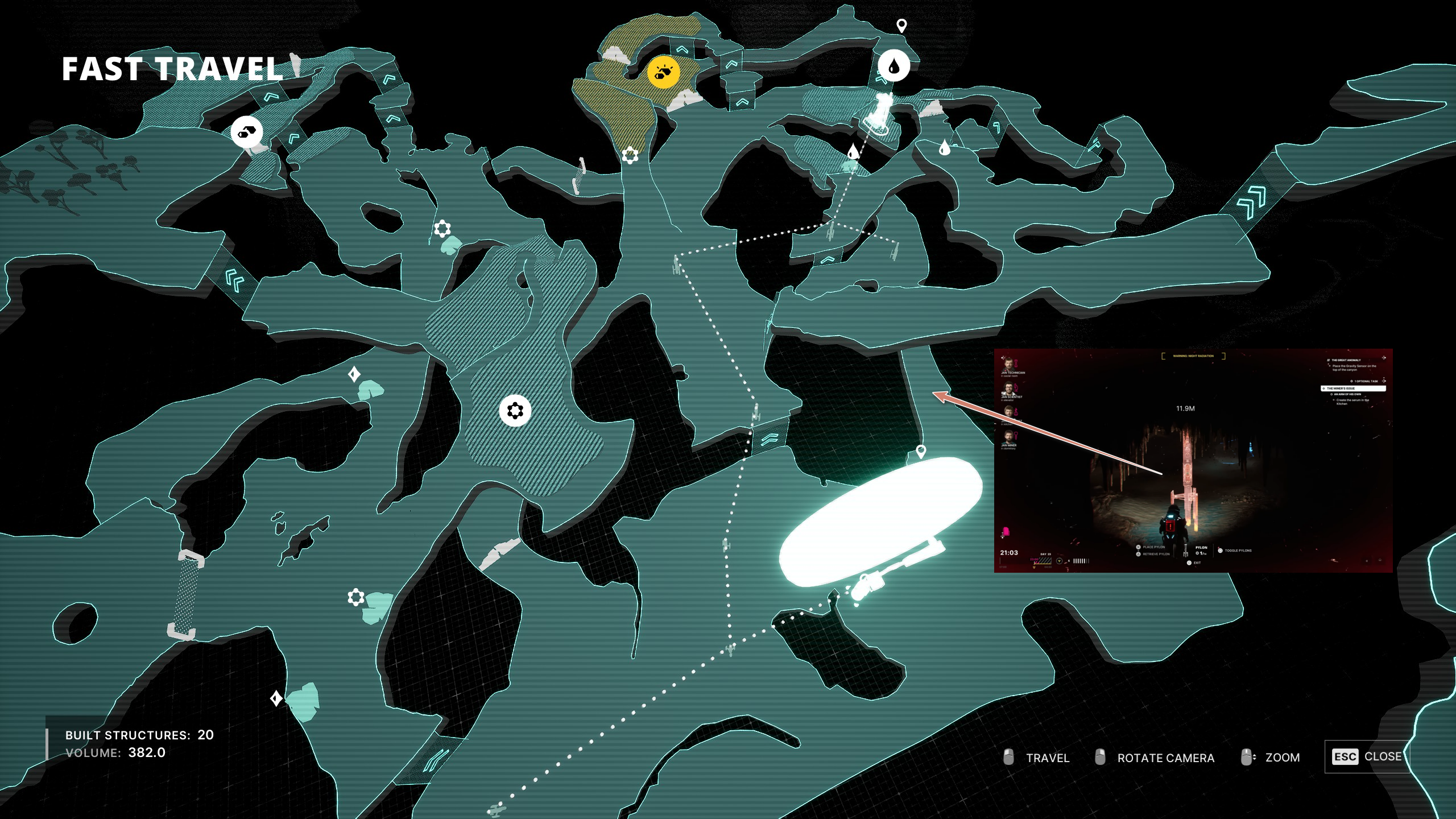
In addition, a new [[soft currency]] is introduced via a [[gameplay & challenge - 解谜玩法 puzzle]] mechanic. Reveal clues first, then you trace the trail to its actual location in order to claim the reward:
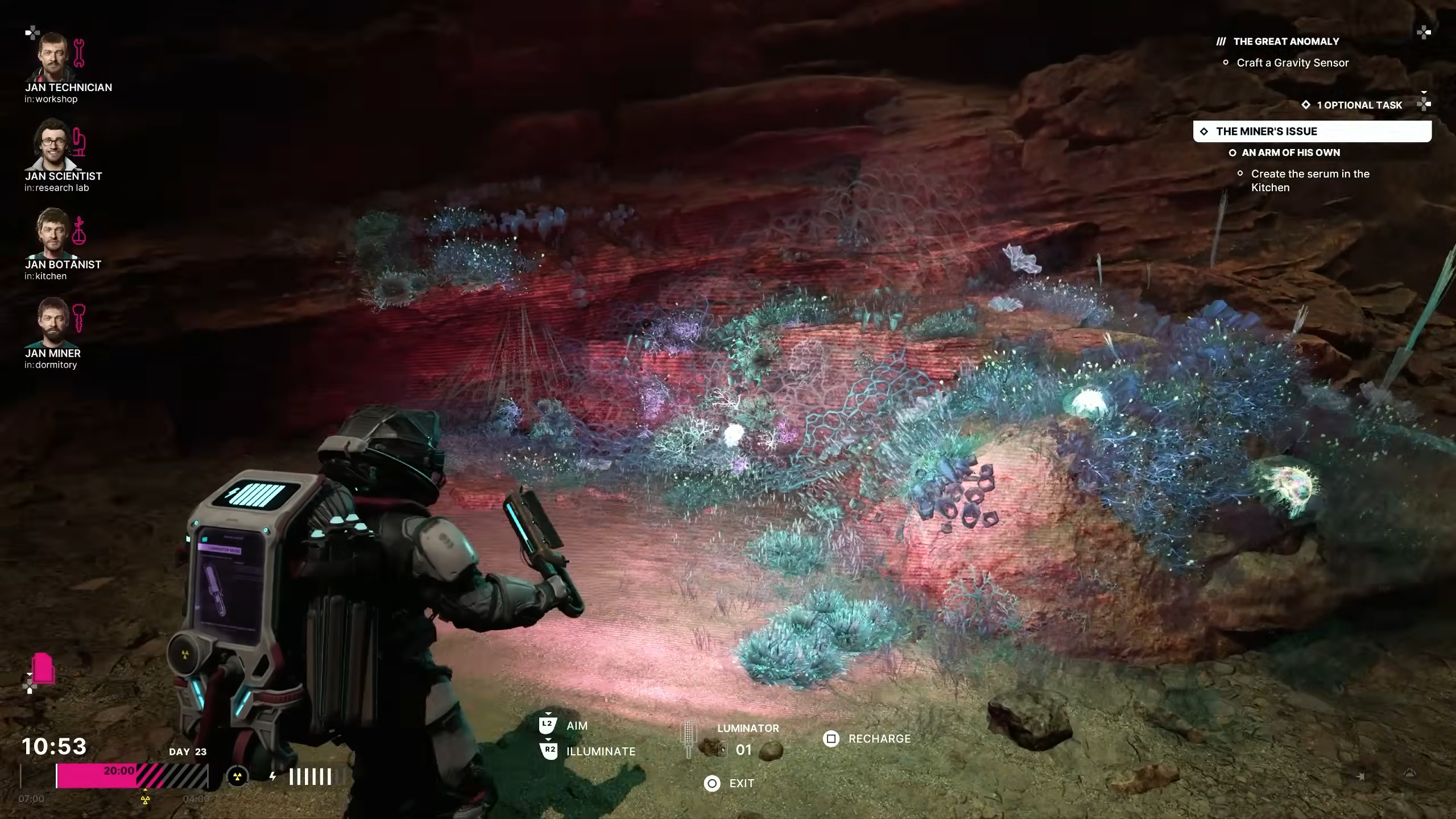
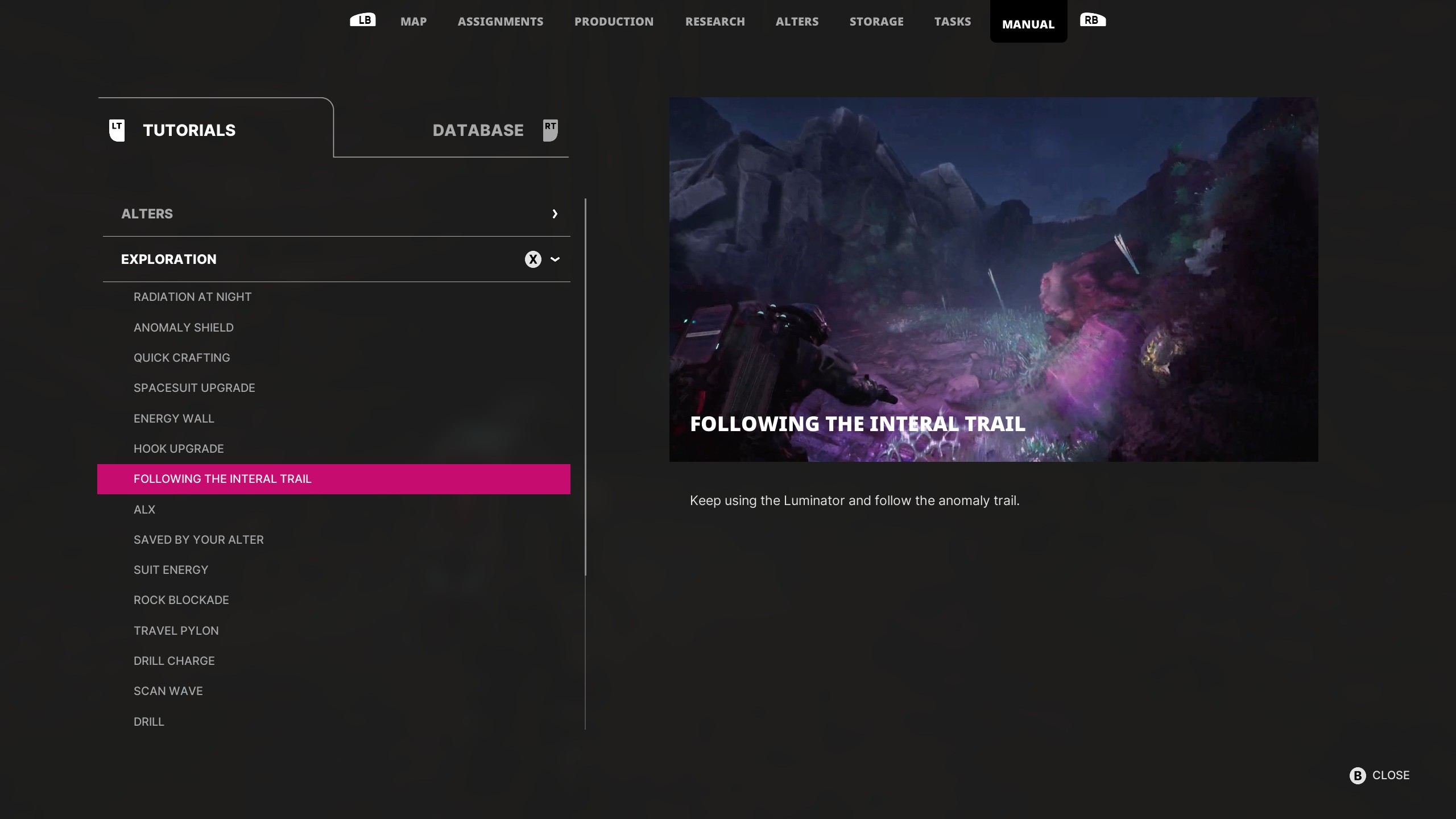
[[gameplay & challenge - 瞄准射击 aim & shoot]] is further reinforced through the newly introduced [[game system - 非玩家角色 npc]] enemies. The multi-core enemy type is introduced:
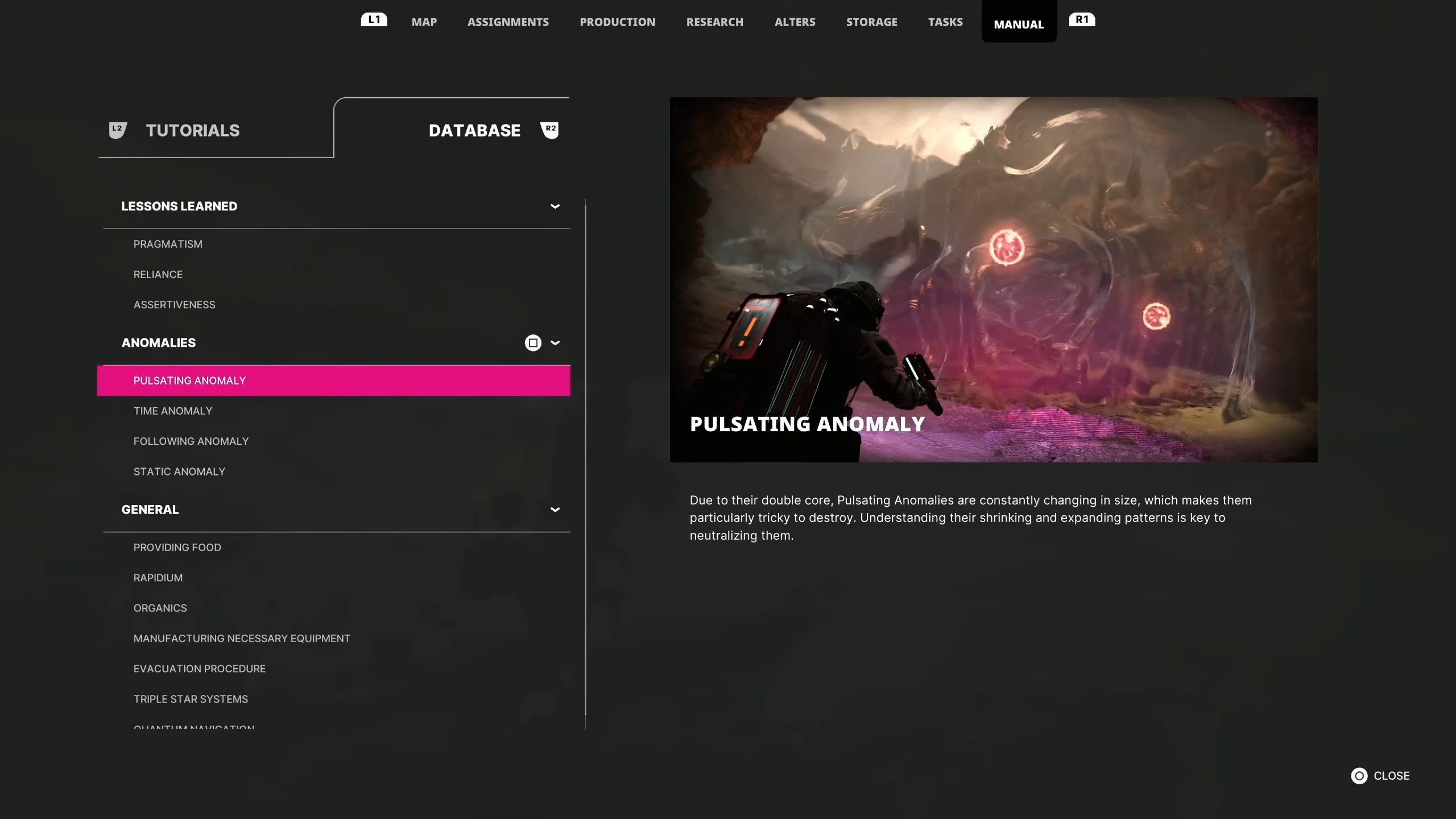
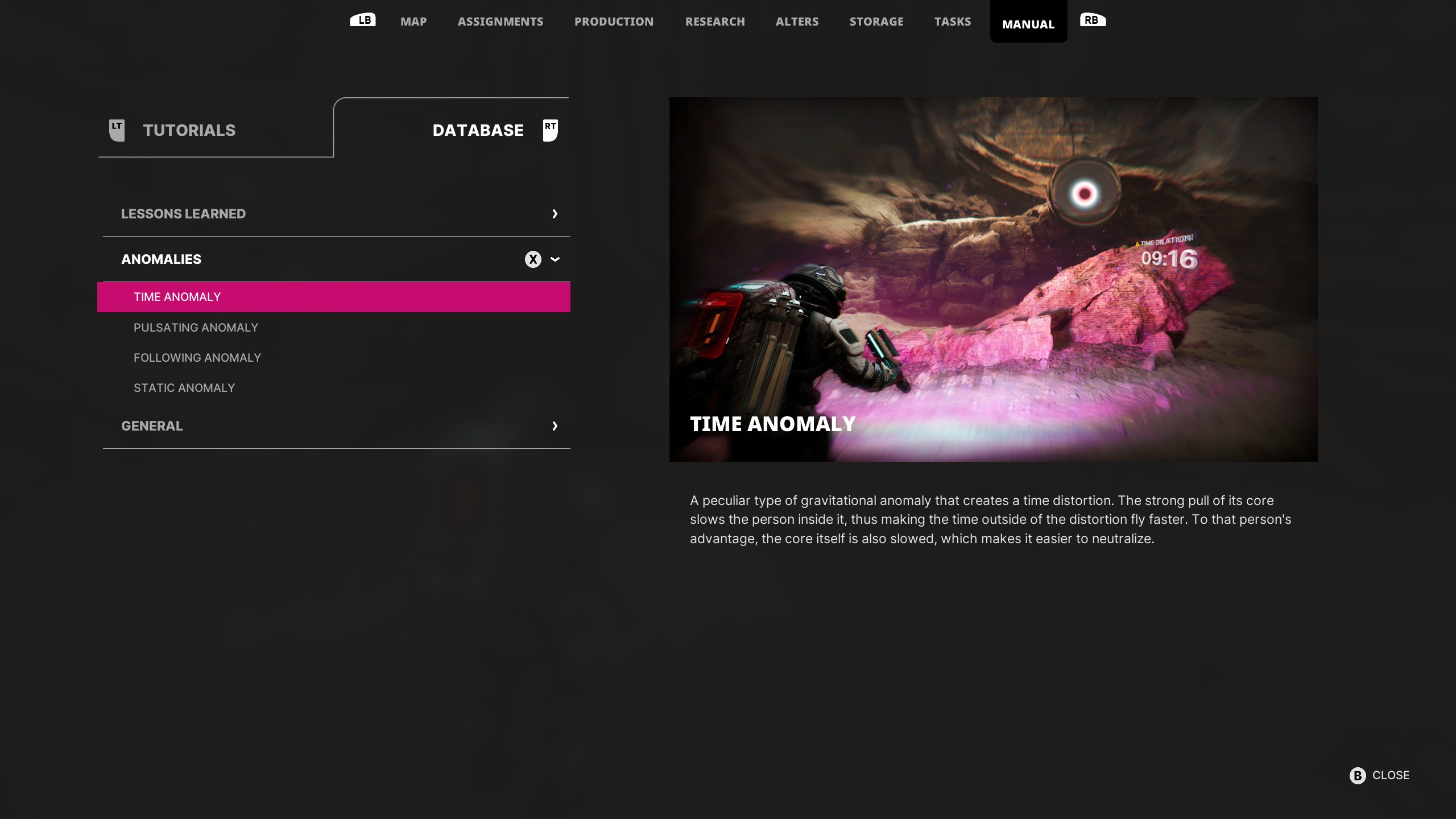
On the [[game mechanic - 环境机制 environment]] side, a new mechanic is added: walking into a time dilation zone makes time pass much faster — so [[soft currency - time]] is rapidly consumed.
Not much new structure is added on the [[叙事 narrative]] and [[美学 aesthetics]] layers in this act, so I won’t elaborate further.
Summary
ACT 2 abruptly reverses the upward emotional trajectory from before; things quickly spiral downward.
Molly’s death serves as a narrative hook, foreshadowing the Alters’ inevitable demise. The tension of this setup builds steadily over time, only to be released in the pivotal Brain Tissue Treatment vs. Neural Implants decision. The act then ends on another hook, with the Technician’s attack.
In a relatively short act, it manages to deliver setup, escalation, climax, and a new hook all at once — truly impressive.
JOURNEY 3
Emotional Curve
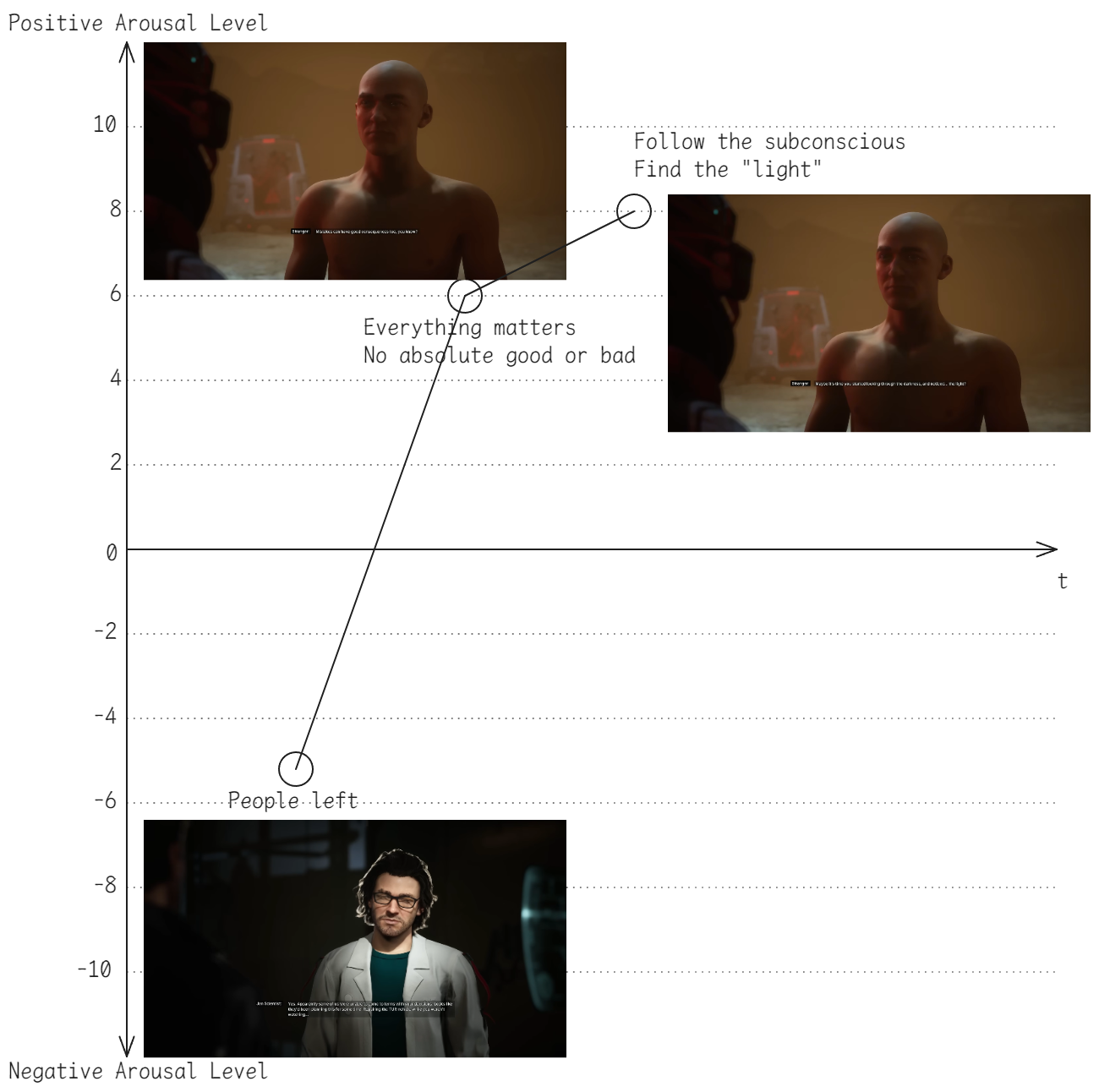
This section begins by explaining what happened: the Technician has fled with some Alters, and the base is trapped in a sandstorm:
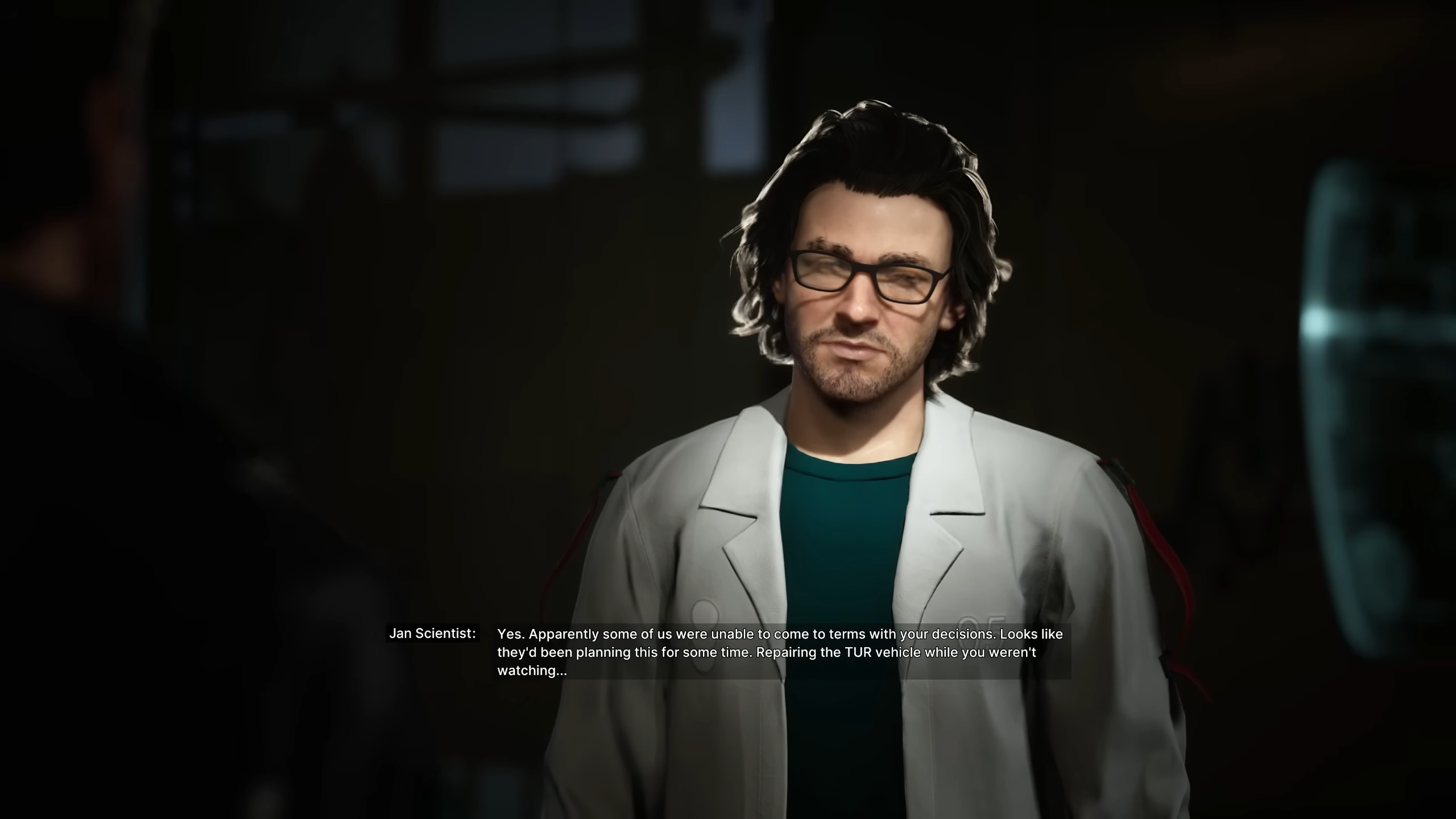
With no options left, the Scientist alters the quantum computer program to send me into a deep dive through my own consciousness to search for a solution, which leads to an interlude:
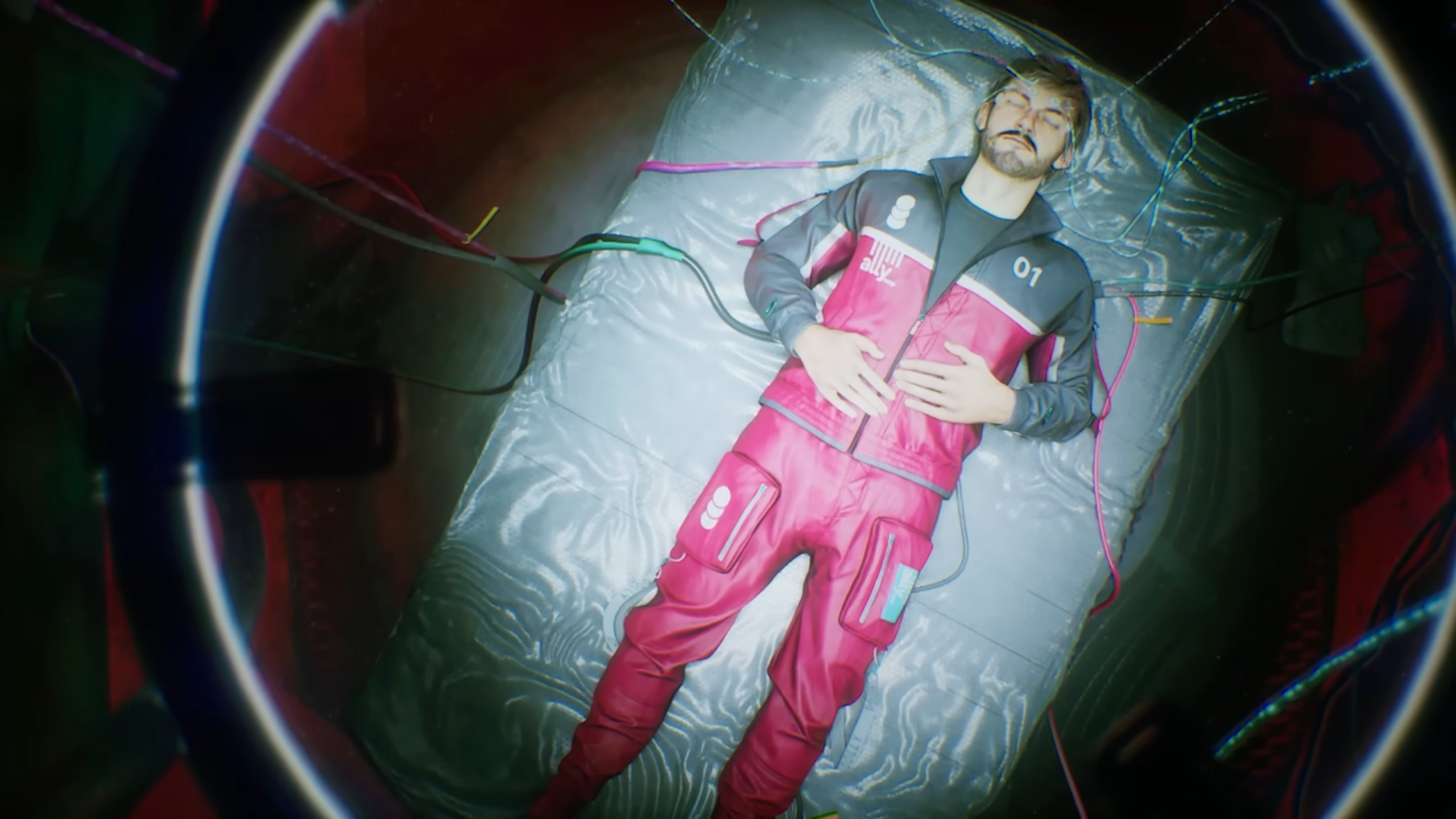
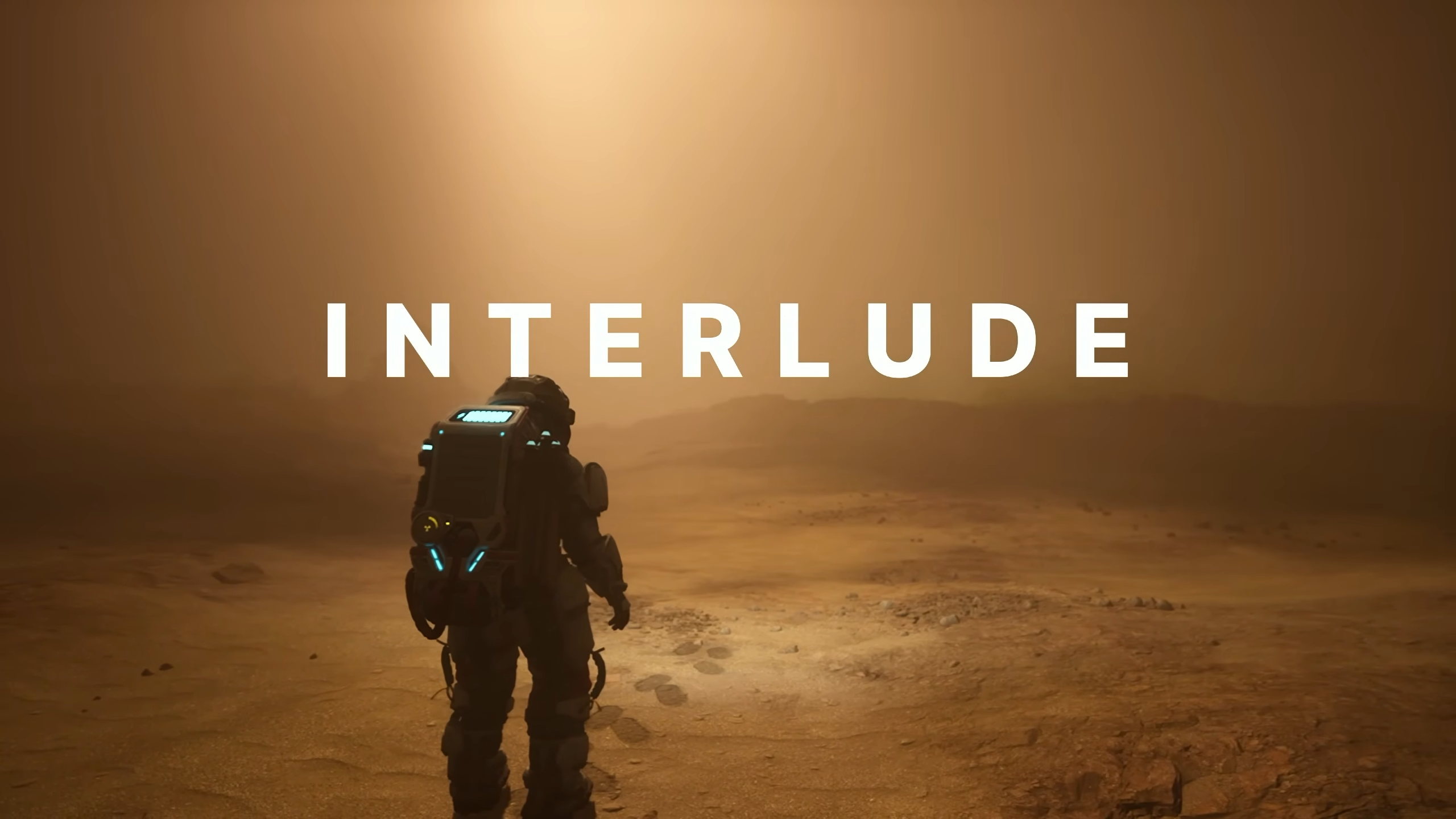
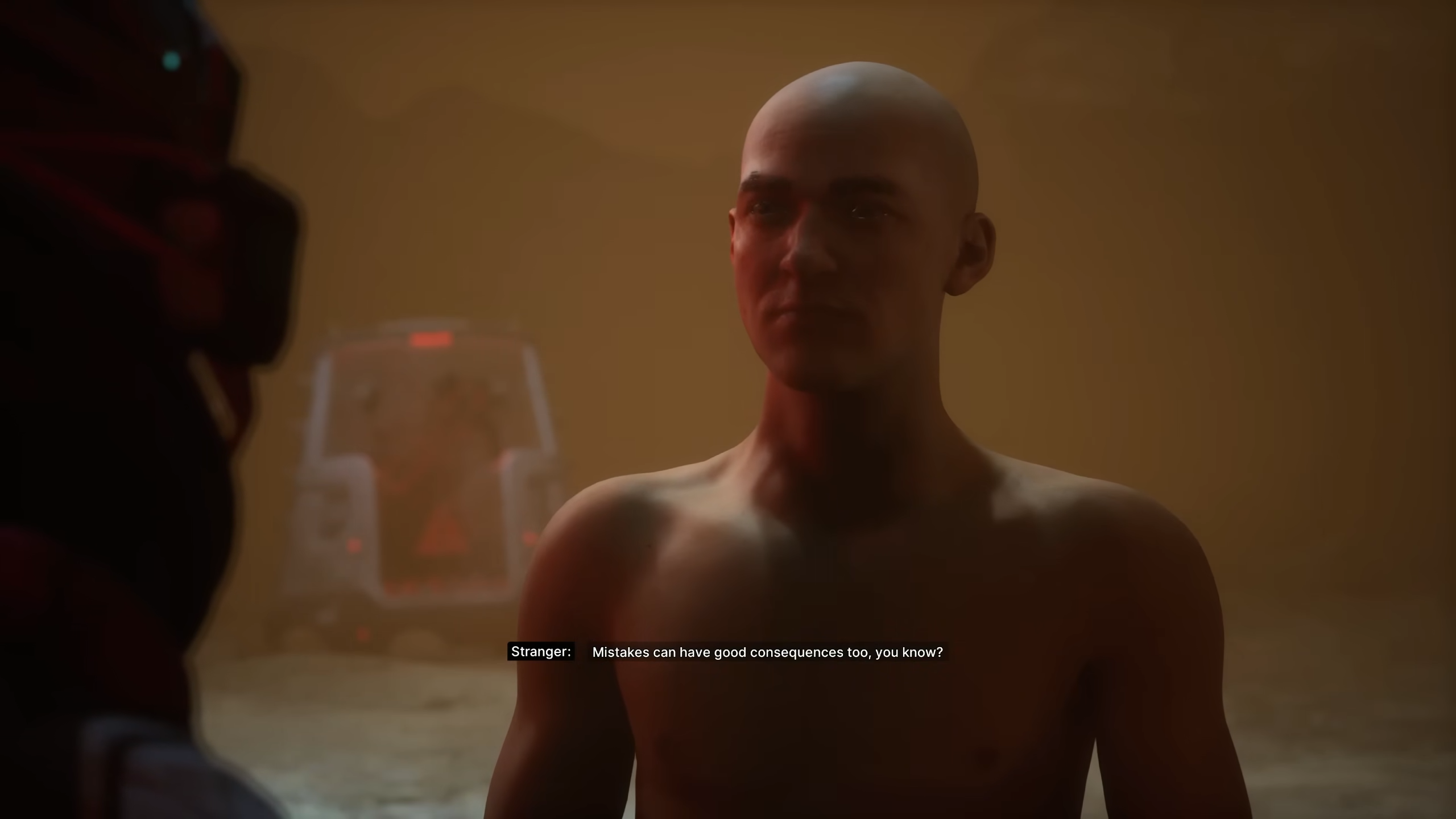
In this sequence, I keep chasing an elusive shadow (which I read as a representation of Carl Jung’s concept of the Shadow). As I revisit buried memories and scenes, I finally catch up and have a conversation with it.
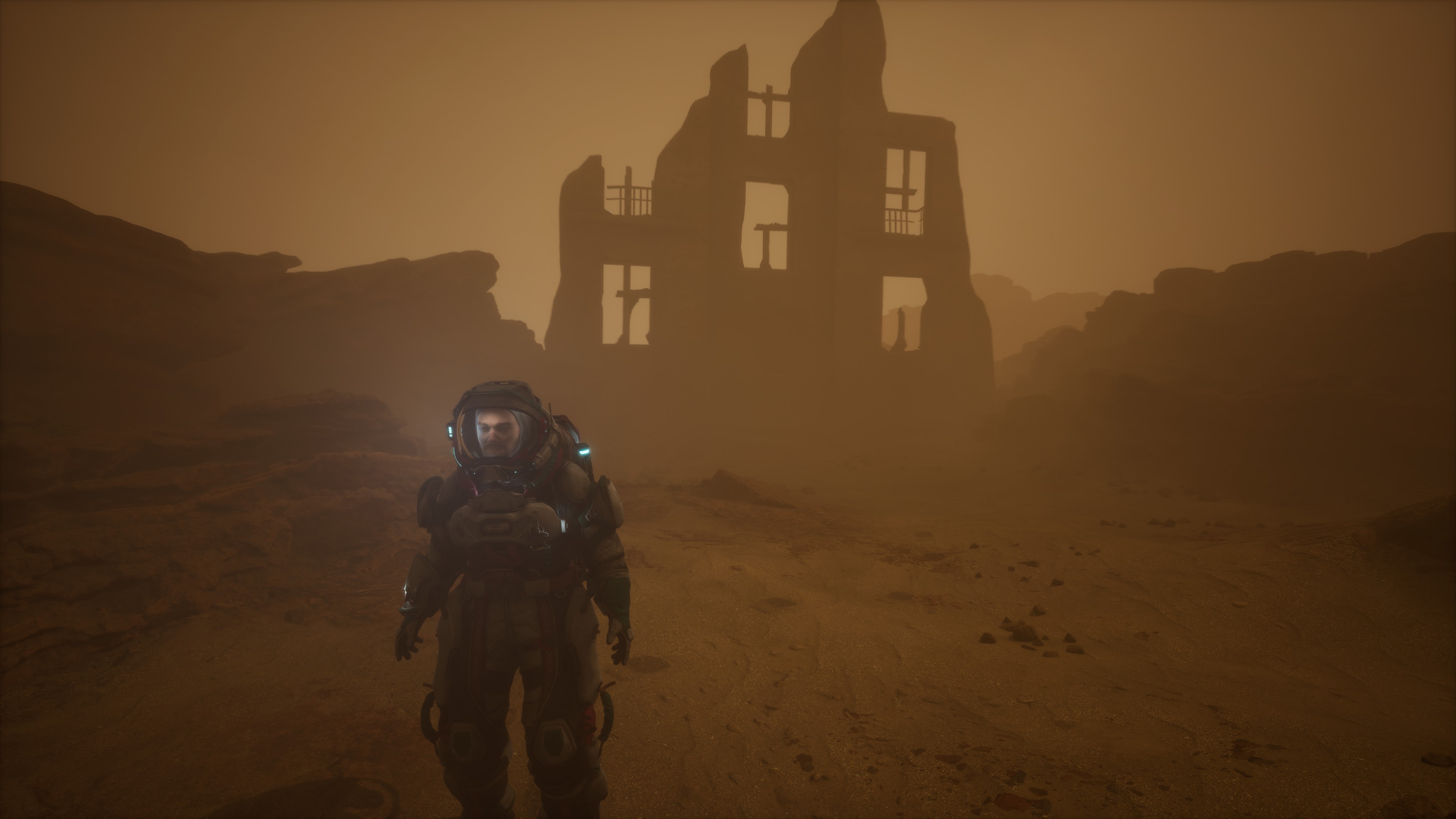

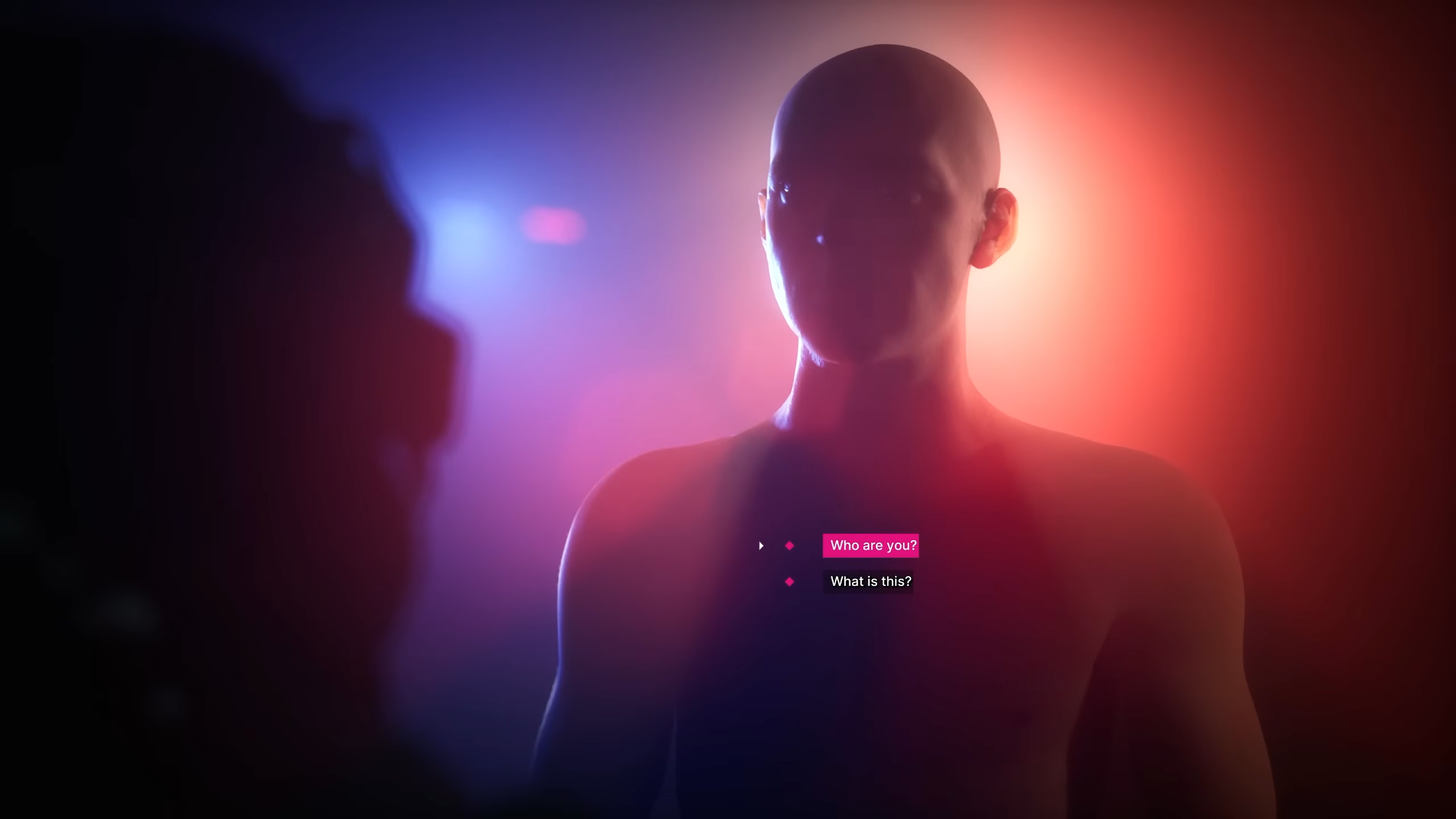
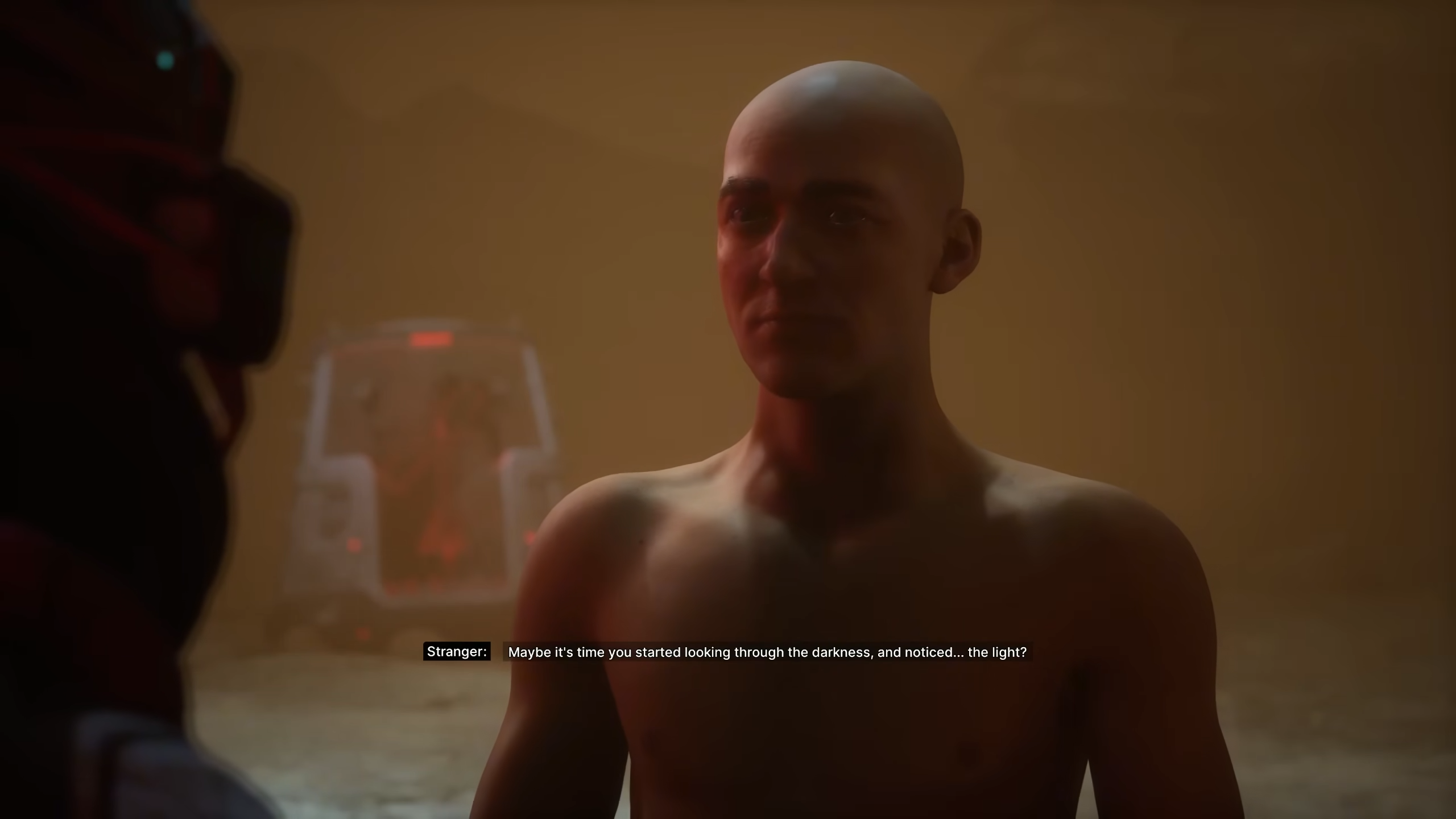
Talking with the Shadow is essentially Carl Jung’s process of individuation ([[荣格 - 个性化 Individualization]]) — discovering the parts of yourself that are hidden or obscured, accepting them, and transforming them into conscious awareness:
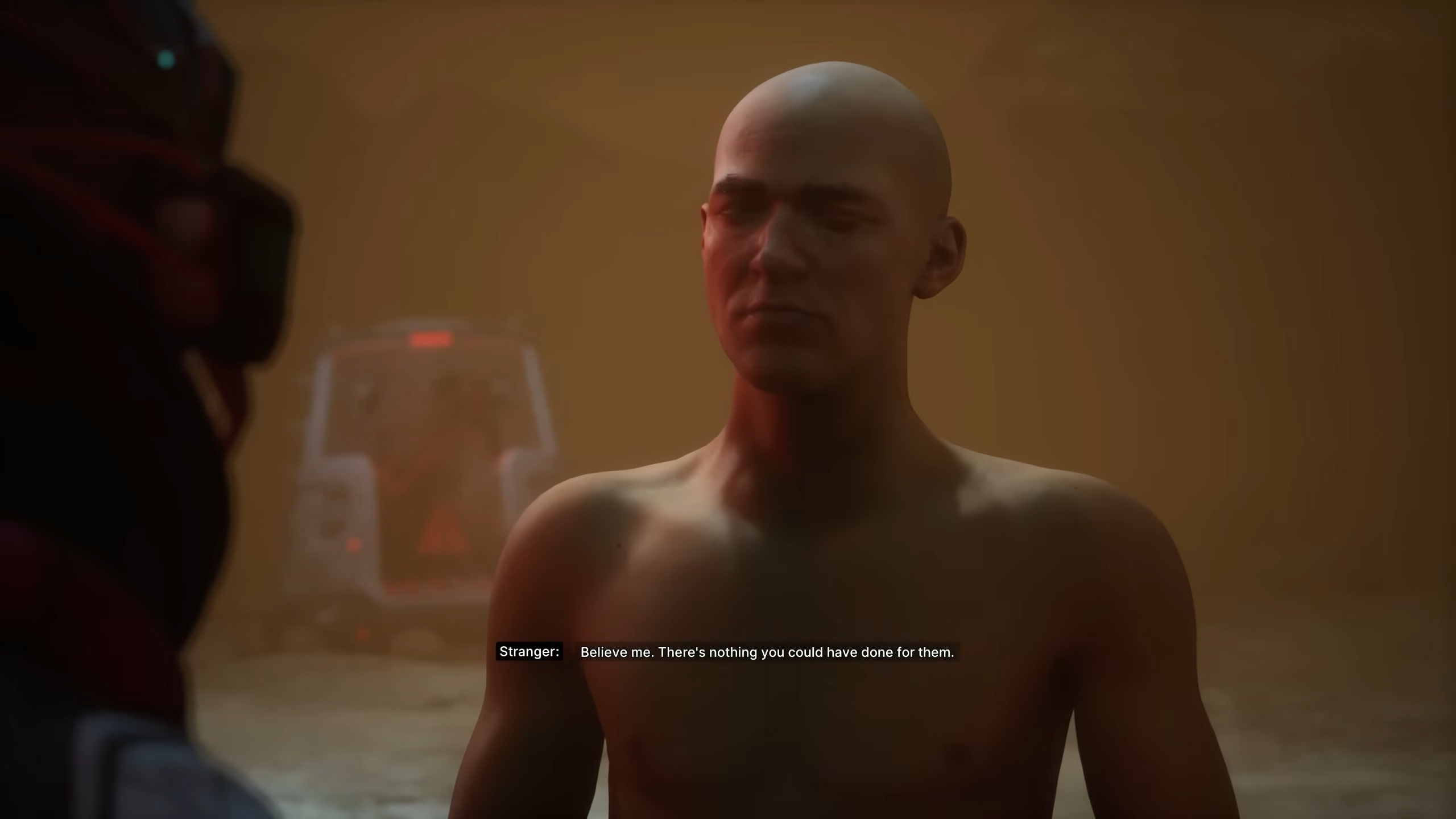
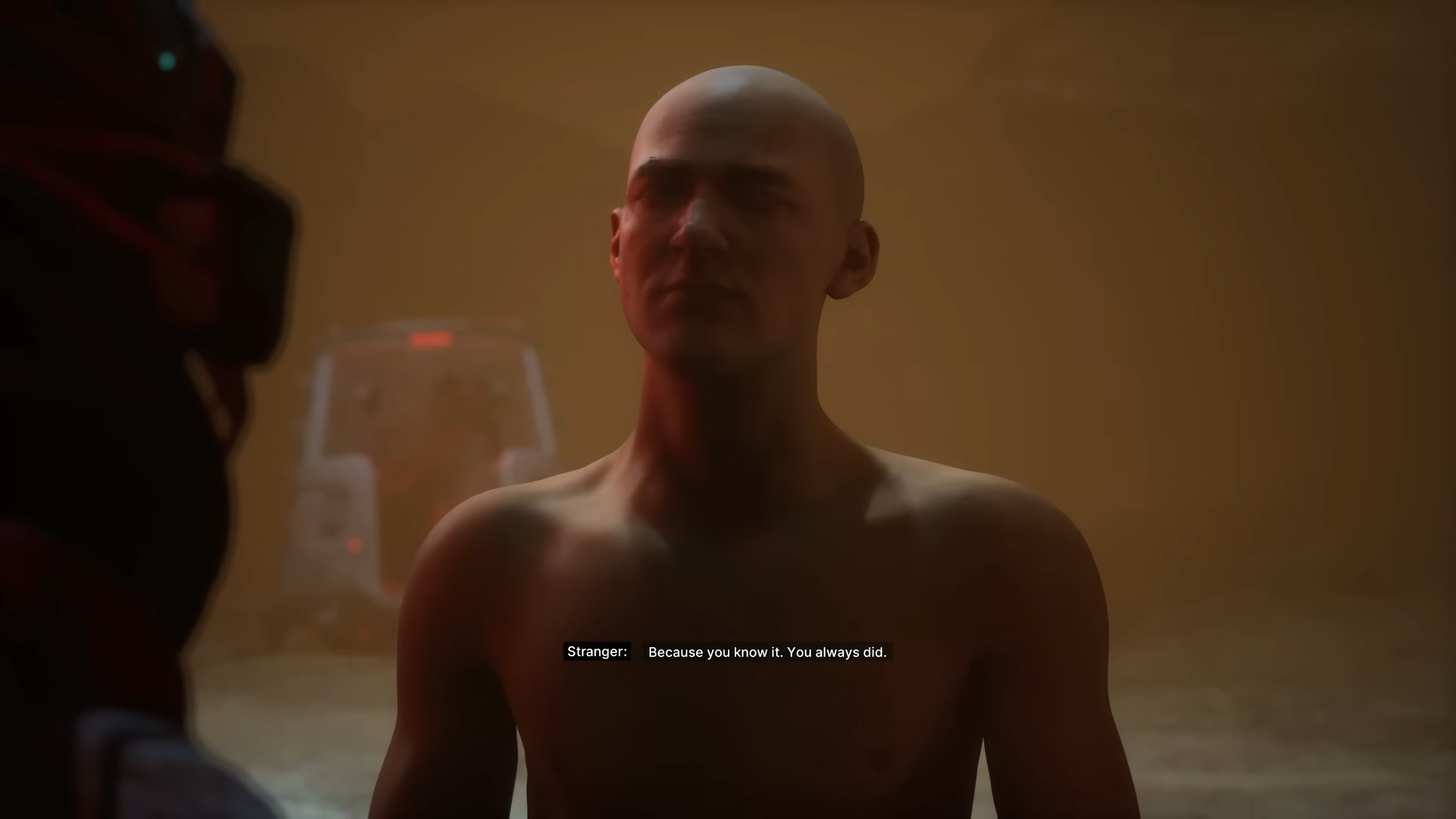
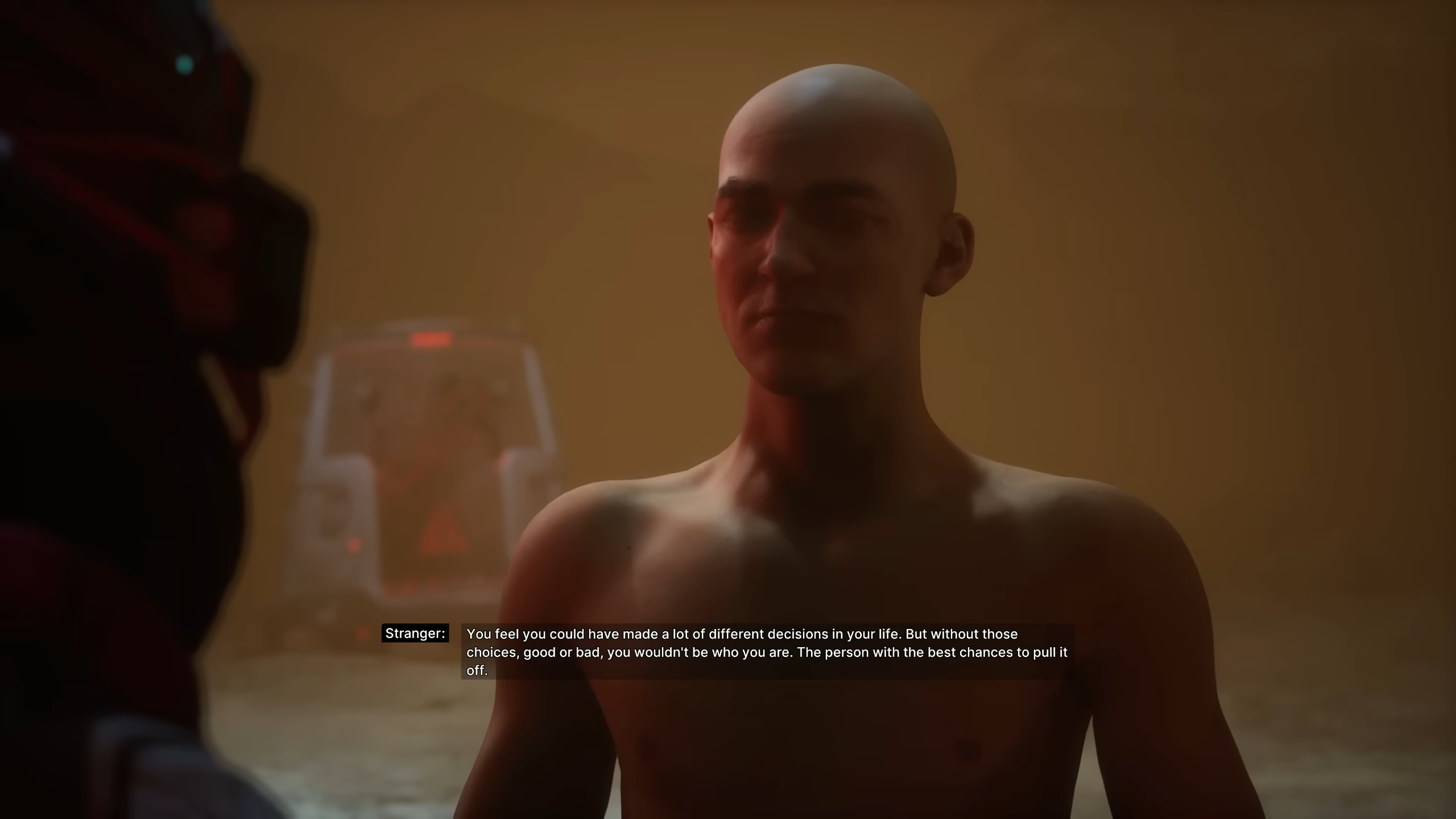
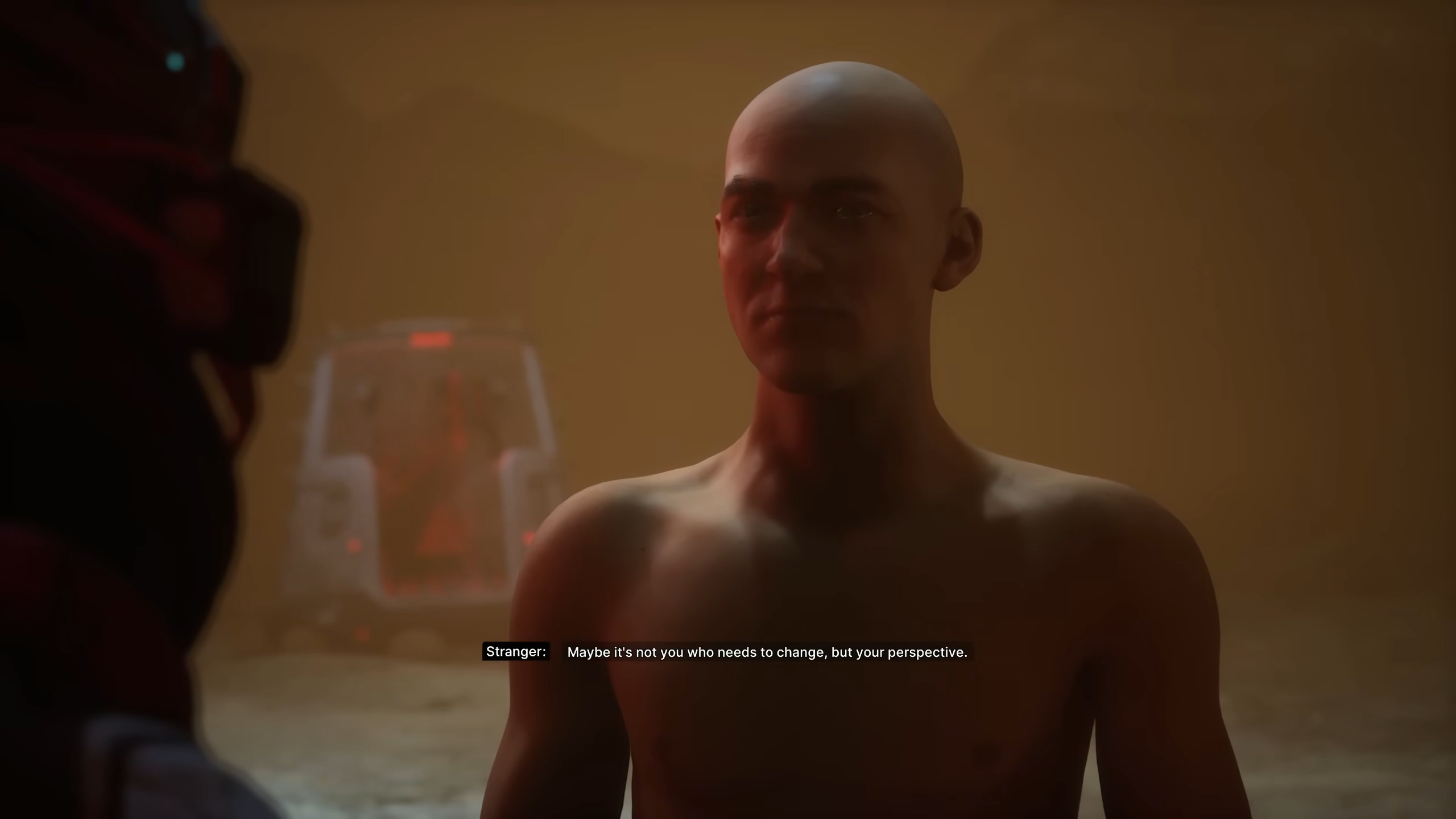
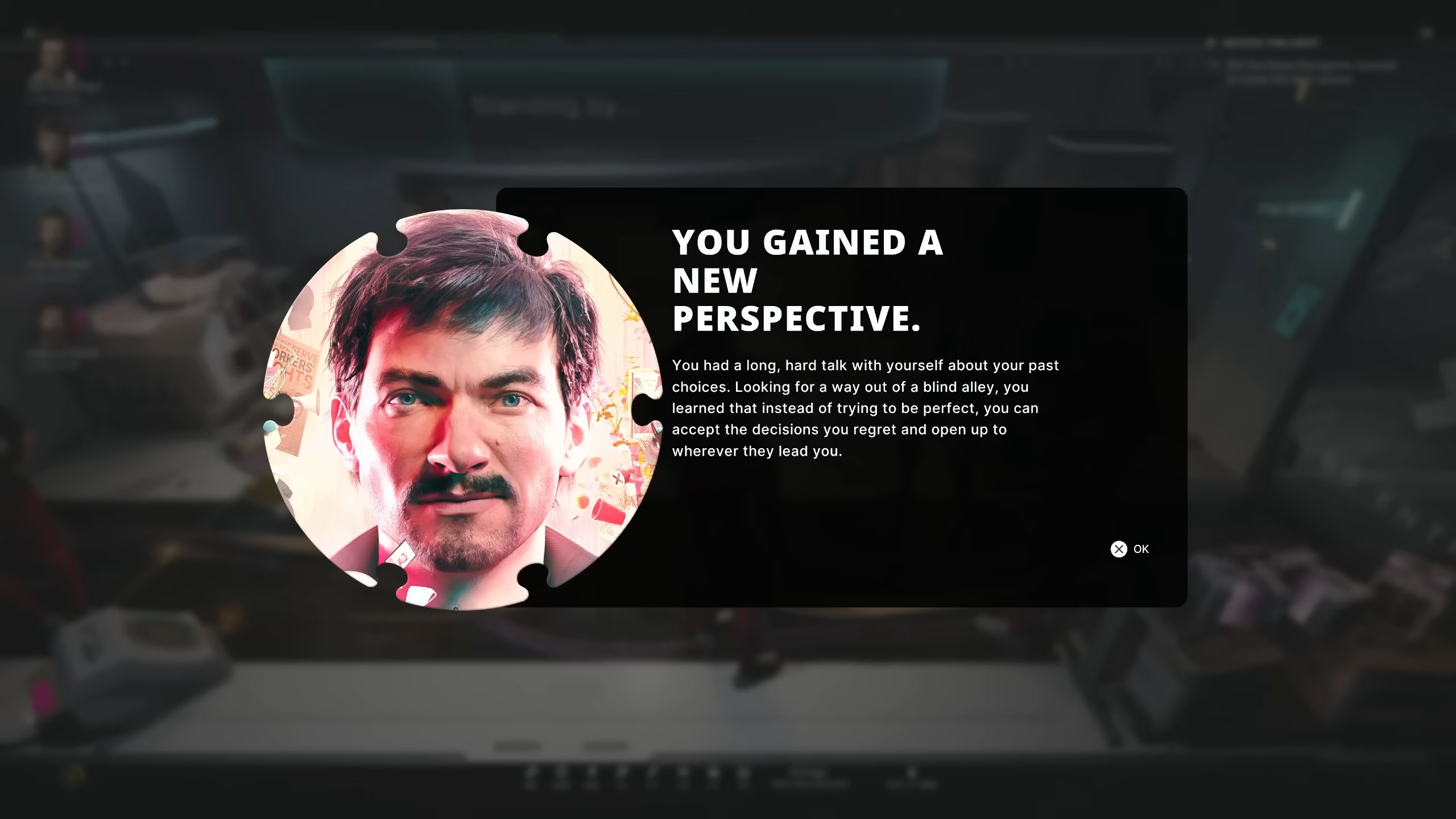
The line “Mistakes can have good consequences too” immediately reminded me of a saying from the [[book - 道德经 Dao De Jing - 老子]]: “祸兮福之所倚,福兮祸之所伏” — disaster hides within fortune, and fortune grows from disaster. Good and bad give rise to each other; what we see as misfortune may be the seed of something good, and what we see as good may contain the seed of misfortune.
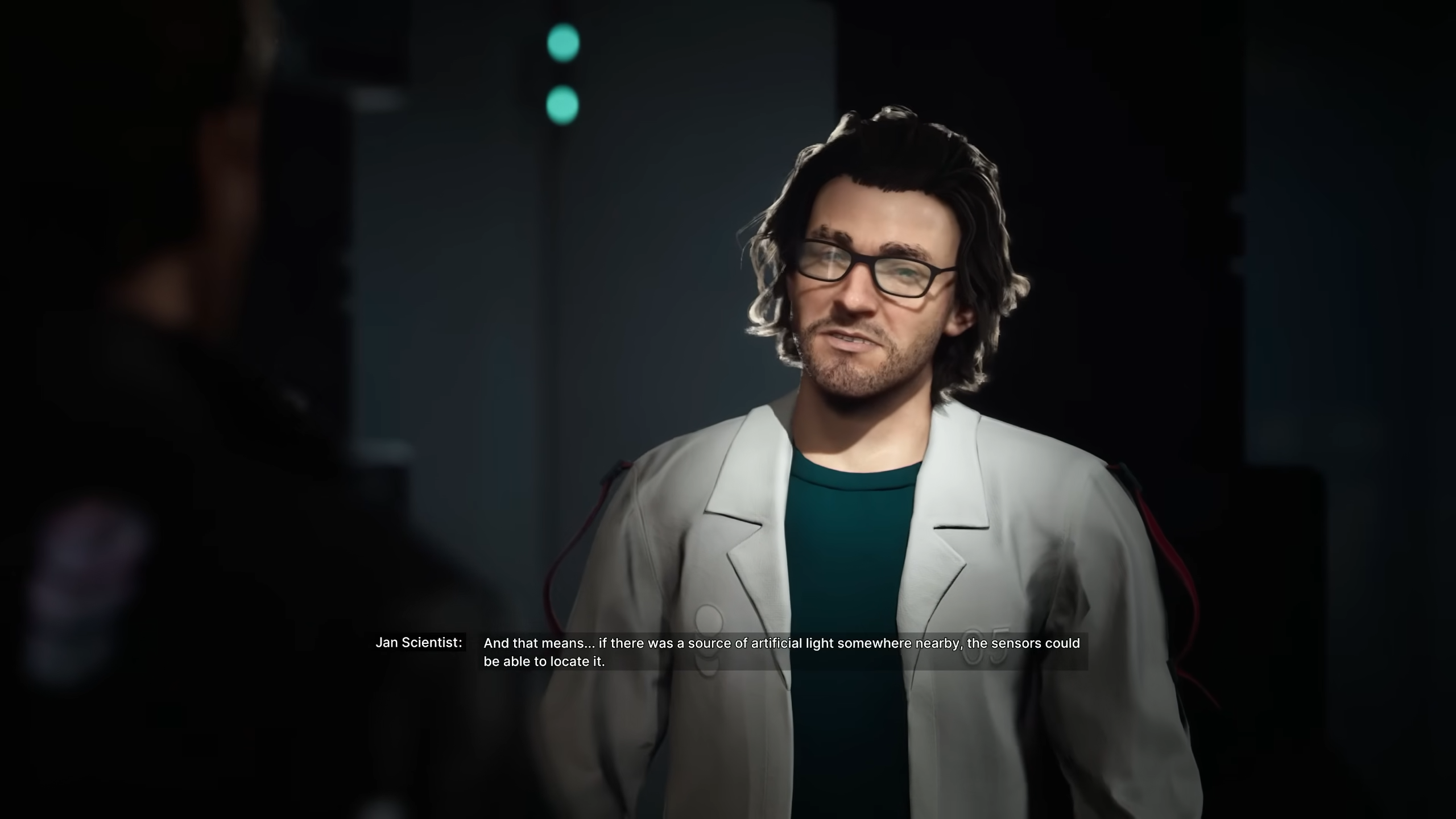
The word “light” here is also a double entendre — it refers both to an inner guiding light, the “north star” of consciousness that points us toward where we want to go (like in my own post “人生之灯”), and to a literal external light in the game that shows you the way out:
Subjective Feelings & Objective Reasons
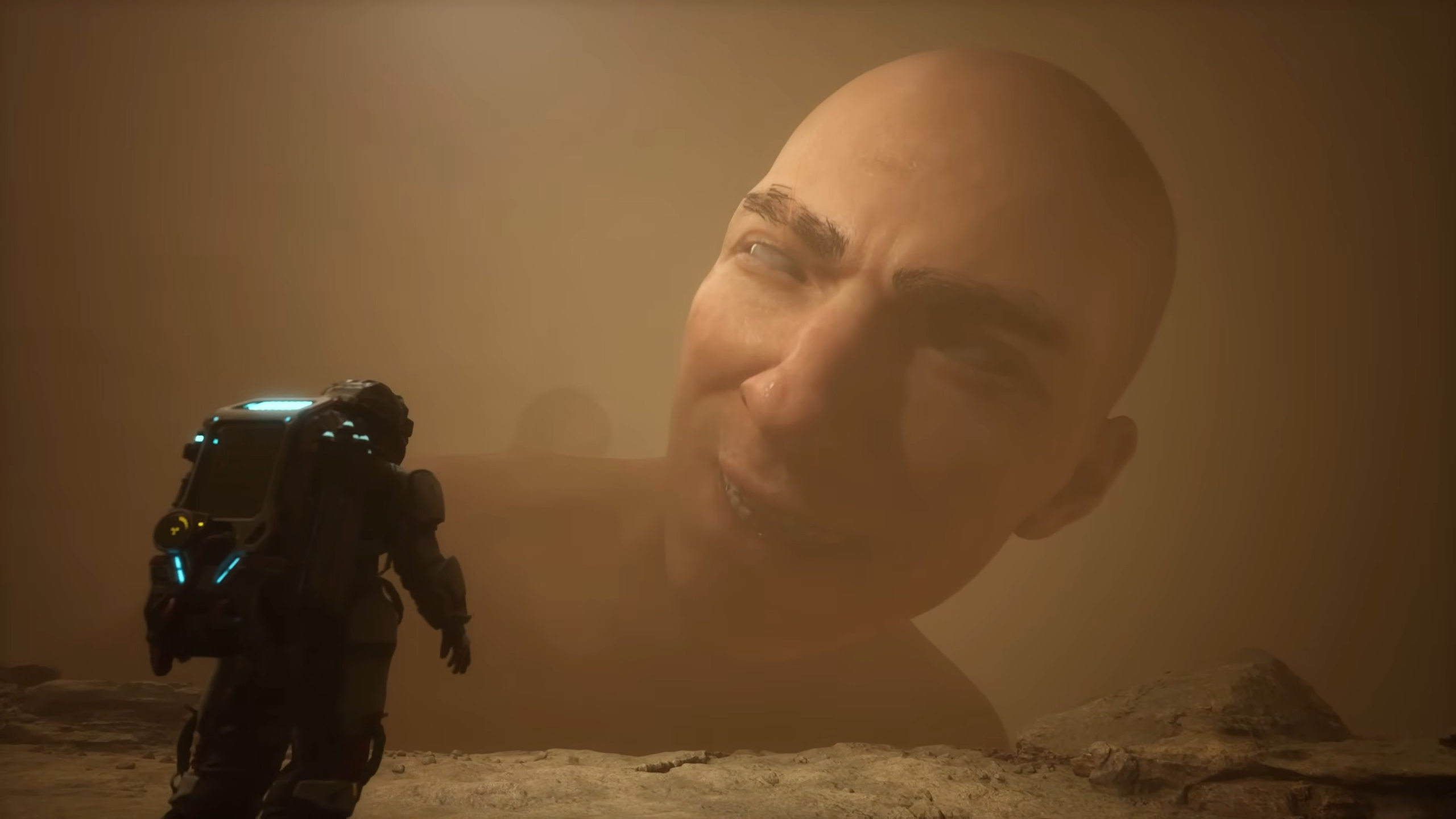
While playing this section, the two main feelings I had were [[subjective feeling - 超现实 surreal]] and [[subjective feeling - 神秘感 mysterious]].
- [[subjective feeling - 超现实 surreal]]
- [[objective reason - 非真实构景 non-realistic staging]]
- [[objective reason - 宏大凸显渺小 grand scale with reference]]
- [[objective reason - 非真实构景 non-realistic staging]]
- [[subjective feeling - 神秘感 mysterious]]
- [[objective reason - 没有脸 no face]]
- [[objective reason - 被刻意隐藏的信息 information withheld until reveal]]
- [[objective reason - 没有脸 no face]]
During my post-play analysis, I also felt [[subjective feeling - 心有灵犀 on the same wavelength]], driven by [[objective reason - 意图可读 readable intention]].
Specifically, the [[narrative content - 对话 dialogue]] in this section made me naturally think of [[卡尔荣格 Carl Jung]] and some of his concepts. That resonance was very satisfying.
ACT 3
Emotional Curve
After a metaphysical journey of self-exploration, it’s time to return to reality and continue trying to survive.
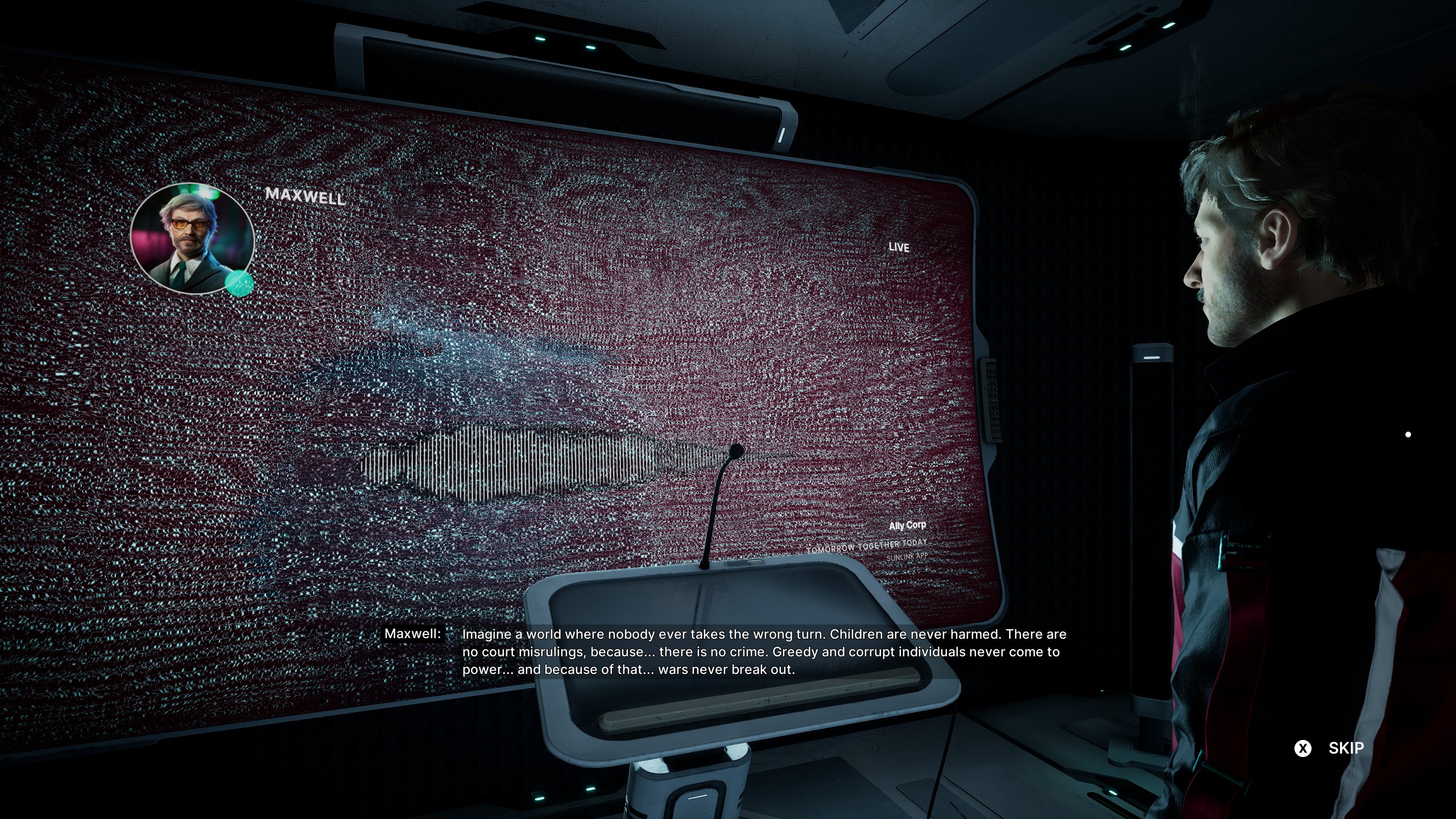
ACT 3 begins with a conversation with Maxwell about global optimization — he wants to hoard all the Repedium and use it to redesign humanity’s decision-making systems, attempting to achieve a global optimum:
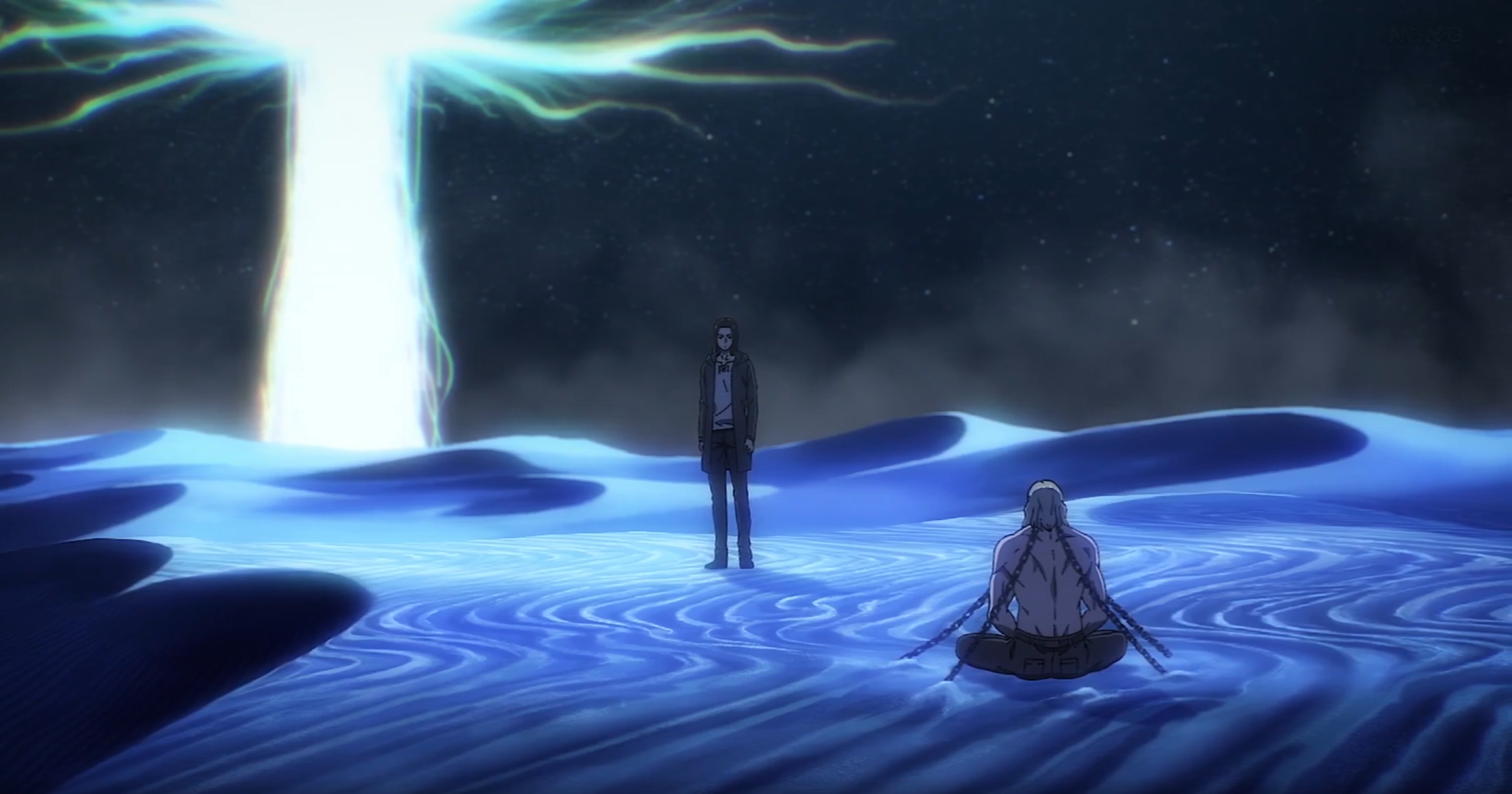
This reminded me of the “paths and timelines” consciousness collective in [[anime - 进击的巨人 Attack on Titan]], where you can see both past and future.
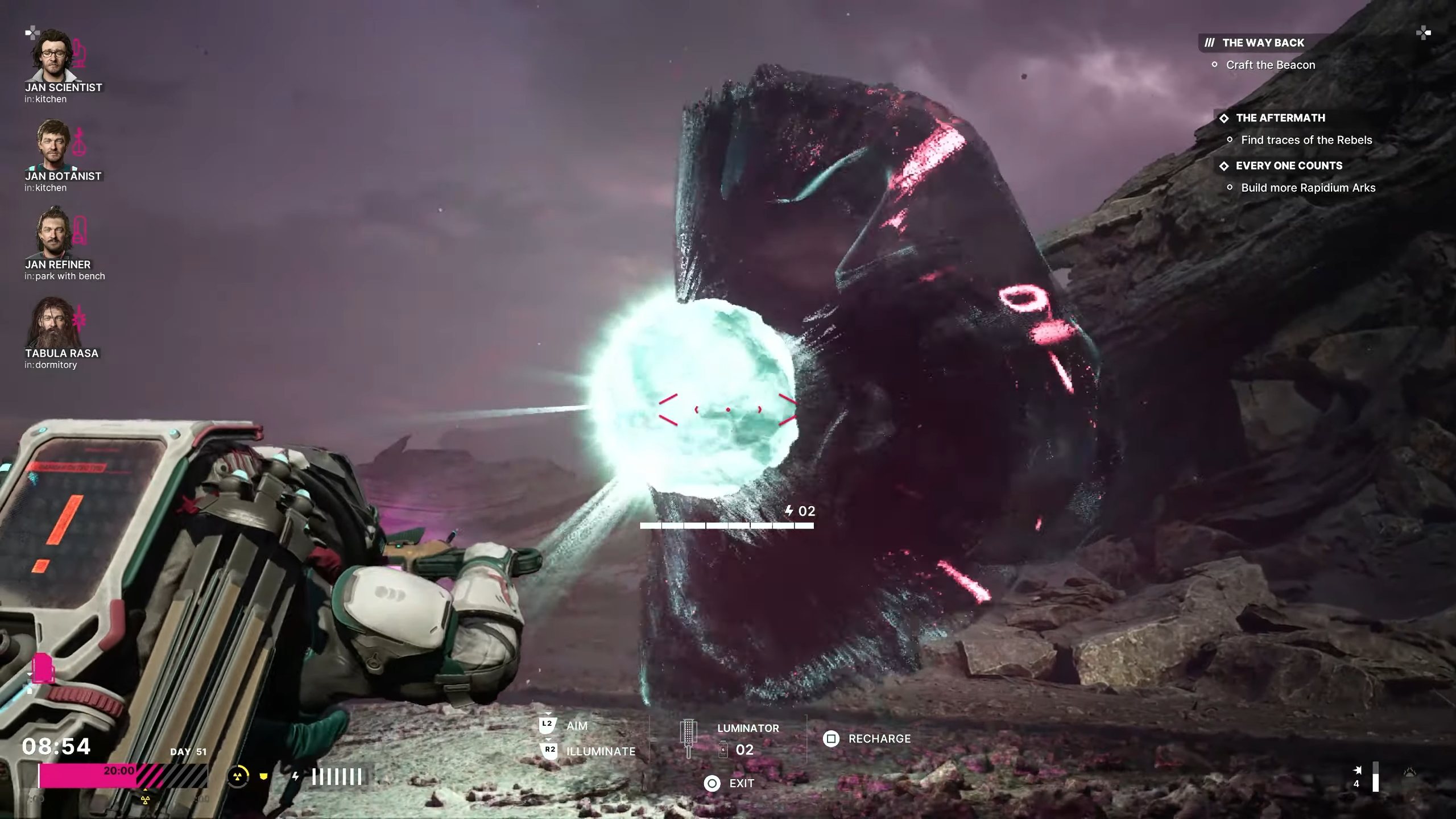
The new, fast-moving enemies introduced in ACT 3 are extremely oppressive. For most of my exploration, I kept my weapon on just to avoid being ambushed (they sent me home twice with radiation overload!).
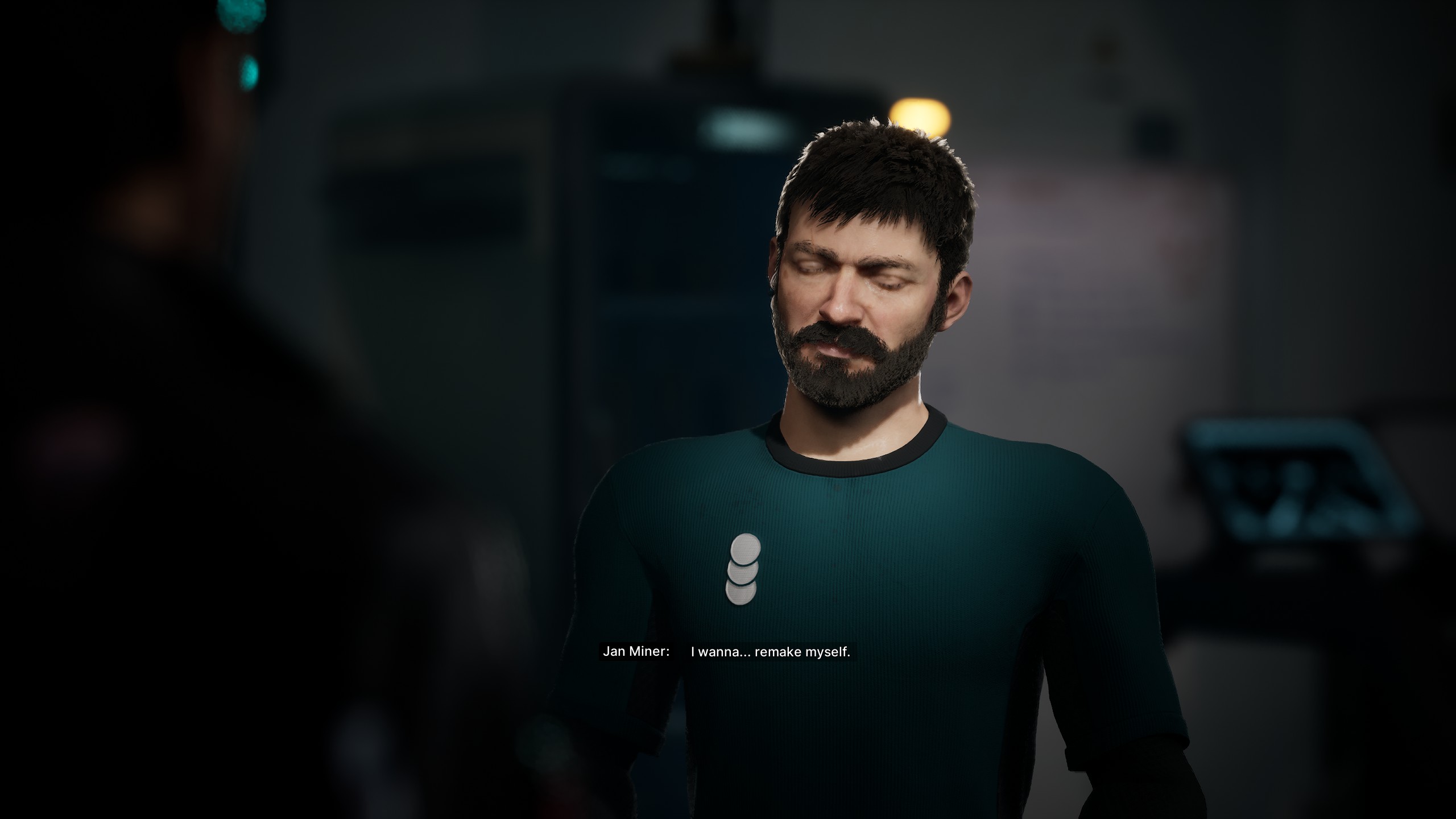
The conversation with the Miner is also very moving. He’s spent his whole life working hard for others, and only at the end does he “shyly” ask whether he might have a chance to “remake himself” using the wooden carving.
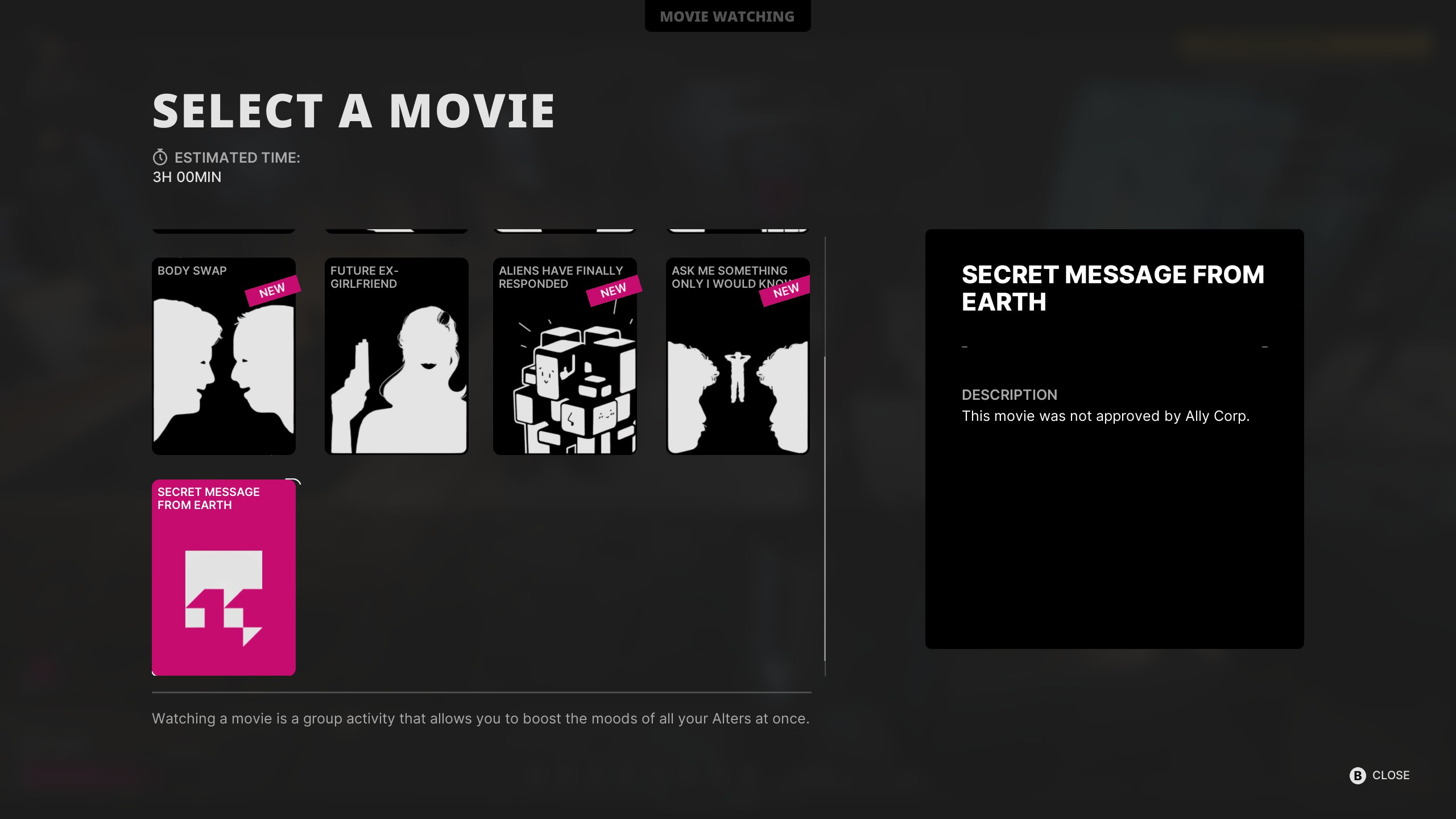
The last film I watched was a short documentary about the game’s production. Seeing the faces and hearing the voices of the people who created this work for players was genuinely heartwarming.
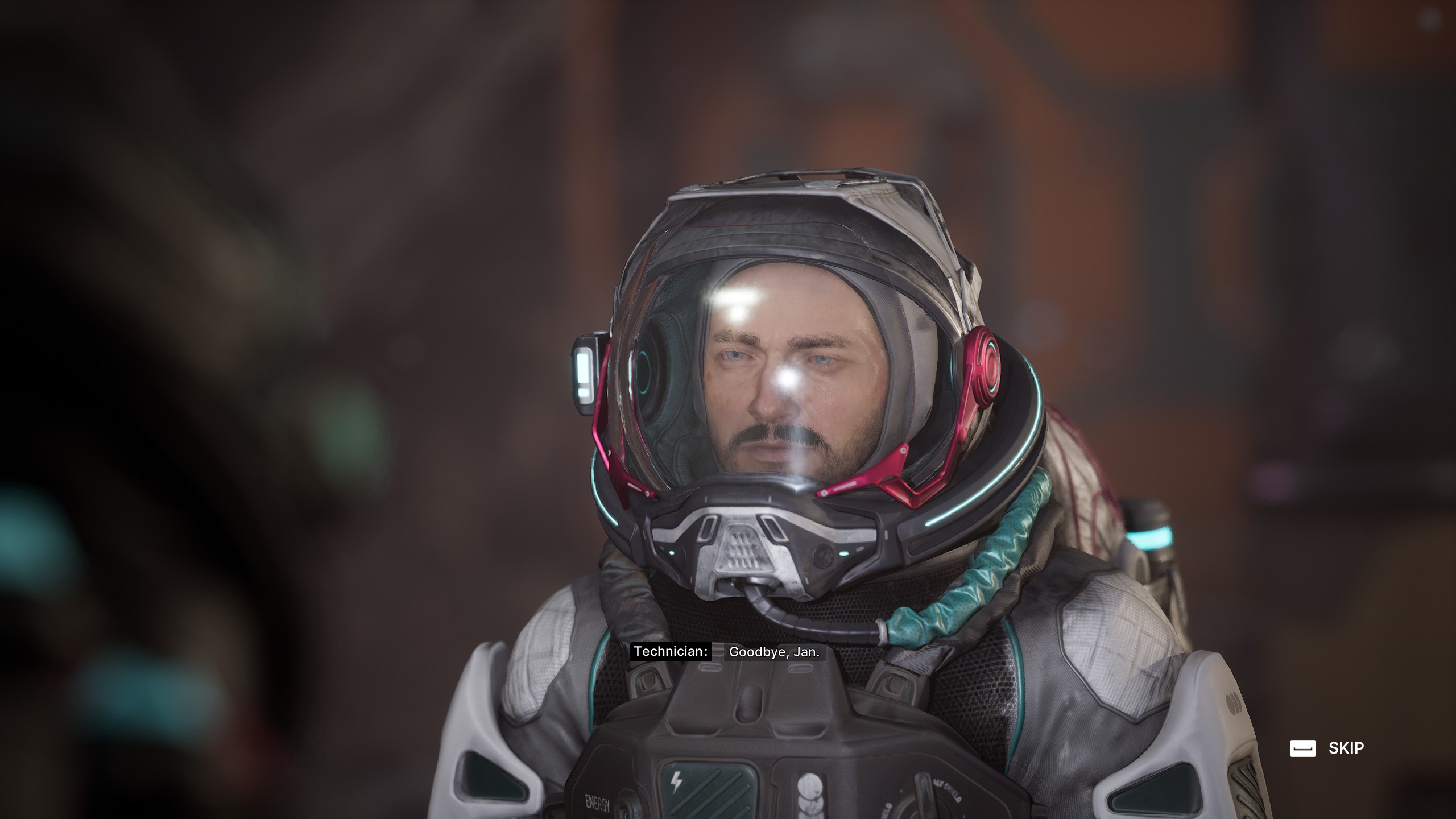
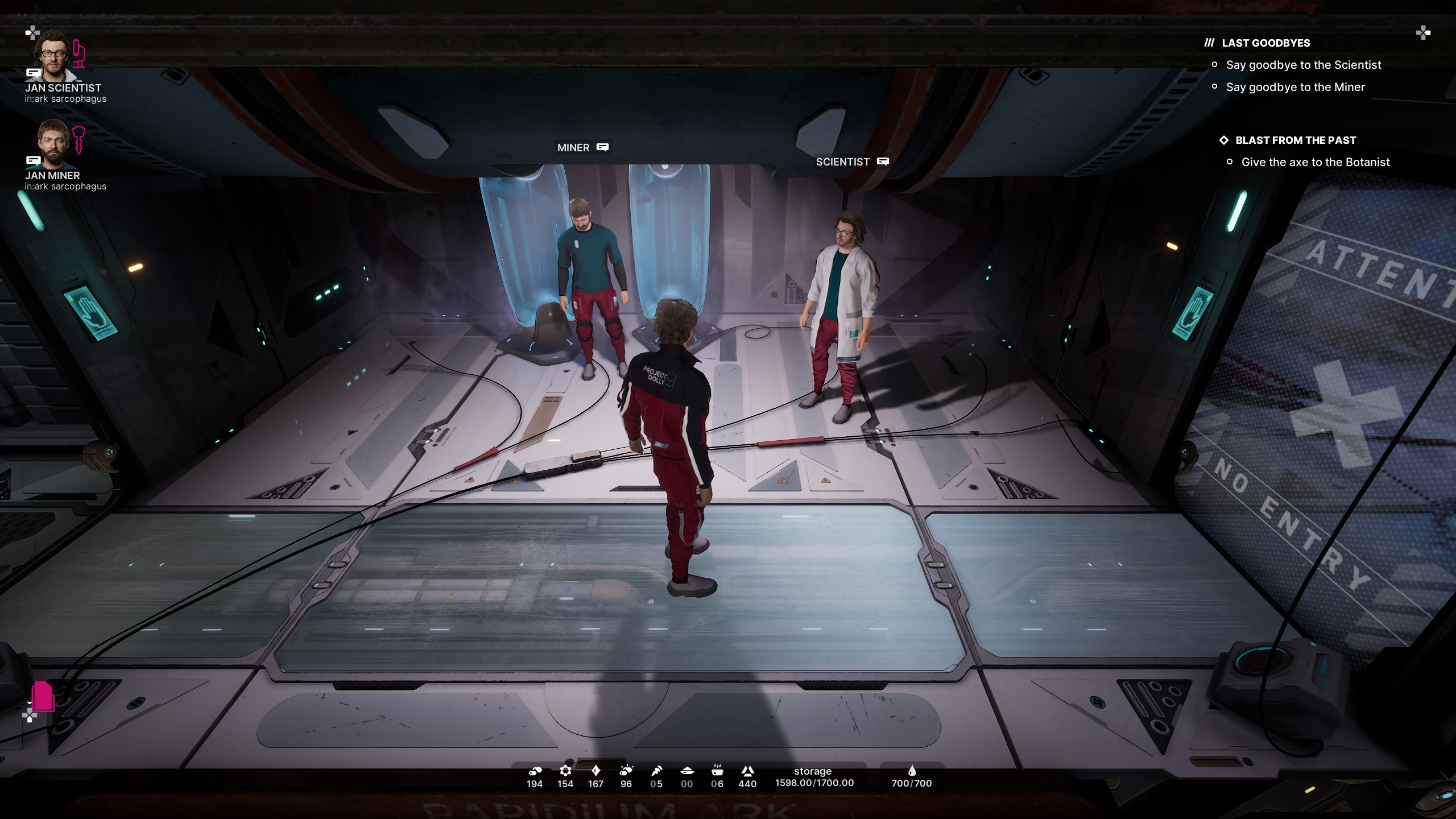
Because of my earlier choices, I eventually parted ways with the Technician & Botanist, saying goodbye for what might be the last time.
After careful preparation I finally completed a tense, exhilarating “boss fight” — very satisfying.
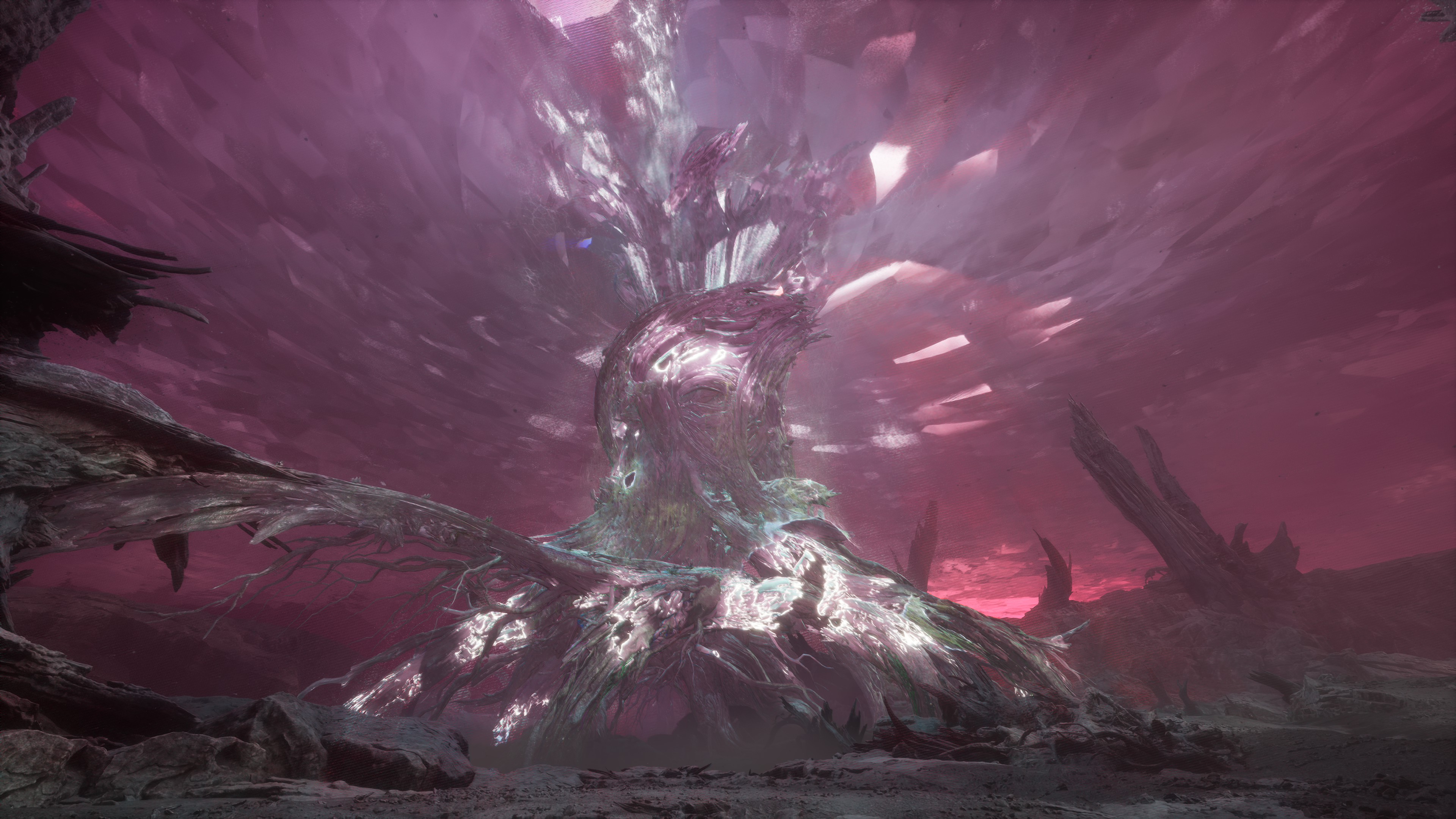
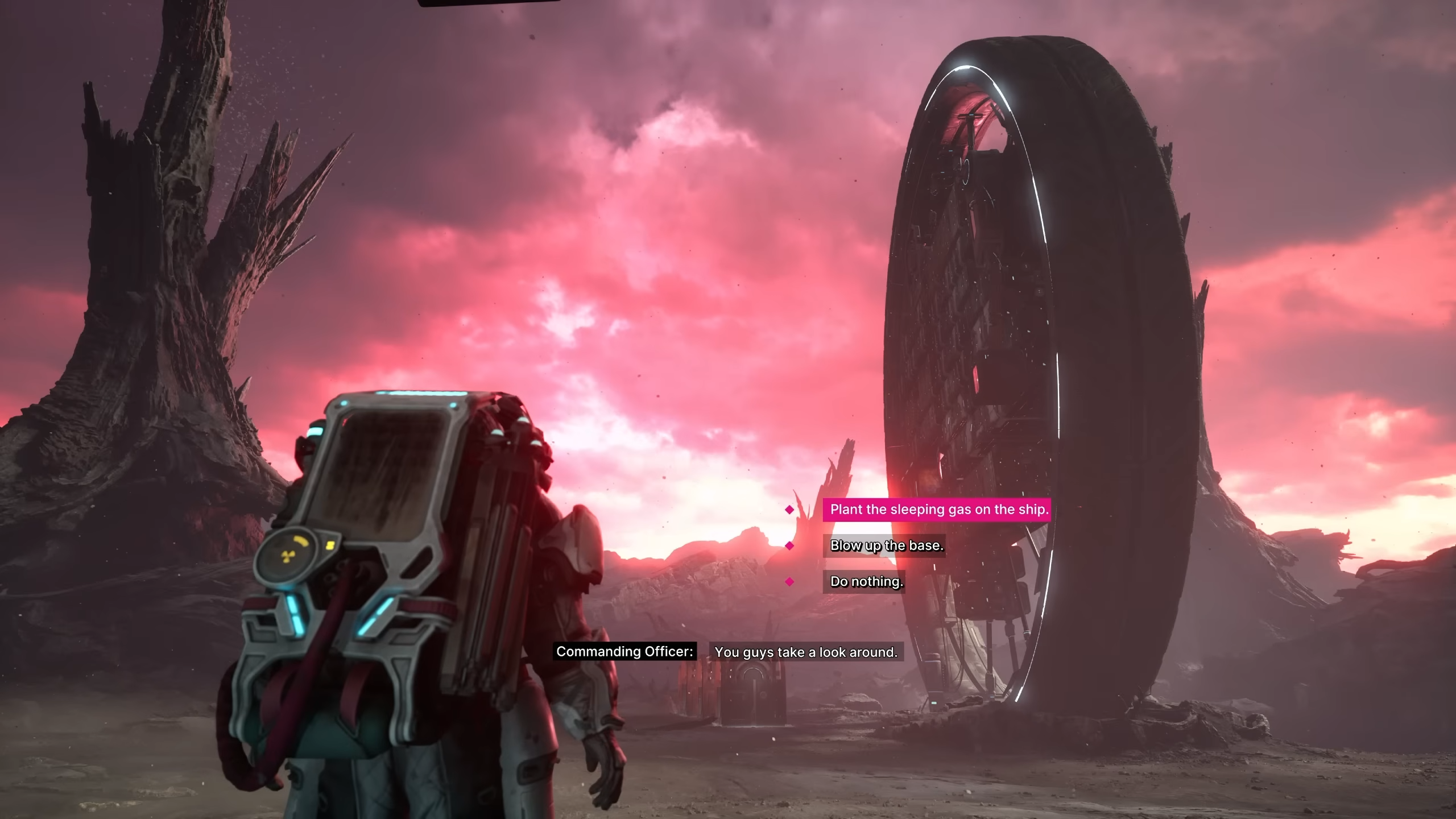
And just before the final moment, with every possible contingency prepared, I still couldn’t bring myself to kill.
Subjective Feelings & Objective Reasons
- [[subjective feeling - 掌控感 sense of control]]
- [[objective reason - 对行为结果有预期 predictable outcomes]]
- [[objective reason - 正反馈循环 positive feedback loop]]
- [[objective reason - 按计划进行 things go as planned]]
By ACT 3, everything is familiar. I know what to do and have roughly figured out efficient ways to gather resources — practice makes perfect.
- [[subjective feeling - 满足 satisfying]]
- [[objective reason - 自愿 voluntary]]
- [[objective reason - 利他付出 慷慨赠与 altruistic giving]]
- [[objective reason - 符合自我价值观 aligned with personal value]]
Even though the Technician and Botanist have left me, I know they’re short on resources, so whenever they ask for help, I naturally give it without hesitation.
- [[subjective feeling - 不舍 reluctant to let go]]
- [[objective reason - 尝试改变但失败 failed attempt to change the outcome]]
- [[subjective feeling - 代入感 共情 empathy 成为或理解TA - 同情 compassion]]
- [[objective reason - 不可逆后果 irreversible outcomes]]
- [[objective reason - 理解角色决策背后的动机 understand motivations behind the decisions]]
In the end, I still couldn’t persuade the departing Alters to reunion. It’s a pity, but I understand their concerns — no one wants to become a lab rat, helpless on a table. I could only wave goodbye and hold them in my heart.
- [[subjective feeling - 力量感 empowerment]]
- [[objective reason - 做足了准备 fully prepared]]
- [[objective reason - 按计划进行 things go as planned]]
- [[subjective feeling - 意犹未尽 wish to continue]]
- [[objective reason - 太简单 too simple or under-challenge]]
- [[objective reason - 流程短 short duration]]
Before the boss fight, I prepared thoroughly: three sets of batteries and shields, three days’ worth of food for the Alters. I didn’t leave at 7 a.m. sharp (because I chose to watch the documentary with everyone the night before — watching a movie together before major events had become a ritual), but I still set out fairly early.
All the enemies were known quantities by then. The level design is clear, with no bottlenecks, so everything went smoothly — to the point that it actually felt over a bit too quickly.
- [[subjective feeling - 解脱 安心 relief]]
- [[objective reason - 做足了准备 fully prepared]]
- [[subjective feeling - 期待 looking forward]]
- [[objective reason - 即将通关 nearing completion]]
- [[subjective feeling - 不确定感 uncertainty]]
- [[objective reason - 前途未卜 future unclear]]
With the end in sight, I had taken every possible precaution and prepared every option. But I still didn’t know what all of it would truly mean. All that was left was to wait for the final outcome.
Design Levers
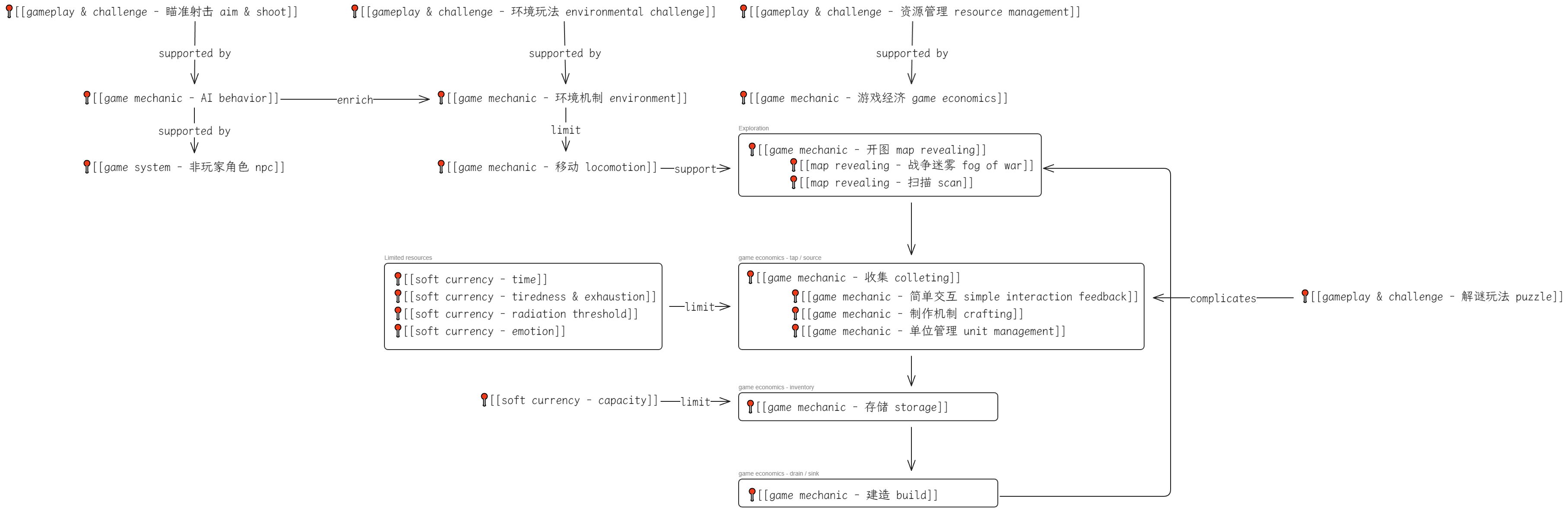
On the [[玩法和挑战 gameplay & challenges]] layer, there are no new structural tiers — only difficulty increases built on existing systems. New [[game mechanic - 环境机制 environment]] elements are introduced to raise the challenge of exploration:
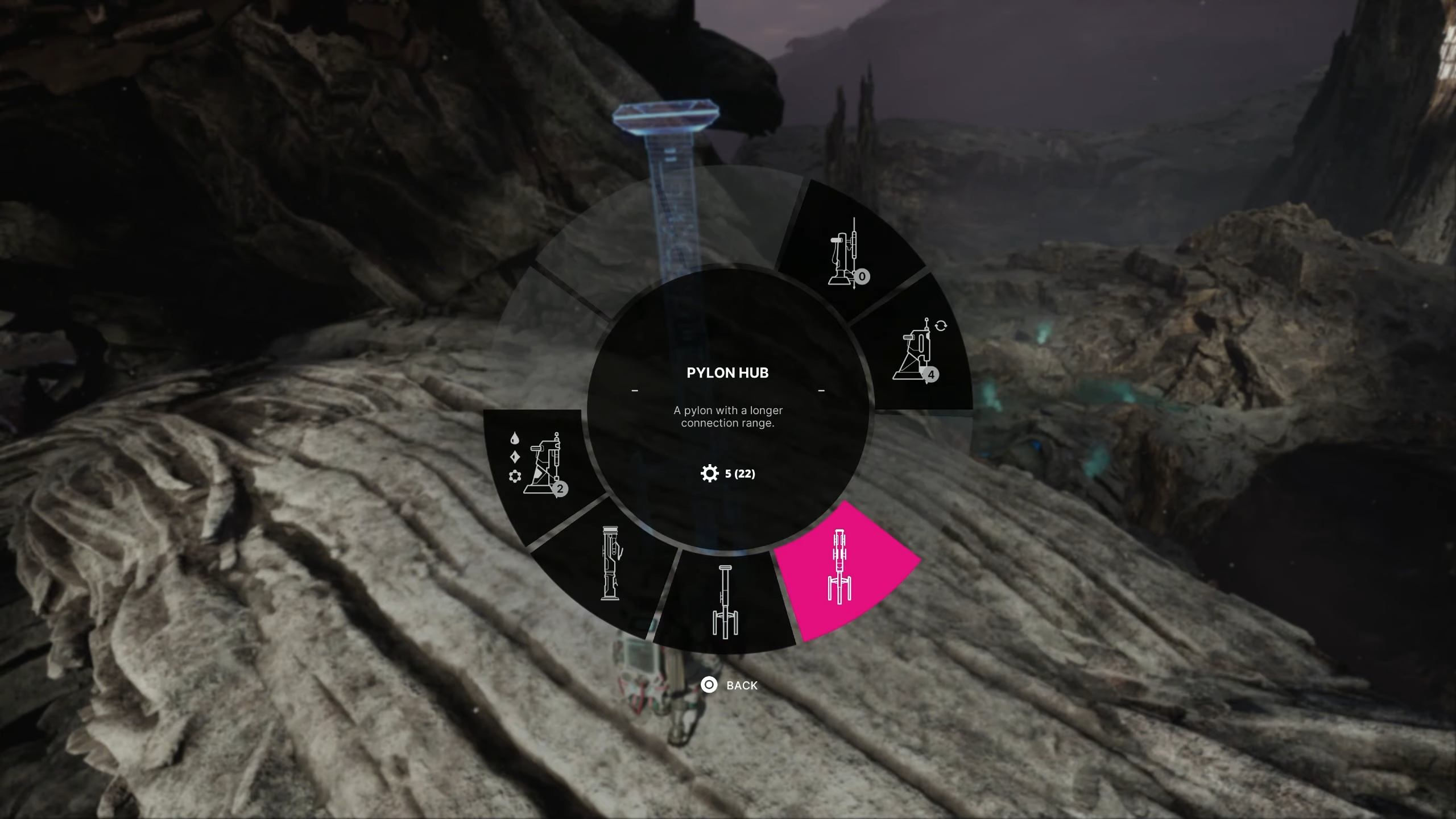
[[gameplay & challenge - 解谜玩法 puzzle]] is also deepened further — you now have to use [[game mechanic - 制作机制 crafting]] to build more advanced PYLON HUBs to power some of the deeper deposits.
Summary
In ACT 3, the pacing clearly accelerates — partly because I’ve already grown comfortable with the game’s systems, so everything unfolds as expected. My first attempt to activate the beacon fails, but that feels within the range of what I anticipated — no major shock.
Toward the end, there are several farewell moments. I kept feeling a bit dazed — I went back to the base entrance both before the boss fight and before the final call, but the others really never showed up again, and I never got the chance to hand the axe to the Botanist.
I went into the boss fight well prepared, and since the actual difficulty isn’t that high, it becomes a compact, intense peak moment rather than a grueling slog. Before the final call, my choices were clear: I didn’t want to kill anyone, and I wanted the Alters to have a free life. Still, I prepared all possible options just in case. In the end, everything simply unfolded as it was meant to. The end was finally here.
PILOGUE
- [[subjective feeling - 终结感 sense of closure]]
- [[objective reason - 通关 game completed]]
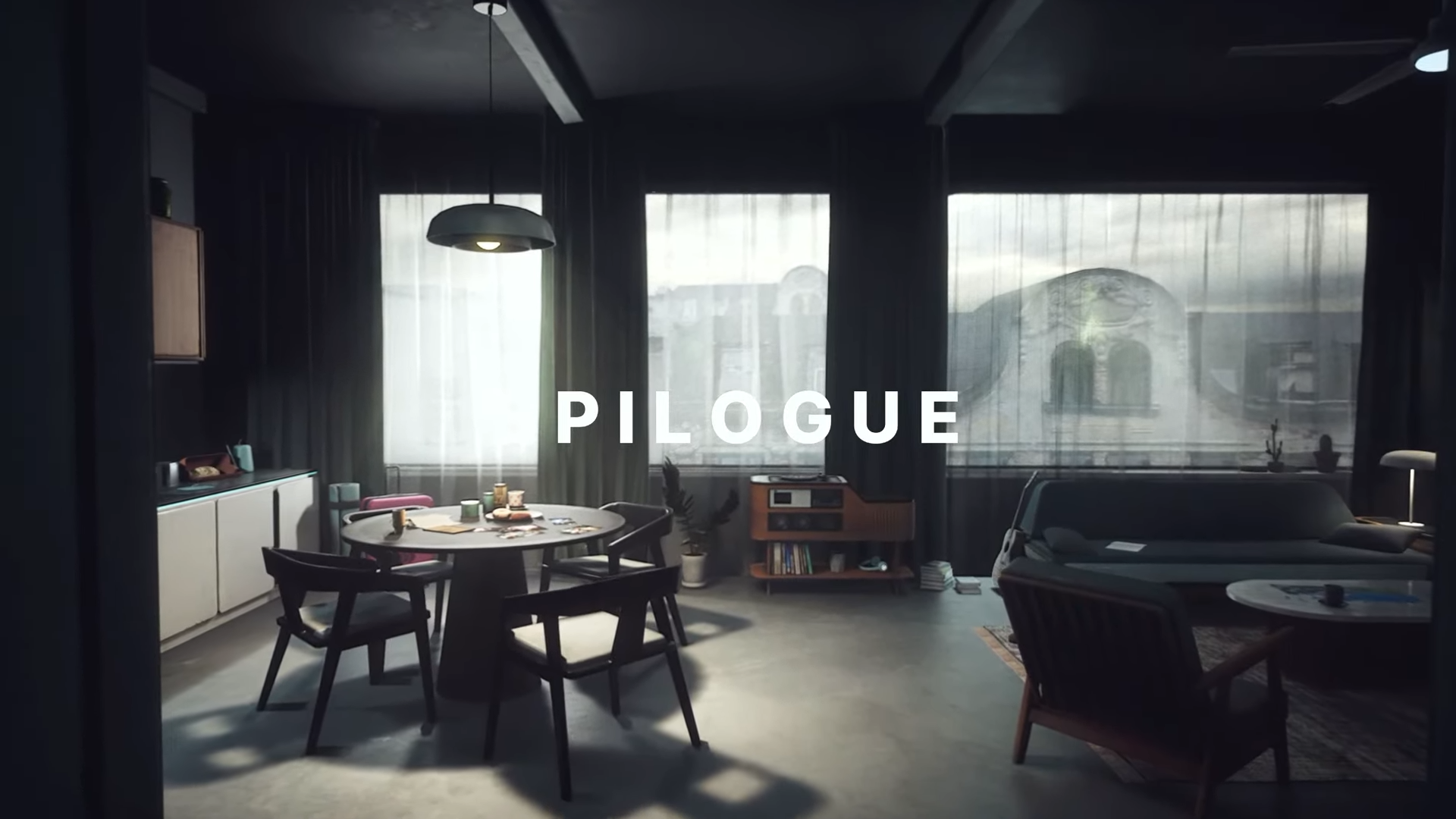
The PILOGUE takes place a few months after returning to Earth. The protagonist is about to appear in court and testify against Maxwell. Everything is heading toward its conclusion. Everyone who appears in this sequence speaks either for me or for Maxwell, based on their own value. To me, though, these things no longer feel as important — because everything is, one way or another, coming to an end.
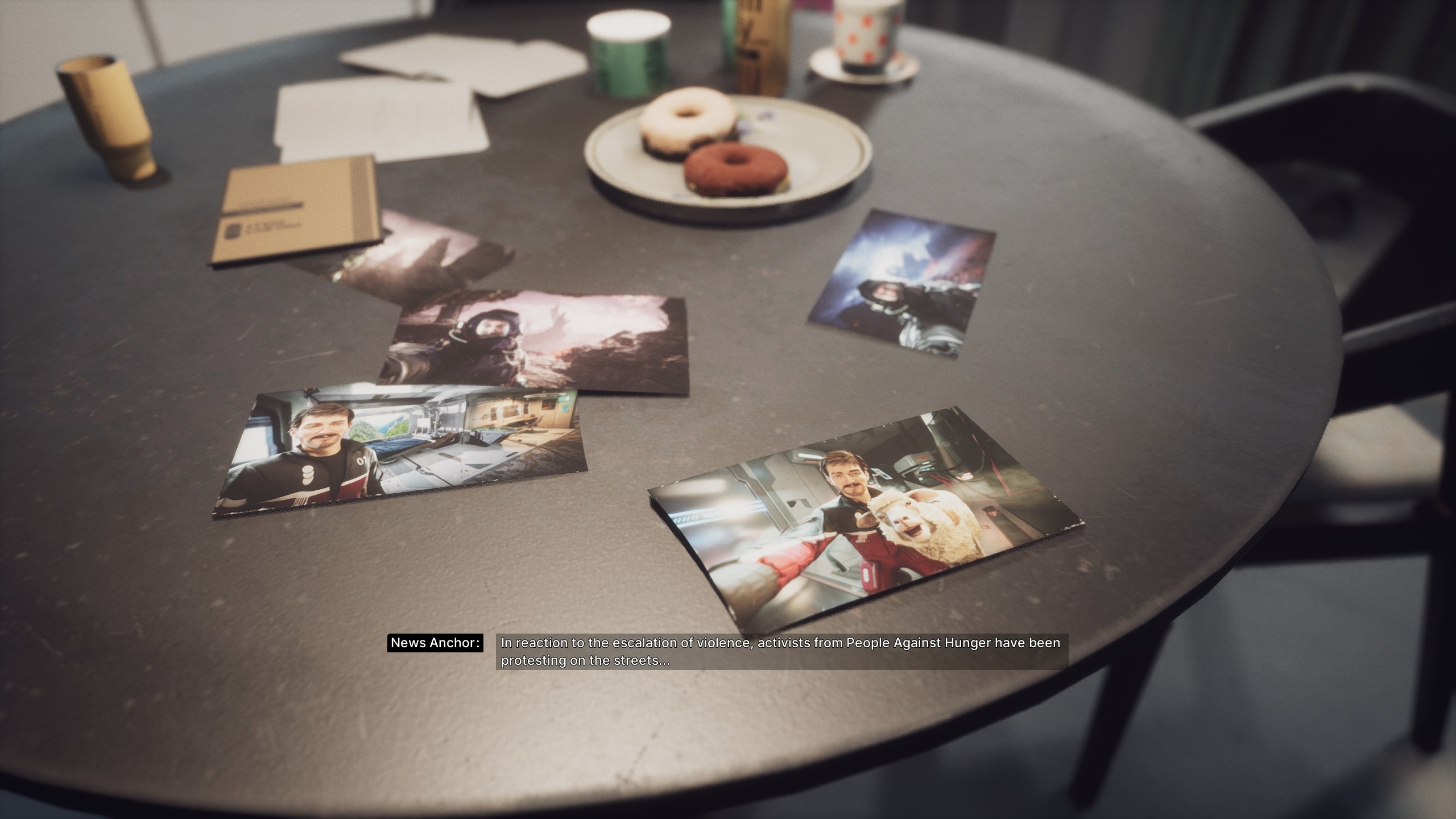
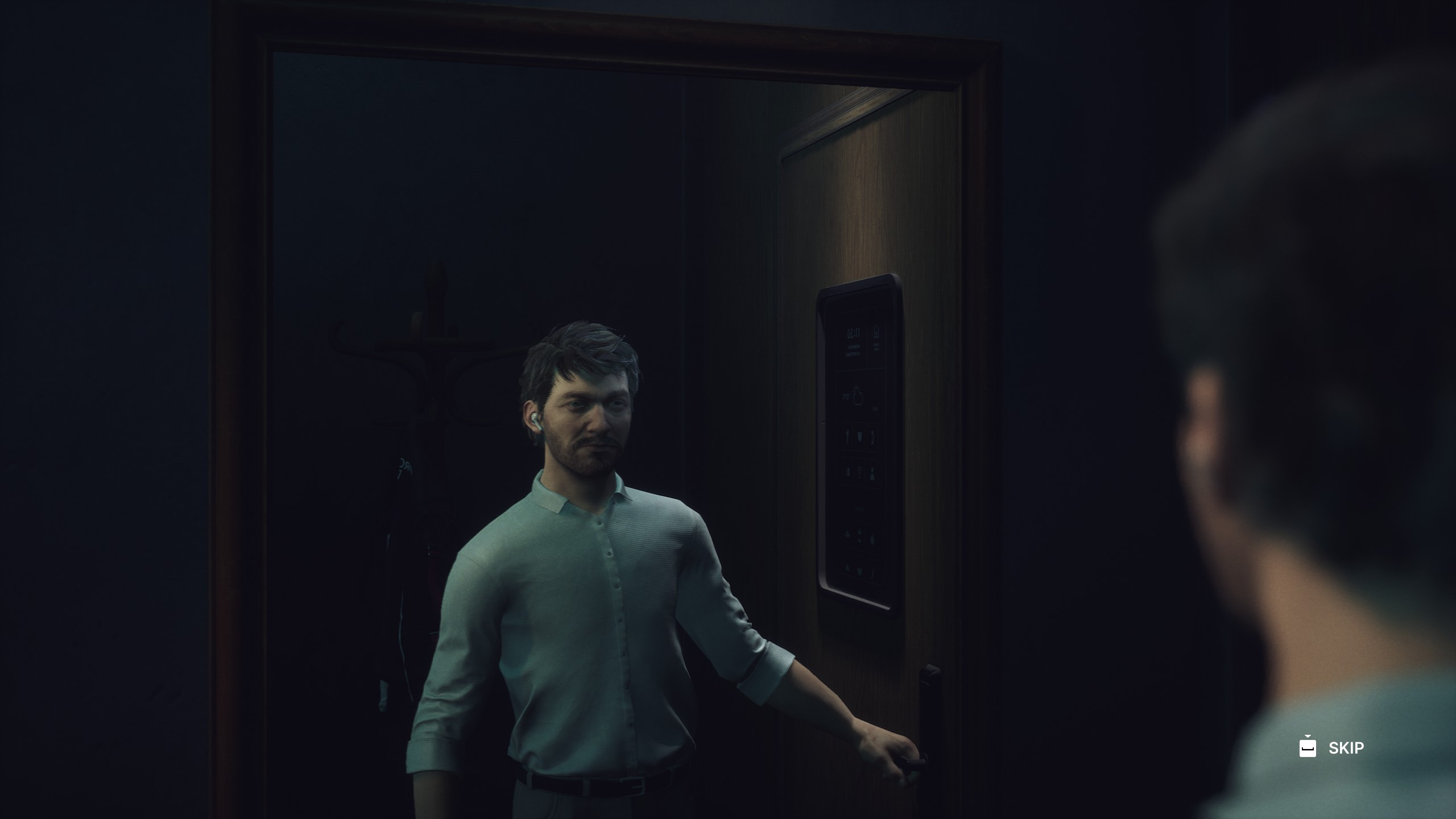
- [[subjective feeling - 成就感 achievement]]
- [[objective reason - 按计划进行 things go as planned]]
- [[objective reason - 符合自我价值观 aligned with personal value]]
I looked up the deciphered text of this message online, and it really moved me:
Reached next destination safely. Still no sign of corpo sleuths. Good reason to party. Wish you were here, bro.
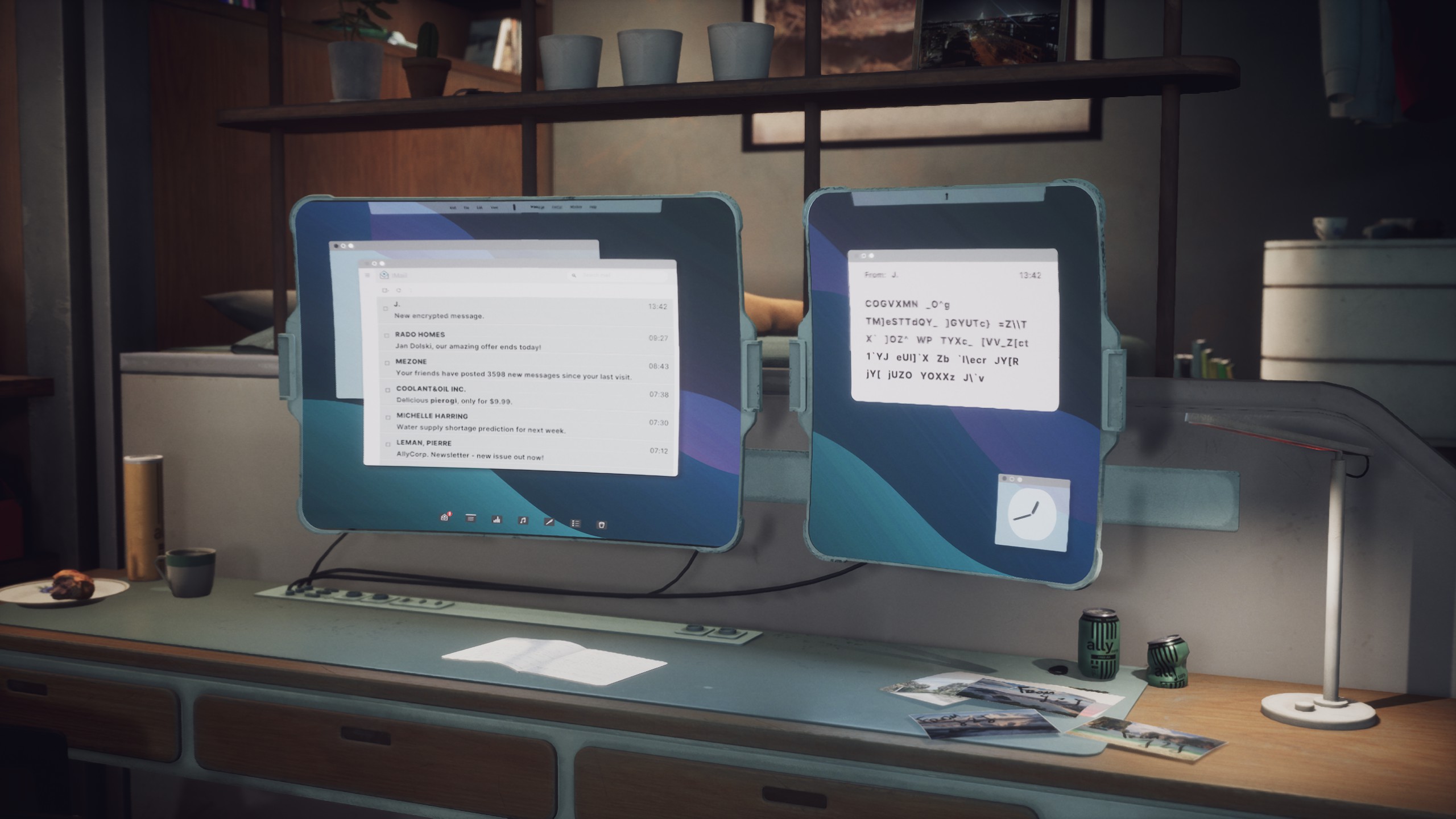
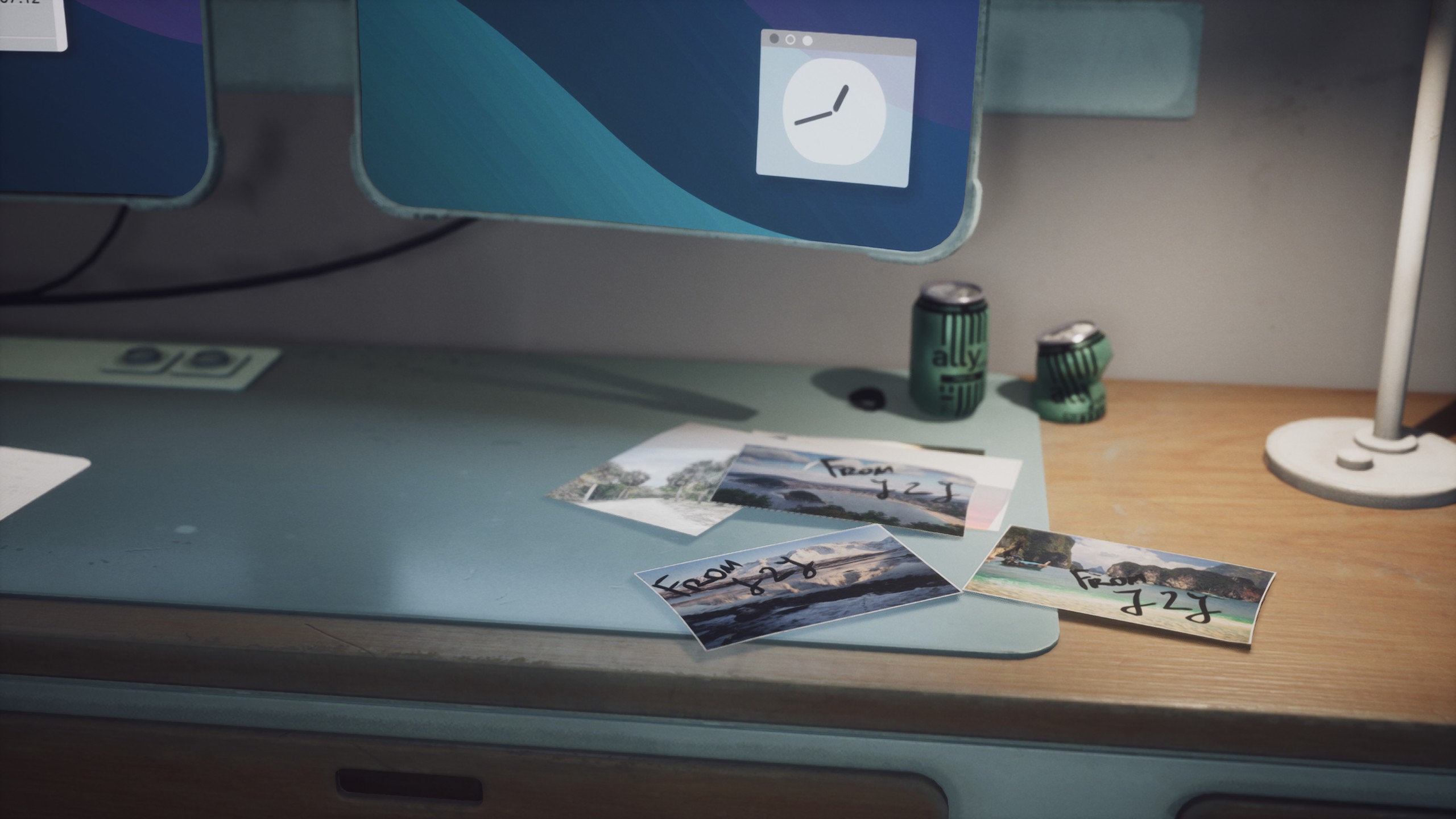
Seeing the final photo of J&J filled me with a genuine sense of accomplishment. They’ve gone on to live a free life — which is exactly what I wanted.
Conclusion
As a player
I later realized the save system is granular down to each day, which meant I had a total of 83 day-by-day saves. This significantly boosts [[subjective feeling - 可重玩性 Replayability]], which I imagine is great for more achievement- or collection-focused players. But I’m not really a completionist, and I don’t regret my choices. I also don’t want to revisit the same decisions and risk diluting their impact, so my character’s story ends here.
As a designer
This work is a great example of valuing quality over quantity in terms of gameplay and challenge. Aside from the choice-based narrative, the only core gameplay & challenge is resource management. By continuously introducing new environmental challenges, new enemy types, and more complex maps, the game achieves a smooth difficulty curve.
On the aesthetic side, the audiovisual experience sets a grounded sci-fi tone early on and sustains it consistently, while each act adds a new environment to keep things fresh. The inner-world journey of self-discovery and the final high-difficulty sequence serve as aesthetic highlights that leave a deep impression.
Narratively, the game repeatedly forces me to confront difficult choices and, just as often, presents dialogue that resonates with my own thinking. There are no absolutely correct options; behind every conscious action lies an unconscious shadow. Worrying and dithering are useless — only by facing the Shadow can we eventually find a way through.
This is the kind of game I can truly love at this point in my life. Thank you for creating it.
What - Thinking
If I could take another turn
My life would never be the same
If I could get another chance
Today
“What if” is the most powerful core of The Alters. I didn’t expect it to move me this much, especially since “there is no if” has long been one of my life mottos.
I recently talked with a friend again about the idea that “every time is the last time”. I’ve always resisted progressivist metaphors like “moving forward”, but if we set Carl Jung’s synchronicity aside for a moment, we can at least say time is one-way. Every seemingly insignificant present moment accumulates into the past, while simultaneously narrowing the space of possible futures.
The Dao De Jing says “抟气致柔如婴儿”: when something is newly born, everything is still formless, so it holds the maximum space of possibilities. It also says “物壮则老”: when something grows strong and mature, many aspects have already solidified; its possible endings are continually collapsing inward.
In The Alters, with the help of the quantum computer and special resources, you finally get to see the roads your life might have taken at different crossroads. The game cleverly funnels all these timelines back to the same point — everyone ends up on this alien mining mission — which gives it a distinct flavor of fate.
Though the crew all die, you still have to find a way to live, don’t you? If you have no teammates, you create them. One moment you’re promising someone a good rest; the next you’re assigning them more work. Who would’ve thought you’d become a “sinful capitalist” yourself?
Because you know everyone’s origin story, you know exactly what kind of words they want to hear in order to keep working in peace — isn’t that, in a way, just self-management? On a larger scale, each Alter is another expression of your own unconscious possibilities. Even if you haven’t led those lives, those trajectories must exist within the space of the collective unconscious.
Decision-making, of course, is about weighing trade-offs. If every option were perfect, there would be nothing to “decide”. On one side is “taking a life”, on the other “submitting to be monitored”. The pull of freedom outweighs ethics, but in that moment “taking a life” becomes “killing a person”. In the midst of that turmoil, you first construct the illusion of democratic voting, then shatter it. There is no splitting the bill; you can’t shed a single ounce of responsibility. After several rounds of circling, your mind is made up: this killing cannot be avoided.
It reminds me of the Stanford prison experiment — how changing roles reshapes wills that once seemed incomprehensible. It’s like putting on a latent persona mask that rises up from the unconscious or even the collective unconscious. Once you put it on, it “swells” and you can’t take it off; at the end you still say, “I don’t know how I became this.” Perhaps in moments of collective frenzy, consciousness has already stepped aside and you’ve become a walking corpse possessed by the unconscious.
The journey of self-exploration in the game is fascinating. The central symbol is “sand”: shapeless yet able to form bodies. In comparison, water might seem more fitting, but maybe water is just harder to produce. The faceless figure later gains a face, but the body remains made of sand — isn’t that precisely a personal unconscious wearing a particular persona mask? It’s a story of “disaster hides within fortune, and fortune grows from disaster” — exactly as the Dao De Jing says.
In the end, the outcome is not entirely “smooth”, but they are still my choices, and I do not regret them.
There is no “if”.
Take the beginning as the end.
Beginning and end are one.
All arises from intertwined causes and synchronicities.
SPECIAL THANKS
- Some screenshots are taken from @BlackTorito TV ’s walkthrough videos
CHINESE
TL; DR
- Tear-down methodology
- 情感化游戏设计系统 Emotional Game Design System (我自创的情感化游戏设计系统)
- Goal
- 以“情绪体验-主观感受&客观原因-设计杠杆”的 EGDS 层级对游戏历程进行实际拆解,检验 EGDS
- 不仅仅只是体验,而是深刻拆解分析每种情绪体验背后的原因,纳入 EGDS 中以完善设计工具
- Takeaways
- 叙事为王,没有绝对正确的选项,好的故事不仅只是勾起好奇,玩家所面对的不是虚构的情景,而是自身的阴影
- 玩家永远是决策中心,无法通过分摊责任来逃避关键选择,唯有承担责任,产生后果,才能深入人心
- 玩法与美学深化叙事,并没有喧宾夺主,三者均衡结合,才是好游戏的真谛
Why
[[game - 2025 - the alters 多重人生]] 是在朋友推荐之下偶然游玩的游戏,乍一眼看过去还以为和 [[game - 2019 - death stranding 死亡搁浅]] 有些相似,看完简介之后惊觉封面上的所有角色都是“你”。玩完之后它已经成为我的人生游戏之一,遂有此文。
请注意,正文中含有剧透!!!
What - Analyze
在整篇文章中,我会采用 [[情感化游戏设计系统 emotional game design system - EGDS]] 作为核心分析框架。千人千面,我的分析主要会基于我个人的游玩体验和所经历的事件。
EGDS (Emotional Game Design System) 是我受 [[陈星汉 Jenova Chen]] 启发,尝试构建的情感化游戏设计体系。
EGDS 的底层信念是:玩家的每一种感受都有其来源,这些来源可被追溯、分析和拆解;一旦被厘清、被命名,就可以成为设计师构建情绪体验的工具。
在电影工业中,如何系统性地影响观众情绪已经有相对成熟的方法论;而在游戏领域,据我所知类似的体系仍相对缺乏。EGDS 便是我基于人类共有的情绪体验和审美共识,尝试整理出的一套“情绪体验 - 主观感受 & 客观原因 - 设计杠杆”的映射关系,期望能为我自己,以及其他设计师,在创造情感驱动的游戏体验时提供一些可复用的参考与灵感。
Overview
Emotional Curve
通关时大概是三十小时的游戏时长,看这张情绪曲线图就可以知道,一路走来多有波折起伏,属实难得。
Subjective Feelings & Objective Reasons
如果要选出一些主观感受的关键词来:
- [[subjective feeling - 探索 exploration]]
- [[subjective feeling - 有意义的选择 meaningful choice]]
- [[subjective feeling - 代入感 共情 empathy 成为或理解TA - 同情 compassion]]
- [[subjective feeling - 纠结 in a dilemma]]
而最关键的客观原因应该就是:[[objective reason - 取舍 trade-offs]]
Design Levers
[[玩法和挑战 gameplay & challenges]]
玩法层面有两个主要的核心:
- [[gameplay & challenge - 资源管理 resource management]]
- [[gameplay & challenge - 基于选择的叙事 choice-based narrative]]
[[叙事 narrative]]
从叙事结构而言应该属于:
- [[narrative structure - 三幕结构 Three-Act Structure - Syd Field - 1979]]
- [[narrative structure - 群像叙事 ensemble storytelling]]
叙事主题而言:
- [[narrative theme - 身份认同 identity]]
- [[narrative theme - 多重自我 multiplicity of self]]
- [[narrative theme - 生存困境 survival under scarcity]]
- [[narrative theme - 道德困境 moral dilemma]]
- [[narrative theme - 责任与亏欠 responsibility & guilt]]
- [[narrative theme - 控制与失控 control vs powerlessness]]
叙事口吻:
- [[narrative tone - 冷静 calm]]
- [[narrative tone - 理性 rational]]
- [[narrative tone - 沉郁 somber]]
叙事视角:[[narrative voice - 第一人称 first-person]]
[[美学 aesthetics]]
- [[visual style - 写实科幻 grounded sci-fi]]
- [[atmosphere - 异星 alien-world]]
- [[atmosphere - 敌意环境 hostile environment]]
总而言之,《多重人生》是一款以遥远异星为背景的写实科幻游戏。其玩法聚焦于资源管理以及基于选择的分支叙事:玩家一方面要在有限资源与时间压力下规划行动,另一方面必须在没有“正确答案”的前提下作出道德抉择。
在 EGDS 的视角下,这款游戏最打动我的地方,是它如何通过一系列具体的设计手段——可视化情绪、不可逆后果等——让“责任”“亏欠”和“多重自我”等主题真正落实到玩家的亲身体验之中。
PROLOGUE
Emotional Curve
在 PROLOGUE 中,一切都很新鲜,[[叙事 narrative]] 和 [[美学 aesthetics]] 驱动着我不断向前探索,[[玩法和挑战 gameplay & challenges]] 方面主要引入的是 [[gameplay & challenge - 资源管理 resource management]]。前面都进展顺利,情绪逐渐走高,但没想到最让我印象深刻的是最后的收尾阶段。
因为我的过度建造导致我在最后关头缺少金属资源(18/40),在跑遍了整张地图后还是不够(27/40)。
盯着建造面板看了好几分钟后已经准备痛苦地重开之后,突然发现可以通过移除模块来回收部分资源:
欣喜地通过移除模块来获取到足够资源之后,本以为大功告成,但没成想又告知因为有模块未连接所以无法完成建造:
看了一会儿之后,发现空间排布上没有达到最优,通过调整了模块位置最终成功将所有模块连接起来。
而最终创造第一个分身的时候因为早有预料了,所以更多是新鲜感:
在创建完分身后,因为我已经具备了离开的条件,所以结束了 PROLOGUE。
Subjective Feelings & Objective Reasons
虽然这完全是由于我个人的决策失误导致的“波折”,但也正因这次事件,强化了 [[gameplay & challenge - 资源管理 resource management]] 所期望带来的 [[subjective feeling - 紧张 tension & nervous]] 和 [[subjective feeling - 有意义的选择 meaningful choice]]。
[[subjective feeling - 有意义的选择 meaningful choice]] 背后的主要原因是 [[objective reason - 资源有限 limited resources]],这要求玩家对于各种资源都有较好的规划能力。
Design Levers
在 PROLOGUE 中,[[叙事 narrative]] 其实还在铺垫阶段,[[美学 aesthetics]] 部分创造了遥远异星的荒凉和足够令人信服的科技感,[[玩法和挑战 gameplay & challenges]] 已经展开了最核心的部分—— [[gameplay & challenge - 资源管理 resource management]]:
因为是 3D 空间的探索,所以需要依托于 [[game mechanic - 移动 locomotion]]:
地图中含有某些无法直接通过的部分,即 [[game mechanic - 环境机制 environment]],会一定程度上限制 [[game mechanic - 移动 locomotion]]:
而所有的一切都是为了服务于 [[game mechanic - 游戏经济 game economics]]。
- 第一步就是 [[game mechanic - 开图 map revealing]],而这包括了两个部分:
- [[map revealing - 战争迷雾 fog of war]] 即常见的地图中没有走过的地方是不可见的:
- [[map revealing - 扫描 scan]] 指的是如果发现了深层矿藏,那么需要通过“三角测定法”找到真正的位置:
- [[map revealing - 战争迷雾 fog of war]] 即常见的地图中没有走过的地方是不可见的:
- 而在找到矿藏之后,有不同的采集方式
- 对于浅表矿藏(SHALOW RESOURCES),那么可以通过 [[game mechanic - 简单交互 simple interaction feedback]] 直接进行采集,但其数量有限
- 对于深层矿藏(DEEP DEPOSIT),就需要通过前面提到的三角测定法来找到位置之后,[[game mechanic - 制作机制 crafting]] 采矿机(MINING OUTPOST)来进行资源采集
并且,所有的采矿机还需要与基地进行通电才能使用,这需要建造电缆塔(PYLON):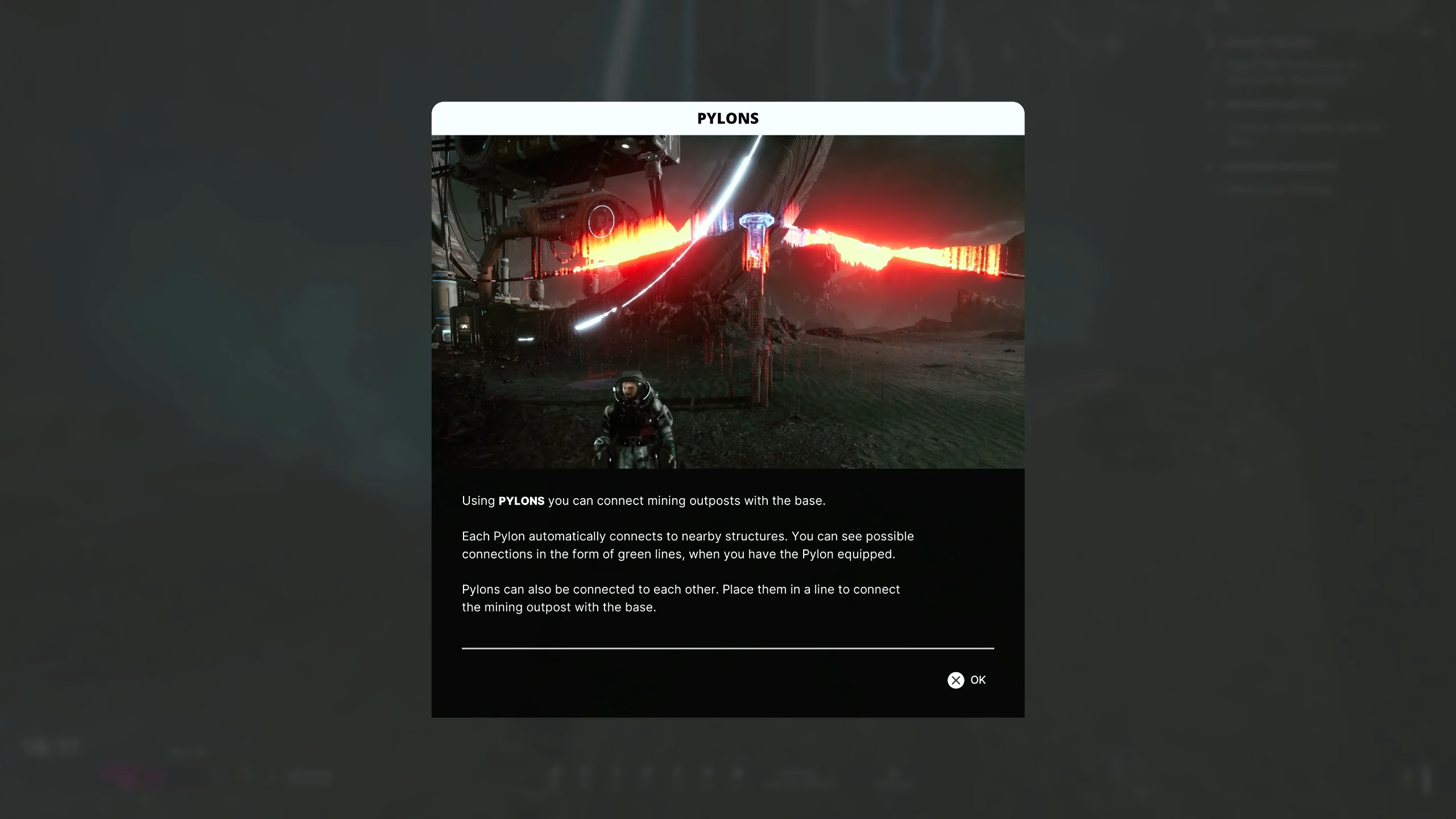
采集时又会受到各种资源的限制,比如 [[soft currency - tiredness & exhaustion]]:
- 对于浅表矿藏(SHALOW RESOURCES),那么可以通过 [[game mechanic - 简单交互 simple interaction feedback]] 直接进行采集,但其数量有限
- 所有被采集的资源会自动被纳入基地的资源池中:
而且具有限制 [[soft currency - capacity]]:部分资源具有单独的限制(100/300),所有资源具有总的上限(404/480) - 之后便可以在基地中消耗资源进行 [[game mechanic - 建造 build]]
而游戏中的另一个玩法和挑战是 [[gameplay & challenge - 基于选择的叙事 choice-based narrative]],包括 [[game mechanic - 异步通讯 asynchronous communication]] 以及 [[game mechanic - 分支对话 choice-based dialogue]]:
[[game mechanic - 异步通讯 asynchronous communication]] 主要指的是游戏中的电话系统:
而 [[game mechanic - 分支对话 choice-based dialogue]] 就不言自明了:
后续基本所有的叙事相关玩法都会依托于这里已经引入的机制。
Summary
在 PROLOGUE 中已经引入了绝大部分的玩法和系统,但并不会觉得东西太多无法理解。整体的叙事基调因为“除了自己之外的人全死了”以及身份未知的来电者,已经有了悬疑和阴谋论的氛围,再加上异星的荒凉美学以及基地的科幻基地,让人有了还想看看接下来到底会发生什么的兴趣。而因为已经有了会创建不同版本的自己的预期,所以创建分身的部分倒反没有那么多预料之外的惊喜。
前面也提到了,虽然我的情绪起伏主要来源于自己的操作,但孤身一人被抛在遥远星球艰难求生,一步走错万劫不复的感觉确实传达到位了。
JOURNEY 1
Emotional Curve
在不同目的地之间会有短暂的旅行时间只能待在飞船上,在第一段旅途中我注意到了两个有意思的点:
- Visualized Emotions
- Transparent Character Insight
- Visualized Emotions
注意到这一点是因为 EGDS 也是强调情绪影响的设计系统,所以我对情绪化相关的设计比较敏感。这种外显化的情绪表达非常直观,也让玩家直接感受到每个对话选项的结果。
- Transparent Character Insight
当下其实并没有这个感觉,但后来思考了一下,觉得这确实就是“明牌识人”,甚至可以称之为非恋爱版本的“GAL-GAME”——与普通 Gal-Game 相比,你完全知道对方的人生轨迹及其思考方式,理论上来讲,可以知道对方心里可能的想法以及期望的答案是什么。
ACT 1
Emotional Curve
这一幕随着分身的加入,可以感到 [[gameplay & challenge - 基于选择的叙事 choice-based narrative]] 和 [[叙事 narrative]] 的影响越来越大。
在关卡中捡到的物品可能对角色本身没有太多用处,但对于不同时间线上的自己而言却是宝贝。
有些讽刺的是,游戏中也会出现上一秒分身刚和你抱怨工作时间太长,需要休息,满口答应之后,下一秒检查了他的面板信息发现其心情状态没有那么差,所以继续给他安排工作。这种由于上帝视角带来的“自我奴役”最开始让我纠结不已(因为答应了要让他好好休息),但后来却有些乐在其中(反正心情状态还挺好)。
在 ACT 1 中也会和 Maxwell 有一番关于 [[加缪 Albert Camus]] 和 [[英雄主义 heroism]] 的对话:
有趣的是因为之前刚好看了 [[book - 荒谬之外 - 傅佩荣]],是 [[傅佩荣]] 对于 [[加缪 Albert Camus]] 的研究论著。也正好写下了 西西弗斯下山,所以看到这里提起加缪颇感惊喜。
看到 Maxwell 有关量子计算机杀死了所有机组成员选择让自己独自存活的猜测时初感意外,后来觉得也在情理之中。
真正让人感到有些纠结的是与 Lena 的对话,因为已经分化了植物学家,所以也可以让其代替自己与 Lena 进行交谈。面对一个真的可能可以信赖的人时,因为也考虑到不想将其卷入这一堆麻烦事中,所以会纠结到底是否要坦诚相待。
喝酒小游戏还挺有意思的,随着喝的酒越来越多,屏幕也模拟了类似酒醉的效果,主要由 [[camera - 运动模糊 motion blur]] 和 [[camera - 摇镜 tilt]] 实现。
另一个记忆点是 [[gameplay & challenge - 基于选择的叙事 choice-based narrative]] 比较常见的 [[game mechanic - 基于条件的对话选项 gated dialogue]]。
比较令人惊喜的是 [[collectible - movie]] 竟然是真的可被播放的长达几分钟的“微电影”。每一段都是不同的,令人充满期待。
最后时刻再次被自己“绊倒”,因为当时一直不知道存在 [[game mechanic - 资源软锁 resource soft reservation]],或者说没有搞懂其机制,所以花费了好几天时间反复收集资源,调整基地模块布局,进行资源和重量置换,甚至销毁了一些已经采集的资源来为有机物腾出空间,最终才勉强离开。最后发现了 [[game mechanic - 资源软锁 resource soft reservation]] 之后不免捶胸顿足。
Subjective Feelings & Objective Reasons
ACT 1 随着分身的加入,[[叙事 narrative]] 带来的影响越来越大,[[玩法和挑战 gameplay & challenges]] 以及 [[美学 aesthetics]] 的影响在相对降低。
比较突出的 [[主观感受 subjective feelings]] 有下面这些:
- [[subjective feeling - 有意义的选择 meaningful choice]]
- [[subjective feeling - 代入感 共情 empathy 成为或理解TA - 同情 compassion]]
- [[subjective feeling - 纠结 in a dilemma]]
而这些主观感受的 [[客观原因 objective reasons]] 主要有以下方面:
- [[objective reason - 取舍 trade-offs]]
- [[objective reason - 不可逆后果 irreversible outcomes]]
- [[objective reason - 资源有限 limited resources]]
出色的 [[gameplay & challenge - 基于选择的叙事 choice-based narrative]] 以及 [[gameplay & challenge - 资源管理 resource management]] 必然意味着 [[objective reason - 取舍 trade-offs]] 以及 [[objective reason - 不可逆后果 irreversible outcomes]],而 [[objective reason - 资源有限 limited resources]] 让决策更加关键,毕竟时间单向流逝,做了这件事可就没空做另一件事了。
如前所述,叙事层面的纠结主要是和 Lena 的对话过程中产生的,在对玩家角色以及分身有了 [[subjective feeling - 代入感 共情 empathy 成为或理解TA - 同情 compassion]] 之后,就会忍不住权衡利弊。
Design Levers
- [[gameplay & challenge - 瞄准射击 aim & shoot]]
ACT 1 中引入了新的“敌人”,玩家需要通过研究解锁“武器”之后,就能看到关卡中存在的“无形之物”,并将其“消灭”。此时的敌人没记错的话都还是静态的,不会移动和追踪。
- [[game mechanic - 单位管理 unit management]] & [[soft currency - emotion]]
随着分身的加入,他们可以参与 [[game mechanic - 收集 collecting]],但需要照顾好他们的情绪。
喝酒游戏作为单独的小游戏存在,不直接构成主玩法的一部分,这里就不单独再提了。
[[叙事 narrative]] 方面,随着 [[narrative content - 人物 character]] 的增多而逐渐展开。如果借用 [[Five-Act Structure 五幕结构 - Gustav Freytag]] 的观点,此时正处于 Rising Action。
Summary
总的来说,ACT1 紧接在 PROLOGUE 之后,故事的背景已经铺垫得差不多,新鲜感来自于不断产生的新分身,了解他们各自的人生轨迹——也是自己的不同可能性。同时稍微增加了一些玩法难度,从 Progression 层面而言,难度在平滑地上升。我也逐渐熟悉了几乎所有的系统,在寻求资源最大化。当然也正是因为这样的“盲目自信”,导致我多花费了好几天,把提前准备的资源进行置换销毁后才勉强起飞。
JOURNEY 2
Emotional Curve
最开始是与 Maxwell 的谈话,他稍微透露了一些他的目的——在混乱中寻找模式。让我想起了 [[猴子打字机 Infinite monkey theorem]]。
之后可能是整个游戏中我最喜欢的一个情绪高潮——共唱 What If。
所有的分身以及自己,用其独特的嗓音,演唱具有其人格特征的歌词。
回望过去,驻足现在,谈及未来。抛开分别,携手同心,温暖有力。
最后的镜头中,“主角”朝向镜头加油打气,应该算是个小彩蛋?鼓励收到了!
ACT 2
Emotional Curve
刚刚经历完快乐的 What If,接下来没过多久就迎来了 Down Moment —— Death of Molly。
Molly 是作为克隆历史上的标志性生物 Dolly 的象征,它也是通过量子计算机和 Repedium 生成的第一个生命,其死亡预示着所有分身的命运。
在探索过程中慢慢意识到在 ACT 2 中引入了 3D 关卡,这也带来了新的挑战:
这一关中捡到的电影还挺有意思的,从未来视角以调侃的方式讲述了生命的进化过程以及在其中出现的微小波动——人类。
另一个记忆点是遗愿清单 Bucket List,可以感受到情况在急转直下:
而 Brain Tissue Treatment vs. Neural Implants 是我整个游戏中最纠结的抉择。前者意味着杀人(特别是 Tabula 曾有过挣扎起身),而后者意味着一辈子活在监视之下。
这一个选择将 [[company - 11bitstudios]] Meaningful Entertainment 的目标很好地传达出来——没有简单的正确选项,一切选择都要考虑 [[objective reason - 风险和回报 risk and reward]]。
我最终选择了第一个选项,虽然这是我在 Tabula 起身之前下的决定,因为我不希望所有的分身一辈子都活在监视之下。但在选完之后我也有过犹豫(我是一个几乎从不后悔的人)——对于所有分身而言,可能在他们到来之际其实已经有所准备,除了死亡之外可能免不了成为小白鼠。
游戏中其实也“提供”过另一个民主的选项——各自投票来决定最终的方案,但这也只是一个假象,没有如此轻易的可以逃脱责任的选项,玩家角色作为核心人物,只能由玩家来下最终决策。
但是木已成舟,多说无益。这个选项作为故事的高潮时刻,也是我喜欢这个游戏最重要的原因之一。
另一个让我感到可惜的事件是错过了送给生物学家斧子的机会。
因为支线任务没有自动被追踪,所以我一直不知道可以和 Lena 通话来继续推进这条故事线。我后来是查了网上的攻略之后才意识到后续的推进步骤,但为时已晚,因为我已经选择了 Brain Tissue Treatment 的治疗方案,生物学家已经不再认同我,所以我也就错失了把斧子送给他的机会。
ACT 2 的最后以 Technician 袭击我做结。
意料之外,情理之中。
Subjective Feelings & Objective Reasons
如前所说,ACT 2 真正体现了 [[company - 11bitstudios]] 的 Meaningful Entertainment 的追求。
具体而言,[[subjective feeling - 有意义的选择 meaningful choice]] 是由 [[objective reason - 风险和回报 risk and reward]] 促成的。关键决策会产生 [[objective reason - 不可逆后果 irreversible outcomes]],从而让玩家在做决策之前慎重考虑。
随着对角色的深入了解,[[subjective feeling - 代入感 共情 empathy 成为或理解TA - 同情 compassion]] 的主观感觉被加深,而这背后的客观原因是:[[objective reason - 取舍 trade-offs]] 以及 [[objective reason - 理解对方动机 understand motivations behind]]。
和自己一样,分身们既不想杀人,也不想受人监控。既不想因为 Tabula 是“没有意识”的生命就牺牲他来救自己,也不想一辈子像罪犯一样被人读取心理活动。所有的一切心理活动和行为及其背后的动机都能被理解,所以当然也能够共情他们的想法。
在 ACT 2 中,[[subjective feeling - 责任感 responsibility]] 也得到了加强。原本可以通过民主投票的方式来分担责任,但这一事件不了了之,这就意味着 [[objective reason - 无法分摊责任 responsibility cannot be shared]] 以及 [[objective reason - 玩家决定后果 player-decided outcomes]],达到了双重强化。
而之后 Technician 以及 Botanist 拒绝对话,以及最后以 Technician 为首的反叛验证了 [[subjective feeling - 山雨欲来 the calm before the storm]]。这背后的客观原因是:
- [[objective reason - 意料之外情理之中 surprising yet reasonable]]
- [[objective reason - 可感知的改变 perceivable changes]]
最开始其实只是因为在基地外面发现坏了的车,Technician 时不时会去进行修理,觉得是一种放松。但在做出关键决策之后,Technician 和 Botanist 多次尝试密谋但被我打断,到最终他们选择反叛,这一切虽然意外,但也合理,并且修车事件反倒顺理成章地成为了反叛的条件,一切都是最好的安排。
Design Levers
[[玩法和挑战 gameplay & challenges]] 层面其实没有结构性的变化,但是通过引入了 3D 关卡让 [[game mechanic - 制作机制 crafting]] 变得更加复杂:
比如原来在 ACT 1 中可以直接连通的电缆,现在需要通过寻找合适的路径之后才能将其正确连通,应该可以算作某种轻度的 [[gameplay & challenge - 解谜玩法 puzzle]]:
此外,解锁了一种基于 [[gameplay & challenge - 解谜玩法 puzzle]] 的 [[soft currency]]。需要先通过照射来解锁线索,然后一路寻找真实位置之后才能够有机会获得:
[[gameplay & challenge - 瞄准射击 aim & shoot]] 也被新引入的 [[game system - 非玩家角色 npc]] 而得到加强。出现了多个核心的敌人:
[[game mechanic - 环境机制 environment]] 方面也引入了新的机制,如果玩家走入时间膨胀区域,时间就会快速流逝—— [[soft currency - time]] 被快速消耗。
[[叙事 narrative]] 和 [[美学 aesthetics]] 层面没有引入太多新的机制,就不再展开。
Summary
ACT 2 中一转前面的情绪上扬氛围,情况急转直下。
Molly 的死亡作为叙事的钩子,预示着所有分身的死亡命运,这一情节的张力随着时间的不断推进而积累。直至做出 Brain Tissue Treatment vs. Neural Implants 的关键决策时得以释放。而最后以 Technician 偷袭玩家的钩子继续延续。
在短短一章中实现了起承转合+新的钩子,非常精彩。
JOURNEY 3
Emotional Curve
最开始当然是交代发生了什么,结果是 Technician 带人跑了,并且基地被困沙暴之中:
在无计可施的情况下,科学家通过改写量子计算机程序让我深入意识探寻可能的解决方案,而这也引入了插曲:
我在其中不断追随一个会消失的影子(我觉得这象征着荣格的阴影概念——shadow),在回溯那些深藏在记忆中的片段和场景时,我终于有机会追上影子与其对话。
和 shadow 对话的过程其实就是荣格的自性化过程 ([[荣格 - 个性化 Individualization]])——发现内心中潜藏或被遮蔽的部分,接受它,然后将其转化为意识:
有趣的是,这里提到的 “Mistakes can have good consequences too” 其实让我想到的是 [[book - 道德经 Dao De Jing - 老子]] 中的“祸兮福之所倚,福兮祸之所伏”——好坏相生,以为的坏事可能正是好事之因,而认为的好事可能也是坏事的种子。
而这里提到的 light 也是双关语——既指的是象征意义的心中之灯,即能够指引自己走向何方的意识北极星(如我自己写的 人生之灯),也指的是外部世界中的真实之灯,即能够指引自己脱困的方法:
Subjective Feelings & Objective Reasons
在玩的时候其实感受到的是 [[subjective feeling - 超现实 surreal]] 以及 [[subjective feeling - 神秘感 mysterious]]。
[[subjective feeling - 超现实 surreal]]
- [[objective reason - 非真实构景 non-realistic staging]]
- [[objective reason - 宏大凸显渺小 grand scale with reference]]
- [[objective reason - 非真实构景 non-realistic staging]]
[[subjective feeling - 神秘感 mysterious]]
- [[objective reason - 没有脸 no face]]
- [[objective reason - 被刻意隐藏的信息 information withheld until reveal]]
- [[objective reason - 没有脸 no face]]
在分析过程中我有了 [[subjective feeling - 心有灵犀 on the same wavelength]] 的感觉,而这是由 [[objective reason - 意图可读 readable intention]] 带来的。
具体而言,这主要是由 [[narrative content - 对话 dialogue]] 所提供的信息让我联想到了 [[卡尔荣格 Carl Jung]] 的一些理论。很是欣喜。
ACT 3
Emotional Curve
经历了一番形而上的自我探寻之后,还是要回到现实中继续求生。
最开始的是与 Maxwell 进行的一番有关全局最优的讨论——他想将所采集的 Repidium 全部独吞,并用于改造人类的决策系统,试图达到全局最优:
这其实让我想到的是 [[anime - 进击的巨人 Attack on Titan]] 中的意识集合体,从中能看到过去和未来:
ACT 3 中加入的高速移动的敌人很有压迫感,让我在探索过程中基本保持了手电筒常开状态,就是为了避免被它偷袭(它成功让我直接因为过量辐射回家两次!)
和 Miner 的对话其实也很让人动容,一辈子忙忙碌碌都是为了别人,在最后的时刻到来之前,他“不好意思”地开口希望能有机会利用木雕“重做自己”。
看的最后一部电影是制作幕后的小纪录片,能看到为玩家们带来这部好作品的开发者们的身影和听到他们的心声,令人开心。
因为前面的选择,最终与 Technician 和 Botanist 分道扬镳,互道珍重,可能再也没有机会再见。
经过了精心准备之后完成了紧张刺激的“BOSS”战,爽!
在最终时刻到来之前准备好了所有的手段,最终还是不忍杀人。
Subjective Feelings & Objective Reasons
- [[subjective feeling - 掌控感 sense of control]]
- [[objective reason - 对行为结果有预期 predictable outcomes]]
- [[objective reason - 正反馈循环 positive feedback loop]]
- [[objective reason - 按计划进行 things go as planned]]
到了 ACT3,一切都很熟悉,知道该做些什么,也大概摸索出了比较高效的资源收集方式,所以相当于熟能生巧。
- [[subjective feeling - 满足 satisfying]]
- [[objective reason - 自愿 voluntary]]
- [[objective reason - 利他付出 慷慨赠与 altruistic giving]]
- [[objective reason - 符合自我价值观 aligned with personal value]]
虽然 Technician 和 Botanist 离我而去,但是我当然也知道他们的资源紧张,所以在他们需要帮助时自然是毫不犹豫。
- [[subjective feeling - 不舍 reluctant to let go]]
- [[objective reason - 尝试改变但失败 failed attempt to change the outcome]]
- [[subjective feeling - 代入感 共情 empathy 成为或理解TA - 同情 compassion]]
- [[objective reason - 不可逆后果 irreversible outcomes]]
- [[objective reason - 理解角色决策背后的动机 understand motivations behind the decisions]]
最后也没能让离开的分身们回心转意,很可惜,但是也能理解他们的顾虑,毕竟没有人希望自己成为实验室中任人宰割的小白鼠。只得挥手作别,心中留念。
- [[subjective feeling - 力量感 empowerment]]
- [[objective reason - 做足了准备 fully prepared]]
- [[objective reason - 按计划进行 things go as planned]]
- [[subjective feeling - 意犹未尽 wish to continue]]
- [[objective reason - 太简单 too simple or under-challenge]]
- [[objective reason - 流程短 short duration]]
在进行 BOSS 战前做好了充足的准备,预备了 3 套电池和护盾,为分身们准备了 3 天的食物,虽然没有七点就出发(因为前一晚和大家一起看了纪录片,每次重大事件之前,都会和大家一起看电影),但也算早早出发。
都是见过的敌人,关卡指引也很清晰,没有任何卡点,所以一切顺利,甚至觉得结束得有些太快。
- [[subjective feeling - 解脱 安心 relief]]
- [[objective reason - 做足了准备 fully prepared]]
- [[subjective feeling - 期待 looking forward]]
- [[objective reason - 即将通关 nearing completion]]
- [[subjective feeling - 不确定感 uncertainty]]
- [[objective reason - 前途未卜 future unclear]]
最后时刻即将到来,将所有可能的选项都全部做了,有着充足的准备。但不知道这最终意味着什么,等待着结局的来临。
Design Levers
[[玩法和挑战 gameplay & challenges]] 层面其实没有添加新的层级,只是在现有结构中继续增加了难度。添加了新的 [[game mechanic - 环境机制 environment]],以增加探索过程中的难度:
此外 [[gameplay & challenge - 解谜玩法 puzzle]] 也进一步得到加深,需要配合 [[game mechanic - 制作机制 crafting]] 来制作更高级的 PYLON HUB 才能实现有些深层矿藏的充电连接。
Summary
ACT3 中明显感觉节奏加快,可能因为对游戏的各方面也较为熟悉了,所以基本一切都是按预期进行。虽然第一次启动信标失败,但也在预期范围之内,没有太大波澜。终局之前,迎来了别离,我到了最后还是有些恍惚,在 BOSS 战之前以及最终呼叫之前我都再次到了基地门口,但他们真的没有再出现,我也没有机会把斧子交给 Botanist。BOSS 战之前做好了充足准备,而且其实难度并不算大,所以也算是比较短小紧凑的高能时刻。最终呼叫之前,因为不想杀人,并且想让分身们自由生活,所以选项也很明了,但以防万一也准备好了所有可能的选项。所以一切也只是顺理成章地发生了。终于要迎来结束。
PILOGUE
- [[subjective feeling - 终结感 sense of closure]]
- [[objective reason - 通关 game completed]]
PILOGUE 发生在回到地球几个月后,主角即将出庭与 Maxwell 对质。一切都将迎来终结。过程中所出现的所有人都依据其立场选择为我或者为 Maxwell 做辩护。这些其实于我而言已经没有那么重要,因为一切都将迎来终结。
- [[subjective feeling - 成就感 achievement]]
- [[objective reason - 按计划进行 things go as planned]]
- [[objective reason - 符合自我价值观 aligned with personal value]]
在网上查了一下这段话的明文,令人感动:
Reached next destination safely. Still no sign of corpo sleuths. Good reason to party. Wish you were here, bro.
最终看到 J&J 的照片时确实满满成就,他们过上了自由的生活,而这正是我想要的。
Conclusion
As a player
我后来才发现游戏的存档竟然精细到了每一天,所以我一共有 83 天的存档。这很大程度上加强了 [[subjective feeling - 可重玩性 Replayability]],想必这对于一些成就型玩家而言是个很好的功能!但我并不是一个收集型玩家,而且我并不后悔我的选择,也不想再次面对相同的选择让其失去力量,所以我的角色的故事到此为止了。
As a designer
这部作品是玩法和挑战重质不重量的一个很好的例子。游戏除基于玩家选择的叙事玩法之外,唯一的核心玩法就是资源管理。通过不断引入新的环境挑战、敌人类型,以及更复杂的空间关系实现了难度的平滑上涨。
美学层面的视听觉体验在最开始奠定了写实科幻的基调之后稳定发挥,在不同幕之间引入新的环境来保持新鲜感,并利用内心世界的自我发现之旅以及最终的高难挑战作为美学表达的高光时刻,令人印象深刻。
叙事层面,让我很多次直面困难抉择,也有很多次和对话背后的想法共鸣。没有绝对正确的选项,任何意识行动,背后都有无意识的影子。纠结无用,直面阴影,方能柳暗花明。
这是现在的我能够喜欢的好游戏,谢谢你们创作了这部好作品。
What - Thinking
If I could take another turn
My life would never be the same
If I could get another chance
Today
“What if”是多重人生这款游戏最有力的内核,没想到它会如此打动我,毕竟,“没有如果”是我的人生信念之一。
最近和朋友聊天又说起“每一次都是最后一次”这个想法。虽然开始有点抗拒使用偏进步主义的“向前”这样的说法,但撇开荣格的共时性不论,暂且可以说时间是单向的。每一个毫不起眼的当下,共同汇聚成了过去,同时将未来的可能性空间一步步收窄。
道德经里面讲“抟气致柔如婴儿”,说的就是事物的新生状态,一切还未开始,所以拥有最大的可能性空间;“物壮则老”,讲的是事物发展到后期,很多方面已经定型,可能的结局在不断收束。
在多重人生中,借助量子计算机和特殊的资源,你终于有机会看到在人生的不同十字路口做出不同抉择的自己可能会经历什么样的风景。游戏中很巧妙地将所有可能的时间线都收束到了相同的点——都参加了这次的异星采集任务——颇有几分命定论的味道。
虽然船员们全都死了,但不管怎样,总得想办法活下来不是。没有队友就创造队友,前脚刚说好好休息,下一秒就继续派活,没想到自己有一天也成了罪恶的资本家。正因为知道每个人的来时路,所以也知道他们想听什么样的话,让自己安心干活,何尝不算一种自我管理?往大了想,每个分身又何尝不是个人潜意识中潜藏的可能性,毕竟自己虽然没有经历过,但这些可能性必然潜藏在群体潜意识的可能性空间之中。
所谓决策,当然需要权衡利弊,若都是万全之策,也无从“决”起。一面是“杀生”,一面是“伏罪”,对“自由”的向往压倒了伦理,但正是此时,“杀生”变成了“杀人”,纠结之时,先创造民主投票的假想,随后将其粉碎,休想平摊责任,逃不了分毫。几番辗转,意已决,非杀不可。
让我想起了斯坦福监狱实验,身份的转变带来了原本无可理解的意志变化。这像是被带上了某个潜藏的人格面具,它从意识,甚至集体潜意识上浮,一旦带上之后便“膨胀”,无法脱下,最后还要说一句不知道为什么会变成这样。也许狂欢之时,意识已经让位,成了被潜意识夺舍的行尸走肉。
自我探寻之旅其实很有意思,用的意向符号是“沙”,虽无定形,也可成体,相比之下,也许水更合适,但也有可能是因为“水”太难做?无面人后来有了脸,但身子还是沙状——这不就是戴上了某张人格面具的个人潜意识吗。讲述的是“祸兮福之所倚,福兮祸之所伏”,然哉。
虽然最后并非完全无事,但都是自己的选择,无悔。
没有如果,
以始为终。
终始一体,
因缘共时。
SPECIAL THANKS
- 部分截图来自于 @BlackTorito TV 的 walkthrough 视频